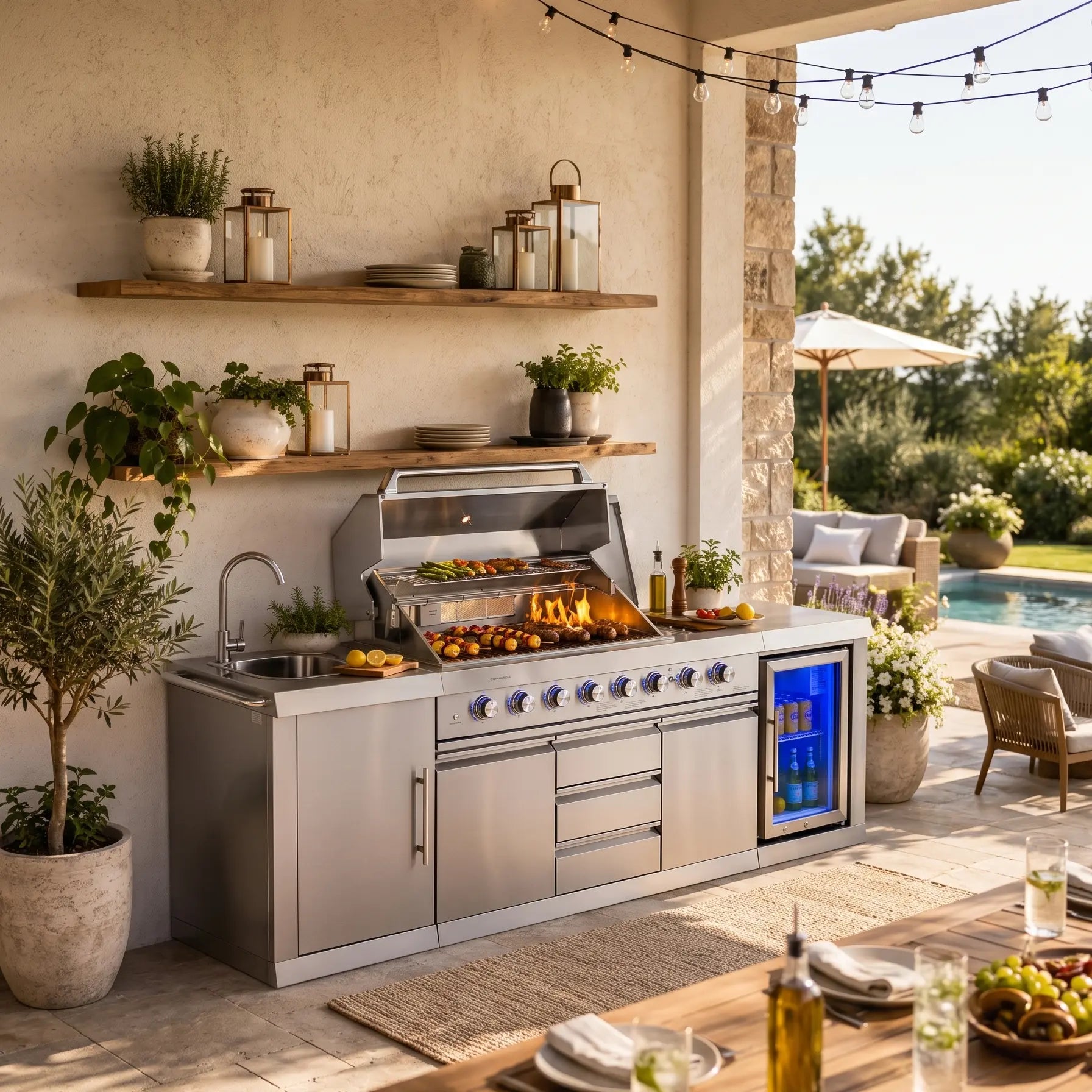
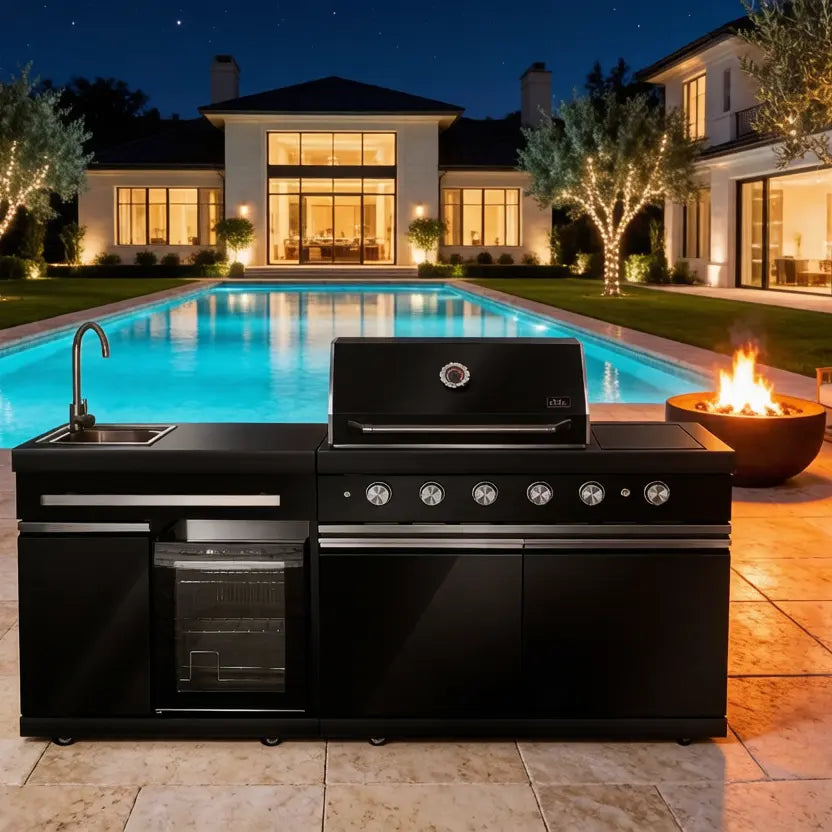
The short answer: a gas grill wins for steaks, burgers, and foods that want flame-kissed char marks, and a griddle wins for smash burgers, breakfast, shrimp, vegetables, and anything small that falls through grates — because a griddle is a continuous flat-top steel surface with edge-to-edge heat. Both run on gas, so the choice is surface, not fuel: grates for char and drips, a flat top for even browning and volume. This comparison covers heat, flavor, and fit.
This is a brand-owned comparison; Big Horn grill and griddle specifications are traceable to the official product listings.
The real differences that matter
A gas grill cooks on open grates over direct flame: food gets grill marks, fat drips away, and larger cuts develop a charred crust. A gas griddle cooks on a flat steel surface: food gets uniform, edge-to-edge browning with no gaps, which suits small items, breakfast, and smash burgers. The differences that matter are surface, heat distribution, and cleanup — grates for char and drip-away, a flat top for even cooking and volume.
Understanding the heat before you decide
Both run on gas burners, but the heat delivery differs. A grill’s grates let flame and smoke reach the food directly, producing char marks and letting fat drip away — reducing flare-ups from pooled grease. A griddle’s flat surface spreads heat edge to edge and keeps the food in contact with the steel, like a giant outdoor skillet. The practical difference: grates smoke and char, a flat top browns and holds uniform heat across the surface.
Head-to-head: heat, flavor, and convenience
| Factor | Gas grill | Gas griddle |
|---|---|---|
| Surface | Open grates | Continuous flat-top steel |
| Best for | Steaks, burgers, bone-in chicken | Smash burgers, eggs, shrimp, stir-fry |
| Heat | Direct flame, char | Even, edge-to-edge |
| Small items | Can fall through | Stay on the surface |
| Cleanup | Brush the bars | Scrape-and-wipe, season the steel |
What each option does best
- Gas grill does char. Grill marks, smoke, and fat dripping away; the tool for steaks and bone-in cuts.
- Gas griddle does volume and breakfast. Edge-to-edge heat for smash burgers, eggs, pancakes, shrimp, and stir-fry; small items never fall through.
Where most comparisons go wrong
Most comparisons declare a winner instead of matching the surface to the meal. A griddle cannot give you grill marks and open-flame char; a grill is a poor fit for cooking dozens of smash burgers or a pile of shrimp at once. The second error is ignoring the surface issue: small, delicate items fall through grates, and a flat top holds them at even heat. Match the surface to the food you cook most.
How to match the choice to your cooking style
- Steak and burger night. Choose a grill for char marks and the flame-kissed crust.
- Breakfast, smash burgers, and small items. Choose a griddle for the flat, even surface.
- You want both. A multi-burner grill with a flat-top accessory covers both surfaces on one base.
- Small space. A griddle or grill-grate combo avoids owning two appliances.
Cost and longevity perspective
Both run on the same gas system, so the cost difference is the surface hardware. A griddle plate needs regular seasoning with oil to maintain the non-stick surface and prevent rust; a grill’s grates need brushing but less seasoning. A grill with a removable flat-top accessory gives both surfaces for the price of one base — the flexible option for cooks who switch meals. Care determines longevity for both.
The decision rule in one paragraph
Choose a gas grill when char marks, smoke, and open-flame flavor are the point — steaks, burgers, and bone-in cuts; choose a gas griddle when even, edge-to-edge heat and volume matter — smash burgers, breakfast, shrimp, and stir-fry. Both run on the same gas, so the choice is surface. If you cook both styles, a multi-burner grill with a flat-top accessory gives you both on one base.
See the grills and griddles that cover both surfaces. grills and griddles collection
FAQ
Is it better to cook steaks on a grill or griddle?
For steaks, a grill is usually better: the open flame produces char marks and a smoky crust, and fat drips away. A griddle gives even browning but no char marks or open-flame smoke; it suits smash burgers and smaller items better than thick steaks.
Are griddles healthier than grills?
Using any cooking surface correctly matters more than the surface itself. A grill lets fat drip away, which reduces pooled grease; a griddle can hold fat on the surface unless you manage it. Both are fine when you cook food to temperature and manage the grease.
Are burgers better on grill or griddle?
It depends on the burger: a griddle is better for smash burgers (even, edge-to-edge crust and a flat surface), while a grill is better for thick, charred burgers with grill marks. Choose the surface by the style you want.
Why buy a griddle over a grill?
Buy a griddle over a grill if you cook breakfast, smash burgers, shrimp, stir-fry, or small items that fall through grates — the flat-top surface gives even, edge-to-edge heat and keeps small food on the cooking surface. A grill is the better char tool for steaks and larger cuts.