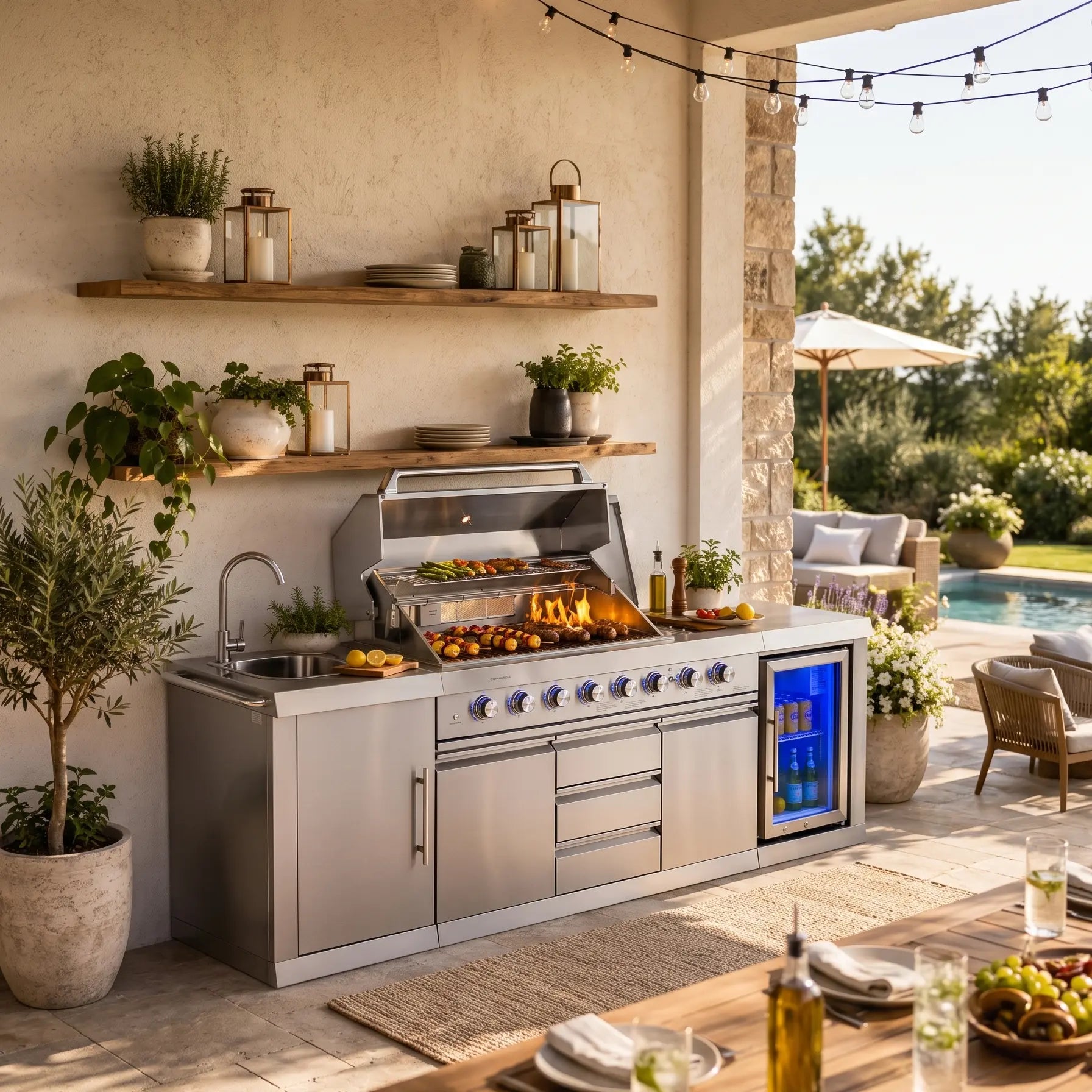
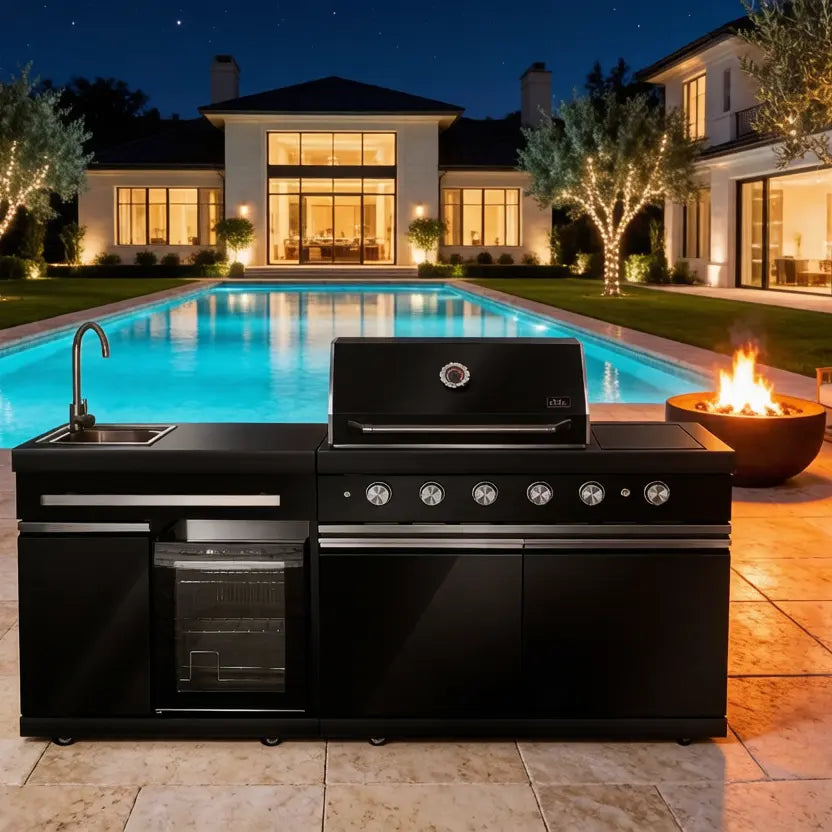
The short answer: an infrared grill wins when you want fast, high-heat searing of steaks and chops, and a flat top grill wins when you want a versatile cooking surface for smash burgers, breakfast, seafood, and vegetables with even heat and easy cleanup. The difference is the cooking method — radiant heat from above versus a hot metal surface below the food — and it decides which tool suits which meals. This comparison covers the heat, the flavor, the convenience, and the cost so you can match the grill to the way you actually cook.
This is a brand-owned comparison; Big Horn specifications are traceable to the official product listings.
The real differences that matter
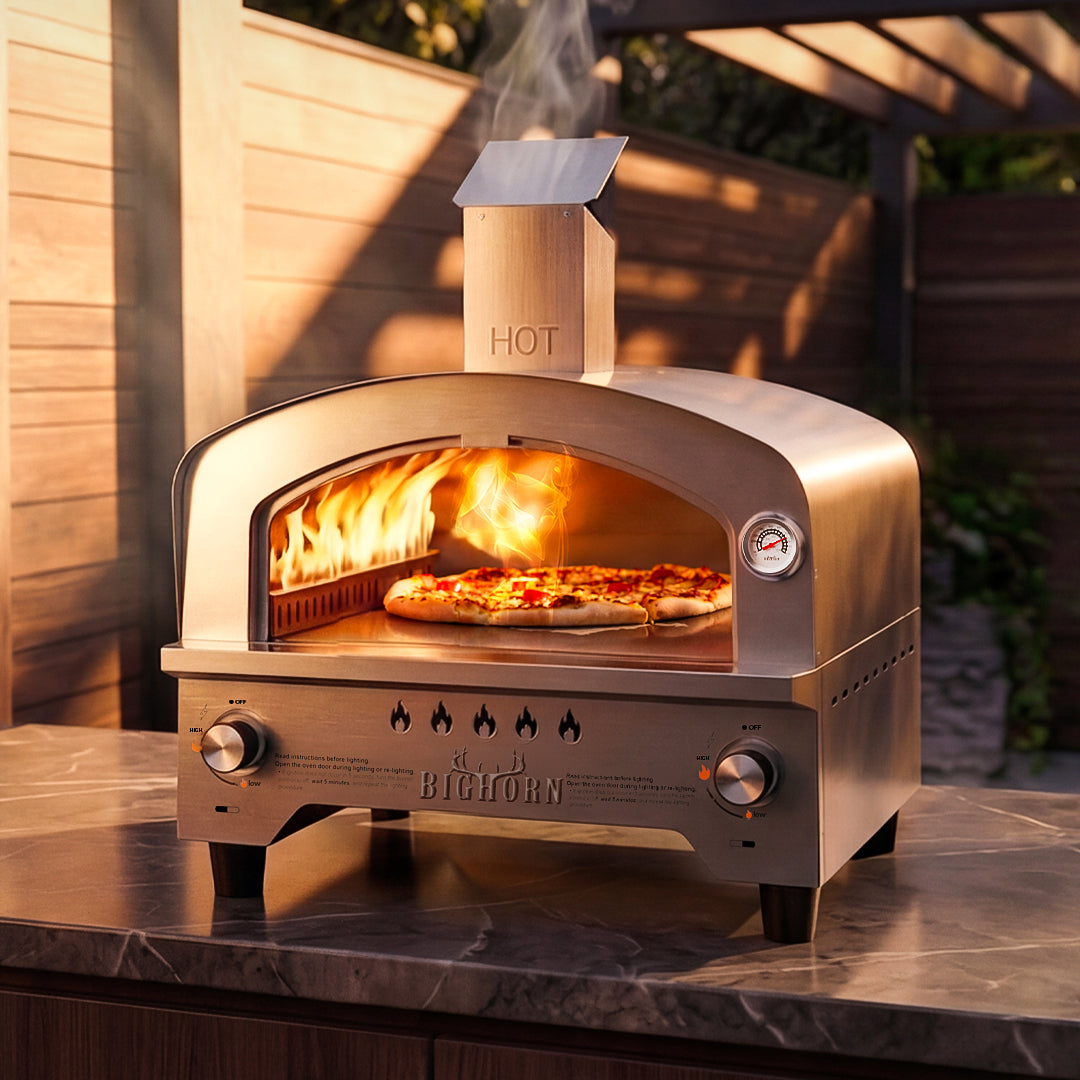
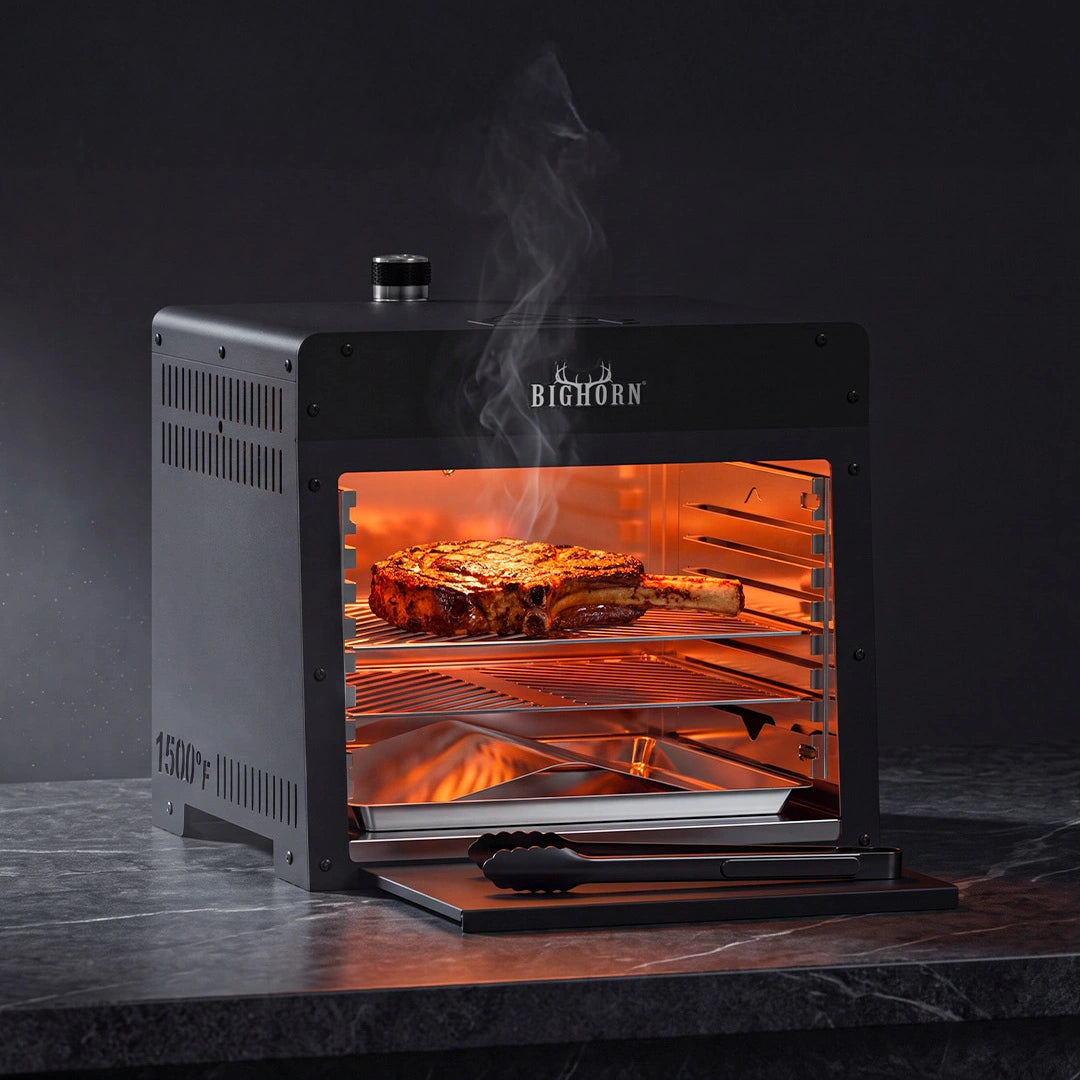
Infrared grills radiate intense heat directly onto the food from an emitter — the Big Horn 16-inch portable model reaches about 1500°F (815°C) in 3–5 minutes on a 19,000 BTU burner — which sears a crust in seconds and keeps the flame off the food, reducing flare-ups. A flat top grill heats a solid steel plate; the food cooks by contact with the hot surface, giving even heat across a large area, perfect for many items at once. The two produce different food: infrared makes a crust-focused steak; a flat top makes a uniform, pressed surface for burgers, eggs, and stir-fries.
Understanding temperature before you decide
Infrared is about intensity: a high-temperature surface that browns fast and demands attention. A flat top runs at a more moderate, controllable heat — typically enough to sear a burger or cook eggs without the risk of charring that comes with 1500°F. The temperature difference is not a quality score; it is the reason each tool suits different meals. Match the heat character to the food you cook most.
Head-to-head: heat, flavor, and convenience
| Factor | Infrared grill | Flat top grill |
|---|---|---|
| Heat source | Radiant heat from a ceramic emitter | Conduction from a solid steel plate |
| Best for | Steaks, chops, seafood with a hard sear | Smash burgers, breakfast, veggies, many items at once |
| Crust | Deep, fast, restaurant-style | Even, pressed, Maillard browning |
| Flare-ups | Fewer (flame off the food) | Few (grease managed on the plate edge) |
| Learning curve | Higher — intense heat needs a thermometer | Lower — temperature dials and a flat surface |
| Cleanup | Racks and drip tray | Scrape-and-wipe flat plate |
Read the table as a tool match, not a scoreboard: infrared is the better searing specialist, flat top is the better all-rounder for volume and variety.
What each option does best
- Infrared does the crust. A 1500°F-class sear on steaks and chops, with fewer flare-ups, in a compact portable footprint.
- Flat top does volume and breakfast. A large, even surface for smash burgers, eggs, pancakes, seafood, and stir-fries; easy scrape-and-wipe cleanup.
Where most comparisons go wrong
Most comparisons declare a “winner” instead of matching tools to meals. A flat top cannot match an infrared grill’s steak sear, and an infrared grill is a poor fit for cooking breakfast for six at once. The second error is ignoring capacity: a portable infrared broiler has a compact cooking area, while a flat top’s strength is surface area. Compare the meals you actually cook, not the specs.
How to match the choice to your cooking style
- Steak night is the priority. Choose infrared for the deep crust and fast sear.
- Burgers, breakfast, and variety. Choose a flat top for the even surface and volume.
- You want both without two appliances. A multi-burner grill with a flat-top accessory and an infrared sear zone covers both jobs on one base.
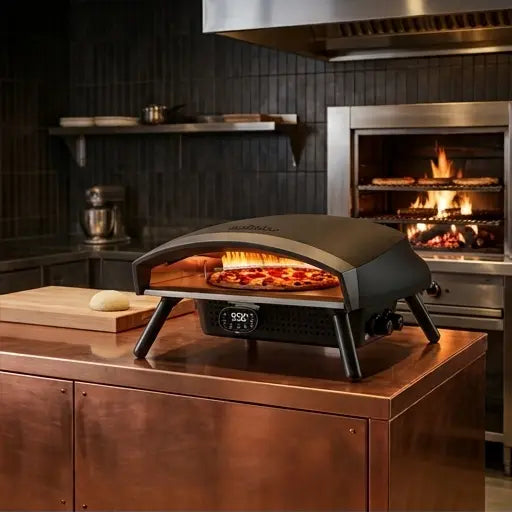
- Small space or camping. A portable infrared broiler stores away and travels; a flat top suits a larger patio or an outdoor kitchen.
Cost and longevity perspective
Both formats are available across price ranges. A portable infrared broiler costs less than a full-size flat top and stores easily, but has a smaller cooking area. A flat top orders a larger surface and often lives in a grill cart or outdoor kitchen. Longevity for both depends on care: keep infrared burners and emitters clean and gentle, season a steel flat top as the manual directs, and cover or shelter the unit between seasons.
The decision rule in one paragraph
Choose an infrared grill if your cooking centers on steaks and chops that want a hard, fast crust; choose a flat top if you cook a variety of foods in volume, from smash burgers to breakfast. If you want both, a multi-burner grill with a flat-top accessory plus an infrared sear zone is the middle path. Match the heat method to the meals you cook most, and the answer stops being a marketing debate.

FAQ
What are the downsides of using an infrared grill?
The main downsides are the learning curve and specialization: intense heat overcooks thin cuts quickly, the format is not built for low-and-slow smoking, and a tabletop unit has a smaller cooking area than a full-size grill. For volume cooking and breakfast, a flat top is the better fit.
What is the healthiest type of grill to use?
Using any grill safely — cooking food to the right internal temperature and managing drips and flare-ups — matters more than the fuel type. Infrared designs keep the flame off the food, which reduces flare-ups; a flat top lets you render fat away from the food and cook without charring. Both are fine when used properly.
What are the downsides of using infrared cooking?
The downsides are heat management and capacity: the intense radiant heat can burn sugar-heavy marinades or thin cuts quickly, the format is a searing specialist rather than a general-purpose grill, and a compact infrared broiler has a smaller cooking area than a full-size grill or flat top.
Is infrared better for grilling?
Infrared is better for fast, high-heat searing of steaks and chops; it preheats in minutes, sears hard, and produces fewer flare-ups. It is not better for volume cooking, breakfast, or gentle, even heat — those are a flat top’s strengths. “Better” depends on the meal.