







Gas Pizza Oven Ownership
A first pie in a gas pizza oven should be a simple launch on a stone that is honestly ready, with a light topping and a peel that still slides. This is a beginner checklist, not an oven ranking. Confirm the live listing, and do not treat a marketing window as a timer.
Leak-check and ignition, in overview
Set the oven outdoors on a stable, level pad, connect only the cylinder, hose, and regulator the current listing names, and complete the leak-check the manual names before you ignite. This page will not invent a soap-test recipe. A fuller setup already lives at how to set up a gas pizza oven safely; use that page for hose and regulator detail, and use this page for the first pie after the oven is safely lit.
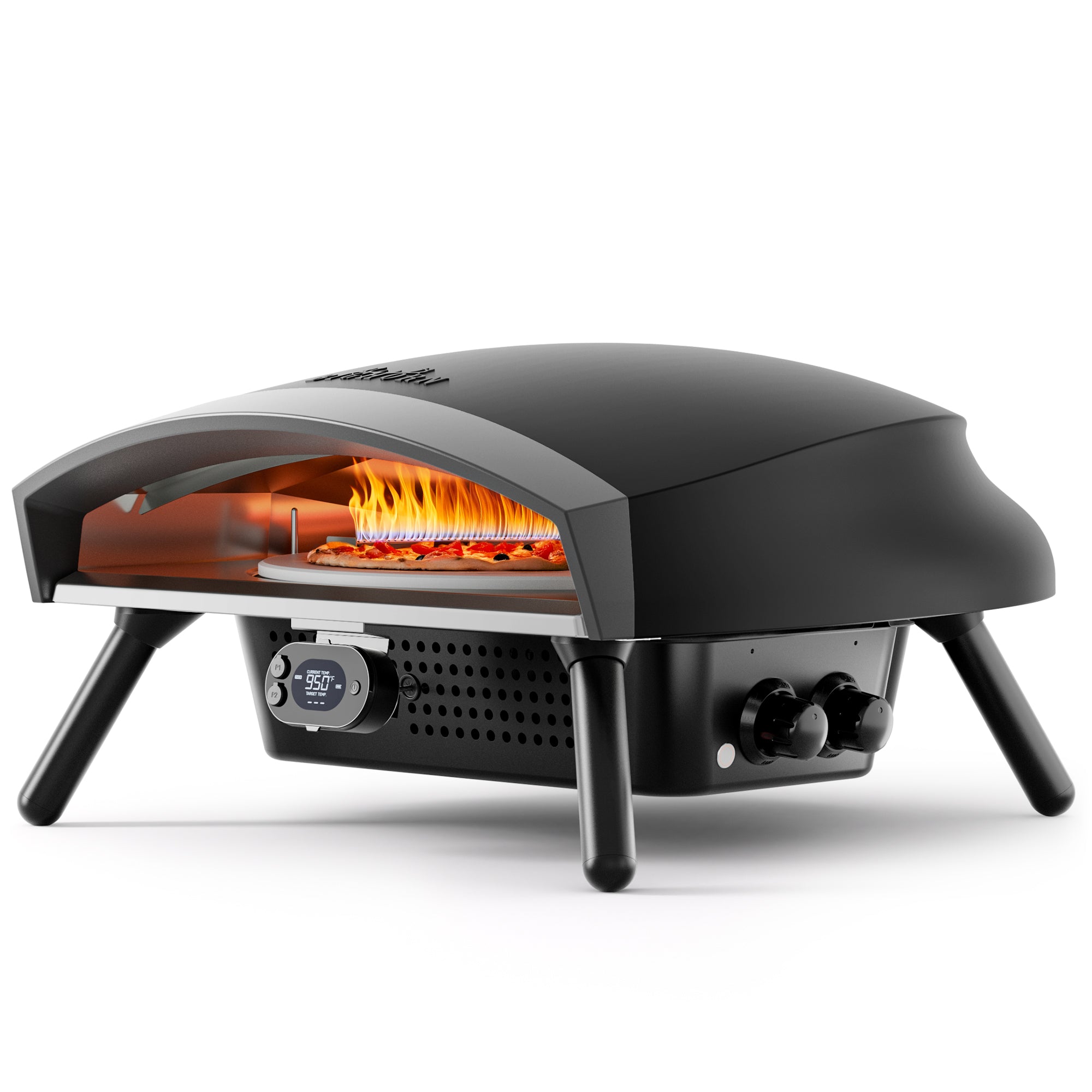
The current 16-inch gas outdoor pizza oven is the example chamber in this checklist. Confirm published output, weight, stone, ignition, and any rotation language on the live page. Marketing bake windows and auto-rotation claims are not a first-pie guarantee. Browse the gas pizza oven collection if you are still matching a size. A ranking page already lives at what is the best gas pizza oven for beginners; this article will not redo that medal.
Stone heat cues
Preheat until the stone and the chamber are honestly ready. A shy deck will glue the dough and leave a pale, wet center; a blast you never measured will scorch a rim before the middle sets. Use the cues the manual names, and look at the stone itself, not only a digital reading if the listing includes one. This article will not invent a preheat minute count. A first-use and burn-in sequence already lives at pizza oven first use, burn-in, preheat, and your first pies; do that work if the oven is brand new, then come back to this checklist for the pie itself.
Wind will steal a shallow preheat. National Weather Service wind safety is the official wind-safety overview. Keep the oven fully outdoors. EPA carbon monoxide information is the reason you do not light a gas chamber in a garage. NFPA grilling safety, U.S. Fire Administration cooking-fire prevention, and Ready.gov home fire guidance still apply: an attended appliance and a clear area.
Dough and topping restraint
A first pie should be a dough you can already handle and a topping you can launch. A thin, even sauce and a moderate cheese layer will teach you more than a loaded pie that sticks to the peel. Leave the experimental toppings for pie two or three. If the pie will carry meat, official temperatures from FDA safe food handling and FDA food safety in your kitchen still apply: 145°F with a three-minute rest for steak or whole-muscle pork, 160°F for ground meat, and 165°F for poultry.
Stretch the dough on the board, then move it to a lightly dusted peel only when you are ready to launch. The current stainless-steel pizza peel with a fordable handle is one metal-peel path; confirm published blade-size notes on the live page, and keep the live URL spelling as it is.
Launch and turn
Shake the peel, confirm the pie still slides, and launch with one committed motion. If the 16-inch listing you own describes an auto-rotating stone, confirm how that feature works in the current manual before you assume you can walk away. A rotating deck can still scorch a wet rim, and a fixed deck still needs a turn. Watch the pie, and turn or stop the rotation as the manual allows when one edge is ahead of the other.
Do not chase a marketing ninety-second pie on night one. Pull the pizza when the crust is set and the cheese has melted cleanly, not when a remembered ad timer beeps.
Fixes after the first pie
If the rim burned and the center was pale, the deck or the flame was ahead of the dough, or the pie was too wet. Give the stone a moment to recover, launch a slightly drier, less loaded pie, and watch sooner. If the pie stuck, dust less paste and more of a dry film, and do not build the next one on the peel five minutes early. If the oven will not stay lit, stop and check the cylinder and the manual rather than improvising a larger flame.
The table below is a first-pie check, not a guaranteed timer.
| Step | What to watch |
|---|---|
| Setup and ignition | The live leak-check and lighting sequence, fully outdoors |
| Stone | An honestly ready deck; no invented preheat minute count |
| Dough and toppings | A simple pie you can launch; official temperatures if you add meat |
| Launch and bake | A committed slide, then a watched bake; rotation claims are not a walk-away guarantee |
Work in a calm order so you are not stretching dough with one hand and hunting for a cylinder wrench with the other. Clear the launch path, set the peel, the board, and a cooling rack, and keep sauce and cheese already portioned. A first pie is a logistics problem as much as a heat problem. If children or pets are nearby, give the oven a wider berth than a kitchen range would get, and do not set the peel on a low table at shin height.
After the bake, resist the urge to launch a much wetter second pie just because the oven is hot. Recovery matters. Give the stone a short pause, and keep the topping modest until you have seen how the first pie behaved. If you want a slightly longer session, make two simple pies rather than one overloaded showpiece. Leftovers still follow official leftover guidance, not a warm sit on the stone.
A first pie walk-through
Leak-check, light, and preheat. Stretch a simple dough, dress it lightly, confirm the slide, and launch. Watch the rim, turn if you need to, and pull the pie when it is honestly baked. Cool the oven before you cover it or carry it, and put leftovers away on official leftover guidance. If the first pie is messy, the second one is the real lesson; do not throw a more complicated topping at a problem you have not diagnosed.
A practice-plan page for early sessions already exists elsewhere on the site. This checklist stays with the first gas pie: safe lighting, a ready stone, a restrained topping, and a launch you can repeat.
If the first pie taught you that the flame was too close to one edge, use a slightly calmer setting or a slightly shorter watch interval on the next one, still without inventing a universal knob position. If the stone left a wet disc, wait longer for the deck, not for a hotter flame alone. Write one note for yourself after the session: what stuck, what burned, and what you will change. That note is worth more than a remembered advertisement.
Key takeaways
- Leak-check and light the gas oven outdoors, then preheat until the stone is honestly ready.
- Launch a simple pie with a peel you have tested, and do not treat a marketing bake window as a timer.
- Confirm any auto-rotation language on the live 16-inch listing; it is not a reason to walk away from the pie.
- Use the existing beginner ranking and first-use pages for those jobs; this page is the first-pie checklist.
Confirm the current 16-inch gas outdoor pizza oven listing, and keep pizza oven first use, burn-in, preheat, and your first pies nearby if the oven itself is still new and needs that first-use sequence.
FAQ
How do I cook my first pizza in a gas pizza oven?
Leak-check and light the oven outdoors, preheat until the stone is honestly ready, launch a simple lightly topped pie, and watch the bake. This article will not invent a first-pie minute count.
What are common beginner mistakes on the first pie?
A shy leak check, a shy stone, a wet overloaded topping, a pie that sits too long on the peel, and walking away from a rotating deck are the usual problems. Fix one of those at a time on the next pie.
Does auto-rotation mean I can leave the pie unattended?
No. If the live 16-inch listing describes rotation, confirm the manual and still watch the rim. Marketing language is not a walk-away guarantee.
Is this the same as a best beginner oven ranking or a burn-in guide?
No. Those jobs already have their own pages. This checklist is the first pie after the oven is safely set up.
More to Read
Leftover Holiday Turkey on the Grill or in the Pizza Oven: Sandwiches, Tostadas and a White Pie
Give leftover turkey a second heat, not another roast: grill sandwiches or tostadas, or bake a white pie, after a safe leftover inventory the night...
Parrilla Taco Night: Carne, Salsas and Grate Space for a Crowd
Run taco night on a parrilla as a grate-space plan: carne, a second protein, a salsa station, and tortillas held soft, without one crowded fire.
Bone-In Lamb Leg or Shoulder on a Santa Maria or Gas Grill
Grill a bone-in lamb leg or shoulder as a roast: Santa Maria height or a gas two-zone fire, a USDA safety floor, and a probe that does not touch bone.
