
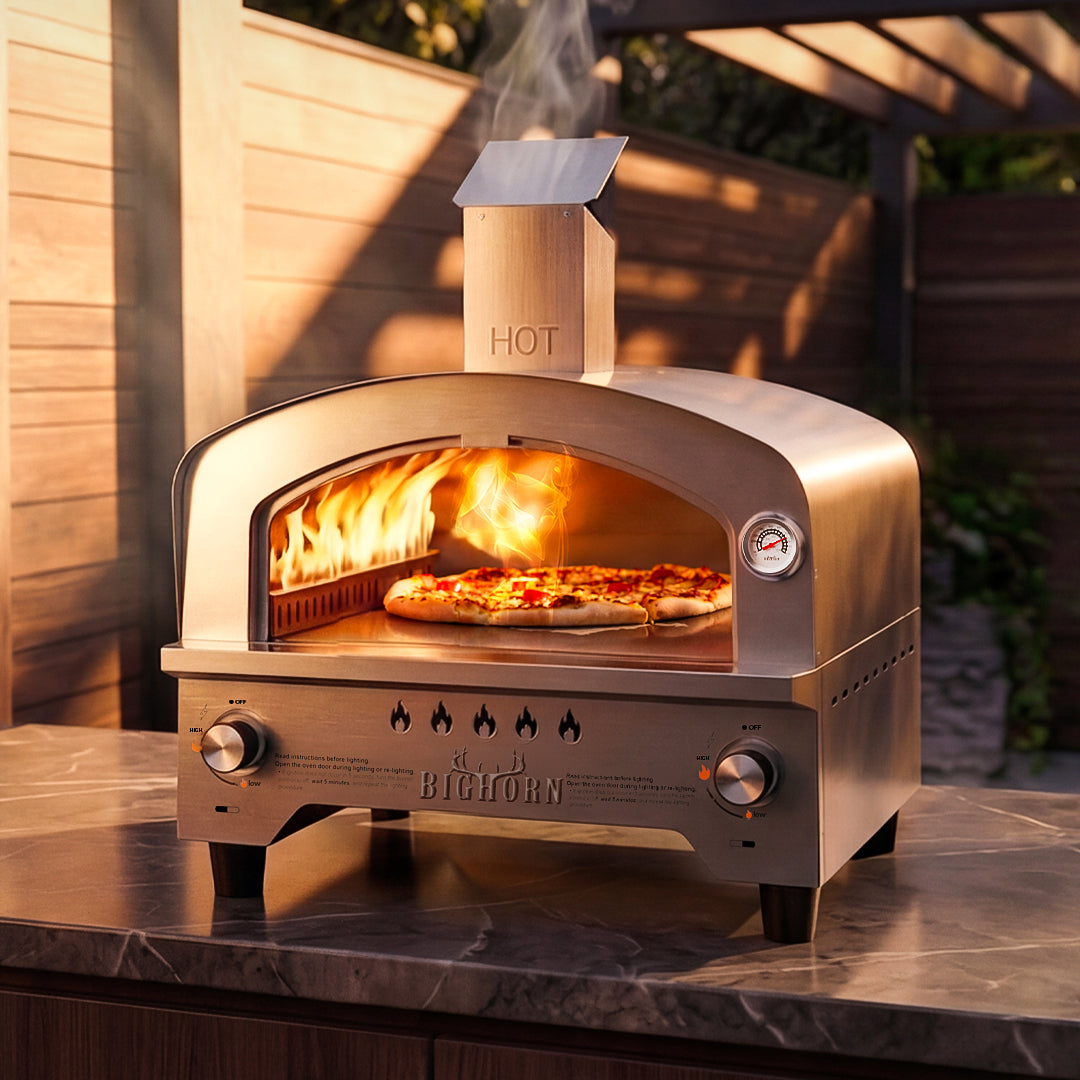
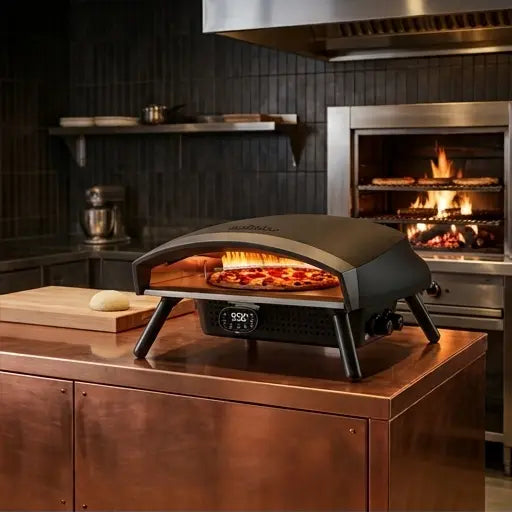
The best gas pizza oven for a beginner is a compact dual-burner model that preheats fast, holds even heat, and bakes a full-size pizza in about a minute. Gas removes fire management from learning: you turn a dial, wait for the thermometer, and bake. The Big Horn 15-inch gas oven reaches about 750 °F in 10 minutes, uses two independent burners totaling 23,000 BTU, and bakes 12–14-inch pizzas in roughly 60 seconds — the right combination for someone learning high-heat pizza.
Why gas suits a beginner
Gas is the easiest fuel for a first pizza oven because it preheats on its own and holds a steady temperature with a dial. There is no fire to build or manage, and a built-in thermometer tells you when the stone is ready. That removes the two variables that most commonly ruin early bakes — a cold stone and wild temperature swings — so you can focus on dough and technique.
What to look for in a beginner gas oven
- Fast preheat — around 10 minutes keeps the first cook quick.
- Even heat — dual, independently controlled burners spread heat across the stone, so pies brown evenly.
- Full-size deck — a 14.7-inch cooking area fits 12–14-inch pizzas, enough for a family.
- Readiness signal — a built-in thermometer or clear gauge removes guesswork.
- Simple cleanup — a removable stone and a wipe-clean shell keep maintenance low.
Speed and consistency matter more than a headline peak temperature for someone learning the craft.

How the learning curve works
The first few bakes are about the oven, not you: preheat fully, watch the thermometer, and pull the pizza when the rim blisters. After a couple of sessions with a simple cheese or margherita pie, you have internalized the heat; from there, dough handling and topping balance become the skills that improve. Gas’s consistency is exactly what lets a beginner build that mental model without fighting the appliance.
How do you avoid the most common beginner mistakes?
Three habits prevent most early failures: preheat fully and trust the thermometer, keep toppings light, and launch with confidence so the pizza does not stick. A fourth is patience — give the first few pizzas room to teach you the oven’s hot spots. Gas consistency means the mistakes are almost always technique, which makes them easy to fix next round.
What else can a gas pizza oven cook?
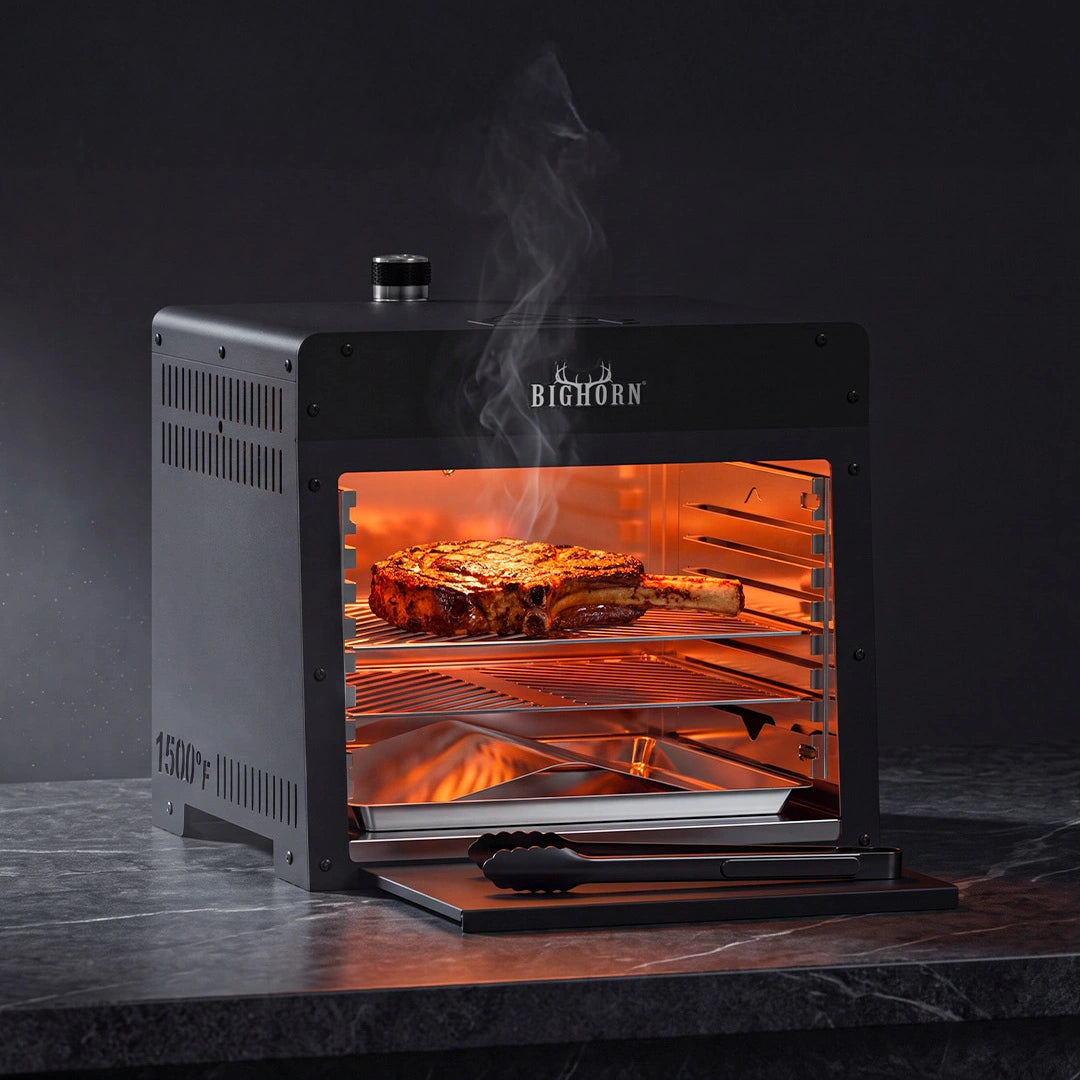
Beyond pizza, a 700°F+ gas oven handles steak, chicken, fish, vegetables, and flatbreads. The high, steady heat sears proteins and roasts vegetables quickly, which turns the unit into a general-purpose outdoor cooker rather than a one-dish appliance. For a beginner, that versatility means the oven earns its place beyond pizza night — a factor worth considering when you choose the fuel.
How do you care for a gas pizza oven between uses?
Let the stone cool, brush off residue, wipe the shell, and cover the unit. Check the gas connection before each session and keep the burner area clean of drips. A five-minute cool-down routine keeps the oven ready and extends the life of the stone and stainless body.
Why choose gas over electric as a first oven?
Gas reaches higher heat faster than most electric countertop ovens, which is what produces the blistered crust that feels like a real pizza oven. It runs outdoors on propane, which suits a patio setup, and the dial-and-thermometer control is intuitive for a beginner. The trade is that gas needs a fuel supply and outdoor use, while electric is plug-in and can sit indoors. If you have a patio and want the authentic experience, gas is the stronger first choice.
How do you set up a beginner gas pizza oven?
Setup is simple but worth doing carefully: place the oven outdoors on a stable, non-combustible surface with clearance from walls and overhangs, connect the propane according to the manual, and leak-check the connection. Confirm the burner lights evenly, then preheat fully before the first bake. A stable surface, a tight gas connection, and a full preheat remove the three most common early frustrations.
How do you know gas is the right first fuel?
Gas is the right first fuel if you want the least learning curve around heat: dial ignition, steady temperature, and a thermometer remove the part of pizza making that frustrates beginners most. If you already cook with propane for a grill, gas adds no new fuel routine. If you strongly want smoke flavor from day one, consider a pellet model instead, but expect a slightly longer learning curve. For fastest progress on dough and technique, gas leads.
How does the 15-inch gas oven compare to other sizes?
A 15-inch dual-burner unit with a 14.7-inch cooking area fits 12–14-inch pizzas and gives a family-size path in one bake. Larger decks hold more, but preheat slower and cost more; a smaller 12-inch unit is cheaper and faster but limits pie size. For a beginner household, the 15-inch size is the practical center: big enough to matter, small enough to afford and store.
How do you troubleshoot the first few bakes?
The first few gas-oven bakes follow a short troubleshooting loop. Pale base? The stone was cold, so preheat fully. Burnt rim with a raw center? The bake ran too hot or long, so lower the heat and rotate earlier. Stuck to the peel? The dough sat too long or the toppings were wet, so build fast and dust the peel. Gas holds temperature so consistently that almost every early failure traces to one of these three, and each has a single-variable fix.
What is the learning path after the first successes?
Once your basic pizzas come out reliably, expand in controlled steps: change one variable at a time — dough hydration, topping moisture, bake time. Then attempt a second style like a pan or thinner crust. The oven’s consistency means each experiment isolates the variable, which is exactly what accelerates improvement.
How do you store a gas pizza oven between uses?
Storage is straightforward: let the oven cool fully, empty any crumb tray, wipe down the shell, and cover the unit out of the weather. Disconnect or protect the regulator and hose so they stay dry, and check them before the next session. A dry, covered store extends the life of the stainless body and keeps the burners clear for a reliable next bake.
Beginner gas pizza oven FAQs
Is gas easier than electric for a beginner?
Both are beginner-friendly. Gas reaches higher heat faster and feels like a real outdoor pizza oven; electric is plug-and-play with presets. Choose gas if you want outdoor-style heat and are comfortable with propane.
How long does it take to preheat the 15-inch oven?
Around 10 minutes to reach about 750 °F. The built-in thermometer tells you when the stone is ready rather than guessing by time.
What should a beginner bake first?
A simple cheese or margherita pizza with light toppings. It is fast, forgiving, and teaches you the heat before you complicate the recipe.
For the current specs and included accessories, review the 15-inch dual-burner gas pizza oven product page before you start.