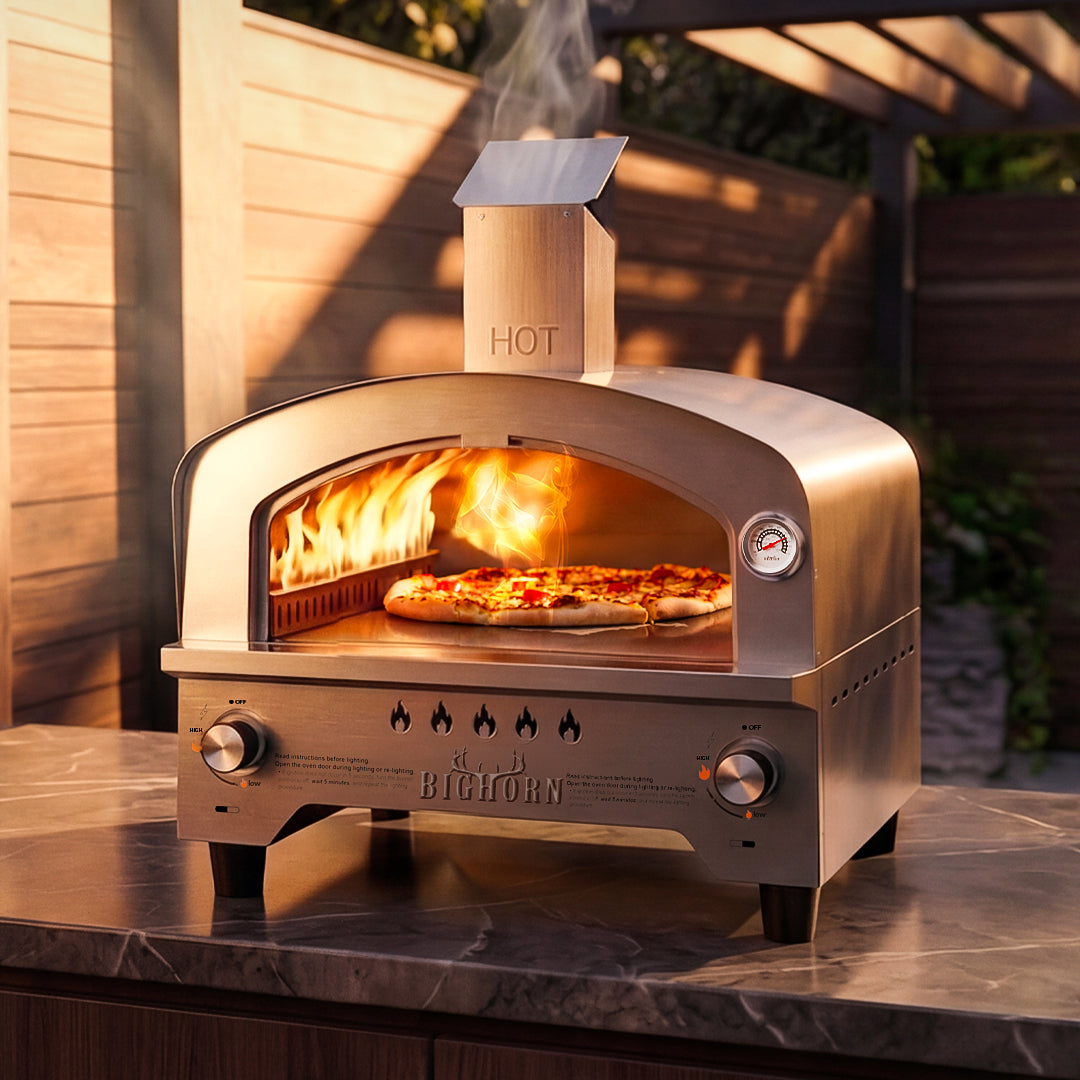
The short answer: a gas pizza oven wins on convenience, fast preheat, and consistent dial-controlled bakes, while a charcoal pizza oven wins on smoky, live-fire flavor at the cost of lighting, heat management, and cleanup. Both can bake excellent pizza — Big Horn’s 15-inch dual-burner gas oven reaches about 750°F in about 10 minutes, while a charcoal-fired build rewards patience with wood and charcoal character — so the real choice is between convenience and flavor ritual. This comparison covers heat, flavor, effort, and cost, and ends with the questions that decide the fit.
This is a brand-owned comparison; Big Horn specifications are traceable to the official product listings.
The real differences that matter
Three differences decide the comparison: flavor, convenience, and cleanup. Gas burns clean and adds no smoke, so the pizza tastes like the dough and toppings; charcoal (and wood) adds smoke and a live-fire character that gas cannot reproduce. Gas lights with a dial and preheats in about 10 minutes; charcoal needs lighting, a settled coal bed, and heat management without a dial. And gas leaves no ash, while charcoal leaves ash and embers to clean up. Neither is “better” — they are two different pizza experiences.
Understanding the fuel before you decide
A gas pizza oven runs on propane with a burner and dial control: connect and leak-test the tank, light the burner, preheat, and bake. A charcoal pizza oven burns charcoal or wood in a firebox; you build the fire, wait for a settled bed of glowing coals, and manage heat with airflow and fuel. The gas session is repeatable and predictable; the charcoal session is a live-fire ritual that rewards attention and rewards flavor.
Head-to-head: heat, flavor, and convenience
| Factor | Gas pizza oven | Charcoal pizza oven |
|---|---|---|
| Heat-up | About 10 minutes (15-in dual-burner) | 20–40 minutes to a settled coal bed |
| Flavor | Clean burn; taste of dough and toppings | Smoky, live-fire character |
| Control | Dial-controlled, repeatable | Airflow and fuel management |
| Effort | Light and preheat | Build, tend, and manage the fire |
| Cleanup | No ash; stone and body care | Ash and embers after the session |
Read the table as a trade-off: gas buys speed and consistency, charcoal buys smoke and ritual. Match the fuel to the pizza experience you want each session to be.
What each option does best
- Gas does convenience. Fast preheat, dial control, repeatable bakes, no ash — the weekday and party workhorse.
- Charcoal does flavor. Smoke and live-fire character that gas cannot copy, for cooks who enjoy tending a fire.
Where most comparisons go wrong
Most comparisons rank flavor against convenience as if one were objectively better. A charcoal oven is not “better” because it adds smoke; it is better for the cook who wants that flavor and accepts the ritual. The second error is ignoring the real session: a charcoal oven asks for 20–40 minutes of attention before the first pizza, which is fine for a weekend ritual and wrong for a Tuesday dinner. Decide what a typical pizza night looks like, then compare fuel.
How to match the choice to your cooking style
- Weeknight pizza. Choose gas: preheat in about 10 minutes and bake consistently.
- Weekend live-fire ritual. Choose charcoal or wood for the smoke and the experience.
- Parties with back-to-back pies. Gas recovers quickly; charcoal needs steady fire and fuel management.
- First pizza oven. Gas is the lower-effort entry; charcoal is the flavor upgrade you may want second.
Cost and longevity perspective
Gas ovens have a clean running cost (propane refills) and a simpler maintenance picture (burner and stone care, no ash). Charcoal ovens often cost less to buy but run on a consumable — charcoal and firewood — that you buy repeatedly, and they need ash cleanup and dry fuel storage. Longevity in both cases depends on care: protect the gas burner and ports, keep a charcoal firebox clear of buildup, store the stone dry, and cover the oven between seasons.
The decision rule in one paragraph
Choose a gas pizza oven if convenience, speed, and repeatable bakes matter most; choose a charcoal pizza oven if smoky live-fire flavor is the reason you are cooking outdoors and you enjoy the ritual. Big Horn’s lineup covers the gas side with the 15-inch dual-burner oven; for charcoal, the live-fire format is the flavor path. Match the fuel to how you want each pizza session to feel, and the answer stops being a debate.
See the gas pizza oven lineup and current prices. 15-inch gas pizza oven · gas pizza oven collection
FAQ
Are charcoal pizza ovens good?
Yes, for cooks who want smoky, live-fire flavor and enjoy fire management. A charcoal oven adds smoke and high heat that gas cannot copy, but it needs 20–40 minutes to a settled coal bed and ash cleanup after. It is a weekend-ritual tool rather than a weekday workhorse.
Which type of pizza oven is best?
There is no single best type. Gas wins on convenience and repeatability, charcoal and wood win on smoke and flavor, pellet sits between with wood-fired character and more control than a log fire, and electric suits indoor use. Define your fuel preference, space, and how often you cook, then match the format.
Are gas pizza ovens worth it?
Yes for most home cooks: a gas oven preheats in about 10 minutes, bakes consistently with dial control, and leaves no ash, which makes it the highest-use pizza oven for weeknights and parties. If smoky flavor is the whole point, a charcoal or wood oven may be worth the extra effort.
Is wood or charcoal better for a pizza oven?
Wood adds a more pronounced smoke character and is traditional in live-fire ovens; lump charcoal is easier to control, lights predictably, and produces a clean, steady coal bed with less flame management. Many cooks start with lump charcoal, then add hardwood once the fire feels natural. The right fuel is the one that matches your patience and flavor preference.