

Cleaning an infrared grill is a step-by-step routine that protects the part that makes it different: the ceramic emitter. Cool the grill, wash the grates, clear the emitter gently when cool, and empty the drip tray — in that order, with the gas off and the unit cool. The routine takes minutes after each cook and protects the infrared burner from the aggressive cleaning that damages it. This guide walks through each step and the mistakes to avoid.
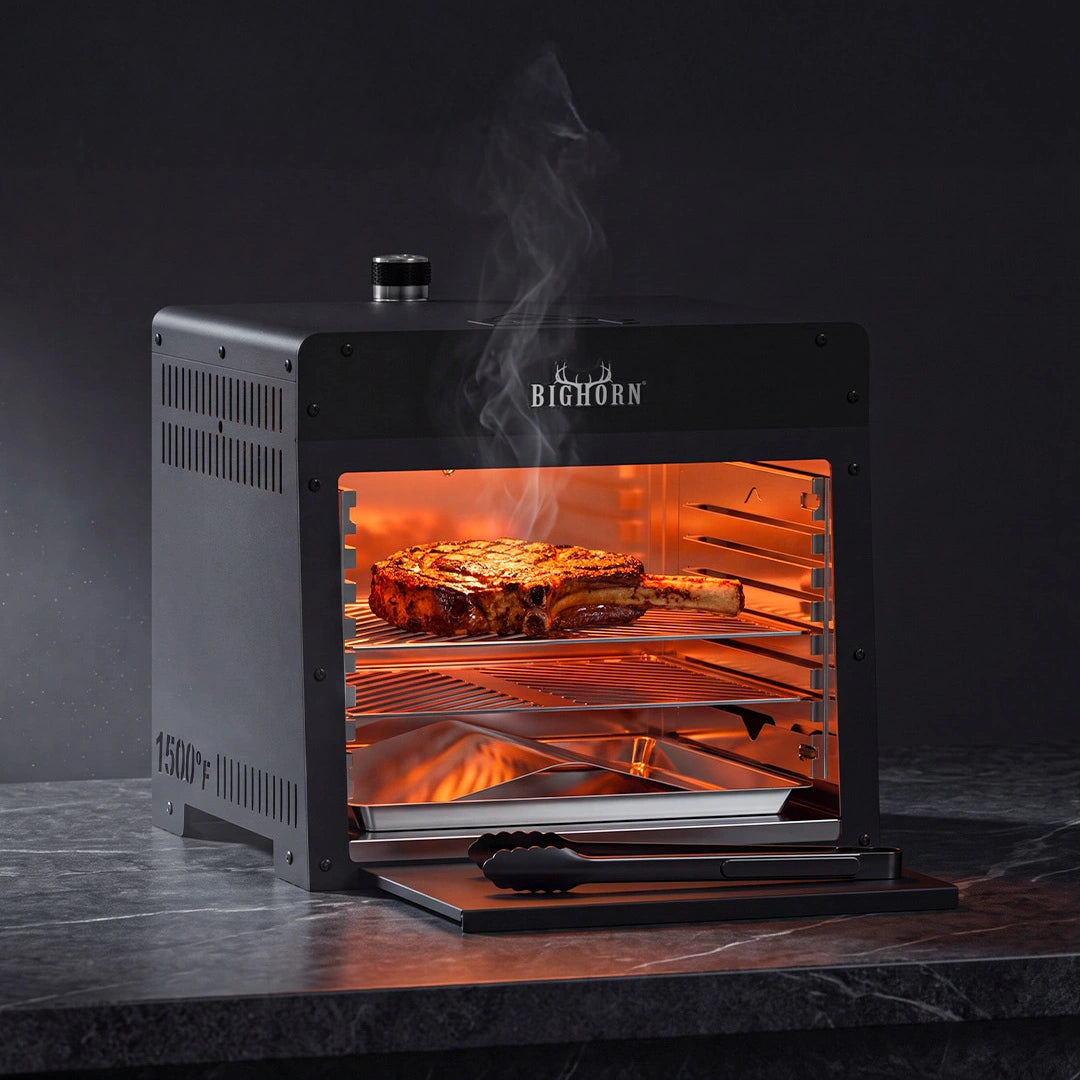
These are general infrared grill cleaning steps for a grill like the Big Horn 16-inch portable broiler; follow the manual for model-specific care.
Step 1: Cool the grill and shut the gas
Start with the grill cool and the gas off. Turn off the tank, let the unit cool completely, and then begin. Cleaning a warm infrared grill is a mistake on two fronts: a warm emitter can ignite cleaning residue, and thermal shock from cold water can damage parts. Cool, gas off, then clean.
Step 2: Wash the cooking grates
Remove the grates and wash them with warm, soapy water, then dry them fully before returning them. On the Big Horn 16-inch broiler, the detachable stainless grates clean quickly and are dishwasher-safe; hand-washing also works. The grates are the part that touches food, so they get the regular clean; the emitter is handled more gently.
Step 3: Clear the ceramic emitter gently
With the unit cool and the gas off, brush loose debris off the ceramic emitter with a soft brush. Never scrape it aggressively — the emitter is the part that radiates the heat, and a damaged surface creates hot spots and uneven sears. Clear residue gently and avoid poking at the emitter with metal tools. This is the infrared-specific step that protects the grill’s core.
Step 4: Empty the drip tray and wipe the body
Empty and wash the drip tray after each cook so grease does not smoke or flare on the next preheat. Wipe the body with warm, soapy water and dry it. Keeping the drip system clear is what prevents smoke on the next cook and protects the stainless finish.
Common mistakes and how to avoid them
- Cleaning while warm. A warm emitter can ignite residue and thermal shock can damage parts; cool fully first.
- Scraping the emitter. Aggressive cleaning damages the ceramic surface; brush gently.
- Soaking the emitter. Liquids on the emitter can affect the heat; brush dry per the manual.
- Skipping the drip tray. Grease buildup smokes and flares on the next cook; empty it regularly.
- Forgetting the gas check. After cleaning near the gas system, leak-test the connection before the next light.
What to do when it does not go right
If the grill smokes on the next preheat, the drip tray or body still has grease — empty and wipe again. If the sear is uneven, check the emitter for residue or damage and clear it gently. If the flame behaves oddly, the gas connection may need a leak test after cleaning. Most issues trace to a dirty tray, a blocked emitter, or a gas check skipped after cleaning.
Realistic expectations and results
A clean infrared grill sears evenly and smokes less: the grates are clean, the emitter is clear, the drip tray is empty, and the gas system is checked. Expect the routine to take minutes after each cook and to protect the infrared burner — the part that is easy to damage with aggressive cleaning. The grill that is cleaned cool, gently, and per the manual is the one that cooks the same every time.
The takeaway in one paragraph
Clean an infrared grill in four steps: cool the grill and shut the gas, wash the grates, clear the ceramic emitter gently when cool, and empty the drip tray and wipe the body. The emitter is the infrared-specific part — treat it gently, never scrape or soak it — and the drip system is what prevents smoke on the next cook. Clean cool, gas off, and per the manual, and the infrared grill sears evenly all season.
See the infrared grill and the care accessories. Big Horn portable infrared broiler · infrared grill collection
FAQ
Is an infrared grill worth the money?
Yes for cooks who will use the high-heat searing mode: fast preheat, hard crust, and fewer flare-ups justify the price for steak-heavy cooking. If you mostly smoke or slow-cook, a smoker or conventional grill is the better buy.
Can I cook hamburgers on an infrared grill?
Yes — burgers cook well on the upper racks, searing 60–90 seconds per side and pulling the ground beef to 160°F. Keep them together and flip once, moving lower if the surface finishes before the center.
Can I use Dawn dish soap to clean my grill?
On the body and the grates, warm soapy water is fine; keep dish soap off the ceramic emitter and follow the manual. Rinse and dry so residue does not affect the flame or the emitter.
Can you boil water on an infrared side burner?
An infrared grill is built for high-heat searing, not for holding a pot of boiling water the way a dedicated side burner does. Use a conventional burner for boiling; the infrared zone is for the sear.