







Care & Troubleshooting
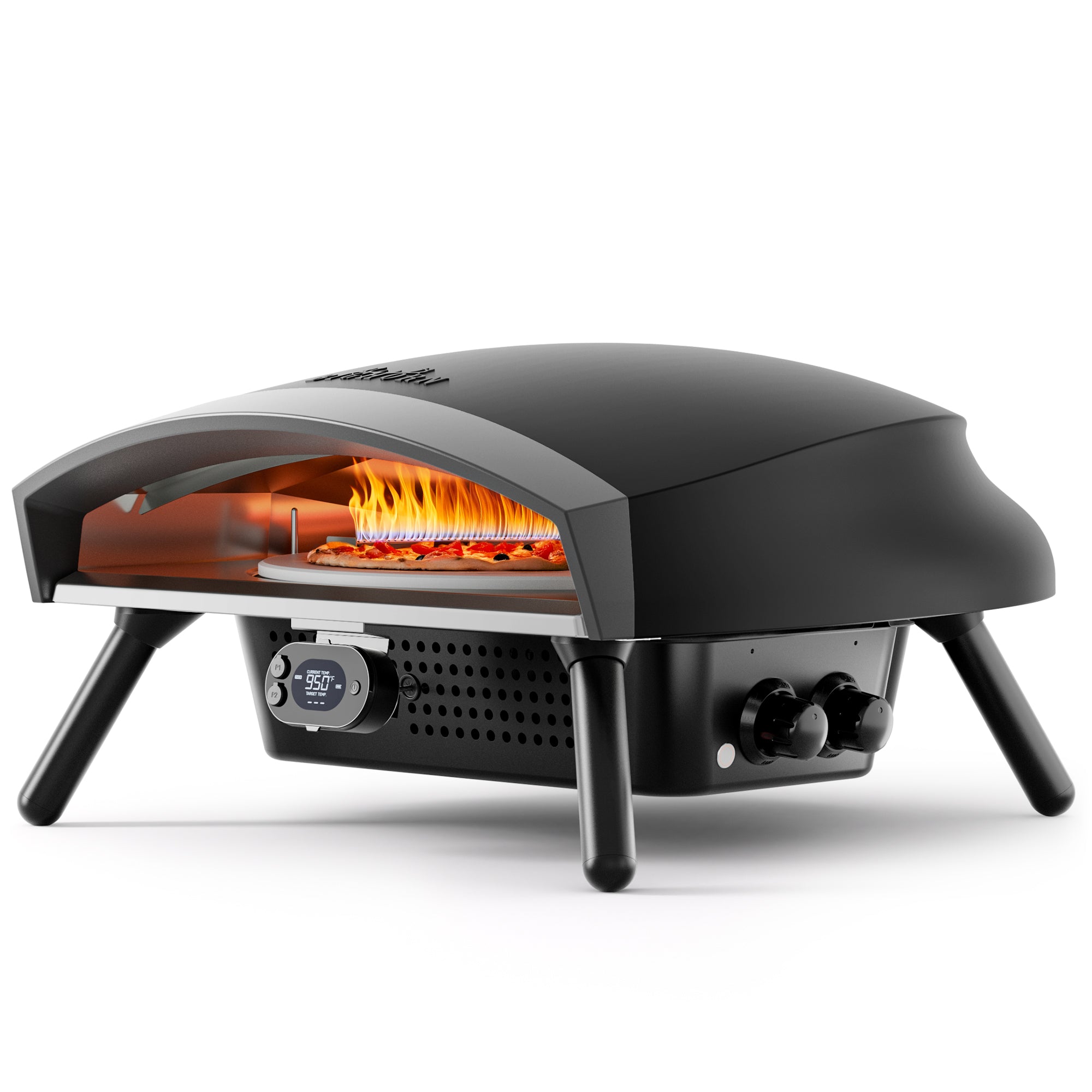
Yellow flames on a gas pizza oven can mean incomplete combustion, debris, wind, or a regulator problem. A brief yellow flicker at light-up can be normal; a sustained sooty flame is not a seasoning color. Keep the oven outdoors, and stop if first checks do not clear it.
Flame color basics
A healthy propane flame is often mostly blue, sometimes with a small yellow tip, once the burner is running cleanly. A tall, lazy, yellow or orange flame, especially with soot on the deck or a sharp fuel smell, can point to incomplete combustion. Incomplete combustion can produce carbon monoxide, which is why this is a safety check, not only a cosmetic one. EPA carbon monoxide information, CDC carbon monoxide information, and CPSC carbon monoxide information explain the CO hazard; use those official pages rather than a forum diagnosis.
Confirm the oven you actually own on the current 16-inch gas outdoor pizza oven listing, and browse the gas pizza oven collection if you need the category view. Published BTU or wattage notes are not a flame-color guarantee. The gas pizza oven guides hub is the slower category companion; this article is the first-check list for a yellow flame.
Debris, wind, and regulator causes
Spider webs, grease, or debris at a burner port can change the flame. Wind can also lift or yellow a flame that looks fine in still air. A regulator that is not seated, a low cylinder, or a hose kink can starve the burner and change the color. Start with those obvious, external checks before you think about "adjusting" anything inside the oven.
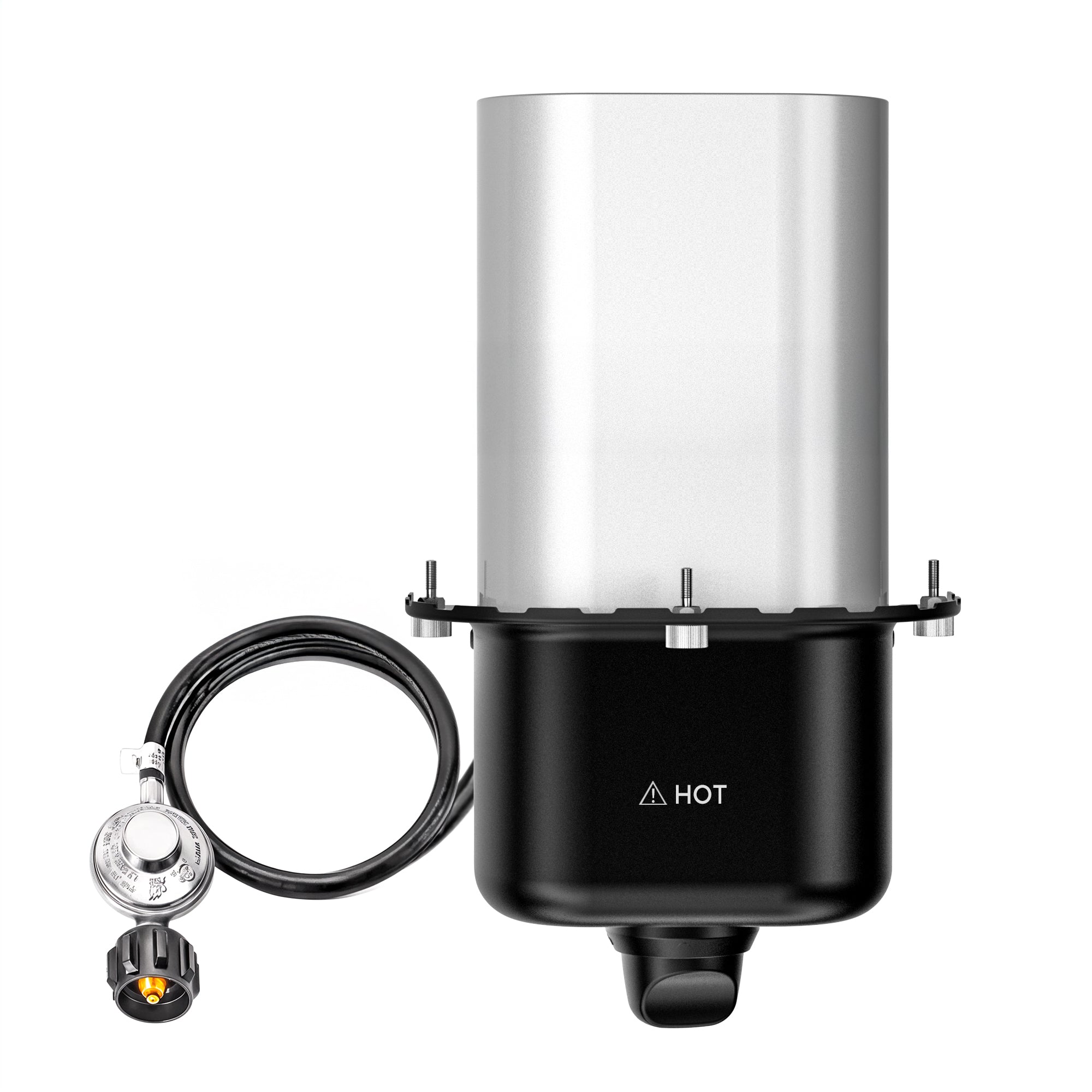
Use only a hose and regulator the live listing and the manual name. The current propane gas burner with regulator and hose is a compatibility question, not a license to swap parts at random. Confirm variants on that page, and keep propane cylinders, regulators, and leak checks beside the first inspection.
Safe first checks
Work outdoors, with the oven off and cool enough to inspect safely, unless the manual shows a brief, watched lighting check. Confirm the cylinder has fuel, the valve is open, the regulator is seated, and the hose is not kinked or damaged. Leak-check as the manual directs. Clear visible debris only in the way the maker allows. Then light, watch the flame, and shut down if it stays yellow and sooty.
Do not enlarge an orifice, do not ignore a gas smell, and do not move the oven into a garage to "see the color better." NFPA grilling safety and U.S. Fire Administration cooking-fire prevention still apply: an attended appliance, a clear area, and a unit that stays outside. National Weather Service wind safety is useful if a gust is obviously washing the burner.
The table below is a first-check order, not a repair procedure.
| What you notice | First direction |
|---|---|
| Brief yellow at light-up that turns mostly blue | Often a short transition; keep watching, and stay outdoors |
| Sustained yellow or orange flame, soot, or a fuel smell | Shut down, check cylinder, regulator, hose, and visible debris, then relight once |
| Flame looks worse in a gust and better in still air | Move to a calmer outdoor pad; do not box the oven in |
| Color does not improve, or you find damage or a leak | Stop and contact support; do not modify the burner |
When to stop for service
Stop when the first checks are done and the flame is still yellow and lazy, when soot is staining the deck or the food, when you smell fuel you cannot clear, or when a part is damaged. Cooking through a bad flame is not a shortcut. Ready.gov home fire guidance is a general fire-preparedness reminder; a yellow flame that will not clear is a service problem.
Is it safe to cook with a yellow flame? A brief flicker at ignition is not, by itself, a reason to panic. A sustained yellow, sooty flame is a reason to stop, because incomplete combustion can produce carbon monoxide and can leave soot on the food and the oven. Do not treat this article as a permission slip to keep baking.
Prevention
Store the oven so bugs and debris are less likely to enter the burner path, following the current cover and storage notes. Keep a current cylinder and a hose in good condition. Light and inspect at the start of a season, not for the first time at a party. Official food handling still applies once the flame is healthy, including finish temperatures and leftover refrigeration.
A kitchen gas range and an outdoor pizza oven are not the same appliance, even when people search for yellow stove flames. The color logic is similar, but the manual, the regulator, and the outdoor wind are different. Use the oven's current instructions, and do not copy a range-top screw adjustment onto a portable pizza burner.
What color should the flame be? After a short start-up, look for a mostly blue flame with a stable shape under the deck. Orange from wind-blown dust can come and go; orange that stays, with soot, should send you back to the checklist.
A flame-color walk-around
Before the next bake, inspect the hose and regulator, confirm the pad is outdoor and reasonably still, and watch the first flame. If it is mostly blue and stable, preheat honestly and cook. If it is not, shut down and use the checklist, then call support rather than inventing a burner adjustment.
If you cook with a yellow flame anyway, you are accepting soot on the stone and a higher chance of incomplete combustion. That is not a technique tip. Shut down, fix the cause, and only then return to a simple pie with official food temperatures still in force.
Key takeaways
- A mostly blue flame is the usual healthy look; a sustained yellow, sooty flame is a stop-and-check signal.
- Start with cylinder, regulator, hose, wind, and visible debris; do not modify an orifice.
- Keep the oven fully outdoors. Incomplete combustion can produce carbon monoxide.
- If first checks do not clear the color, contact support rather than baking through it.
Confirm the current 16-inch gas outdoor pizza oven listing and a compatible propane gas burner with regulator and hose, and keep propane cylinders, regulators, and leak checks beside the first inspection.
FAQ
Why is my gas stove getting yellow flames?
A kitchen range and an outdoor pizza oven are not the same appliance. On a gas pizza oven, a sustained yellow flame can point to incomplete combustion, debris, wind, or a regulator problem. Use the oven manual, not a range-top adjustment copied from a stove forum.
What color should the flame in a gas oven be?
After a short start-up, look for a mostly blue, stable flame. A brief yellow flicker at light-up can happen. A tall, lazy, yellow or orange flame with soot is a stop-and-check signal.
How to fix an orange flame in a gas stove?
On this outdoor oven, start with the cylinder, regulator, hose, wind, and visible debris, then relight once. Do not enlarge an orifice or invent a burner screw setting. If the color will not clear, stop and contact support.
Is it safe to cook with a yellow flame?
A brief flicker at ignition is not, by itself, a reason to panic. A sustained yellow, sooty flame is a reason to stop, because incomplete combustion can produce carbon monoxide and can leave soot on the food and the oven.
More to Read
Leftover Holiday Turkey on the Grill or in the Pizza Oven: Sandwiches, Tostadas and a White Pie
Give leftover turkey a second heat, not another roast: grill sandwiches or tostadas, or bake a white pie, after a safe leftover inventory the night...
Parrilla Taco Night: Carne, Salsas and Grate Space for a Crowd
Run taco night on a parrilla as a grate-space plan: carne, a second protein, a salsa station, and tortillas held soft, without one crowded fire.
Bone-In Lamb Leg or Shoulder on a Santa Maria or Gas Grill
Grill a bone-in lamb leg or shoulder as a roast: Santa Maria height or a gas two-zone fire, a USDA safety floor, and a probe that does not touch bone.
