







Camping Stoves & Fuel
The wet-morning failure is usually a drip, not a recipe. The stove is under a low fly, steam has nowhere to go, and a puddle is already forming where the cook has to stand. People start asking whether they should just boil water in the vestibule. That is the wrong question. Cooking on a camping stove in the rain is a ventilation and drip problem first, and the safe answers stay outdoors.
Rain cooking is a ventilation and drip problem first
Cooking on a camping stove in the rain is a ventilation and drip problem first. Raise a tarp high enough for steam and flame, keep the sides open, and cook in a dry zone, never in a closed tent. Watch drip lines and standing water underfoot. A low, sealed fly is not a kitchen.
Rain itself does not make a camp stove illegal. Enclosing the exhaust, standing in runoff, or letting a sagging tarp drip into a pot or a burner does make the cook unsafe or miserable. EPA's carbon monoxide overview is the official reason a stove stays in the open air. Weather.gov flood safety and Ready.gov flood guidance are also a reminder that rising or standing water under a kitchen is a reason to move, not a reason to tough it out.
Tarp height, open sides and a steam path
A tarp over a stove has two jobs: keep rain off the cooktop and let steam and exhaust leave. Height is how you get both. The fabric should sit well above the pot and the flame, and the sides should stay open so a cloud does not hang around your face or the burner. This article will not publish a single height in inches, because stoves, pots, and tarp rigs differ. If you have to stoop into steam, or if the fabric is close enough to scorch or sag into the pot, raise the tarp or take the kitchen down.
A windward wall can help keep rain off the flame, but a fully boxed, low shelter is the wrong direction. Weather.gov wind-safety guidance is useful when the rain is also moving sideways; it does not ask you to seal the stove in. Use tie-outs and poles the site allows, and keep guy lines out of the walking path to the stove.
A dry zone for the stove, the cook and the plates
Draw a small dry zone and keep the stove, the cook's feet, the fuel, and the plates inside it. The zone is not the entire tarp footprint. It is the area that is not under the drip edge and not in a puddle. Plates and bread live there so they do not sit in rain between the pot and the table. Fuel stays there so you are not changing a cartridge in the mud.
If the only flat table is under a heavy drip, move the table or add a gutter by tightening the tarp so water runs to a corner away from the kitchen. Cold weather can pile onto rain; cold-weather camping-stove tips and cold-weather fuel, setup, and wind cover the temperature side. This page stays with rain, steam, and footing.
What not to do under a low fly
Do not cook in a tent, a closed vestibule, or a car. Do not run a stove under a fly so low that the fabric can scorch, melt, or collect a steam ceiling. Do not trap yourself between the stove and a wall of wet nylon with no exit. Do not set a cartridge or a tank in a puddle, and do not ignore a burner that is being rained on hard enough to fight the flame.
NFPA grilling fire-safety guidance and U.S. Fire Administration cooking-and-fire prevention are official outdoor-cooking starting points. They assume open air and an attended stove. A low fly does not change those habits; it only adds a drip problem you have to solve without stealing the air.
How this differs from pizza-oven rain go/no-go
A pizza oven in wet or cold weather is a different appliance, with a stone, a chamber, and a cover meant for a cold oven. That is what using a pizza oven in winter, wood-pellet fire control and a recovering stone, and building and keeping a stable pellet-oven fire are for. This page is a camp stove under a tarp, not an oven in a rain-soaked backyard.
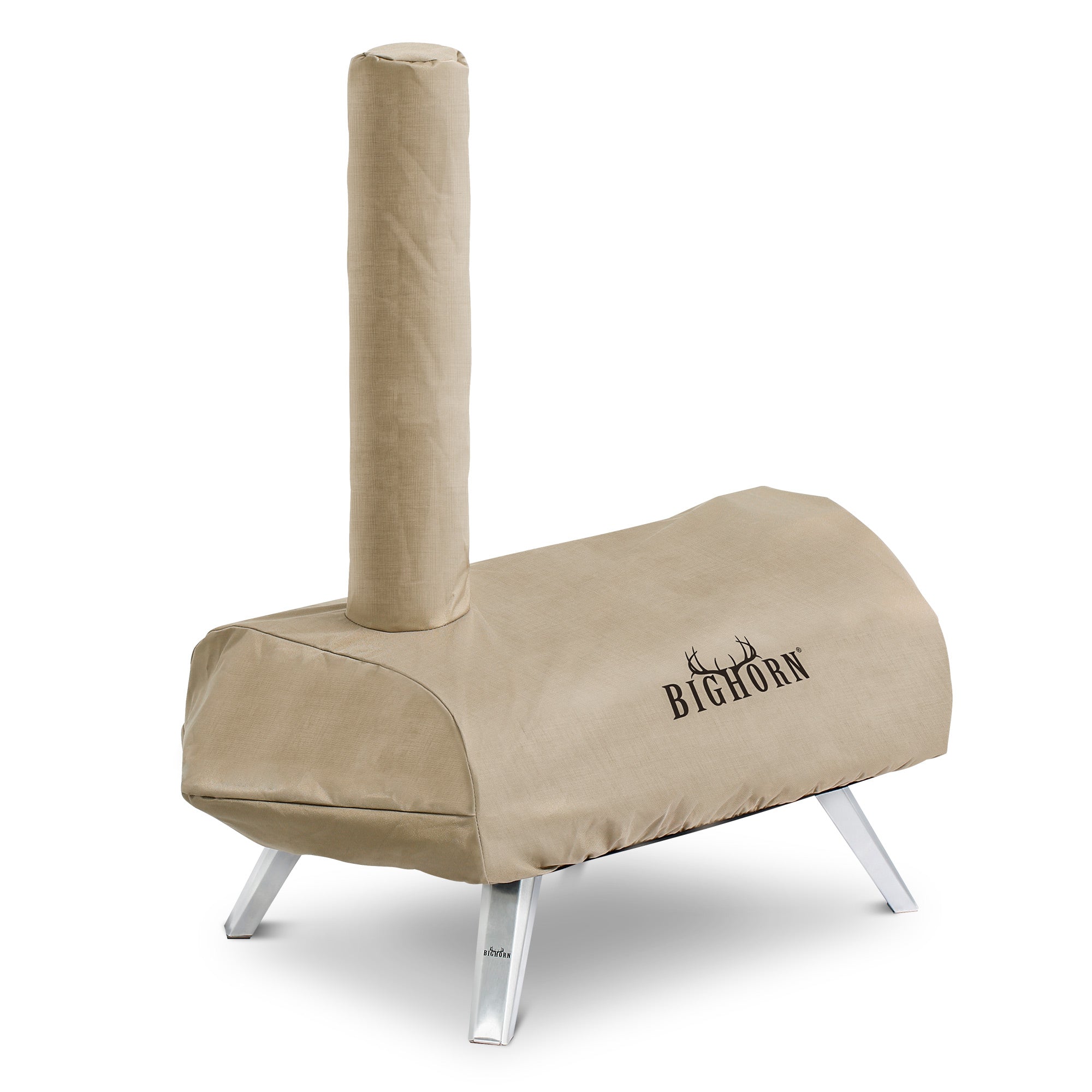
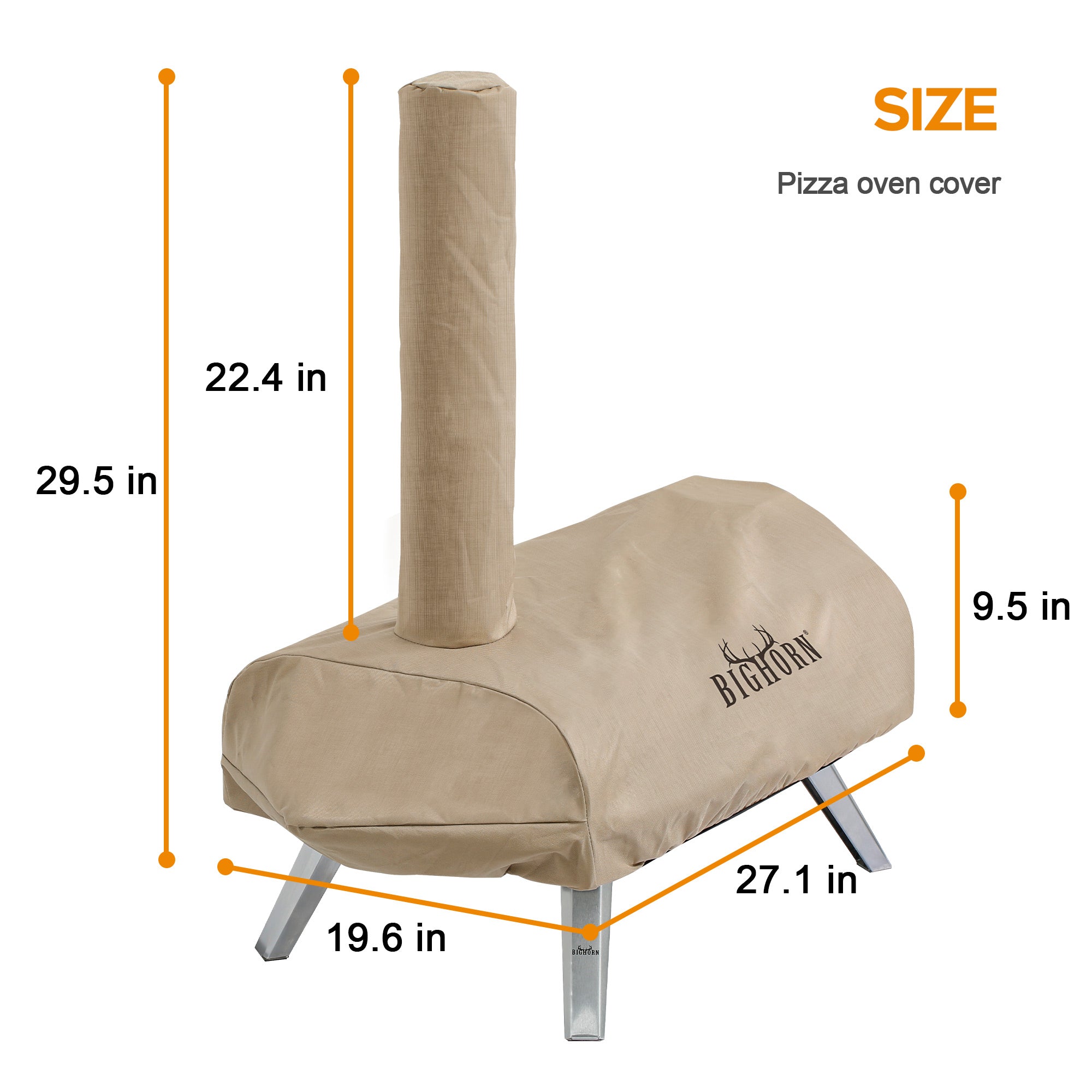
The cover in the photographs is an Oxford fabric lid for a 16-inch pizza oven. It is here because it is the product this plan can show, and because it is a useful contrast: a fitted cover belongs on a cold oven, not over a live camp burner, and it is not a substitute for a high, open tarp.
A rainy breakfast plan
Plan a shorter menu that can live in the dry zone: a kettle or coffee, one skillet, and food that does not need a long, uncovered boil. Queue the pans so the stove time is short. Set the tarp and the drip line before anyone is hungry, and keep a no-cook backup in the bin if the rain turns into standing water.
| Rainy-breakfast piece | How it helps | Skip it if |
|---|---|---|
| Kettle or coffee first, then a skillet | Keeps the cook short and the steam bursts limited. | The tarp is too low to take even a short steam column. |
| A pre-packed dry-zone kit: plates, spoons, a towel | Stops the table from turning into a wet scatter of gear. | You would have to stand in a puddle to reach it. Move the zone instead. |
| A no-cook backup | Ends the morning safely if ventilation or footing fails. | Never skip this because the forecast "looked light" when you left home. |
Ready.gov food guidance is a plain reminder that a safe meal can be a simple one when conditions are poor.
A ground-water and drip line so the cook is not standing in a puddle
Look at the ground before you light the stove. Water should run away from the kitchen, not into it. The drip line from the tarp edge should fall outside the place you stand and outside the fuel. If you are already in a hollow, move now. A board, a mat, or a table can help only if it is stable and not floating a puddle toward the stove.
This is the detail that makes the rest of the method real. A high tarp with open sides still fails if the cook is standing in runoff, reaching across a wet fuel bottle. Set the drip line, set the dry zone, then light. If you cannot do those three things, do not cook on the stove until you can.
A recap of who this method is for, and who should use a different cooker
This method is for a car-camper or tailgater who needs to cook on a camping stove in the rain without moving the burner into a tent. It is not a pizza-oven weather go/no-go, not a flood-evacuation guide, and not a reason to seal a low fly around a live flame.
If you cannot raise a tarp with open sides and a dry place to stand, use a no-cook meal or wait. If your cooker is a pizza oven, use the oven weather pages and the oven cover, not this tarp plan. The safe rainy kitchen is still an outdoor kitchen: high enough, open enough, and dry enough underfoot.
The photos show a 16-inch pizza oven Oxford fabric cover, which is a weather cover for a cold oven, not a camp tarp. Use it as a reminder that rain gear has to match the appliance, then build a ventilated dry zone for the stove itself.
FAQ
Is it safe to cook under a tarp?
It can be, if the tarp is high enough for the flame and the steam, the sides stay open, the stove is in a dry zone, and you are not in a tent or a closed vestibule. A low, sealed fly that traps exhaust is not a kitchen. Cooking on a camping stove in the rain is a ventilation problem as much as a weather problem. If you cannot keep a clear path for steam and a clear drip line, wait or use a no-cook meal.
How high should a tarp be over a camping stove?
High enough that the fabric is well clear of the flame, the pot, and the steam, with open sides so exhaust can leave. This page will not invent a height in inches that fits every stove and every tarp. If the fly is close enough to scorch, sag into the pot, or hold a cloud of steam around your face, it is too low. Raise it or cook elsewhere. A pizza-oven rain cover, like the one in the photos, is a different accessory for a cold oven, not a tarp height formula.
Where should I stand when cooking in the rain?
Stand in a dry zone that is not a puddle and not under a drip line from the tarp edge, with a clear exit away from the stove. Keep the fuel and the plates in that same dry zone, not in a wet basin at your feet. If the only place to stand is in runoff, move the kitchen. The stove can be slightly sheltered; you still need stable, drained footing.
Can I cook on a camping stove inside a tent in the rain?
No. A tent, a closed vestibule, or a sealed camper without the ventilation the appliance requires is the wrong place for a camp stove, rain or not. Carbon monoxide and fire risk are the reasons, not a preference for fresh air. Park the idea of a "quick boil in the fly" and keep the cook outdoors, under a high, open tarp if you use one.
More to Read
Leftover Holiday Turkey on the Grill or in the Pizza Oven: Sandwiches, Tostadas and a White Pie
Give leftover turkey a second heat, not another roast: grill sandwiches or tostadas, or bake a white pie, after a safe leftover inventory the night...
Parrilla Taco Night: Carne, Salsas and Grate Space for a Crowd
Run taco night on a parrilla as a grate-space plan: carne, a second protein, a salsa station, and tortillas held soft, without one crowded fire.
Bone-In Lamb Leg or Shoulder on a Santa Maria or Gas Grill
Grill a bone-in lamb leg or shoulder as a roast: Santa Maria height or a gas two-zone fire, a USDA safety floor, and a probe that does not touch bone.
