
If you're shopping for your first pizza oven, the decision usually comes down to fuel. Gas ovens are popular for convenience and consistent results, while wood pellet ovens are popular for their smoky, wood-fired character. At Big Horn Outdoors, we make pellet and outdoor cooking gear, so we'll keep this comparison practical and honest.
This guide walks through the differences so you can choose without overthinking it.
Gas vs. Wood Pellet Pizza Oven: Quick Answer
For most beginners who want the easiest first cook, gas is the safer choice. If smoky, live-fire flavor matters more to you than convenience, choose wood pellet. A multi-fuel oven covers both, but at a higher price and with a little more setup.
Gas Pizza Ovens: Pros, Cons, and Best Uses
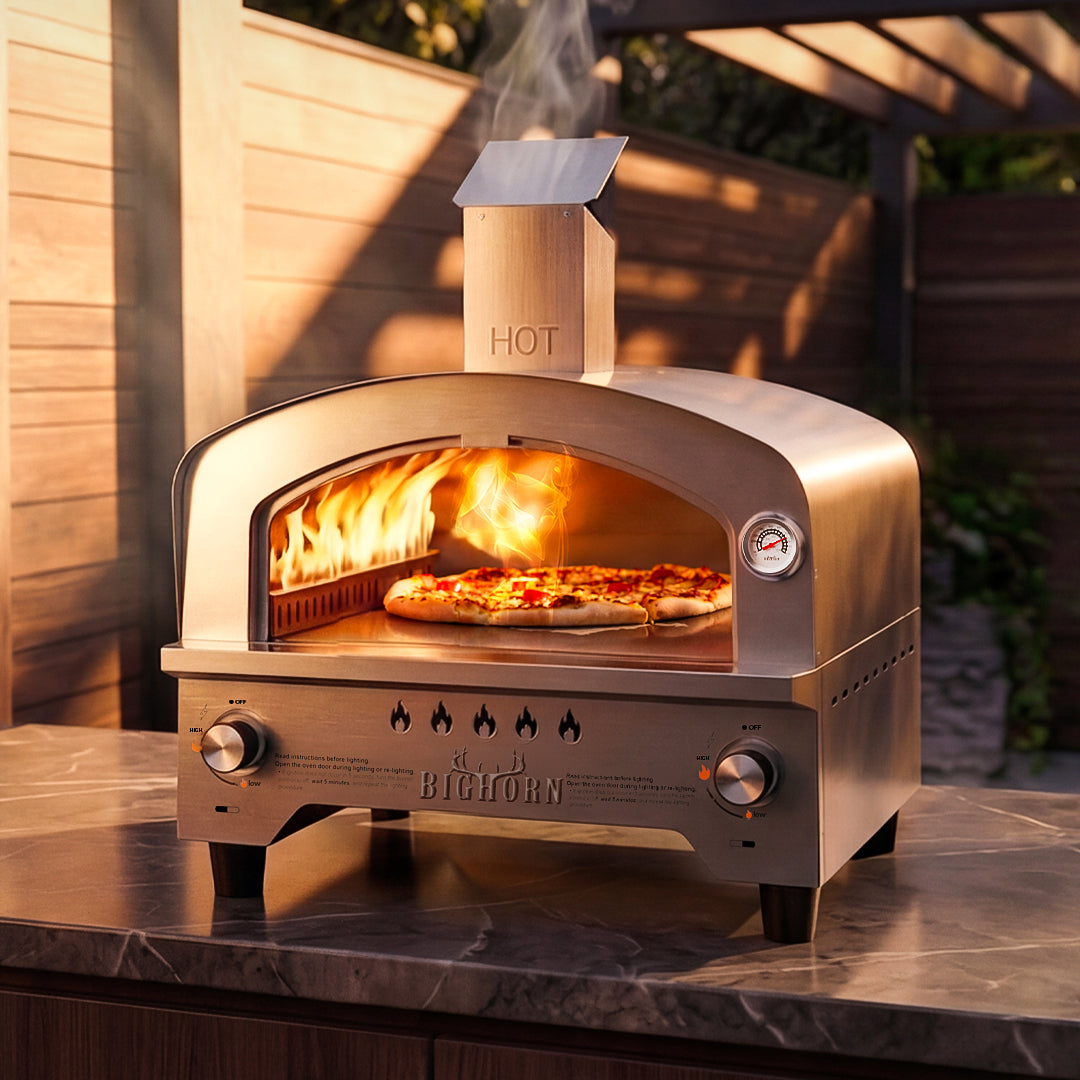
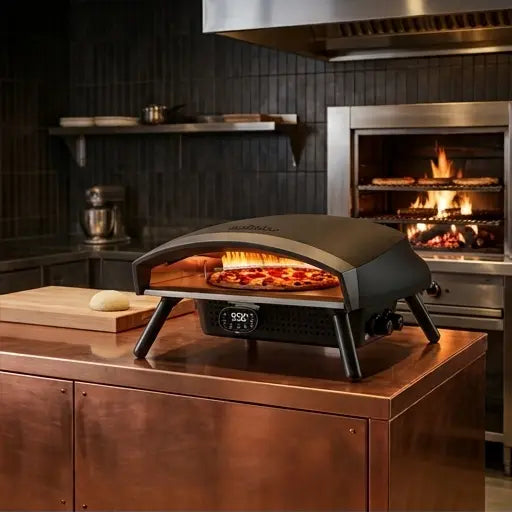
A gas pizza oven runs on propane or natural gas, with a burner positioned under or around the baking stone. Most models use push-button ignition and a dial, which makes temperature control more predictable.
Pros:
- Quick ignition and generally shorter preheat
- More repeatable temperature control
- Minimal ash cleanup
- Consistent results across back-to-back pizzas
Cons:
- Requires a propane tank or gas line
- Flavor profile is cleaner and more neutral rather than smoky
- Outdoor wind can still affect performance
Best for: weeknight cooking, first-time owners, and cooks who want predictable results.
Wood Pellet Pizza Ovens: Pros, Cons, and Best Uses
A wood pellet pizza oven burns food-grade wood pellets in a burn chamber, heating the oven floor and dome. Pellet ovens are simpler to manage than a full log-fired oven while still delivering live-fire cooking.
Pros:
- Noticeable wood-fired aroma and flavor
- Easier than splitting logs or managing a full fire
- Compact and portable for backyard, camping, or tailgating
Cons:
- Longer preheat and heat recovery between pizzas
- Requires dry pellet storage
- Needs ash cleanup after cooking
- Usually more sensitive to wind than gas
Best for: flavor-focused cooks, weekend gatherings, and anyone who wants wood-fired results without managing full-size logs.
Gas vs. Pellet Pizza Oven Comparison
| Factor | Gas Pizza Oven | Wood Pellet Pizza Oven |
|---|---|---|
| Temperature control | Usually more precise and repeatable | Requires fuel and airflow management |
| Preheat time | Varies by model; often shorter | Varies by model; often a bit longer |
| Heat recovery between pizzas | Often more consistent | Can vary with pellet feed and fire strength |
| Wind sensitivity | Can be affected outdoors | Usually more sensitive to wind |
| Flavor profile | Clean, neutral heat | Light wood-smoke character |
| Workflow | Ignite, preheat, cook, cool down | Light pellets, stabilize the flame, cook, clear ash |
| Cleanup and maintenance | Wipe surfaces and inspect the burner | Empty ash, keep pellets dry, clean the burn area |
| Fuel storage | Propane tank or gas line | Dry, sealed pellet storage |
| Best buyer profile | Convenience-first beginners | Flavor-first beginners |
Which Pizza Oven Is Easiest for Beginners?
Answer these three questions before deciding:
- How many pizzas do you usually make at one time?
- Do you have a balcony, HOA, lease, or local open-flame restrictions?
- Do you care more about cooking quickly or about wood-fired flavor?
Choose gas if you want the shortest learning curve and the most repeatable results. Choose pellet if you enjoy the live-fire process and are comfortable with a little extra fuel and ash management.
Which Pizza Oven Has Better Flavor?
"Better" depends on what you want. Gas produces clean, consistent heat that lets toppings and crust technique stand out. Wood pellets can add a subtle smoky, live-fire character. Neither is universally better — it's a preference, not a rule.
Gas vs. Pellet: Cost, Cleanup, and Fuel Storage
- Purchase cost: Both vary widely by model. Factor in useful accessories such as a pizza peel and an infrared thermometer.
- Running cost: Depends on local propane and wood pellet prices.
- Cleanup: Gas is mostly a surface wipe plus an occasional burner check. Pellet adds ash removal and keeping the burn area clean.
- Storage: Gas needs a safe place for a propane tank. Pellets need dry, sealed storage to burn properly.
Should You Choose a Multi-Fuel Pizza Oven?
A multi-fuel oven lets you switch between fuels — for example, gas on weeknights and wood or pellets on weekends. The trade-off is a higher price and slightly more setup. It's worth it if you'll use both modes often; it's not necessary for most first-time buyers.
Our Pick for Beginners Who Want Wood-Fired Flavor
If you want the character of wood-fired pizza without managing full-size logs, a compact pellet oven is a practical first step. The Big Horn Outdoors 16-inch wood pellet pizza oven suits buyers who want a portable, dedicated pellet setup in a smaller footprint.
Before buying, check its dimensions, included accessories, fuel requirements, warranty terms, and any local open-flame rules. Then compare it against the rest of the outdoor pizza oven lineup.
Big Horn Outdoors offers a 24-month warranty, 30-day returns, and free shipping on U.S. orders when you buy directly from our site.
Frequently Asked Questions
Is a gas or pellet pizza oven easier for a beginner?
A gas pizza oven is generally easier because ignition and temperature adjustments are more straightforward. A pellet oven has a slightly bigger learning curve, but it's still simpler to manage than a traditional log-fired oven.
Do pellet pizza ovens taste better than gas ovens?
It depends on your preference. Pellet ovens can add a subtle smoky, wood-fired character, while gas ovens offer clean, consistent heat and easier repeatability.
Can I use a pellet pizza oven on a balcony?
Check your lease, HOA rules, local fire code, and the manufacturer's clearance requirements before use. Outdoor cooking rules vary significantly by location.
How long do pellet pizza ovens take to preheat?
Preheat time varies by oven, outdoor temperature, pellet quality, and your target cooking temperature. Follow the manufacturer's instructions and use an infrared thermometer to confirm the stone is ready before launching a pizza.
What is better for cooking several pizzas in a row?
Gas is often more consistent from pizza to pizza because the burner holds a steady temperature. A pellet oven can still work well, but it requires a little more attention to keep the fire and stone temperature stable.
Do I need special accessories?
A pizza peel and an infrared thermometer are useful for both fuel types. For a pellet oven, you'll also want dry pellet storage and a way to remove ash.