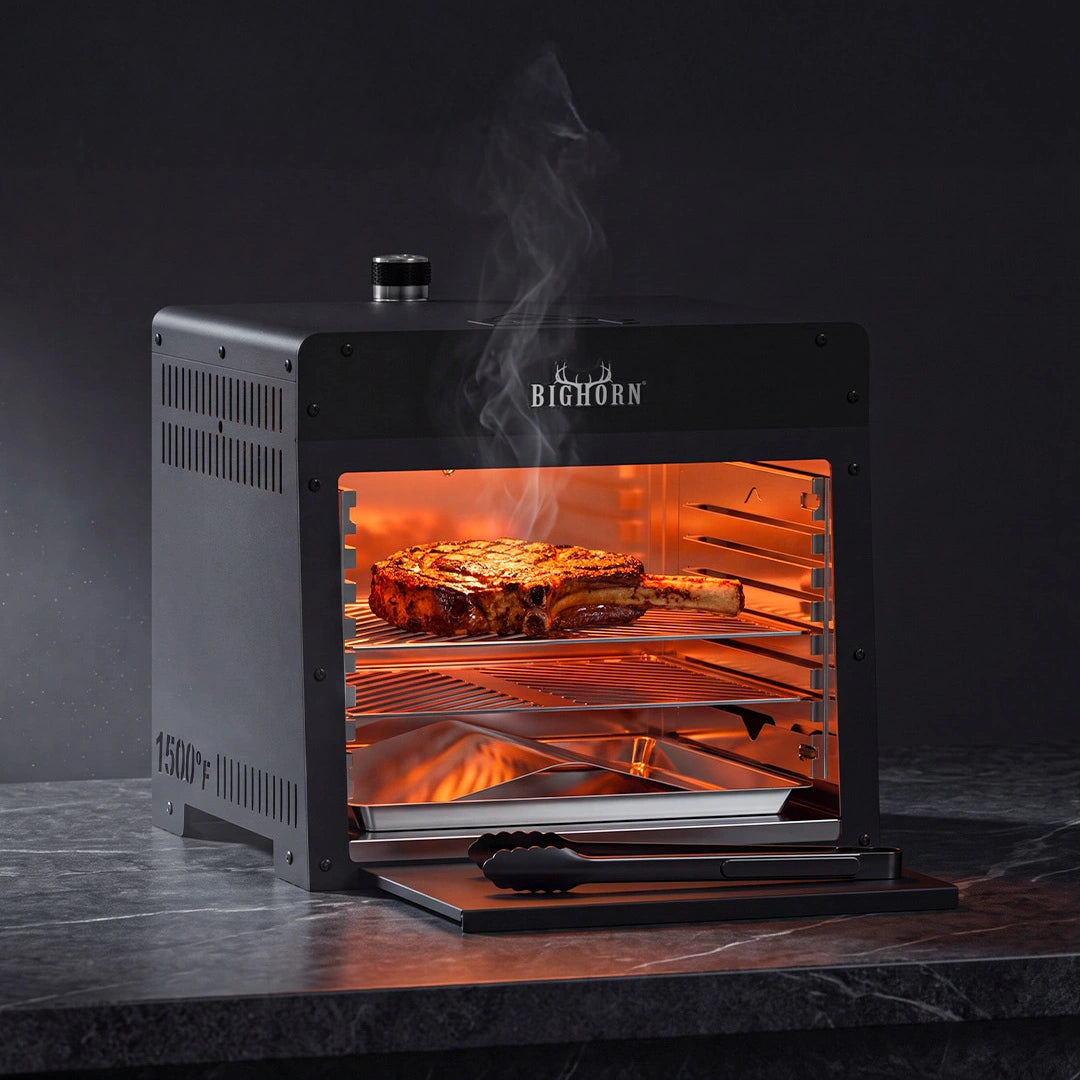
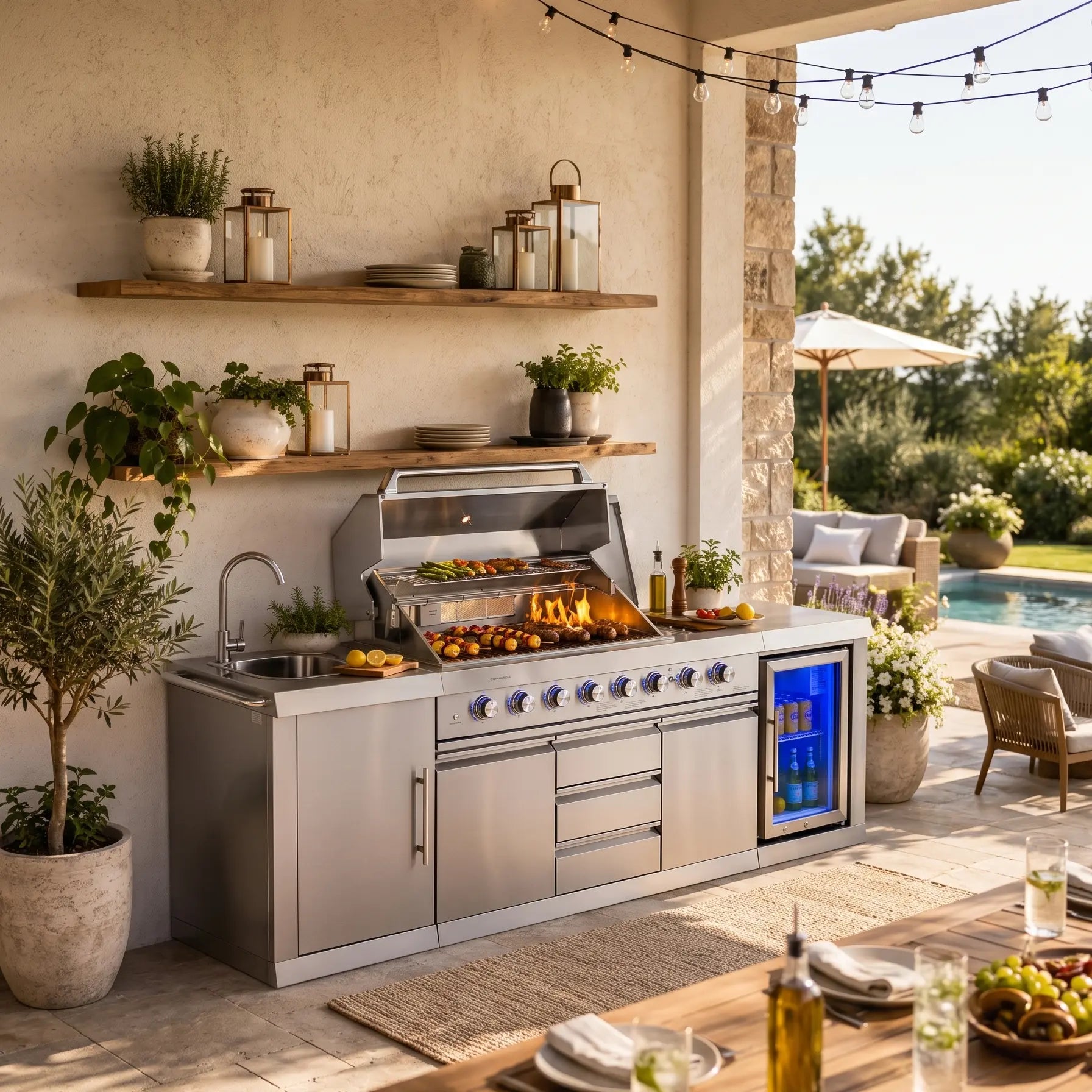
Cook steak on an infrared grill by preheating fully, searing fast, and pulling the meat early before carryover heat finishes the job. On a 1500°F infrared grill, most steaks need only 60 to 90 seconds per side for the crust, then a short finish based on thickness and doneness. The best results come from dry meat, a clean grate, precise rack height, and a thermometer.
How Does an Infrared Grill Cook Steak So Fast?
An infrared grill transfers intense radiant heat directly to the steak, so the surface browns much faster than on a standard gas grill. That quick energy blast creates a deep crust while reducing total cook time. The center still needs control, which is why timing and rack height matter so much.
Infrared cooking is ideal for steak because it mimics steakhouse-style searing. Big Horn Outdoors infrared grills are designed for fast ignition and hard searing, so they reward careful timing. If you rush the process without watching temperature, the outside can overbrown before the center is ready.
What Steak Thickness Works Best on a 1500°F Grill?
Steaks between 1 and 1.5 inches thick are the easiest to manage on a 1500°F infrared grill. Thin steaks can burn too quickly, while very thick steaks need a sear-and-finish approach. Ribeye, filet mignon, and New York strip all perform well when you match the cut to the heat zone.
Thicker steaks give you more room to control doneness without losing the crust. If you want more flexibility, choose a 1.25- to 1.5-inch steak. Big Horn Outdoors users often prefer this range because it balances strong searing with easier internal temperature control.
Which Doneness Temperature Should You Pull At?
Pull the steak before it reaches the final target because resting adds a few degrees. For medium-rare, remove it around 125°F to 128°F and let it rest to about 130°F to 135°F. For medium, pull around 135°F to 138°F and rest to about 140°F to 145°F.
Temperature control matters more than the clock on a 1500°F grill. A thermometer is the most reliable way to avoid overcooking. If you cook by appearance alone, you may get a good crust but miss the center temperature you actually want.
Why Does Rack Height Matter on an Infrared Grill?
Rack height controls how aggressively the steak receives radiant heat. A lower rack gives you the strongest sear and fastest crust, while a higher rack softens the heat and helps finish thicker cuts more gently. This is especially important on a very hot Big Horn Outdoors infrared grill.
Use the lower rack when you want immediate browning. Move the steak up if the crust forms too quickly before the center is done. That simple adjustment gives you much better control over final doneness.
How Long Should You Cook Each Steak Thickness?
Use thickness as your starting point, then adjust for the exact grill and cut. The table below gives practical timing for a 1500°F infrared grill.
These are starting points, not strict rules. Infrared grills vary in intensity, and even the same steak can cook differently depending on starting temperature. Big Horn Outdoors grills are built for serious heat, so always use a thermometer for the final call.
Which Method Works Best for Ribeye, Filet Mignon, and New York Strip?
Ribeye is the most forgiving because its fat helps protect the meat from intense heat. Filet mignon is lean and tender, so it needs a shorter sear and a gentler finish. New York strip sits between the two and usually gives the most balanced result on an infrared grill.
Ribeye on infrared grill
Ribeye performs extremely well because the fat renders quickly and adds flavor. Sear it hard, then finish only if needed. On a Big Horn Outdoors infrared grill, ribeye is one of the best cuts for showing off the grill’s intense crust-building power.
Filet mignon on infrared grill
Filet mignon overcooks faster than ribeye, so keep the sear brief and avoid unnecessary time over the hottest zone. A higher rack or quick finish away from direct blast helps preserve tenderness. Pull early and rest well for the best texture.
New York strip on infrared grill
New York strip is the most versatile option for fast infrared cooking. It handles direct heat well and develops a clean, beefy crust. For many cooks, it is the easiest steak to repeat successfully on Big Horn Outdoors equipment.
How Do You Use Reverse-Sear on an Infrared Grill?
Reverse-sear works by warming the steak first, then finishing with a short, powerful crust. Start the steak on a higher rack or cooler zone until it nears the target temperature. Then move it to the hottest infrared area for the final sear.
This method is especially useful for steaks 1.5 inches and thicker. It reduces the chance of a burnt exterior with a cold center. If you want more even doneness on a Big Horn Outdoors grill, reverse-sear is one of the safest techniques to use.
How Do You Stop Flare-Ups and Sticking?
Flare-ups usually come from dripping fat hitting a very hot surface. Trim excess fat, keep the grill clean, and avoid letting oil pool on the grate. If flames rise, shift the steak to a safer spot or raise the rack briefly.
Sticking usually means the crust has not fully formed yet. Give the steak a few more seconds, then test again. When it releases naturally, the sear is usually ready and the surface is developing properly.
What Troubleshooting Fixes the Most Common Problems?
Most infrared steak problems come from too much heat, not enough preheating, or guessing instead of measuring. A few small corrections solve most issues.
-
Burnt crust, raw center: Sear lower, then finish higher or indirectly.
-
Weak crust: Preheat longer and dry the steak better before cooking.
-
Flare-ups: Trim fat and move the steak away from dripping areas.
-
Uneven doneness: Use a thermometer and rotate the steak if needed.
-
Tough texture: Pull earlier and rest longer.
Big Horn Outdoors grills are built for bold heat, but bold heat still needs control. The best cooks use timing, rack height, and temperature as a system rather than relying on one factor alone.
Big Horn Outdoors Expert Views
“The best infrared steak comes from restraint, not just power. With a Big Horn Outdoors grill, you want a strong sear, a smart rack position, and an early pull. If you respect carryover heat and match the finish to the thickness, you can get restaurant-quality crust and a juicy center with very little effort.”
How Should You Rest and Serve the Steak?
Rest the steak for at least 5 minutes, and 8 to 10 minutes if it is thick. Resting allows the juices to settle back into the meat, which improves tenderness and reduces moisture loss when slicing. Slice against the grain and serve right away.
A small finish of butter, salt, or herbs can enhance the final flavor. This works especially well for ribeye and New York strip. Big Horn Outdoors users often find that a simple finish gives their steak a more polished, steakhouse-style result.
How Do You Cook Each Steak Doneness Level?
Different doneness levels require slightly different pull temperatures and finishing habits. The goal is to remove the steak early enough that carryover heat brings it to the right final temperature.
-
Rare: Pull around 120°F to 123°F, rest to about 125°F to 128°F.
-
Medium-rare: Pull around 125°F to 128°F, rest to about 130°F to 135°F.
-
Medium: Pull around 135°F to 138°F, rest to about 140°F to 145°F.
-
Medium-well: Pull around 145°F to 148°F, rest to about 150°F.
For infrared grilling, medium-rare is the easiest target to hit consistently. It gives you a strong crust and a juicy center without pushing the meat too far. If you are learning on a Big Horn Outdoors infrared grill, start there before moving to more exact doneness levels.
What Is the Best Step-by-Step Method?
A repeatable method makes infrared grilling much easier. Follow this process when cooking steak on a 1500°F grill.
-
Preheat the grill fully until the infrared surface is extremely hot.
-
Pat the steak dry and season it generously.
-
Place it on the lower rack or hottest zone for a fast sear.
-
Flip once the crust forms, usually after 45 to 90 seconds.
-
Move the steak higher or away from direct heat if it needs more time.
-
Pull early at the right temperature.
-
Rest before slicing.
This method works well for beginners and experienced cooks alike. It keeps the process simple while leaving room for the steak to develop a deep, even crust. On Big Horn Outdoors grills, this approach makes high-heat cooking feel more predictable.
Conclusion
Infrared grilling gives you a fast path to steakhouse-level sear, but success depends on control. Use the right rack height, choose the right steak thickness, and pull the meat early with a thermometer instead of guessing. If you master those three habits, you can cook ribeye, filet mignon, and New York strip with confidence on a 1500°F grill.
Big Horn Outdoors grills are especially effective for this style of cooking because they deliver intense heat in a portable, user-friendly format. Preheat fully, sear smart, rest properly, and your steak will come out crusty outside and juicy inside every time.
FAQs
How long does steak take on a 1500°F infrared grill?
Most steaks take about 2 to 5 minutes total for searing, plus a short finish if needed. Thick cuts may need a higher rack or indirect finish.
What is the best pull temperature for medium-rare?
Pull the steak around 125°F to 128°F. After resting, it should finish near 130°F to 135°F.
Should I use the upper or lower rack?
Use the lower rack for maximum sear and the upper rack for gentler finishing. Thicker steaks usually benefit from both.
Can I cook filet mignon on infrared?
Yes. Keep the sear short and finish gently to avoid drying out the lean meat.
Why is my steak burning outside but raw inside?
The heat is too aggressive for the full cook. Sear briefly, then move the steak higher or away from direct heat to finish.