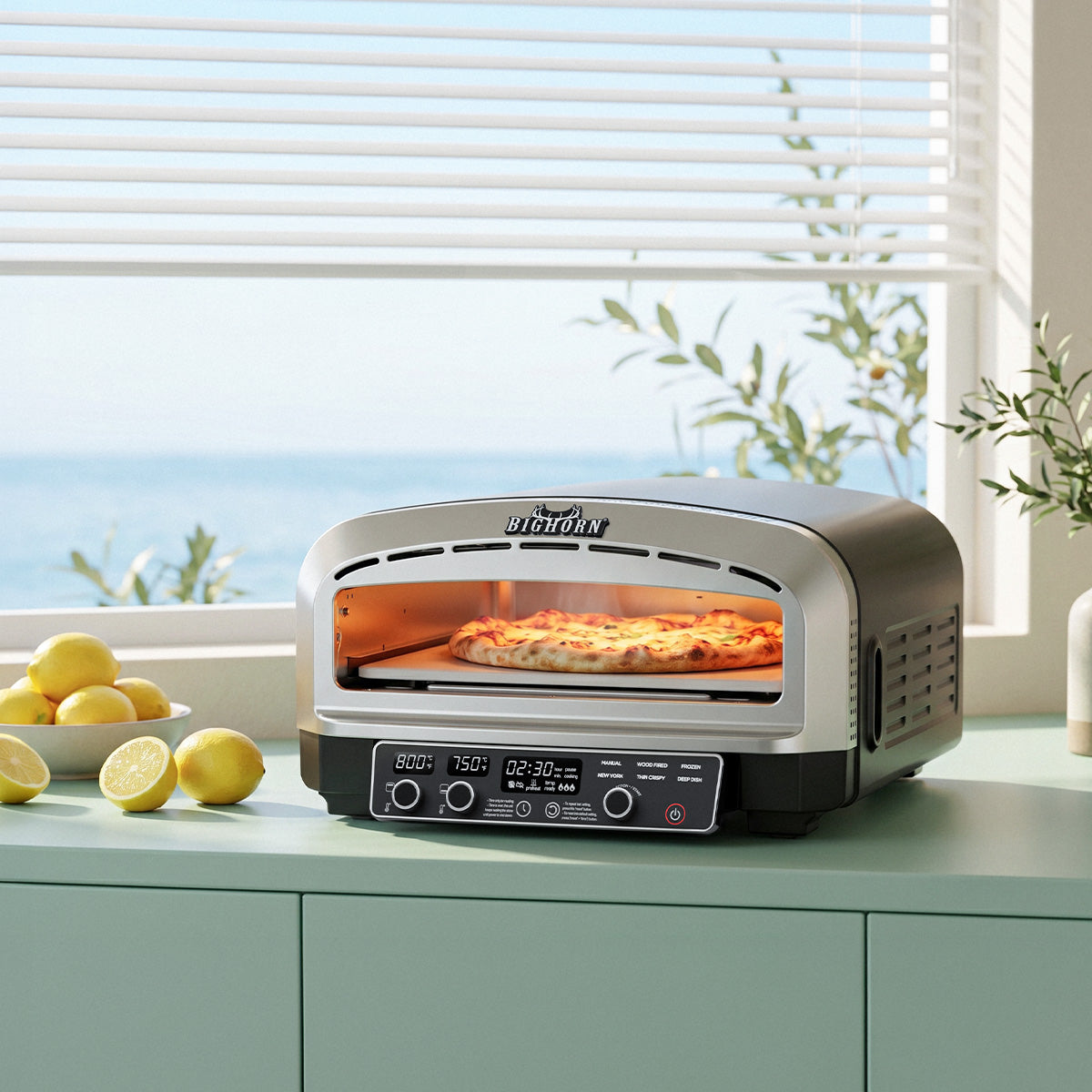
The best home pizza oven balances where you cook, what fuel you can support, and how often you make pizza. If you cook indoors in a kitchen or apartment, a countertop electric model is the practical fit; if you cook on a patio, gas or wood-fired expands the heat window. This guide keeps the decision centered on your actual space and fuel access, then matches the oven type to that baseline — instead of starting from the furthest-reaching oven and working backwards.
How a home pizza oven works
A home pizza oven is a compact, high-heat appliance that replicates commercial performance: an insulated chamber traps radiant heat, and a cordierite stone or steel deck transfers heat directly into the dough while overhead elements or flames cook the toppings. That dual-heat approach produces the leopard spotting and chewy texture of artisanal pizza — something a 500 °F kitchen oven cannot reproduce.
Choosing by space and fuel
Measure your patio, countertop, or storage area first. Gas models need propane tanks or natural gas lines; electric units need a suitable outlet; wood-fired ovens demand outdoor clearance and ventilation. The table below summarizes the practical factors.
| Factor | Consideration |
|---|---|
| Space | Countertop (indoor) vs. patio/RV (outdoor) |
| Fuel | Gas (convenient), electric (indoor-safe), wood (authentic) |
| Portability | Foldable legs, lightweight for travel |
| Capacity | 12-inch pies for families; smaller for singles |
The four main types
Home pizza ovens fall into four categories. Gas ovens offer precise control and rapid heating. Electric models excel indoors with plug-and-play convenience. Wood-fired ovens deliver smoky, authentic flavor but require more skill. Multi-fuel units combine flexibility for varied cooking scenarios. Gas dominates the market for the balance of performance and ease, while electric suits apartments where open flames are not an option.

Heat, stone, and recovery matter most
For pizza, the specs that matter are peak heat (700–950 °F), stone quality, and recovery between bakes. A thick stone holds temperature so consecutive pies bake identically, and fast recovery keeps a group fed. Confirm these rather than the marketing number, because a high peak with poor recovery slows every session.
What size pizza oven do most people need?
Most households need a 12–14 inch deck, which fits a family-size pizza and gives a little turning room. A 10-inch unit suits singles or couples; anything larger adds throughput for regular entertaining at the cost of preheat time and space. Match the deck to the pizzas you actually serve.
How important is preheat time?
Preheat time affects how often you use the oven. A gas unit that climbs in 10 minutes makes pizza a spontaneous dinner; a 20-minute preheat means planning ahead. For busy households, faster preheat is a genuine convenience, not a minor spec.
Can a compact oven still make great pizza?
Yes — compact gas and electric ovens reach the 700–950 °F window the style needs. The limits are capacity and recovery, not quality, so a small oven with a good stone and steady heat makes excellent pizza.
What is the easiest oven for a beginner?
A gas oven with a thermometer or an electric model with presets is the easiest to learn on, because both remove fire management and tell you when the oven is ready. A beginner can focus on dough and toppings instead of heat control. Pellet and wood add flavor but a learning curve around the fire.
How much should you spend on a first oven?
Spend for heat and a good stone first; extras are secondary. A modest oven that holds 750–850 °F and has a thick stone will make great pizza. You can upgrade to a larger deck or multi-fuel flexibility once you know the habit is here to stay.
What separates a great home pizza oven from an average one?
The difference is heat retention and recovery more than peak temperature. A thick stone that holds heat, steady burners or elements, and fast recovery between bakes keep consecutive pizzas consistent. A unit that peaks high but drops between pies slows you down. Check the stone and the recovery, not just the headline temperature.
How do you care for a home pizza oven?
Let the oven cool, brush the stone without soap, wipe the shell, and empty any crumb tray. Keep a cover or dry storage for outdoor units and check fuel or electrical connections. A few minutes of cool-down care keeps the stone and chamber ready for the next session.
Is it worth buying a multi-fuel oven?
Yes if you will genuinely use more than one fuel — pellets for flavor, gas for speed, electric for convenience. If you only ever cook one way, a dedicated single-fuel oven is simpler and cheaper. Buy multi-fuel for the modes you will actually reach for.
What distinguishes a 60-second bake from a 5-minute one?
A 60–90 second bake in a truly hot oven creates the blistered, puffy rim and crisp base that define high-heat pizza, because the dough puffs before moisture escapes. A 5-minute bake at lower heat dries the dough and produces a flatter, cracker-like result. If the quick, blistered style matters to you, the oven’s heat window and stone recovery are the specs to chase.
What outlet and circuit does an electric pizza oven need?
Confirm the wattage and circuit requirements on the product page before you buy. Most countertop electric ovens draw enough power that a dedicated circuit is wise, especially in an older kitchen shared with other appliances. Check that the outlet type and cord reach fit your countertop, and avoid running the oven on an overloaded kitchen circuit. Electrically, the planning is simple — just confirm it before you plug in.
How do you fit a pizza oven into a small kitchen?
Measure the countertop depth and clearance above the oven before buying, since a high-heat unit needs open space around it for heat to escape. Flip-up or compact models take less permanent space and store away after use. Keep the stone and peel within reach, and leave room for a landing board. With a little measurement up-front, even a small kitchen fits a capable pizza oven.
What is the fastest way to improve your first home pizza?
Fix the stone temperature first. A fully preheated stone cures pale bases, speeds the bake, and puffs the rim — three symptoms at once. Hold preheat discipline for a few sessions, keep toppings light, and build the pizza quickly on a floured peel. Most first-pizza problems shrink before you change anything else.
Home pizza oven FAQs
Can I bake good pizza in a compact oven?
Yes — compact gas and electric ovens reach the 700–950 °F window the style needs. The limit is capacity and recovery, not capability.
What is the best fuel for an apartment?
Electric, because it needs no flame or ventilation and fits a standard countertop with the right outlet.
Which oven type is easiest to learn on?
Gas with a thermometer or an electric model with presets removes heat management, making either the fastest path for a beginner.
To compare options by fuel and size, review the pizza oven collection.