
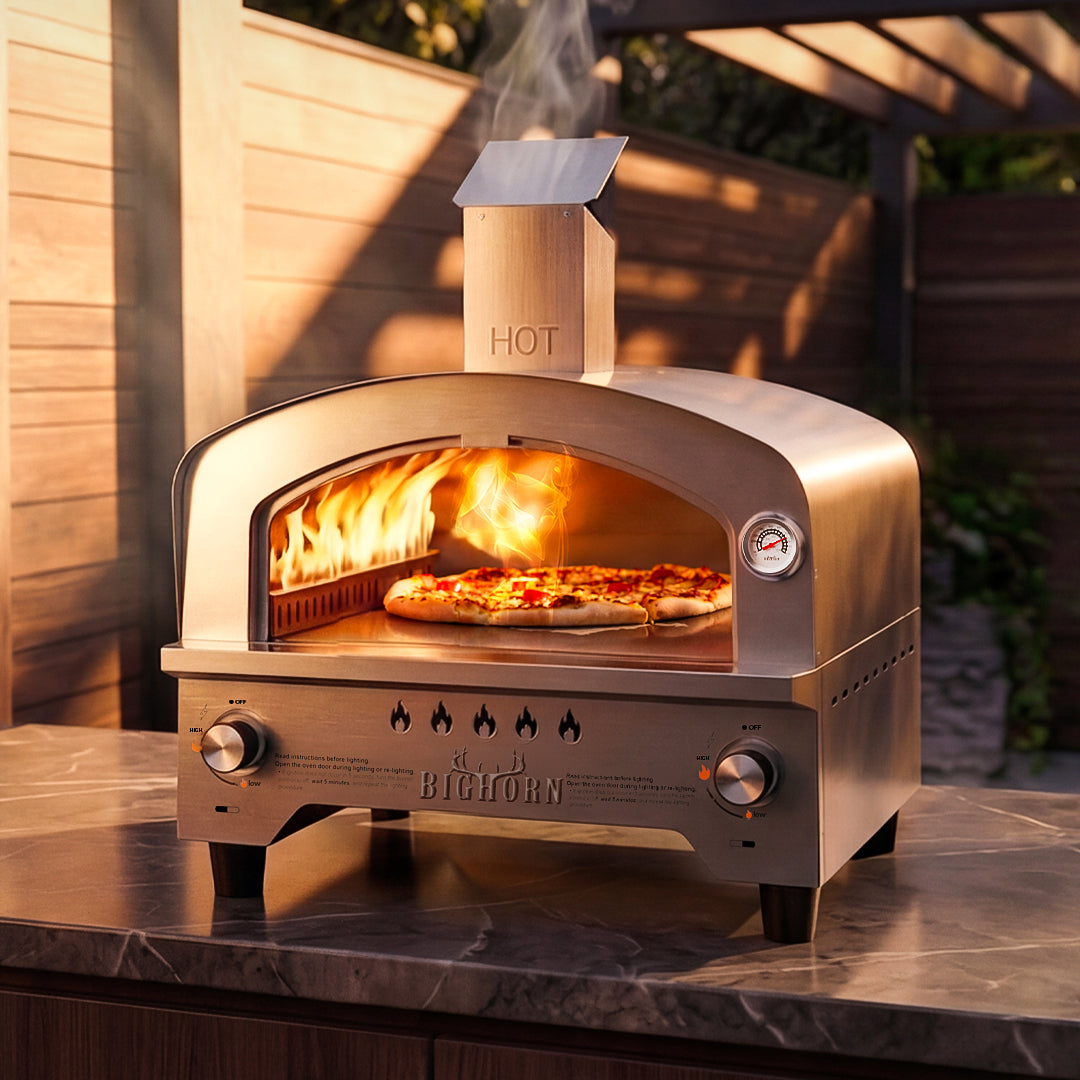



A gas pizza oven takes about 10 minutes to reach cooking temperature. The Big Horn Outdoors 15-inch gas oven reaches 750°F in about 10 minutes and tops out at 1,070°F. That is faster than a wood or pellet oven.
Typical Heat-Up Time
A gas pizza oven takes about 10 minutes to reach 750°F. The Big Horn Outdoors 15-inch oven reaches that temperature quickly because gas ignites and climbs fast.
Gas is the fastest fuel for a pizza oven, because there is no fire to build and no pellets to feed. You light the burners and the heat climbs quickly. 10 minutes is the expected preheat for this oven.
Why Does the Stone Need Longer Than the Air?
The stone heats more slowly than the air, because it is dense and absorbs heat gradually. A hot flame does not mean the stone is ready.
The air heats fast, but the stone needs time to soak up heat and bake the base. Give the oven the full 10 minutes so the stone is hot, not just the air. The stone temperature is what matters for the crust.
What Slows Down the Preheat?
Cold weather and wind slow the preheat, because they strip heat from the oven. Shielding the oven keeps the 10-minute window.
Wind and cold ambient air force the oven to work harder to reach temperature. Position it out of the wind and in a sheltered spot. Wind is the main thing that stretches a gas oven's preheat.
How to Know It's Ready
Check the built-in thermometer to confirm the oven reaches 750°F before you launch. The Big Horn Outdoors oven has an integrated thermometer.
The thermometer gives a clear ready signal, removing guesswork. Wait until it reads the target before adding the pizza. Trust the thermometer rather than judging by feel.
How to Preheat Faster
Shield the oven from wind and keep the burners at full output during the climb. These habits keep the preheat close to 10 minutes.
Wind protection is the main speed-up, because it prevents heat loss. Run the burners high until the oven reaches temperature, then adjust down. A sheltered spot and full burners during the climb trim the preheat.
How the Preheat Compares to Other Fuels
Gas preheats faster than wood or pellet ovens. The Big Horn Outdoors gas oven reaches 750°F in about 10 minutes, while a pellet oven takes 18 to 20 minutes.
Gas is the fastest fuel, because it ignites instantly and needs no fire management. Pellet ovens take longer to establish a fire and heat the stone. The table below compares typical preheat times.
| Fuel | Typical Preheat |
|---|---|
| Gas | About 10 minutes |
| Wood pellet | 18–20 minutes |
| Electric | About 15 minutes |
Key Facts
The specifications that shape how you cook:
- Preheat: 750°F in about 10 minutes (Big Horn Outdoors' listed figure)
- Maximum temperature: up to 1,070°F (listed)
- Burner output: 23,000 BTU across two burners (listed)
- Thermometer: integrated (listed)
Common Preheat Mistakes to Avoid
The most common preheat mistakes are launching too early, judging by the flame instead of the thermometer, and preheating in strong wind. Each one produces a pale base or a slow climb.
A cold stone gives a pale base, so wait for the full preheat. The flame is not the same as the stone temperature, so use the thermometer. Wind slows the climb, so shelter the oven. Full preheat, thermometer, and wind protection fix most issues.
Conclusion
A gas pizza oven takes about 10 minutes to heat up, faster than wood or electric ovens. The Big Horn Outdoors 15-inch gas oven reaches 750°F in about 10 minutes with an integrated thermometer to confirm readiness. Shelter the oven from wind, wait for the thermometer, and let the stone heat fully for the best results.
FAQs
How long does a gas pizza oven take to preheat?
About 10 minutes to reach 750°F, according to Big Horn Outdoors.
Is gas faster than a pellet oven?
Yes. Gas preheats in about 10 minutes versus 18 to 20 for a pellet oven.
How do I know it's ready?
Check the built-in thermometer for 750°F before launching.
What slows the preheat?
Wind and cold weather, which strip heat from the oven.
Why does my oven heat slower in cold weather?
Cold air and wind pull heat away; shelter the oven from the elements.