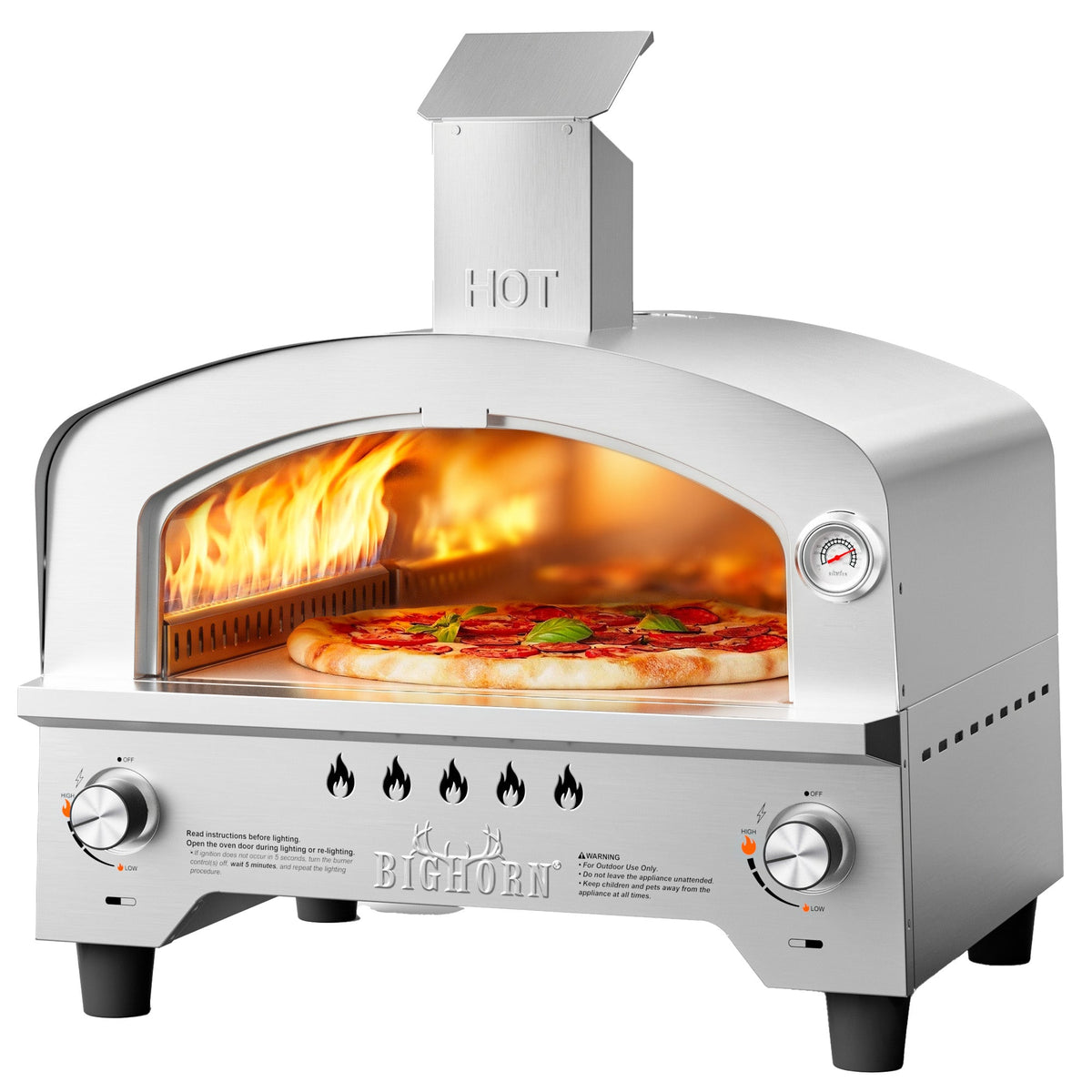
Master an outdoor gas pizza oven by learning its burner layout, preheat discipline, and gas safety checks — the three things that decide whether a bake is even, hot, and safe. A dual-burner oven lets you balance heat across the stone; a full preheat saturates the deck; and a quick gas check before each session prevents leaks and weak flames.
How burner layouts shape the bake
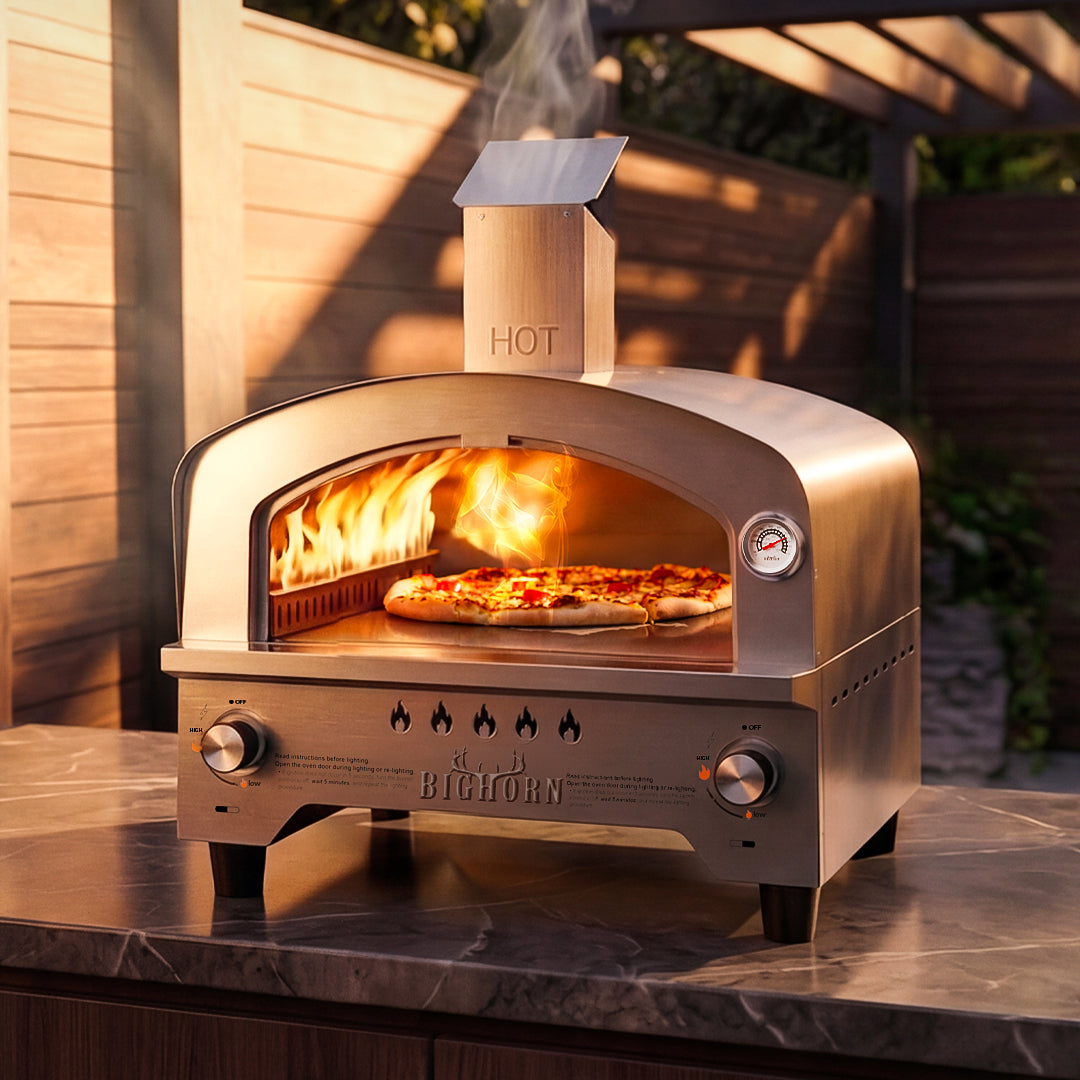
Single-burner ovens heat the stone in one pattern, which can create a hot side; dual-burner layouts give independent control so you balance the deck or bias it to one area when needed. Read which side browns fastest in your oven and use the burners to even it out. The layout is a control system — learning it is what makes consecutive pizzas consistent instead of a gamble.
Preheat: the stone is the target
Preheat until the stone, not just the air, reaches baking temperature. On a typical gas oven that is roughly 10 minutes, and a thermometer on the stone confirms the deck is saturated. Launching early into a cold stone gives you a pale, chewy base, so treat the preheat as part of the recipe rather than a wait to skip.

The gas checks that keep sessions safe
Before every use, check the propane tank connection for leaks — a soap-and-water test on the fittings is quick and reliable — and inspect the hose for cracks or wear. Confirm the burner lights evenly and the flame is stable, and keep the area ventilated and outdoors. A two-minute safety pass prevents most incidents and makes the session worry-free.
Reading and correcting an uneven bake
When a bake is uneven, check the base first: a pale base means preheat or recovery was short. Then compare the edges — if one side burns early, reduce that burner or turn the pizza slightly. Adjust one variable at a time and record what worked, so the next session starts from a known configuration.
What does a normal burner flame look like?
A healthy gas burner shows a steady blue flame with a defined cone, lighting evenly across the burner. Yellow, flickering, or uneven flames can mean a dirty burner or a gas-flow issue. If the flame does not look right, turn off the oven, let it cool, and clean the burner before the next session.
How do you clean a burner area?
Let the oven cool, remove any covers or parts the manual allows, and brush away residue from the burner ports. Clear drips and debris from the area so gas flows evenly and ignites cleanly. Avoid soaking electrical or control parts, and dry everything fully before reassembling.
How often should you deep-check the gas system?
Do a full gas-system check at the start of each season and before long sessions: inspect the hose and regulator, leak-check the fittings, and confirm the tank valve works. During the season, the two-minute pre-session check is enough. A seasonal deep-check catches wear that daily checks miss.
Why does the first pizza sometimes miss?
Usually because the stone was never fully saturated — the air reached temperature before the deck did. Give the oven a longer preheat before the first launch or run a test pizza first. Once the stone is loaded, the first pie is as good as the last.
How do you recover between pizzas?
Keep both burners set and let the stone recover for 20–30 seconds between launches. Top the next pizza while the previous one bakes, so the oven never waits. A short recovery keeps consecutive pies identical.
How do you avoid flare-ups on a gas pizza oven?
Flare-ups usually come from grease dripping onto the burner. Keep the cooking area and drip tray clean, wipe excess oil from food before launching, and avoid sugary marinades that burn. A clean chamber and light toppings keep the flame steady and the bakes predictable.
What is the best way to store the oven?
Let the oven cool fully, disconnect or protect the gas connection, and cover the unit in a dry spot. Empty any crumb tray and wipe the stone once cool. Dry storage keeps the burners and stainless body ready for the next session.
How do burner layouts differ across models?
Single-burner ovens heat in one pattern, which can favor one side; dual-burner layouts give independent control to balance or bias the deck. Some models position burners differently, so the hot pattern varies by design. Learn where your model browns fastest and use the controls to even it out — the layout is your heat map.
What causes weak ignition or uneven flames?
Typically dirty burner ports, a low tank, or a worn hose or regulator. Clean the burner area, confirm the tank has fuel, and inspect the gas path before blaming the oven. If the flame stays weak after cleaning and a full tank, have the regulator and hose checked.
Finally, keep a short record of your burner settings and bake results for the first few sessions. The note becomes your personal baseline, so every future bake starts from a known configuration instead of guesswork — the same discipline that turns a good oven into a consistent one.
Gas oven fundamentals FAQs
How long should I preheat a gas pizza oven?
About 10 minutes for a typical gas oven to reach baking temperature. Confirm the stone with a thermometer when possible — the deck, not the air, is what sets the base.
Why does my pizza brown unevenly?
Usually wind or a slightly unbalanced burner. Reduce the burner on the hot side or turn the pizza partway, and let the stone settle before the next bake.
How often should I check the gas connection?
Before every session. A soap-and-water leak check on the fittings and a quick hose inspection take two minutes and prevent most gas-related problems.
To confirm the current specs, review the 15-inch dual-burner gas pizza oven product page.