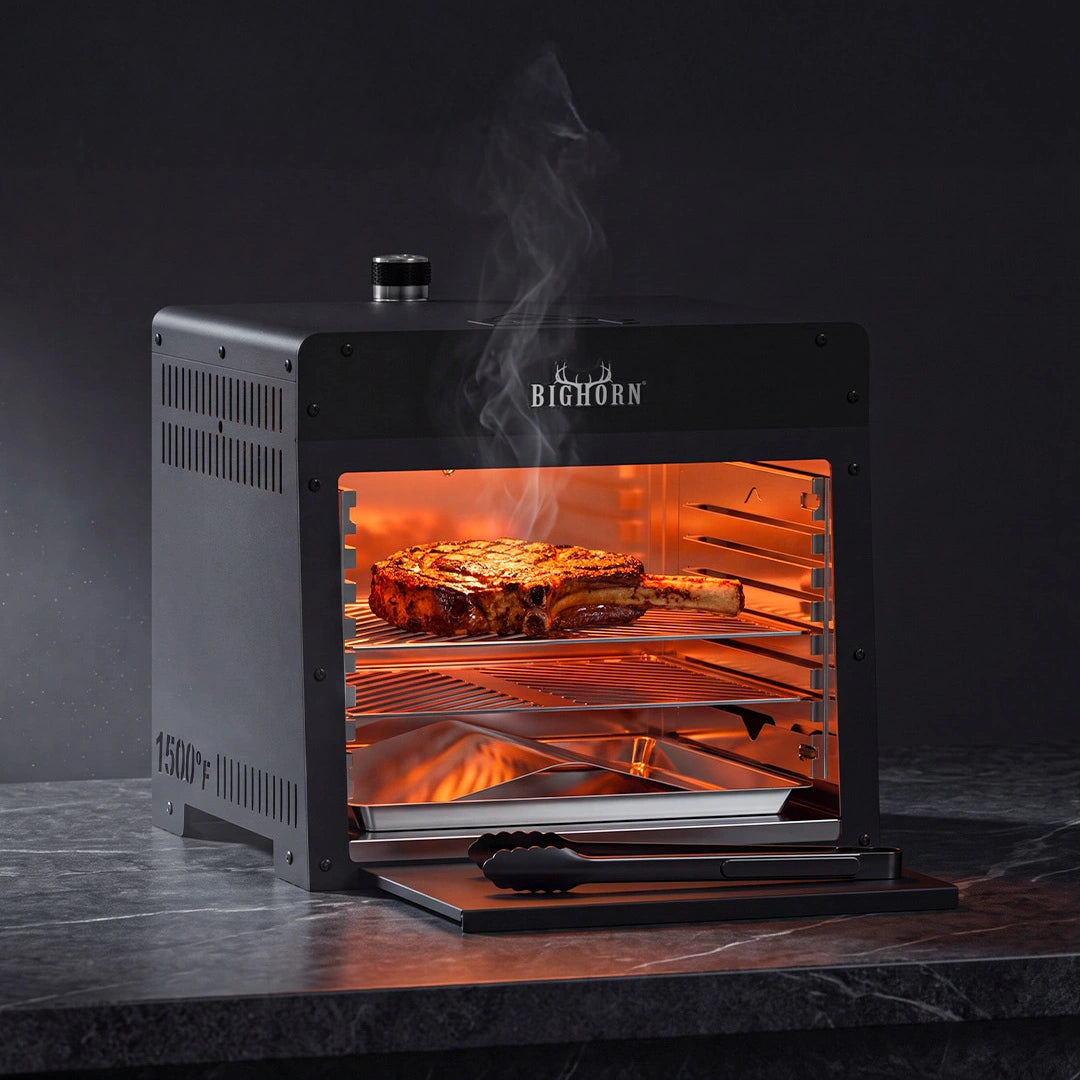

Yes, you can cook a frozen steak on an infrared grill — cooking from frozen is safe as long as the steak reaches the proper internal temperature, and an infrared grill's intense heat is actually an advantage for the method. The frozen steak is the original reverse sear: the frozen center buys time while the outside sears, and a careful cook can produce a crusty exterior with a center that finishes properly. The rules are thickness, heat management and a probe thermometer — this guide covers the food-safety facts, the infrared-specific approach and the step-by-step method.
Is cooking from frozen safe?
Cooking meat from frozen is safe when the meat reaches a safe internal temperature throughout. The United States Department of Agriculture states that it is safe to cook frozen meat without thawing, with the caveat that it takes roughly fifty percent longer than thawed meat and that a food thermometer must confirm the center reaches the safe minimum. For whole cuts of beef, that minimum is 145°F with a three-minute rest; the doneness temperatures below that are personal preference, and the steak must reach whichever target you choose in its center, not just at the surface.
The practical safety rules are simple. Never thaw a steak on the counter at room temperature — thaw in the refrigerator, in cold water or in the microwave if you thaw at all. Once a frozen steak begins to thaw and then refreezes, its quality and safety suffer, so cook frozen steaks straight from the freezer. And always use a probe thermometer on a frozen or partially frozen steak, because time estimates are less reliable when the starting temperature is below zero — the probe is the only way to know the center has reached your target.
Why infrared changes the approach
Infrared heat changes the frozen-steak method in a useful way: the sear is fast and intense, so the outside browns before the frozen center has a chance to warm much at all. On a conventional grill, a frozen steak often steams or chars unevenly while the center stays cold; on an infrared grill, the crust forms quickly and cleanly, and the cook's job becomes finishing the center without destroying the crust. The intense heat is also the danger — a frozen steak left too long on the infrared zone will burn on the outside while the center remains cold, so the method is a controlled two-stage cook rather than a single blast.
The frozen steak also demonstrates why thickness matters more on an infrared grill than anywhere else. A thin frozen steak is the hardest case: by the time the center thaws and cooks, the surface has long since charred. A thick frozen steak — one and a half inches or more — gives the method room to work, because the frozen center slows the cook enough for the sear and the finish to happen in sequence. If you only have thin steaks, thaw them instead, or slice and stir-fry them; the frozen direct-sear method is a thick-steak technique.

Step-by-step frozen steak method
Start with a steak at least one and a half inches thick, frozen solid. Preheat the infrared grill fully with the lid closed, then lower the heat or move the steak to a gentler position for the first stage — the goal is to thaw and warm the interior slowly before the hard sear, not to blast the frozen surface. Season the steak lightly before it goes on, or season after the sear; salt on a frozen surface will not penetrate the way it does on thawed meat, so most of the seasoning lands after cooking.
For the first stage, cook the steak over indirect or reduced heat with the probe in place, letting the center thaw and climb toward your target — this stage is slower than a thawed steak and needs patience, and it is where the "fifty percent longer" rule shows up. When the center is within roughly ten degrees of your target, move the steak to the hot infrared zone and sear it in short intervals, building the crust without overcooking the now-warm interior. Pull the steak a few degrees early, rest it for at least five to ten minutes, and slice against the grain. The result is a steak with a proper crust and a center cooked to your number, cooked from frozen without a thaw.
Season and finish with the crust in mind. Because salt cannot penetrate a frozen surface, season the steak lightly before the sear and finish with flaky salt after the rest, when the seasoning lands on the warm crust instead of washing off with the thaw. For extra richness, add a knob of butter, a garlic clove and a herb sprig to the pan or a cast-iron insert during the final sear and spoon the butter over the steak as it browns — the basting adds flavor and helps the crust develop evenly across the surface. The frozen steak's surface dries as it thaws in the gentle stage, which is a genuine advantage: a drier surface sears harder than a wet one, so the crust on a well-managed frozen steak can be exceptional.
Checking doneness correctly
A frozen steak demands correct probing because the temperature gradient is extreme — the surface can be searing hot while the center is still frozen. Insert the probe into the thickest part of the steak, from the side rather than the top where possible, so the tip sits in the center of the meat and not near the crust or the grate. Read the center temperature, not the surface, and remember that a frozen steak's carryover continues during the rest just like a thawed one — pull a few degrees early and let the rest finish the climb. If the probe reads below your target after the rest, the steak needs more time in a gentle heat, not another blast on the sear zone.
Probe placement matters more with frozen meat because a misread is more dangerous: a shallow reading can show a done temperature while the center is still cold. When in doubt, check in two places — the thickest part and the geometric center — and confirm both meet your target before serving. The USDA minimum for whole cuts is 145°F with a three-minute rest; cooks who prefer medium-rare pull lower, and the choice is personal, but the center must always reach the intended temperature, verified by the probe, never by the color of the crust.
When thawing is still better
Cooking from frozen works, but thawing is still better in three situations. Thin steaks cook poorly from frozen, because the crust burns before the center thaws; steaks destined for a precise medium-rare or a delicate doneness are easier to hit when thawed; and any recipe that relies on seasoning penetrating the meat — a dry brine, a marinade or a heavy rub — needs thawed meat for the seasoning to work. If dinner is an hour away and the steak is frozen solid, the frozen method saves the meal; if you planned ahead and the steak is thawing in the fridge, the thawed cook gives you more control.
Be realistic about the time the frozen method takes and plan around it. The gentle first stage can run well over an hour for a very thick steak from a deep-freeze start, so the frozen technique is not faster than thawing — it is a way to cook a steak you forgot to thaw, with the trade-off that the cook needs more attention, not less. If you are feeding several people, start the frozen steaks in staggered order so they reach the sear together, and keep a probe in each thick steak rather than assuming identical timing. Leftover cooked steak should be refrigerated within two hours and reheated gently; the frozen-cook method does not change the rules for handling leftovers safely.
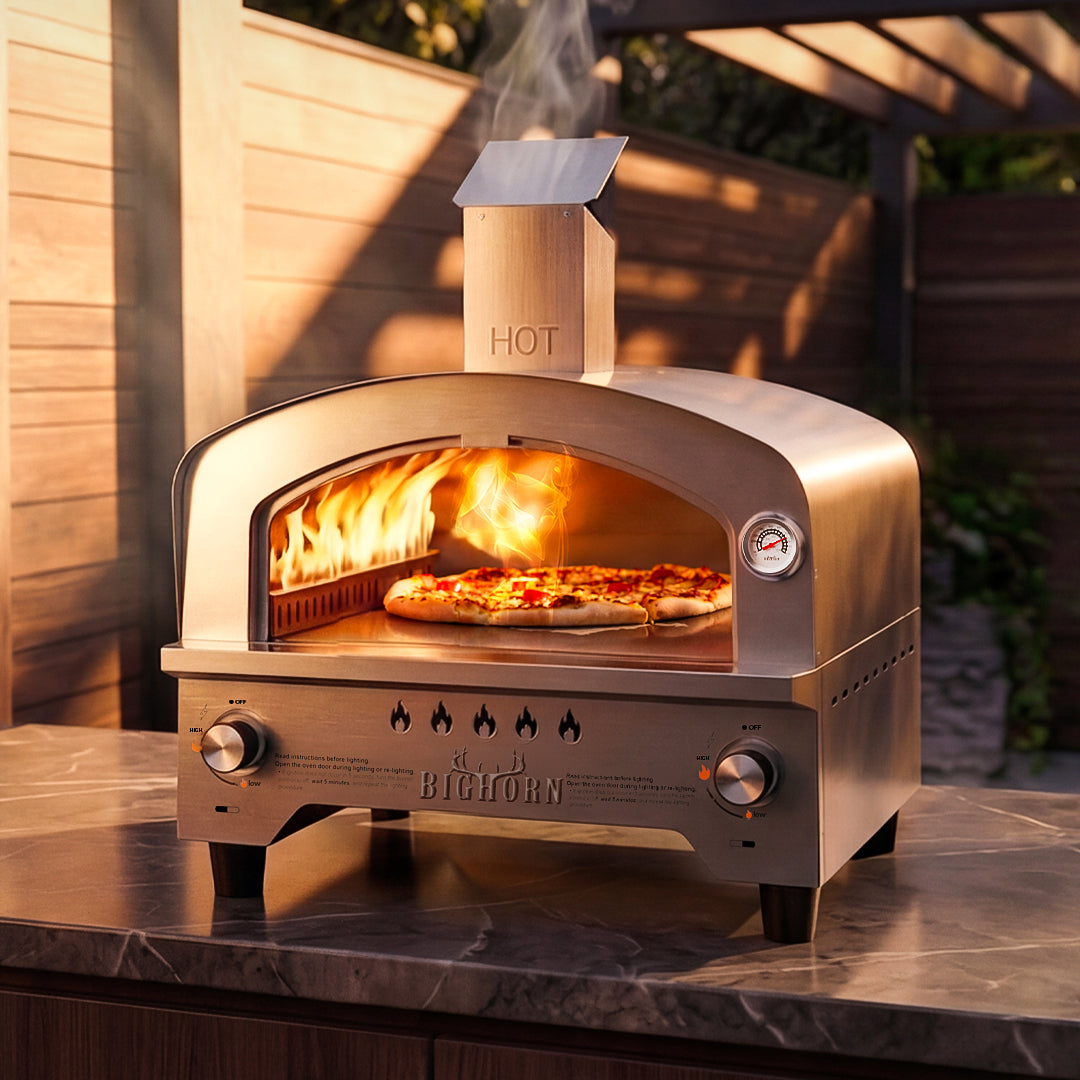
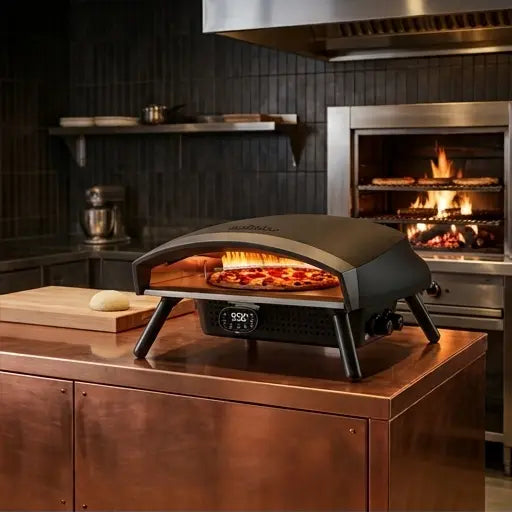
Thaw correctly when you have the time: move the steak from the freezer to the refrigerator the night before, keep it in its packaging on a plate, and cook it within a day or two of thawing. For a faster thaw, seal the steak in a bag and submerge it in cold water, changing the water every thirty minutes — never warm water, which starts cooking the outer edge. The frozen method is a rescue technique and a genuinely good one for thick steaks on an infrared grill; the thawed method is the everyday choice when time allows. Big Horn's portable infrared steak grill and the 16-inch infrared steak grill handle both approaches, and the steak searing grill collection shows the range.
Cooking a frozen steak on an infrared grill is a two-stage rescue: gentle heat to bring the frozen center up, then the infrared sear for the crust, with the probe calling the finish at every step. Keep the steaks thick, trust the thermometer and rest the meat, and the freezer becomes a source of good dinners rather than an emergency backup.
These steps are general guidance, and models vary: follow the manual for your specific unit, and verify temperatures with a clean thermometer where the text calls for one. Product details reflect official Big Horn Outdoors listings reviewed September 5, 2026; re-check prices and availability at checkout.