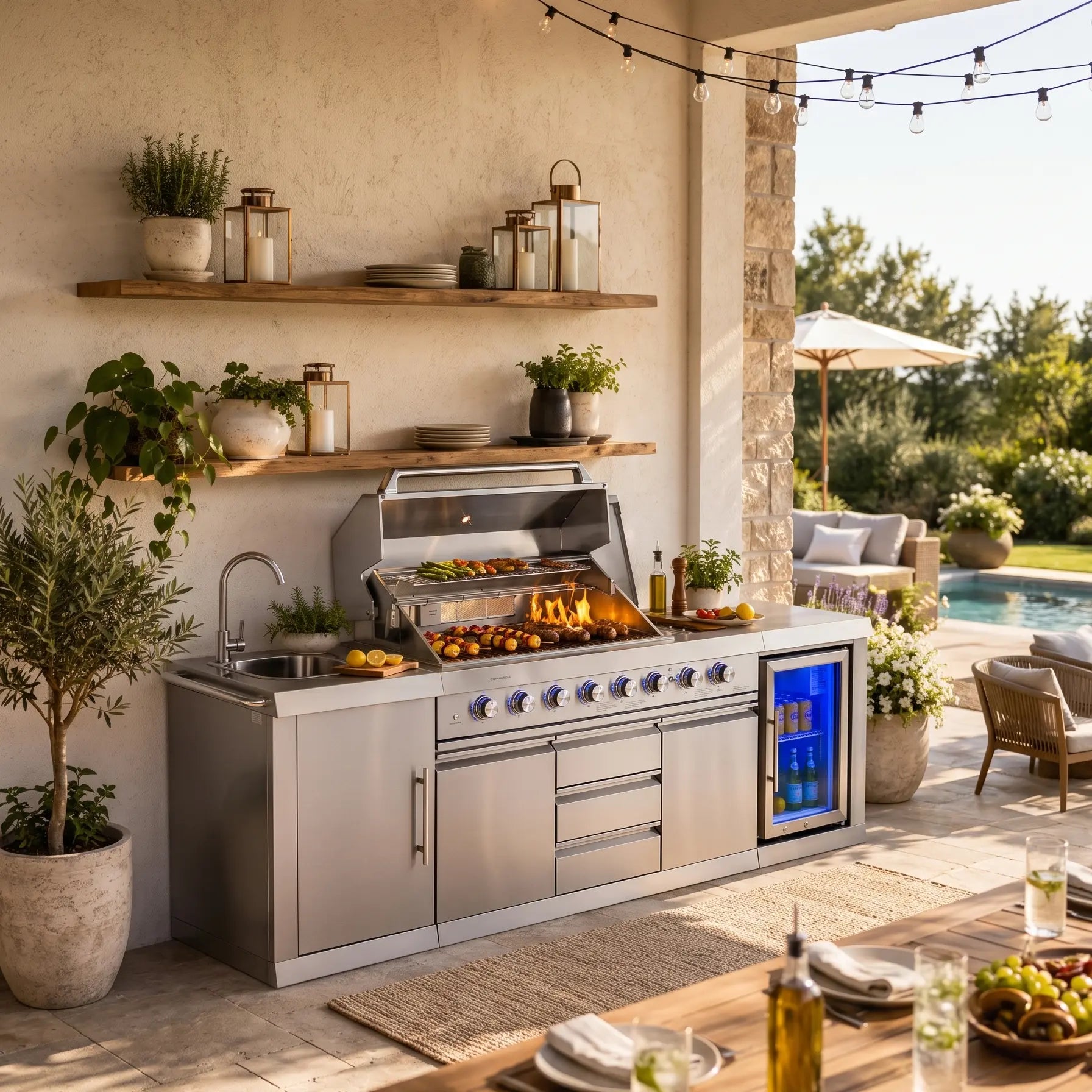
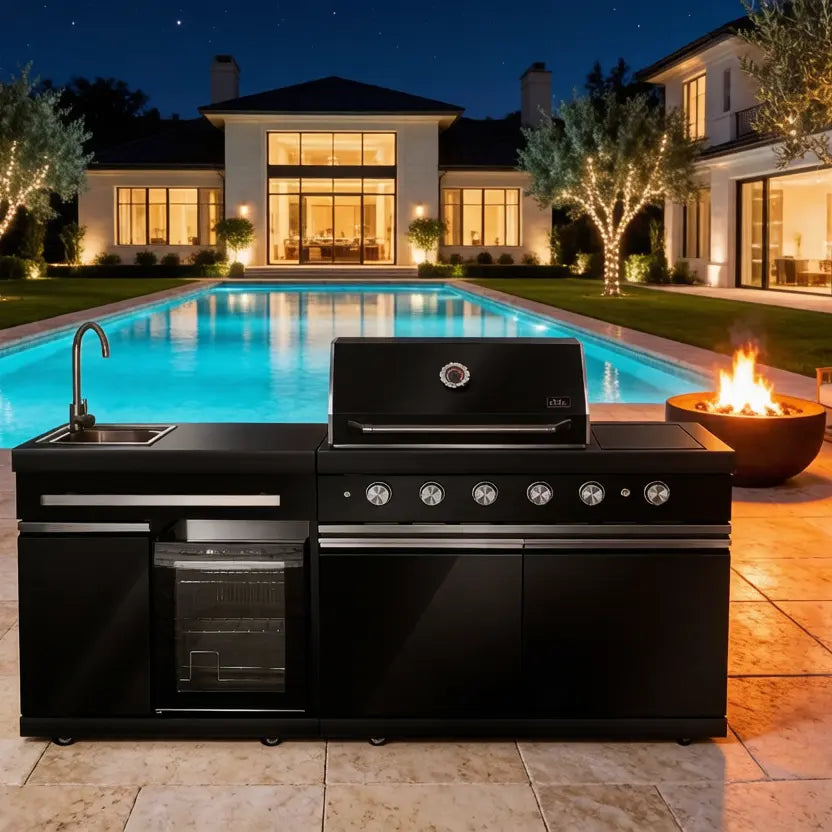
An outdoor pizza party succeeds on logistics, not luck: the dough is ready before the guests arrive, the toppings are prepped in a bar, the oven queue runs without a traffic jam, and nobody waits twenty minutes between slices. The plan starts with guest math, moves backward through dough and prep, and finishes with a timeline that keeps the oven busy and the guests fed. This guide walks through each stage so the party runs like a small pizzeria instead of a scramble.
Start with guest math
Guest count drives every number in the plan, so settle it first. Estimate how many pizzas the group will eat and how many dough balls that means — the guest-math calculator on the Big Horn site does the arithmetic for you, and the short version is that most parties need about one pizza per two to three guests depending on appetites and sides. Then convert pizzas to dough: one ball per pizza, sized to your oven's stone. Add 10–20 percent buffer dough for torn bases, experimental toppings and the guest who wants a second pie, because running out of dough is the one failure a party cannot recover from quickly.
Write the final numbers down in three places — the shopping list, the prep list and the dough schedule — so nothing is re-derived mid-party. Include the sides in the math too: a salad or a plate of appetizers reduces the pizza count and gives the oven a breather between waves. A party planned for the true guest count feeds everyone without a mountain of leftovers, and the buffer dough covers the unpredictable part of the evening.
Ask about dietary needs in the invitation or the group chat before you shop. A gluten-free guest usually means a separate dough or a crust option, a vegetarian guest changes the topping bar's balance, and food allergies mean labeling everything at the bar — unlabeled cheese blends and hidden toppings are how a party goes wrong for one person in a way that matters. The guest math should count dietary versions separately, and the prep list should mark the allergen-safe containers clearly. Planning for the group's real needs takes ten minutes at the start and saves the awkwardness later.
Dough and prep two days before
The dough is the long-lead item and the one that decides the crust quality. Make the dough a day or two ahead so it ferments slowly in the fridge — a cold, slow rise builds flavor and makes the dough easier to stretch — and portion it into individual balls the night before the party so each ball relaxes and rounds itself. On party morning, pull the dough from the fridge in batches rather than all at once: cold dough needs time to warm and relax before stretching, and a single batch can sit out while the earlier ones bake.
Prep everything that can be prepped the day before: grate the cheese, make the sauce, slice the toppings, wash and dry the greens. Store each topping in its own labeled container so the topping bar is assemble-in-place rather than cook-at-the-last-minute. The two hours of prep that happen before the party are what make the party itself feel effortless — by the time the first guest arrives, the only cooking left is the baking, and the cook's hands stay clean enough to greet people.
Designing a topping bar
A topping bar turns every guest into a pizzaiolo and spreads the work across the party. Lay out the bar in the order of assembly: sauce, cheese, then toppings, with a stack of dough balls and a floured surface at the front. Keep the choices classic and compatible — a tomato sauce, a white base, mozzarella, pepperoni, cooked sausage, mushrooms, peppers, onions, olives and fresh basil — because exotic toppings slow the line and confuse the bake. Label everything, especially the cheese, and keep raw items out of the bar until they are cooked.
Teach the assembly rules once, at the first pizza: light sauce, moderate cheese, quick-cooking toppings, and nothing piled so high it will not cook through in the oven's fast bake. Assign one person to stretch and one to launch if the crowd is large, or let guests build while the host runs the oven — the bar keeps guests busy and the host's oven queue moving. A pizza that takes two minutes to build and two minutes to bake is the whole point of the format; the bar is what keeps that rhythm alive for a dozen guests instead of a dozen separate orders.

Running the oven queue
The oven queue is where parties stall or flow. The pattern that works: guests build their pizzas at the bar, hand them to the launcher in order, and pick them up by number or by sight when they come out. Keep a simple queue board — numbered peels, or a list on a whiteboard — so the oven bakes in arrival order and nobody's pizza jumps the line. The oven should never wait for a pizza: if the queue runs dry, that is the moment to launch a "house pizza" for the table rather than let the stone cool and force a re-preheat.
Batch the bakes by doneness, not by guest. Pizzas with the same toppings and thickness bake at the same speed, so group the similar ones together and let the oven run a steady rhythm. If the oven has an auto-rotating stone, use it — it removes the turn timing from the host's job. If you are turning by hand, keep a turning peel at the oven and check each pizza early. The queue runs smoothly when the oven never idles, the bakes are batched and the host never has to decide whose pizza is next mid-bake.
Serving without bottlenecks
Serving is the bottleneck most hosts forget. A single cutting board at the oven becomes a traffic jam the moment two pizzas come out together, so set up a landing zone with two boards or one board plus a rack, a pizza cutter or wheel, and a stack of plates within reach. Cut each pizza the moment it rests for a minute, and move whole pies to a serving table for guests to slice themselves if the crowd is casual. Finished pizzas should not sit stacked — the steam softens the bottom crust — so slice and serve in small waves rather than stockpiling.
Keep drinks and sides away from the oven path so guests are not crossing the launch zone for a refill. Put the drink station at the opposite end of the table from the pizza landing spot, and keep plates, napkins and cutlery at both ends. The party flows when the guest's journey is circular — build at the bar, collect at the landing zone, eat at the table, refill at the drink station — and the host's journey stays short: stretch, launch, check, serve.
Assign roles before the first pizza so the party does not depend on one exhausted host. The stretch-and-build station runs itself once guests learn the assembly rules; the oven needs one responsible cook who launches, checks and serves; a second helper keeps the landing zone cleared and the plates stocked. For a small party the host can cover the oven while guests build their own pies; for a large group, a second pair of hands at the oven or the bar is the difference between a relaxed evening and a marathon. Write the roles on the plan so the helpers know what they volunteered for before the fire is lit.
Timeline from setup to dessert
| When | What happens |
|---|---|
| 2 days before | Make dough; buy toppings; confirm oven and fuel |
| Day before | Portion dough balls; grate cheese; make sauce; slice toppings |
| Party morning | Set up topping bar; stage dough in batches; clean landing zone |
| 60 minutes before guests | Preheat oven; stretch test dough; prep sides and drinks |
| Guests arrive | Open the topping bar; first build starts; launch first pizzas |
| Through the party | Run the queue; batch bakes; slice and serve in waves |
| End of night | Clear stone; cool oven; store leftovers; clean the bar |
The timeline works backward from guests arriving: the long-lead work happens early, the morning is staging, and the hour before the party is oven and sides. If dessert is part of the night, plan it as a separate course after the pizza queue ends — a pre-made dessert or a sweet bake on the stone gives the evening a clean finish without competing with the main event. The party that ends calmly is the one that was planned backward from a clear schedule, and the timeline above is the spine of that plan.
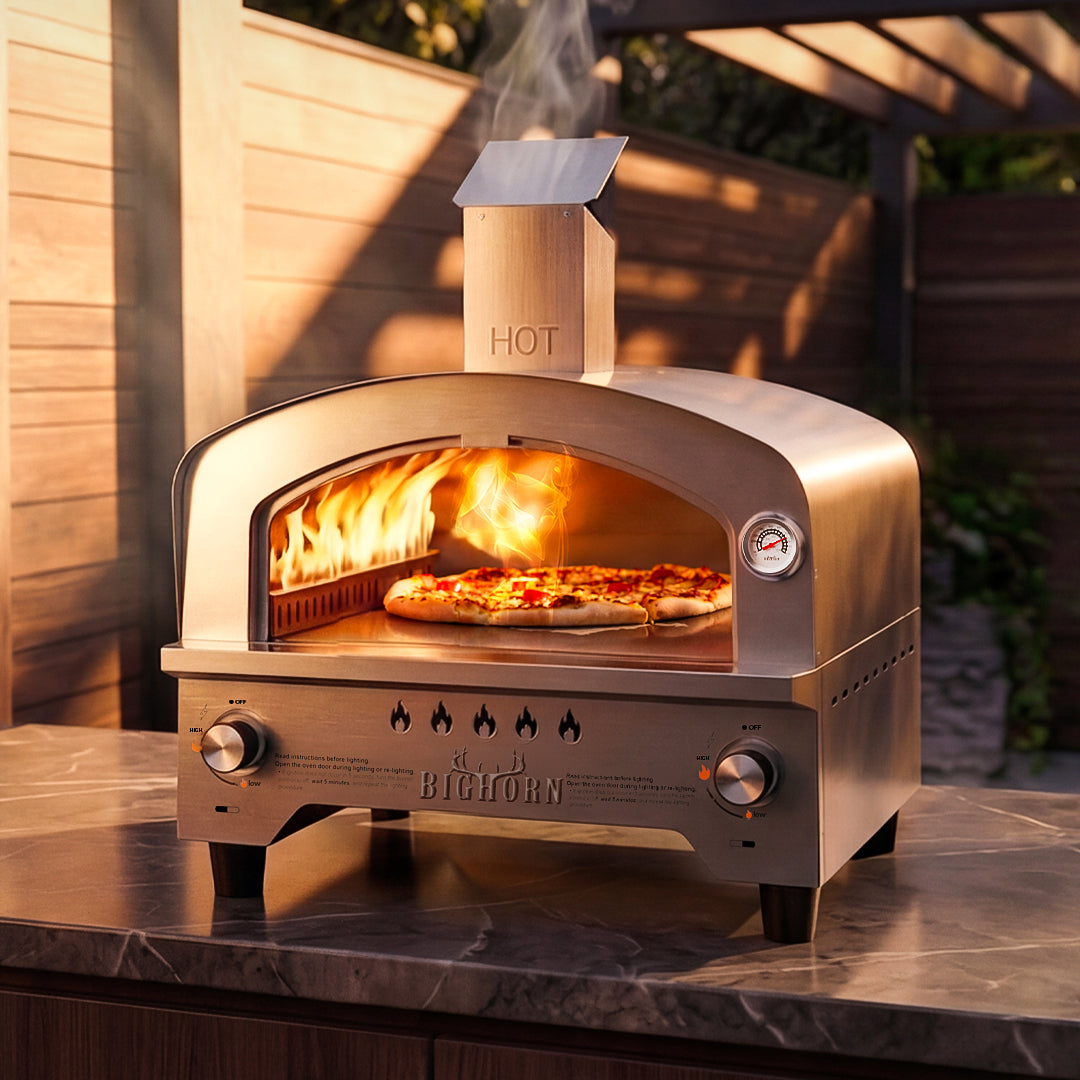
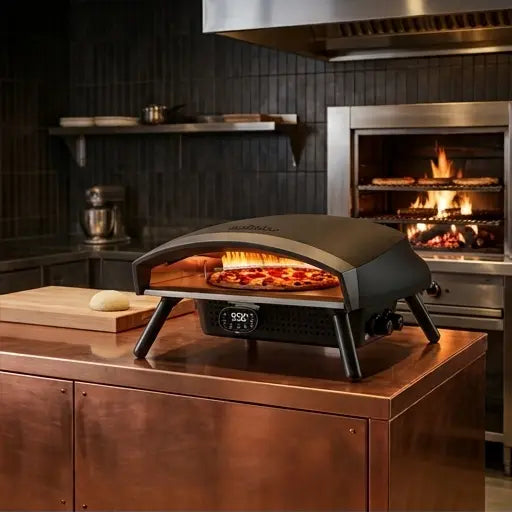
Big Horn's pizza guest calculator handles the quantities, the pizza oven collection covers the oven formats, and a grill cart and pizza oven table gives the party a dedicated station. Do the guest math, make the dough early, prep the bar the day before, and run the oven in a steady queue — then the party's only surprise is how easy it felt.
These steps are general guidance, and models vary: follow the manual for your specific unit, and verify temperatures with a clean thermometer where the text calls for one. Product details reflect official Big Horn Outdoors listings reviewed September 5, 2026; re-check prices and availability at checkout.