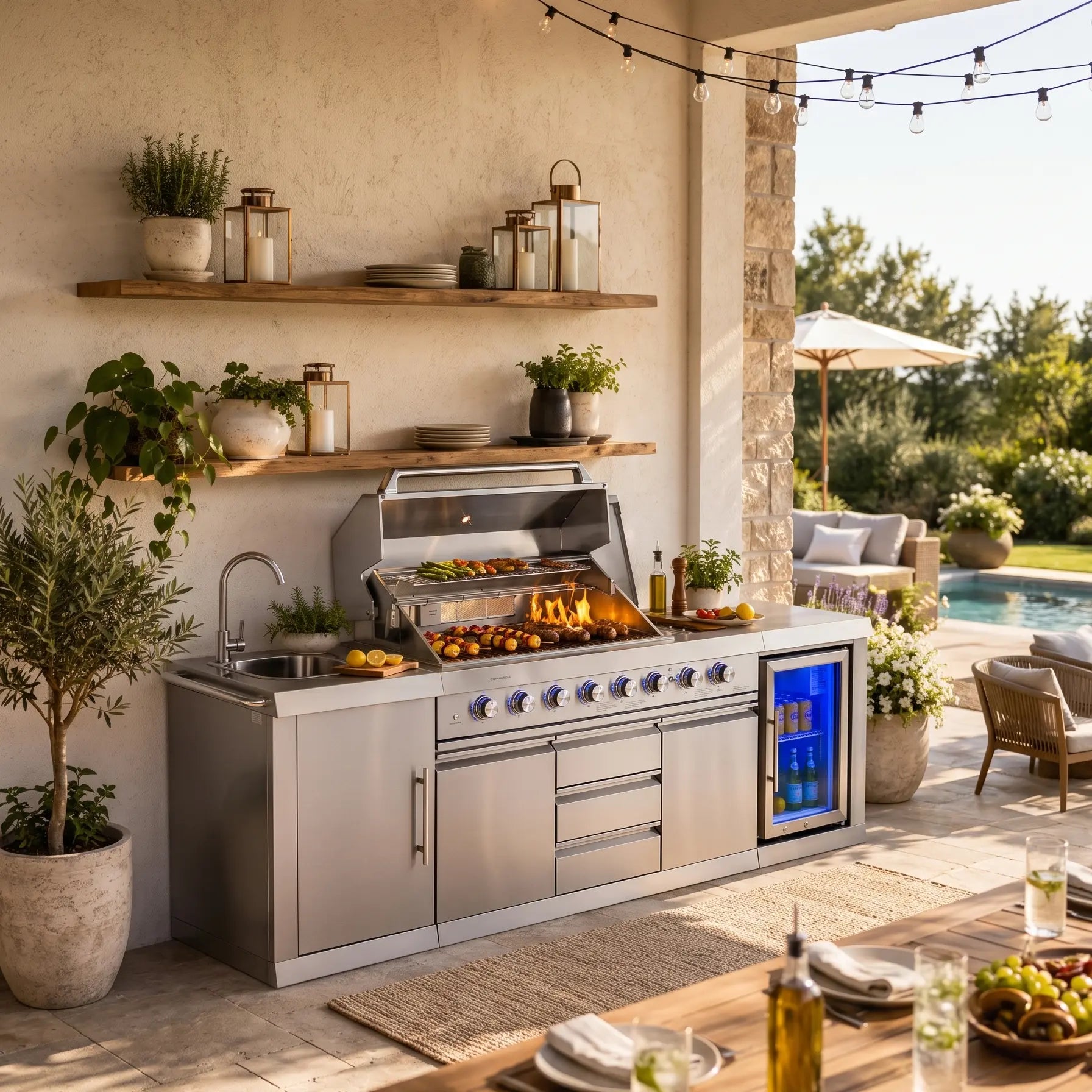
A gas grill can produce real smoke flavor without a dedicated smoker: set up a two-zone low-heat cook, place a foil packet or smoker box of wood chips over a lit burner, and let the smoke circulate around the food on the unlit side. The honest expectation is a lighter, shorter-lived smoke than an offset smoker, which suits ribs, chicken, and pork shoulder — not marathon briskets. This guide covers the setup, the wood options, and the timing that turns a gas grill into a capable smoke machine.
These are general gas-grill smoking guidelines; follow your grill’s manual for burner and clearance details.
What you need before you start
- Wood chips or pellets. Dry, food-grade hardwood; fruit woods for chicken and pork, stronger woods for beef.
- Heavy-duty foil. To make smoke packets, or a smoker box / pellet tube.
- A two-zone grill. One burner lit, the other off, with a drip pan on the unlit side.
- A thermometer. To hold the 225–250°F smoking range.
Understanding the heat before you decide
Smoking on a gas grill is a low-and-slow two-zone cook: one burner runs on low to create the heat, the food sits on the unlit side, and the wood smolders rather than burns. A gas grill burns clean propane, so all the smoke flavor comes from the wood you add — and that wood smolders rather than burning like it does over coals. The result is a lighter, cleaner smoke that flavors the surface and the first layers of the meat, not the deep smoke ring of a dedicated smoker.
Making and placing smoke packets
The foil packet is the simplest smoke delivery: fill a sheet of heavy-duty foil with a loose handful of dry chips, fold it into a sealed flat packet, and poke several holes in the top so the smoke can escape. Make two or three at once so you can swap them mid-cook. Place the packet directly on the lit burner or on a heat plate just above it, where the flame heats the chips to smoldering. Start with one packet over the lit burner and watch for a thin, steady stream of pale smoke — not a thick white cloud.
Step 1: Set up the two-zone heat
Turn on one burner (or two on a larger grill) to medium-low, and leave the rest off. Place a drip pan on the unlit side to catch drippings and keep the meat moist. Close the lid and preheat until the internal temperature stabilizes between 225°F and 250°F before the food goes on.
Step 2: Start the smoke and place the food
Place the smoke packet on the lit burner and put the seasoned meat on the unlit side, over the drip pan. Keep the lid closed to trap heat and smoke, monitor the thermometer, and adjust the lit burner to hold the 225–250°F range. Refresh the wood packet every 45–60 minutes for a long session.
Step 3: Timing, temperature, and signs of success
| Food | Target | Smoke profile |
|---|---|---|
| Ribs | Probe-tender, 190–205°F | Mild fruitwood or oak |
| Chicken pieces | 165°F | Fruitwood, gentle |
| Pork shoulder | Around 200–205°F, probe-tender | Hickory or oak blend |
Success looks like a steady 225–250°F chamber, a thin stream of pale smoke, and meat with a light smoky surface and a moist interior. A thick white cloud means the wood is burning, not smoldering; lower the heat or move the packet.
Common mistakes and how to avoid them
- Using wet chips. Dry chips smoke sooner and cleaner; skip soaking unless a trusted recipe calls for it.
- Dumping too much wood. A packet or two is enough; too much wood burns thick white smoke that tastes bitter.
- Skipping the two-zone setup. Food over direct heat cooks, not smokes; keep it on the unlit side.
- Opening the lid too often. Heat and smoke escape; check the thermometer instead of the food.
- Expecting a deep smoke ring. Gas-grill smoke is lighter; match the food to the method (ribs, chicken, pork, not brisket).
What to do when it does not go right
If the smoke is bitter or thick, the wood is burning too hot — lower the burner and let the packet smolder instead. If there is no smoke, the packet is too far from the heat or the chips are damp — move it onto the lit burner and use dry chips. If the temperature climbs past 250°F, reduce the lit burner and let the chamber settle. Every issue traces back to heat control or wood delivery.
Pro tips for better results
- Choose the wood by the food. Fruit woods for chicken and pork, oak or hickory for beef.
- Keep packets stocked. Make several ahead so you can refresh without lifting the lid long.
- Match food to the method. Gas-grill smoke suits a few-hour smoke, not an overnight brisket.
See the multi-burner grills that make smoke easy. grills and griddles collection · outdoor kitchen island collection
FAQ
Can you smoke on a normal gas grill?
Yes — a normal gas grill smokes well with a two-zone setup and wood chips: one burner on low, a smoke packet over it, and the food on the unlit side at 225–250°F. The smoke is lighter than a dedicated smoker, so choose foods that pick up a smoke layer in a few hours.
How to set up a gas grill for smoking?
Set up two zones: light one burner (or two on a larger grill) on low, leave the rest off, place a drip pan on the unlit side, and preheat to 225–250°F with the lid closed. Put a wood-chip packet on the lit burner and the food on the unlit side.
How can I add smoke to my gas grill?
Add smoke with dry wood chips in a foil packet or a smoker box placed over a lit burner, or use a pellet tube. Keep the heat low so the chips smolder, and replenish every 45–60 minutes for a long cook.
How do I use my propane grill as a smoker?
Use your propane grill as a smoker the same way: one burner on low for heat, a foil packet or smoker box of chips over it, the food on the unlit side, and the lid closed to hold 225–250°F. It smokes lighter than a dedicated smoker but works well for ribs, chicken, and pork.