
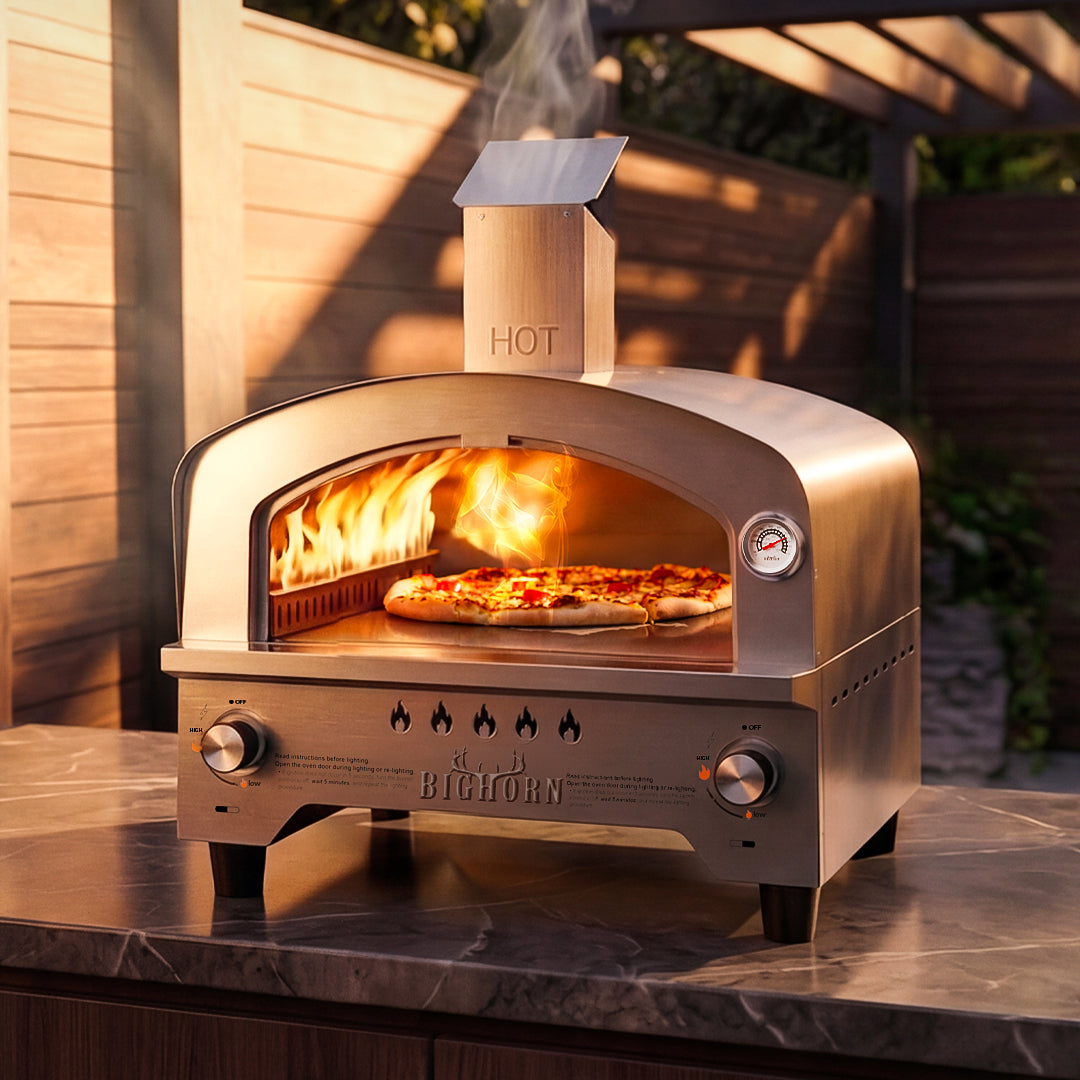
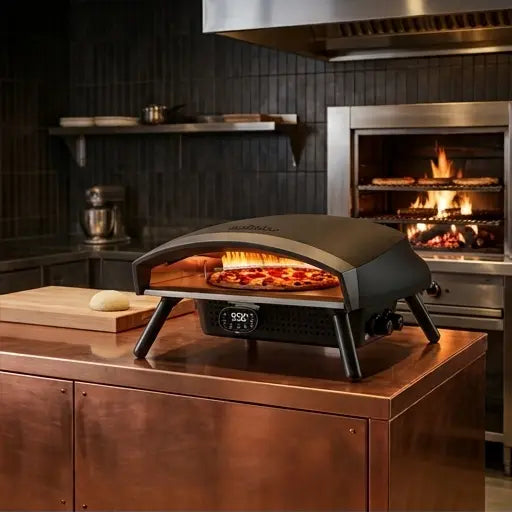
A multi-fuel pizza oven accepts more than one fuel source — pellet and optional gas or electric attachments, or a convertible wood-and-gas design — so you can switch fuels without changing the appliance. It is worth it if you will genuinely use more than one fuel: wood-fired flavor at home, gas on the road, or electric for convenience. Big Horn’s 12-inch oven cooks at about 887°F on pellets and accepts optional gas and electric attachments, which is the flexible entry to the format. This guide covers the formats, the trade-offs, and who a multi-fuel oven is for.
This is a brand-owned guide; Big Horn specifications are traceable to the official product listings.
What actually matters for this decision
- Real fuel flexibility. A multi-fuel oven is worth it only if you will switch fuels; otherwise it is an expensive option.
- Fuel behavior. Pellet adds wood-fired flavor and fire management; gas adds convenience; electric adds precision indoors.
- Cost and complexity. The flexibility is not free — attachments and maintenance add to the price.
- Fit. Match the oven to the fuels you actually cook with and the space you have.
Understanding fuel flexibility before you decide
A multi-fuel oven is more than one oven in a shell: each fuel changes the flavor, the effort, and the venting. Pellet or wood gives the wood-fired smoke that defines the format, but demands fire management and dry fuel; gas gives dial-controlled convenience with no smoke; electric gives precise indoor heat. The honest question is whether you will switch — a cook who only ever uses gas should buy a gas oven, not pay for modular flexibility. The value is real only when the second fuel matches a real second use.
The key factors, ranked
| Factor | Why it matters | What to compare |
|---|---|---|
| Fuel flexibility | The whole point | Pellet + gas/electric attachments vs fixed fuel |
| Flavor | Pellet/wood adds smoke | Wood-fired vs clean burn |
| Effort | Fire management vs dial control | Pellet ritual vs gas convenience |
| Cost | Flexibility is not free | Attachments, maintenance, accessories |
| Fit | Fuels you will use | Match the oven to how you cook |
Matching the choice to your situation
A multi-fuel oven suits a cook who will genuinely move between fuels: wood-fired flavor at home and gas on the road, or an electric option for convenience and rainy days. Big Horn’s 12-inch pellet oven with optional gas and electric attachments is that flexible entry — start on pellets for flavor, add gas or electric later. If you cook one fuel only, a dedicated fuel oven is simpler and cheaper; if you want the option to switch, the multi-fuel format pays.
What the experts look for
Experienced buyers weigh a multi-fuel oven by real usage, not the spec list: will the second fuel actually get used, and does the conversion stay simple? They check that attachments match the oven, that the pellet mode holds the wood-fired heat the format promises (about 887°F on the 12-inch model), and that the gas or electric attachments are sold separately with clear compatibility. A multi-fuel oven is worth it when the flexibility is used, not just offered.
Common mistakes and how to avoid them
- Paying for fuel flexibility you will not use. If you cook one fuel, buy the dedicated oven.
- Expecting every fuel mode to be equal. Pellet is more effort, gas is easier, electric is precise — each changes the bake.
- Ignoring attachment compatibility. Confirm the gas or electric attachment fits your exact model.
- Underestimating the cost. Attachments and accessories add to the price; compare the full package.
- Forgetting storage. Dry pellets and gas attachments both need their own care and storage.
Realistic expectations and results
A multi-fuel pizza oven delivers the fuel flexibility it promises when you use it: wood-fired flavor on pellets, convenience on gas, precision on electric — all from one oven. Expect to manage more than one fuel system, to keep attachments compatible and maintained, and to pay more than a single-fuel oven. For a cook who genuinely switches fuels, the flexibility is the point; for a one-fuel cook, it is an unnecessary option.
The takeaway in one paragraph
A multi-fuel pizza oven is worth it if you will genuinely cook on more than one fuel — pellet for wood-fired flavor, gas for convenience, electric for precision — and Big Horn’s 12-inch pellet oven with optional gas and electric attachments is the flexible entry. The value is in using the flexibility, not owning it: match the oven to the fuels you cook, confirm attachment compatibility, and buy the multi-fuel only when the second fuel has a real use. One oven, several fuels — worth it exactly when you use them.
See the multi-fuel capable pizza ovens and the fuel options. 12-inch pellet pizza oven · pizza oven collection
FAQ
Are dual-fuel pizza ovens worth it?
Yes if you will genuinely use both fuels — wood-fired flavor and gas convenience — and no if you cook one fuel only. The multi-fuel format costs more and adds maintenance; the value comes from using the flexibility, not just owning it.
What is the best multi-fuel pizza oven?
The best multi-fuel pizza oven matches the fuels you cook: Big Horn’s 12-inch pellet oven with optional gas and electric attachments covers pellet, gas, and electric flexibility. Compare attachment compatibility, wood-fired heat, and cost.
What is the best dual-fuel pizza oven?
The best dual-fuel oven is the one whose two fuels both fit your cooking: pellet plus gas, or pellet plus electric, depending on your season and space. Confirm attachments match your model and the pellet mode delivers the heat you want.
What pizza oven was on Shark Tank?
Big Horn Outdoors is not the pizza oven featured on Shark Tank; the Shark Tank segment is a separate brand. If you see a claim connecting Big Horn to Shark Tank, treat it as unverified and check the brand yourself.