







Pizza Dough & Bake Faults
Changing the flour is the expensive first move, and often the wrong one. A pie with no oven spring already cost you dough, toppings, and a preheat. Another bag of flour costs more of all three if the real miss was dough temperature, a timid launch, or a floor that was not ready. The cheaper path is a short diagnosis, one change at a time.
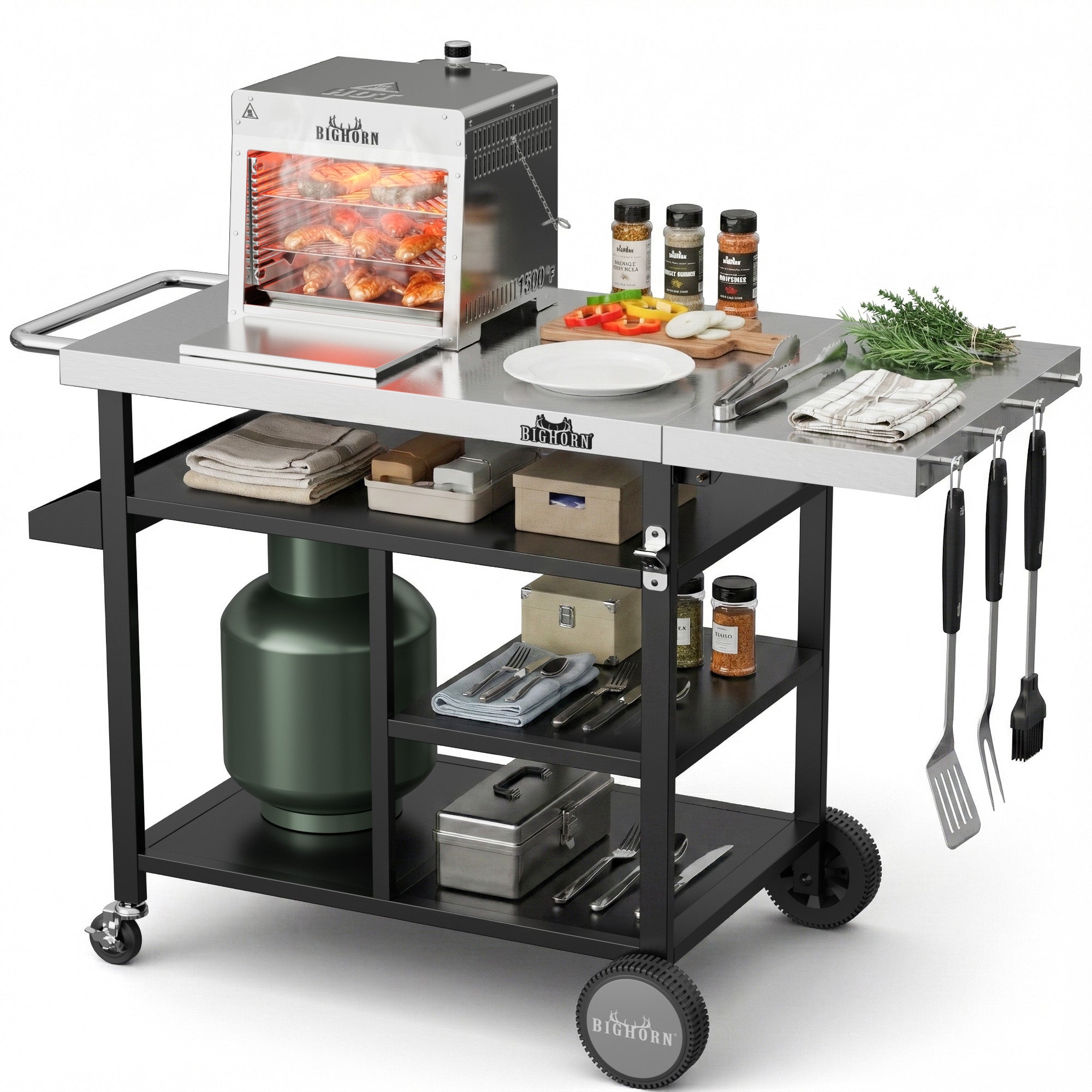
The counterintuitive part is that a tight, “strong” ball can be the problem, not the solution. High-heat dough needs enough gas and enough relaxation to puff when it hits the stone. A level station helps you launch cleanly; a stainless-steel pizza oven cart will not puff a cold or overworked rim on its own.
What oven spring is supposed to look like on a high-heat pie
Oven spring is the rapid puff in the first moments on a hot floor, especially in the rim. The edge should inflate and set, not sit like a flat disc that only colors. A modest puff can still work. A rim that never lifts is the failure this page is about.
Spring is not the same as leopard spotting, and it is not the same as a clean stretch. Those are related skills with their own pages. This page asks a narrower question: why the pie did not lift when it should have, and which cheap check to run before you rewrite the recipe.
A Neapolitan-style dough for a high-heat oven is built with this puff in mind, but the formula only works if the dough is ready at launch and the floor can deliver a sudden blast of heat.
Dough temperature at launch: the most common miss
Fridge-cold dough is a frequent spring killer. The center is stiff, gas production is slow, and the rim cannot expand before the crust sets. If the ball still feels cold when you press it, wait. Tempering is a short pause, not a new recipe.
The opposite miss is dough that has gone too warm and slack, with little gas left to give. That pie can also bake flat. The useful check is simple: the dough should feel relaxed, slightly airy, and close to a comfortable room temperature in the center, not icy and not collapsing.
If every cold ball fails and every tempered ball puffs, you have your answer. Stop buying new flour until that pattern changes.
Floor heat that is too low — or too dirty
Spring needs a hot, reasonably clean floor. A stone that has not finished preheating, or a floor insulated by a layer of burnt flour and debris, will not deliver a sudden lift. The pie sits, the top may color from the flame, and the rim stays low.
Read the crust before you turn the flame into a guess. Pale, soft bottoms with a lifeless rim point to the floor. The existing page on reading the crust before you change the heat owns that broader diagnosis. Here, the only extra point is that a dirty floor can mimic a cold one.
Brush loose flour off the stone when it is safe to do so, give the oven a full preheat, and use an infrared thermometer if you have one. Do not invent a single official temperature that every oven must hit. Confirm that the floor is ready in the way your manual and your usual successful pies require, then launch.
Over-handling and tight dough that will not puff
Dough that has been degassed, rolled flat, or stretched like pastry has already lost a lot of the gas it needs for spring. A heavy rolling pin is a reliable way to bake a thin, tight disc. So is docking the rim, pressing the edge too thin, or reworking a skin that already tore.
If the dough fights you, the fix is often a short rest, not more force. The technique page on how to stretch pizza dough without tears owns the handling steps. This page only needs the spring consequence: a tight, overworked skin will not puff, no matter how hot the oven is.
Leave a slightly thicker rim. The center can be thin. If you iron the edge as thin as the middle, there is nothing left to spring.
Underproofed dough as a spring killer
Underproofed dough is another common reason a high-heat pie stays flat. The ball has not produced enough gas, and it often feels tight and springs back too quickly when poked. It can look “strong” on the bench and then sit lifeless in the oven.
This is not the place to reteach fermentation signs or a full rescue window. If the dough has barely grown and still snaps back, give it more time or mix again, and treat tightness at stretch time as a warning rather than a virtue. Handling advice on the tear-free stretch page linked above will not replace a ferment that never happened.
Gluten-free doughs follow different spring rules. If you are baking from a gluten-free high-heat pizza crust or a gluten-free dough for a high-heat oven, do not judge success by a puffy Neapolitan rim. Those pages own the realistic crumb and handling for those doughs.
A short diagnostic path before you change recipes
Run the cheap checks in this order, because each one is less costly than a new mix: dough temperature and proof, handling, then floor heat. Only after those three are in range should you look at flour and hydration.
| Check first | What you are looking for | If it fails |
|---|---|---|
| Dough temperature and proof | Relaxed, not fridge-cold, with some gas in the ball | Temper longer, or give an underproofed dough more time |
| Handling | A gentle stretch with a rim left in place, not a rolled-flat skin | Rest the dough and stretch with less force |
| Floor | A fully preheated, reasonably clean stone | Preheat longer or clean loose debris when it is safe |
| Formula, last | Hydration or flour that consistently fails even after the checks above | Change one number, then bake again |
The cost of skipping the first three rows is another bag of flour and another evening that teaches you nothing. The cost of running them is a short wait or a longer preheat.

When the flour or hydration is actually the issue
Flour and hydration become the issue when the dough was proofed, tempered, and handled reasonably, the floor was ready, and the pie still baked flat across more than one night. A dough that is much too dry can bake tight. A dough that is much too wet can be hard to handle and still bake dense if it was degassed. Those are formula problems, and they deserve a careful change, not a panic swap.
Use baker’s percentages so the change is measurable. King Arthur Baking’s baker’s math guide and the hydration explainer are enough to scale a known dough rather than guessing with cups. Change one variable. Leave the rest alone until you see the result.
A single change log so you do not adjust three variables at once
Write down one change per night: a longer temper, a cleaner preheat, a gentler stretch, or a small hydration adjustment. If you change three things, a better pie will not tell you why. A worse pie will not either.
Keep the log short. Date, what the pie did, and the single change you made. Food-handling habits still apply while dough waits on the bench; ordinary kitchen and storage advice from FDA kitchen food safety, the National Center for Home Food Preservation, and Ready.gov food basics covers holding leftover balls. The log is for diagnosis. It is not a diary of a test kitchen you do not have.
If the next pie springs, stop changing things. Repeat the condition that worked. That is how a flat-pie night turns into a method instead of another shopping list.
A clean launch is easier on a level, stable stand. Confirm the current stainless-steel outdoor grill cart and pizza oven table listing for size and load rating before the next cook.
FAQ
Why does my pizza have no oven spring?
The usual causes are a fridge-cold or tight dough at launch, a floor that is not hot or clean enough, or dough that was over-handled or underproofed. Change one of those before you change the flour.
Can cold dough cause a flat crust in a pizza oven?
Yes. A ball that is still cold in the center often will not puff, even in a hot oven. Let the dough temper until it is relaxed and no longer fridge-cold, then launch.
Should I change the flour if the rim will not puff?
Not first. Flour and hydration matter, but they are the expensive late move. Check dough temperature, handling, proof, and floor heat, and change only one of those at a time.
How do I check floor heat before I change the recipe?
Confirm a full preheat and a clean stone, and use an infrared thermometer if you have one. If the floor is clearly lagging, fix the heat before you buy new flour.
More to Read
Fireproof Grill Mat Under Pizza Ovens and Infrared Grills
Place a fireproof grill mat to catch grease and sparks under ovens and grills. Confirm the live 48-by-30-inch claims, and use a cart when you need ...
Heat-Resistant BBQ Gloves: Temperature Ratings and Wet-Grip Limits
Read a 1472°F glove rating as a short, dry, instant figure. Wet or oily conditions change grip, so let long peels reach into hot ovens and grills.
Pizza Burnt on One Side: Turning Cadence and Hot-Spot Mapping
Stop pizza burnt on one side by mapping oven hot spots and turning on a regular cadence in gas, pellet, and wood ovens, before you blame the dough.
