







Accessories & Tools
A heat-resistant BBQ glove rating is a dry, short-contact number, not a promise that you can grab a wet, 800-degree pan or reach into a pizza oven like a superhero. Wet fabric, oil, and steam change the story, and grip can fail before insulation does. Read the rating next to those limits, then decide when a long peel or a tool should do the reaching instead of your hands.
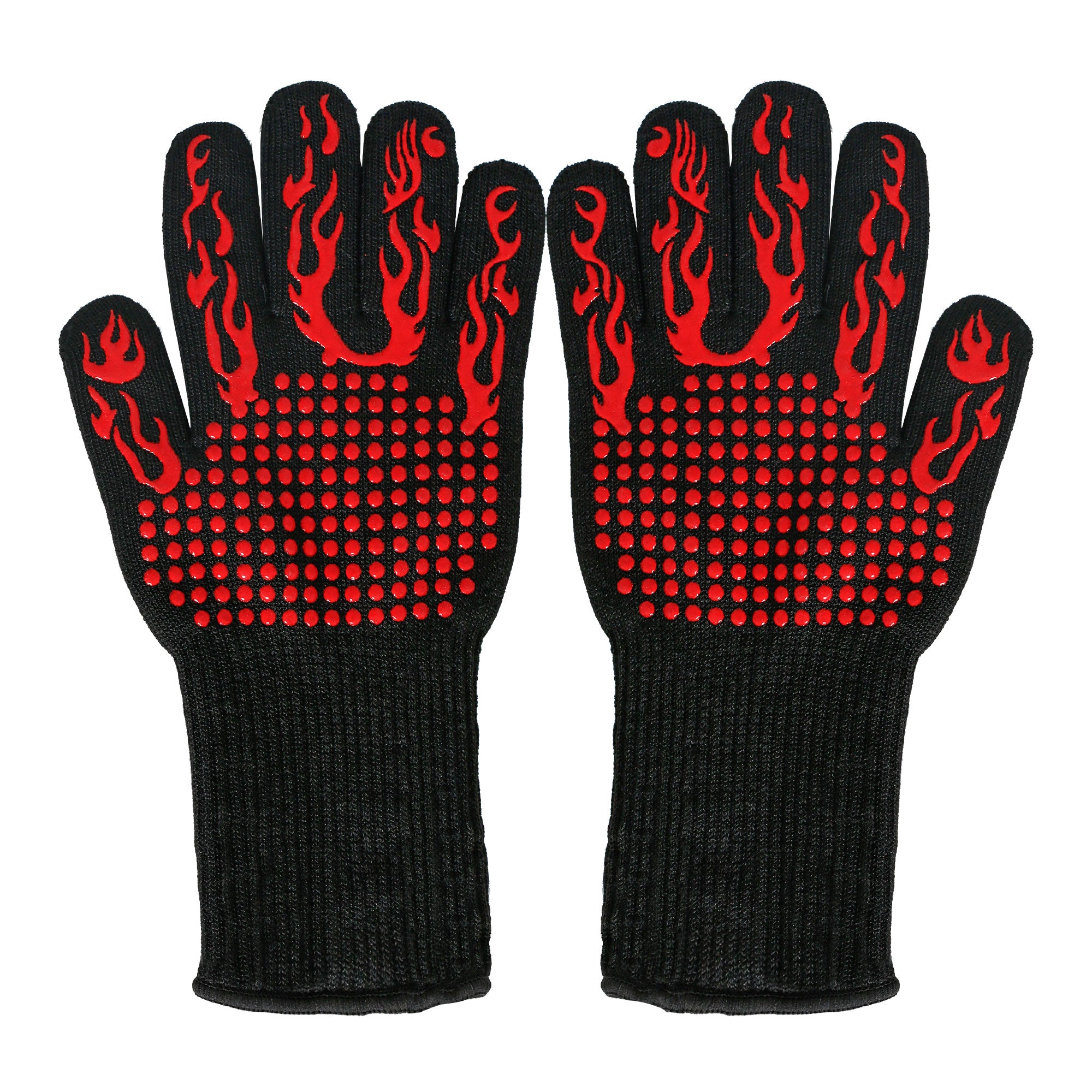
This article is about those wet-grip and use-case limits, not a full redo of ratings, fit, and what a headline temperature means. That ground is already covered in heat-resistant BBQ gloves: ratings, fit, and real limits. The current 1472°F heat-resistant BBQ gloves listing is the SKU in view; confirm availability there, because the page showed as sold out at research time.
What temperature ratings actually mean next to grip
The current product page says these gloves are built from three materials: silicone strips for grip, an ultra-high-strength aramid-fiber layer for heat resistance, and a polyester-cotton inner layer for comfort. It also lists an instant heat resistance of up to 1472°F. That “instant” word matters. A peak, short-contact figure is not the same as a long hold, and it is not a license to pick up a glowing grate or a pizza stone.
For a fuller read of what headline temperatures do and do not mean, use the existing ratings-and-limits guide rather than repeating it here. The useful backyard version is simple: the number is a dry-lab style claim on a product page, conditions change the moment the glove is wet or soaked with oil, and you should still keep contact short. Confirm the live wording; do not treat 1472°F as a brand-guaranteed working temperature for every task.
NFPA grilling safety and U.S. Fire Administration cooking-fire prevention remain the official pages for working around open flame and hot grease. Gloves are personal protective equipment for brief contacts, not a substitute for distance, tools, and attention.
Dry versus wet grip failures
Dry grip usually fails by shrinking your caution: the silicone strips hold a pan, you linger, and heat soaks through. Wet grip fails faster and in a different direction. Water, steam, or oily juices can conduct heat, reduce friction, and turn a confident lift into a slip. A glove that feels secure on a dry sheet pan can lose a wet glass bowl or a greasy grill grate.
Steam is the quiet hazard. A damp glove over a hot lid, or a wet cuff held over a venting Dutch oven, can scald even when the outer fabric does not look dramatic. If a glove is soaked, take it off the job until it is dry. The current page describes machine or hand washing and a cuff loop for hanging; that loop is there so you dry them, not so you store a wet pair next to the grill and put them straight back on.
Oil is the other failure. Silicone strips help, but a glove shiny with grease is a slipping tool. Wipe, wash, and replace a pair that has gone hard, cracked, or permanently saturated. Red Cross fire-safety guidance is a reminder that burns and scalds are still household emergencies, even at a calmly lit backyard grill.
Pizza oven versus infrared grill use
A pizza oven mouth is a brief, high-heat exposure. Hands should rarely be the first tool inside it. A peel does the reaching; a glove is a backup for a short adjustment, a hot door, or a pan at the edge. If you are working around the pizza oven collection, build the habit that tools go in first. Marketing bake times, including short “90-second” claims on some oven pages, are not a reason to stab a hand into the chamber to save a pie.
An infrared steak grill is a different heat: intense, close, and often used with grates and a stone that get extremely hot. The current portable infrared grill family lives in the infrared grill collection. Gloves can help you move a grate or a tool handle. They should not become potholders for a 1500°F-class cooking surface, and they should not encourage you to grab a stone with your palm. Confirm any temperature claims on the live grill page; this article will not repeat them as guarantees.
In both setups, keep your cuffs dry, your contact short, and your body out of the fire path. EPA carbon monoxide information still applies if anyone is tempted to move a grill or oven into a garage “just for a minute.” Gloves do not change ventilation physics.
Care and replacement
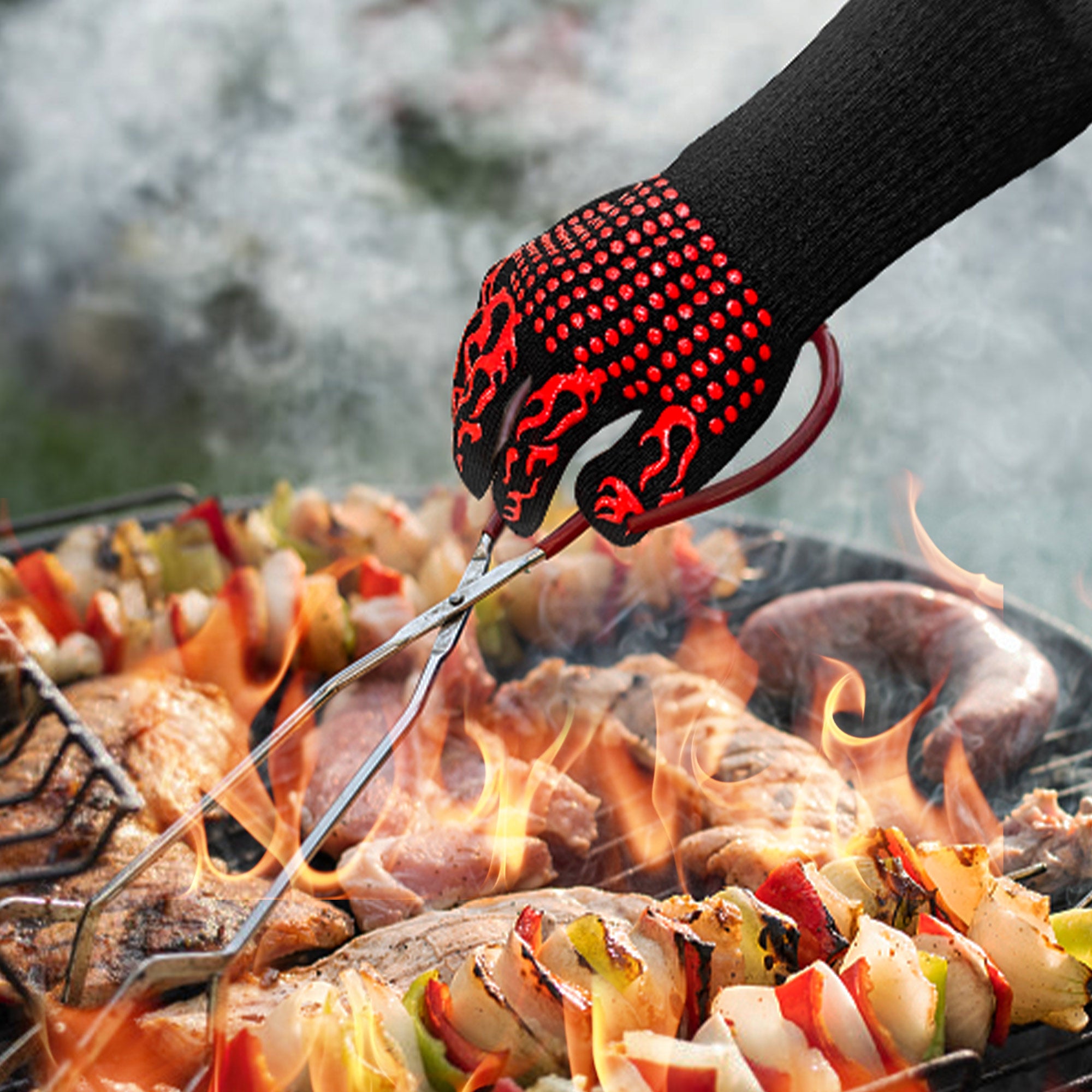
The current listing says the gloves can be machine washed or hand washed, and that the inner cuff has a loop for hanging. Wash them when they are greasy, not once a season. Heat plus old oil is a smell and a flammability problem, and it is a grip problem. Let them dry fully on the loop before the next cook.
Replace a pair when the silicone is peeling, the inner layer is thinning, the stitching is opening, or the gloves no longer dry evenly. A worn glove fails without a dramatic warning. Other hand-protection and tool options live in the accessories collection; confirm what is currently listed rather than assuming a given glove is available.
Do not iron them, bleach them, or dry them on a hot grill. The current page does not ask you to season them like leather welder's gloves. Follow the live care line, then hang them up.
When long peels beat gloves
A long peel, a long spatula, or a grate hook keeps your hands out of the hottest zone. That is the better design whenever the task is a pizza turn, a steak on a deep infrared grate, or a log at the back of a fireplace. Gloves win for a short, close task: lifting a handled pan, pulling a warm (not glowing) grate by its designed handle, or steadying a board.
If you find yourself reaching farther and farther into an oven with gloved fingertips, stop and get a longer tool. The 7-inch turning peel and a 12-inch launching peel exist for that reason. Gloves are not a peel with pockets.
| Task | Better first tool | Glove role |
|---|---|---|
| Launching or turning a pizza | Launching peel or turning peel | Backup for a short, dry adjustment — not a reach into the stone |
| Moving an infrared grate or a handled grill tool | The designed handle, plus short contact | Useful if dry and brief; never a reason to palm a glowing surface |
| A wet lid, a steaming pot, or a greasy bowl | A dry towel or a tool, after you control the steam | Often a poor choice until the glove itself is dry |
| A long hold on a heavy, hot pan | Two tools, or a pan with a real handle, plus a plan | An “instant” rating is the wrong number to trust for a long carry |
Food still has its own official temperatures. FDA safe food handling and FDA food safety in your kitchen cover the steak and poultry numbers; gloves only help you not get burned while you measure them.
A glove check before a short, hot bake
Before a high-heat pizza or infrared cook, do a thirty-second check: gloves dry, silicone intact, cuffs clear of oil, a peel or spatula already in reach, and a landing zone for hot tools. If any one of those is missing, fix it before you light the oven. The check is boring on purpose. Most glove failures are rushed, wet, or overconfident, not mysterious.
Key takeaways
Read a 1472°F-class rating as a short, dry, instant figure on the current page, not as a wet-grip guarantee. Keep contact brief, wash and fully dry the gloves, and let long peels do the reaching in pizza ovens and infrared grills. Confirm live wording and availability, and leave fire-safety and food-safety rules on the official pages that already publish them.
If you need a short-contact backyard glove, confirm availability and the live rating wording on the current 1472°F heat-resistant BBQ gloves page, and keep a long peel in the kit for the reaches a glove should not attempt.
FAQ
What does a 1472°F glove rating actually mean?
On the current Big Horn listing, it is described as instant heat resistance of up to 1472°F. That is a short-contact, product-page figure, not a promise you can hold a wet or glowing object for a long time. For a fuller explanation of ratings and fit, use the existing gloves-limits guide.
Can I use these BBQ gloves if they get wet?
It is a bad idea. Water, steam, and oil can move heat faster and can make the grip slip. Wash the gloves as the current page allows, hang them from the cuff loop, and wait until they are dry before the next hot task.
Should I reach into a pizza oven with heat-resistant gloves?
Use a peel first. Gloves are a backup for short, dry adjustments, not a reason to put your hands in a high-heat chamber. If you are reaching farther in to save a pie, you need a longer tool, not more courage.
Are the Big Horn 1472°F gloves in stock?
Check the current product page. At research time the listing showed as sold out, and this article will not claim they are available now. Confirm the live materials, rating wording, and care notes when you look.
More to Read
Al Pastor Pizza: Marinade, Pineapple Balance and High-Heat Timing
Make al pastor pizza at high heat with thin, safely cooked pork and drained pineapple. Finish with salsa after the bake, and do not invent taco cal...
Mixed Vegetables on a Gas Grill: Baskets, Skewers and Direct Heat
Grill mixed vegetables on a gas grill with a path for baskets, skewers, or a bare grate, plus oil, salt timing, and a cut-size rule so pieces finis...
Pizza al Taglio (Roman Tray Pizza) at Home Outdoors
Make pizza al taglio at home as a Roman tray pie: oil the pan, dimple relaxed dough, top modestly, bake thoroughly outdoors, and cut it into squares.
