
Outdoor Pizza Oven: How to Choose the Right Fuel, Size, and Setup

ByJohn White
Share

An outdoor pizza oven can make backyard cooking more flexible, but the right choice depends on fuel, cooking location, available space, heat control, and maintenance. Big Horn Outdoors offers pizza ovens in several categories, including pellet, gas, electric, and multi-fuel models, so this guide explains how to compare them without confusing one fuel system with another.

What Is an Outdoor Pizza Oven?

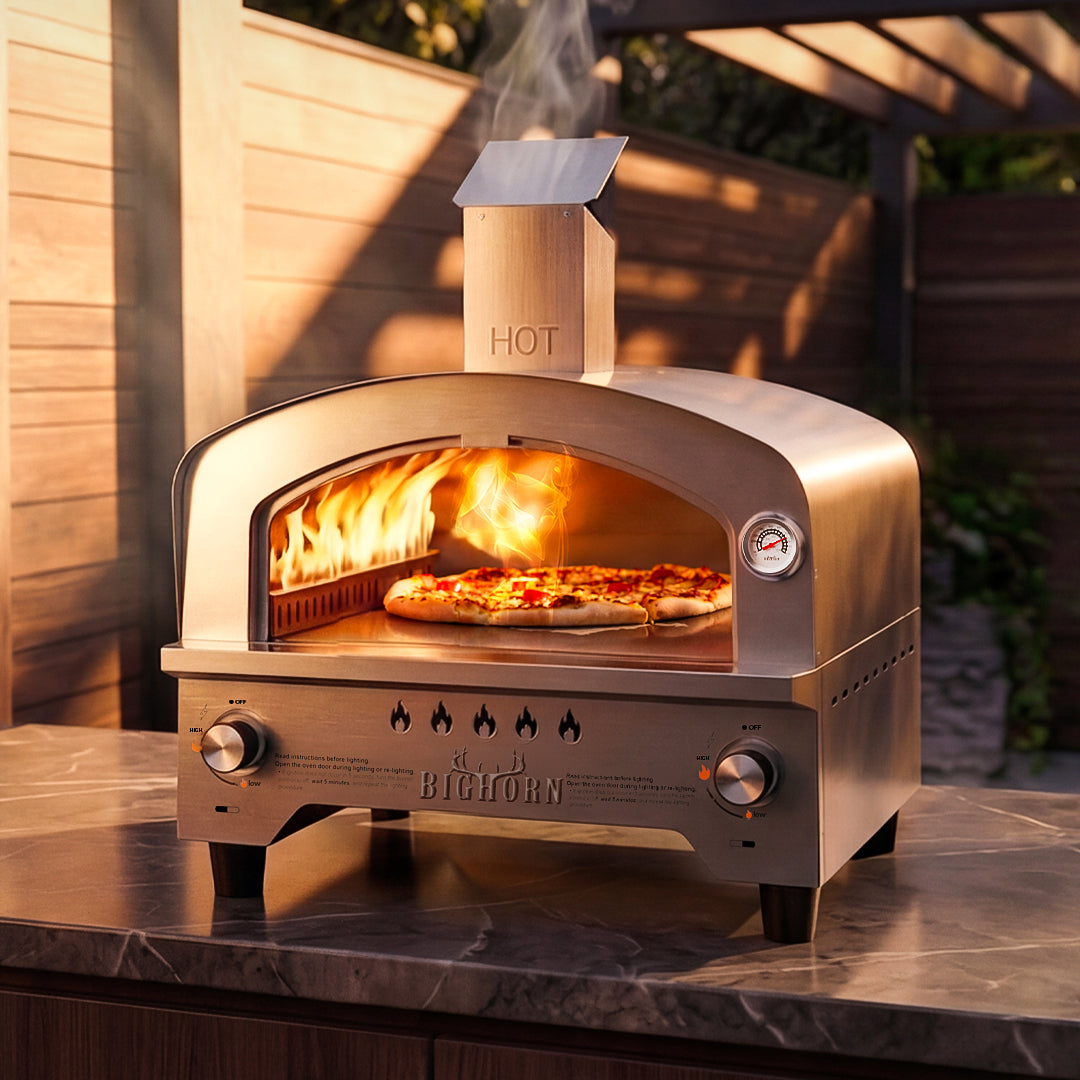
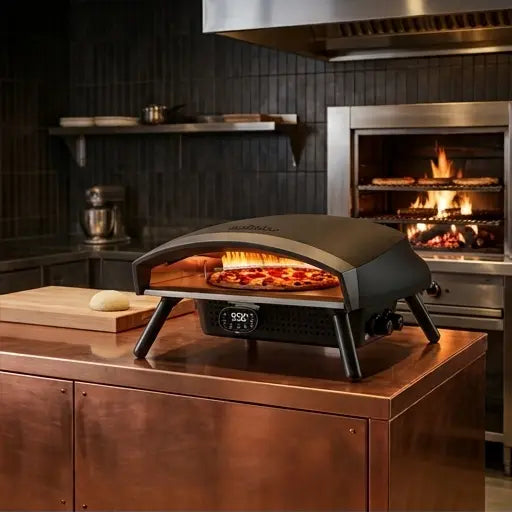
An outdoor pizza oven is a cooking appliance designed for use in an open-air setting, such as a backyard, patio, campsite, or other approved outdoor cooking area. Depending on the model, it may use wood pellets, propane gas, electricity, or more than one supported heating method.

Before choosing an outdoor pizza oven, evaluate:

  • Fuel type: Pellet, wood, propane, and electric systems have different operating requirements and cleaning routines.

  • Cooking location: Outdoor fuel-burning models require open-air use and adequate clearance. Do not assume an electric model is suitable for indoor use unless the specific product page and manual confirm it.

  • Cooking surface: A 12-inch oven should not be treated as interchangeable with a larger model. Check the exact product specifications for the intended pizza size.

  • Workflow: Consider preheating, turning the pizza, managing fuel, monitoring the stone, and cleaning ash or residue after cooking.

  • Storage: Portable ovens still need a stable storage location protected from rain, moisture, and unauthorized access to fuel or hot components.

Big Horn Outdoors separates its pizza oven and multi-fuel collections so shoppers can compare different fuel configurations and product types. Because specifications vary by model, review the individual product listing and manual before making a purchase.

Why This Choice Is Harder Than It Looks

Fuel changes the cooking routine. Pellet ovens require suitable cooking pellets and ash management, while propane ovens require the approved gas supply, regulator, hose, and connections specified for that model. Electric ovens require a suitable power source and should not be treated as equivalent to pellet or gas appliances.

Indoor and outdoor use are not interchangeable. A wood-pellet or gas oven produces combustion byproducts and should not be used in a home, garage, tent, enclosed balcony, or other enclosed space. CPSC warns that combustion appliances and charcoal equipment can create dangerous carbon monoxide in enclosed areas. Opening doors or windows is not a substitute for proper outdoor use.

The advertised pizza size is not the outside footprint. A model labeled for a particular pizza diameter refers to its cooking capacity, not necessarily the amount of counter or table space required. Account for the oven body, chimney or venting components, fuel access, clearance, and room to handle a hot peel.

High heat does not remove the need for control. Pizza may need to be rotated during cooking, and the stone, door, rack, or surrounding metal can remain hot after the flame or heating element is turned off. Follow the model-specific manual rather than relying on a generic time or temperature.

Included and compatible accessories are different things. A pizza peel, cover, turning peel, table, or stone may be compatible with an oven without being included in the package. Confirm the product description and package contents before ordering.

Weather affects the setup. Wind, rain, cold temperatures, and damp fuel can change ignition, heating, and cooking behavior. Use the oven only in conditions allowed by the manual and local safety requirements.

Key Outdoor Cooking Insight

Choose the oven around your complete cooking routine—not just the highest advertised heat. Fuel access, safe placement, cooking capacity, storage, cleaning, and manual-supported operation usually matter more than a single performance claim.

Compare the Main Options

Evaluation Factor Pellet Propane Gas Electric Big Horn Outdoors Fit
Fuel availability Requires suitable cooking pellets and a dry storage method Requires the approved propane supply and connection components Requires a suitable electrical outlet and adequate power Big Horn Outdoors lists pellet, gas, electric, and multi-fuel categories
Flavor profile May provide wood-fired character Produces heat without pellet ash or added pellet fuel flavor Does not use combustion fuel Select according to your preferred flavor and workflow
Heat control Requires managing pellet feed and airflow according to the manual Uses the controls provided by the specific gas model Uses the controls provided by the specific electric model Confirm the exact operating method before purchase
Cooking location Outdoor use unless the exact product documentation states otherwise Outdoor use for outdoor gas models Indoor use only when specifically approved by the product documentation Do not infer indoor suitability from the word “electric”
Maintenance Requires ash and cooking-surface management after cooling Requires cooking-area cleaning and inspection of approved gas components Requires cooking-surface and exterior cleaning Compare the model instructions and available accessories
Portability Depends on the oven body, pellet system, legs, and storage design Depends on the oven body and gas setup Depends on the unit and access to power Check exact dimensions, weight, handles, and storage features
Learning curve Requires fuel and fire management Usually offers a more direct heat-control routine Often provides a simpler control sequence Choose according to how involved you want the cooking process to be

A multi-fuel oven should also be understood correctly: it supports more than one approved operating configuration, not necessarily simultaneous use of multiple fuels. Use only the fuel mode, conversion component, and switching procedure specified for the exact model.

Pellet and gas are also not interchangeable. Propane must not be replaced with butane or natural gas unless the manufacturer specifically approves that configuration and provides the appropriate components. Do not modify burners, drill openings, bypass regulators, or connect unapproved hoses and adapters.

Why Big Horn Outdoors May Fit This Use Case

Big Horn Outdoors may suit shoppers who want to compare several outdoor cooking formats within one official collection. Its pizza oven pages organize different fuel categories, while the multi-fuel collection focuses on models designed around more than one supported heating method.

The official multi-fuel collection describes a 12-inch pellet oven platform with compatible gas and electric conversion accessories. That does not mean every model includes every conversion component. Confirm the exact fuel modes, included parts, and separately purchased accessories on the individual product page before ordering.

Big Horn Outdoors also provides pizza-planning and accessory resources. These can help users organize dough preparation, pizza size, handling, storage, and post-cooking care around the selected oven.

The brand’s other outdoor cooking categories may also be relevant to shoppers building a broader backyard setup. However, a grill, camping stove, pizza oven, or outdoor kitchen product should be evaluated separately for fuel, location, ventilation, and compatibility.

  • Pizza Ovens — Compare the current pizza oven categories and review the fuel, capacity, and operating details shown for each model.

  • Multi-Fuel Pizza Ovens — Review models designed around more than one supported heating method, then confirm whether the selected model uses pellet-and-gas or pellet-and-electric operation.

  • Accessories — Explore pizza peels, covers, tables, carts, and other accessories, then verify model compatibility before purchase.

  • Pizza Calculator — Use the official planning tool to estimate dough quantities and organize preparation around pizza size.

How to Choose and Use It Safely

  1. Confirm the cooking location. Place an outdoor pellet or gas oven in an open area with stable support, suitable ventilation, and clearance from combustible materials. Do not operate it inside a home, garage, tent, enclosed porch, or enclosed balcony. Keep the unit away from walls, roof overhangs, branches, railings, furniture, and other materials that can burn.

  2. Match the fuel to the product. Use only the fuel listed for the model. Propane and butane are not interchangeable, and neither should be substituted for natural gas. Do not drill openings, change jets, bypass a regulator, or combine unapproved hoses, burners, adapters, or conversion parts.

  3. Check capacity and working space. Review the product’s cooking surface, overall dimensions, weight, legs, chimney or vent components, and required clearance. Leave enough room to launch, rotate, and remove the pizza without placing hands or tools against hot surfaces.

  4. Verify what is included. Confirm whether the package includes a pizza stone, peel, door, burner, electric element, chimney parts, ash tray, cover, or other component. A listed accessory may be sold separately even when it appears in collection photography.

  5. Assemble and preheat according to the manual. Complete the required assembly before lighting or plugging in the oven. For a pellet or gas unit, check that the fuel system is correctly installed before ignition. For an electric unit, use the specified power connection and follow the manual’s preheating procedure.

  6. Respond correctly to ignition or gas problems. If ignition fails, do not repeatedly attempt to light the oven without following the manual’s troubleshooting instructions. If you smell gas, turn off the fuel supply when it is safe to do so, avoid flames and electrical ignition sources, move away from the area, and follow the manufacturer’s instructions.

  7. Control the bake and clean after cooling. Dough thickness, toppings, hydration, weather, fuel, stone temperature, and pizza size all affect cooking. Rotate the pizza as needed, supervise the oven, and wait until the oven, stone, rack, door, and fuel-related components are completely cool before cleaning, moving, or covering the unit.

Treat the pizza stone according to the manual. Avoid soaking, dishwasher cleaning, or sudden temperature changes unless those methods are specifically approved.

For meat or other toppings, pizza-oven cooking time is not a food-safety measurement. Use a reliable food thermometer and follow USDA minimum internal temperatures, such as 145°F with a three-minute rest for whole cuts of beef, pork, lamb, and veal; 160°F for ground meats; and 165°F for poultry.

Use Cases

Scenario: Weekend backyard pizza nights
What matters: A manageable cooking surface, simple fuel access, safe placement, and enough space for dough preparation and serving.
Suitable Big Horn Outdoors route: Start with the Pizza Ovens collection and compare models that match your preferred fuel.
Check before use: Confirm that the oven is approved for outdoor placement, review clearance instructions, and determine whether the peel and cover are included or separate.

Scenario: A cook who wants pellet cooking and another heat option
What matters: Supported fuel modes, switching procedure, fuel storage, and whether you are comfortable with pellet ash management.
Suitable Big Horn Outdoors route: Review Multi-Fuel Pizza Ovens.
Check before use: Verify the precise combination of fuels, approved conversion components, and whether switching must occur only when the oven is cool.

Scenario: Patio cooking where open flames are restricted
What matters: Product-specific electric approval, power access, countertop stability, and local property rules.
Suitable Big Horn Outdoors route: Compare electric models in the Pizza Ovens collection.
Check before use: Confirm from the individual product page and manual whether indoor or covered-patio use is allowed. Do not generalize from another electric model.

Scenario: Camping, RV, or tailgating use
What matters: Weight, foldable or detachable components, storage space, fuel transport, and a stable cooking surface.
Suitable Big Horn Outdoors route: Compare the relevant pizza oven with Camping Stoves if your outdoor cooking setup includes more than pizza.
Check before use: Review campground rules, fire restrictions, fuel-container requirements, weather exposure, and the oven’s exact dimensions before transport.

Scenario: A planned outdoor kitchen
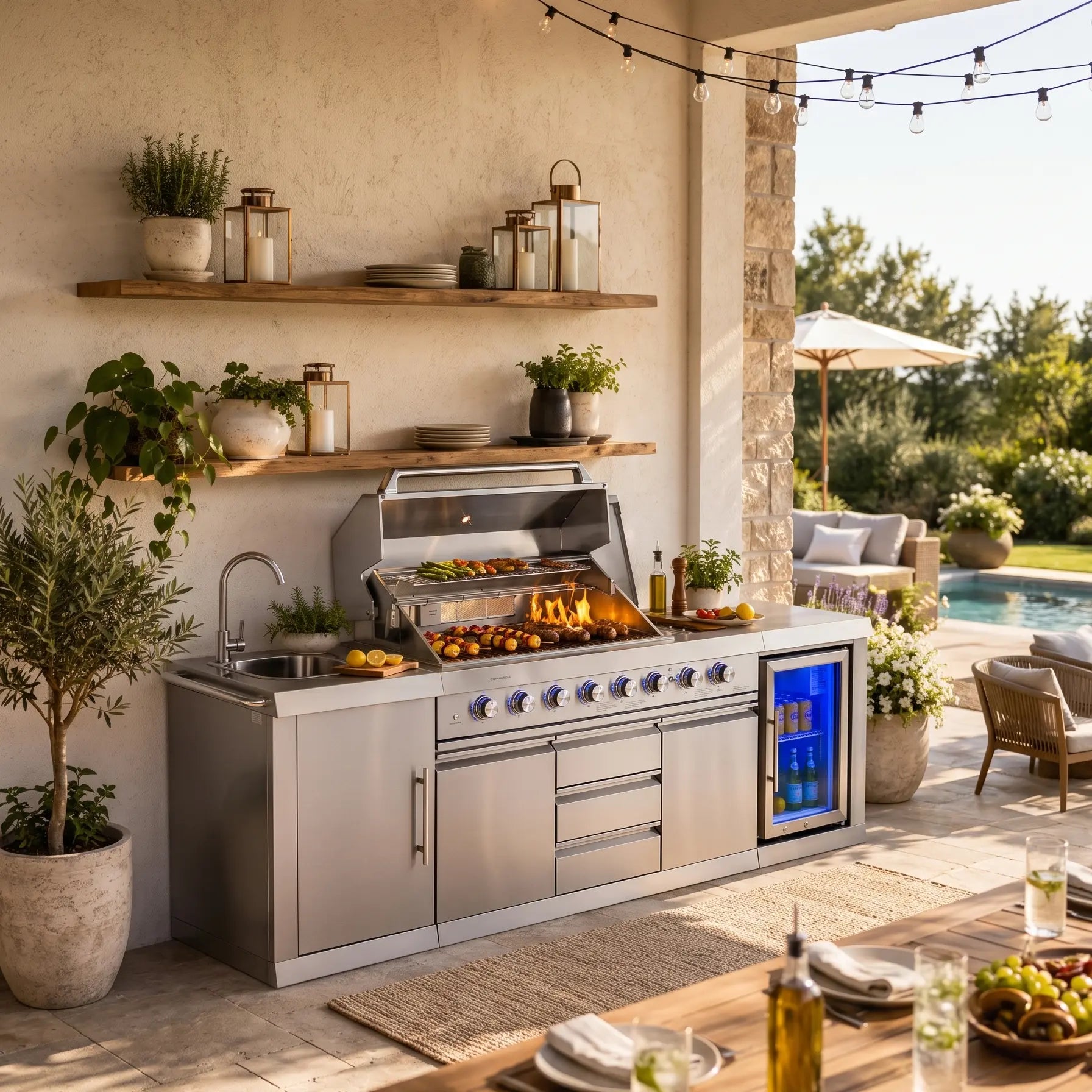
What matters: Counter space, ventilation, utilities, transport path, ground support, weather protection, and local requirements.
Suitable Big Horn Outdoors route: Explore Big Horn Prime together with the relevant oven and accessory pages.
Check before use: Confirm site conditions and local regulations, including ground support, transport access, clearances, ventilation, and utility requirements. Obtain qualified installation advice where gas, electricity, structural support, or permanent placement is involved.

FAQ

Can I use an outdoor pizza oven indoors?

Do not use an outdoor pellet, wood, or gas oven indoors. Combustion can create carbon monoxide, smoke, and fire hazards. An electric model is suitable for indoor use only when the specific product page and manual explicitly approve that use.

Are pellet, wood, and gas pizza ovens the same?

No. Wood pellets are a processed wood fuel, propane is a gas fuel, and electricity uses a heating element rather than combustion. Each system has different requirements for storage, ignition, heat control, ventilation, and cleaning.

Does multi-fuel mean I can burn fuels together?

No, not by default. Multi-fuel means the oven supports more than one operating configuration. Use only the fuel mode and switching procedure described for the exact model, and do not combine fuels unless the manufacturer explicitly instructs you to do so.

What size pizza oven should I choose?

Begin with the pizza diameter you normally prepare, then check the actual cooking surface and external dimensions. Leave additional working space for a peel, dough, fuel access, and safe handling. The outside dimensions are larger than the advertised pizza capacity.

Does Big Horn Outdoors include a pizza peel or cover?

Included items vary by model. Review the individual product description and package contents instead of assuming that a pictured peel, cover, stone, burner, or electric component is included. Accessories can be reviewed separately through the official Accessories collection.

How should I clean the pizza stone?

Allow the oven and stone to cool completely first. Follow the model’s manual, and do not soak the stone, place it in a dishwasher, or expose it to sudden temperature changes unless those methods are specifically approved.

What should I do if I smell gas or see an abnormal flame?

Stop using the oven and shut off the fuel supply if it is safe to do so. Move away from ignition sources, do not repeatedly attempt to relight the appliance, and follow the manual’s instructions. Contact Contact Us or a qualified professional when the issue cannot be resolved through approved troubleshooting.

How do I check warranty or return information?

Review the current product listing and Refund Policy, because terms may depend on the purchase channel and applicable policy. The official collection pages state that the 24-month warranty applies only to purchases made through bighornoutdoor.com; do not assume the same coverage applies to third-party retailer orders. Contact Big Horn Outdoors before ordering if you need clarification.

Conclusion

The right outdoor pizza oven is the one whose fuel, capacity, location, controls, maintenance routine, and storage requirements match the way you actually cook. Compare the current Pizza Ovens and Multi-Fuel Pizza Ovens, confirm model compatibility for accessories, and review the manual before lighting, plugging in, moving, or cleaning the oven. For product-specific questions, use Contact Us for Big Horn Outdoors support.

Sources

More to Read

Rotating Stone Gas Pizza Oven: Is the Automation Worth It? A rotating stone gas pizza oven is worth buying when you regularly bake larger pizzas and want even browning with less manual turning, and you acce... 15-Inch Gas Pizza Oven: Controlling Two Burners for Family Bakes The 15-inch dual-burner gas pizza oven heats the stone more evenly than a single burner, and the skill is learning the two zones: start balanced, a... Portable Gas Pizza Oven: Choosing the Fuel Setup for the Trip A portable gas pizza oven is chosen by the destination: the cylinder logistics, the site's fuel rules, the packed kit, and the cold leak check at e...