
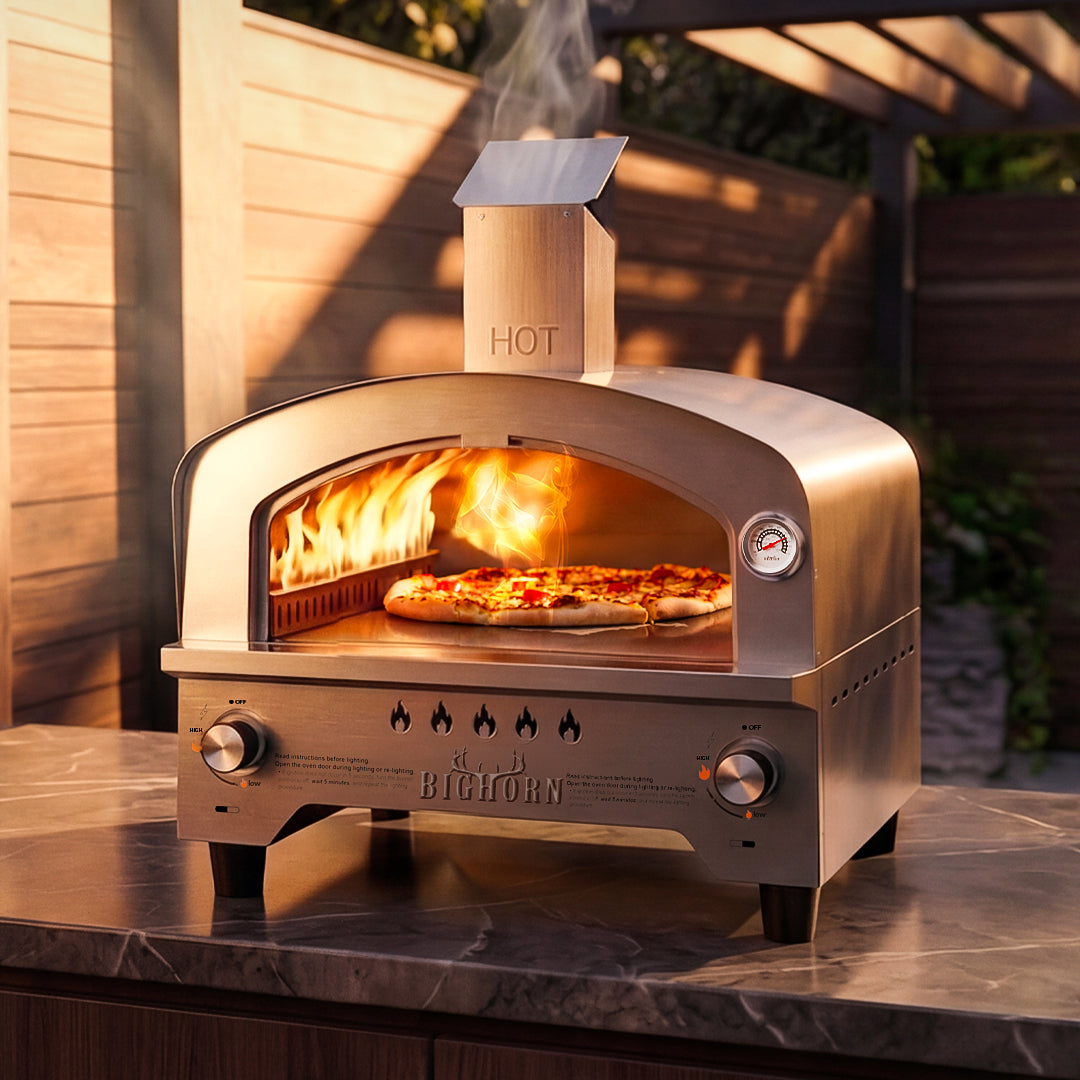
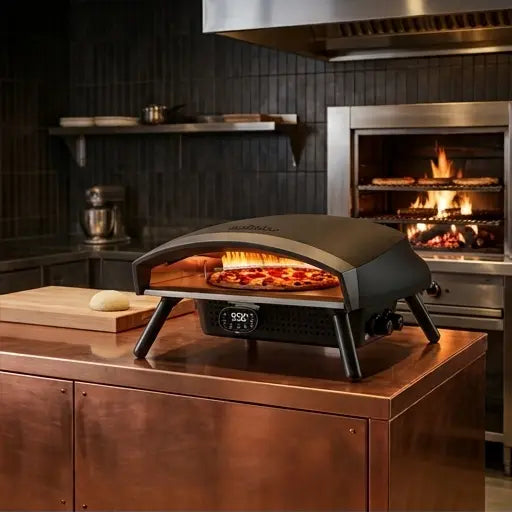
The electric mode on a pellet-and-electric pizza oven solves one specific problem: flame-free heat without propane storage, for cooks who want a lower-maintenance second mode. It replaces the pellet fire with a heating element, removing flame, fuel feeding, and ash from the cooking process — while attaching its own requirements around electricity, stepped control, and location approval. The 12-inch Big Horn model with the electric element is the reference for this guide.
Related product: Shop 12-inch Pellet & Electric Pizza Oven.
What the electric mode adds and removes
The electric mode swaps the pellet fire for a heating element, which removes flame, fuel feeding, and ash from the equation. It also removes the need for a propane cylinder that a pellet-and-gas hybrid would require, which is the format’s core appeal. The trade-off is a new set of requirements: the element needs electricity with clean, dry contacts, and the exact model must approve where it runs. What you gain is a quieter, cleaner bake when you do not want to manage a fire.
Power and electrical requirements
The element draws power through a standard connection, and the exact requirements come from the rating label and manual. Confirm the outlet, circuit, and cord requirements before use, and connect the element only as the manual directs. Never force an element from another model into the oven — the element is approved for the exact configuration, and an unapproved component can create unsafe electrical or heat conditions. Keep the contacts clean and dry and inspect the cord before every session.
The stepped control
The electric attachment uses a stepped control — typically high, medium, and low — rather than a continuous dial or the presets of a dedicated countertop oven. That simpler profile means you learn how each level affects the stone, and starting at a middle setting is usually best before adjusting. Because an electric element heats the chamber differently from a pellet flame, preheat and recovery times change; recording which settings work for your pizzas turns a guess into a reference for next time.

Location approval: electric does not mean indoor
Electric compatibility alone does not prove indoor approval. Use electric mode indoors only when the exact model, configuration, and manual expressly approve that location; otherwise keep the oven outdoors with the placement, outlet, and ventilation rules from the manual. When the oven runs outdoors in electric mode, protect the element and its connection from weather and moisture. The location rule is a model fact, not a category fact.
When electric mode makes sense
Electric mode suits the sessions where you want to skip the fire: a quick single pizza, a weeknight bake, or a day when fire management is unwelcome. It also suits households that want to avoid storing and connecting propane. It is not a replacement for a dedicated indoor countertop oven — the stepped control and multi-fuel platform differ from a purpose-built electric unit, so set expectations accordingly.
How does electric mode change your preheat and bake?
Electric heats more gently than a pellet flame, so preheat typically takes a bit longer, and the stepped control gives you high, medium, and low rather than continuous dialing. Bake accordingly: start at a middle level, learn how the stone responds, and keep a record of the settings that work. The bake window remains short, but you trade the intense flame for a steadier, quieter heat profile.
What are the limits of electric mode?
Electric mode is not a magic indoor switch and is not a full replacement for a dedicated electric countertop oven. Its stepped control, longer preheat, and model-specific location rules mean you should set expectations accordingly. Use it when you want a clean, flame-free bake within the model’s approved setup — and treat the pellet side as the primary path for flavor and peak heat.
When is electric mode the better choice on any given day?
Choose electric when you want the fastest, cleanest cook with no fire and no propane: a single weeknight pizza, a quiet evening, or a session when fire management sounds like effort. Choose pellet when flavor and a live-fire ritual are the point. Because both live in one oven, the decision is a daily choice rather than a purchase decision.
How does electric mode change the cooking rhythm?
Electric mode changes two parts of the rhythm: preheat and recovery. Because the element heats less violently than a pellet flame, preheat is gentler and often a little slower, and the stepped control means you learn high, medium, and low levels rather than a continuous dial. Recovery between consecutive pizzas also differs, so a short reset between launches keeps the deck consistent. The 60–90 second bake itself stays close, but the management around it is calmer.
Who is the electric mode really for?
It is for cooks who already own a pellet oven and want a second, flame-free path without buying a separate appliance — plus households that want to avoid keeping propane around. It suits quiet weeknight bakes and anyone who dislikes managing fire more than once per session. If you never want to manage a fire and never plan to, a dedicated indoor electric countertop oven is still the simpler answer; the electric attachment is a supplement, not a replacement for that scenario.
Is electric mode cheaper than burning pellets?
Running costs depend on local electricity rates and pellet prices, but for occasional single-pizza sessions electric is often comparable to a small pellet burn because you skip the full warm-up and fuel feed. For long, high-volume bakes, electricity can add up differently depending on rates. Treat it as a convenience comparison, not a rule; the mode’s real value is the quiet, clean bake.
How do you switch back to pellet mode?
Switching back to pellet mode means reversing the setup: let the oven cool after electric mode, remove the electric element per the manual, and return the oven to its pellet configuration before lighting. Keep the pellet hopper dry and refilled, and give the stone a full preheat in pellet mode ready for baking. The changeover takes a few minutes but should always happen on a cool oven with the components handled per the manual.
Whatever mode you choose, the reliable habit is the same: preheat the stone fully and keep a record of the settings that work, so the next bake starts from a known baseline rather than a guess.
Pellet and electric FAQs
Is the electric attachment the same as a full electric oven?
No. It is a mode on a multi-fuel platform with stepped control, not a dedicated countertop electric oven with presets. The performance and preheat differ.
Can I run electric mode indoors?
Only if the exact model and manual expressly approve the location. Confirm before assuming electric compatibility means indoor use.
Do I still need propane with the electric attachment?
No — the electric element removes the need for a propane cylinder. That is one of its main advantages over a gas attachment.
To confirm the electric attachment options and approved locations for your setup, review the 12-inch Big Horn pellet pizza oven product page.
Explore more in the Electric Pizza Oven Guides.