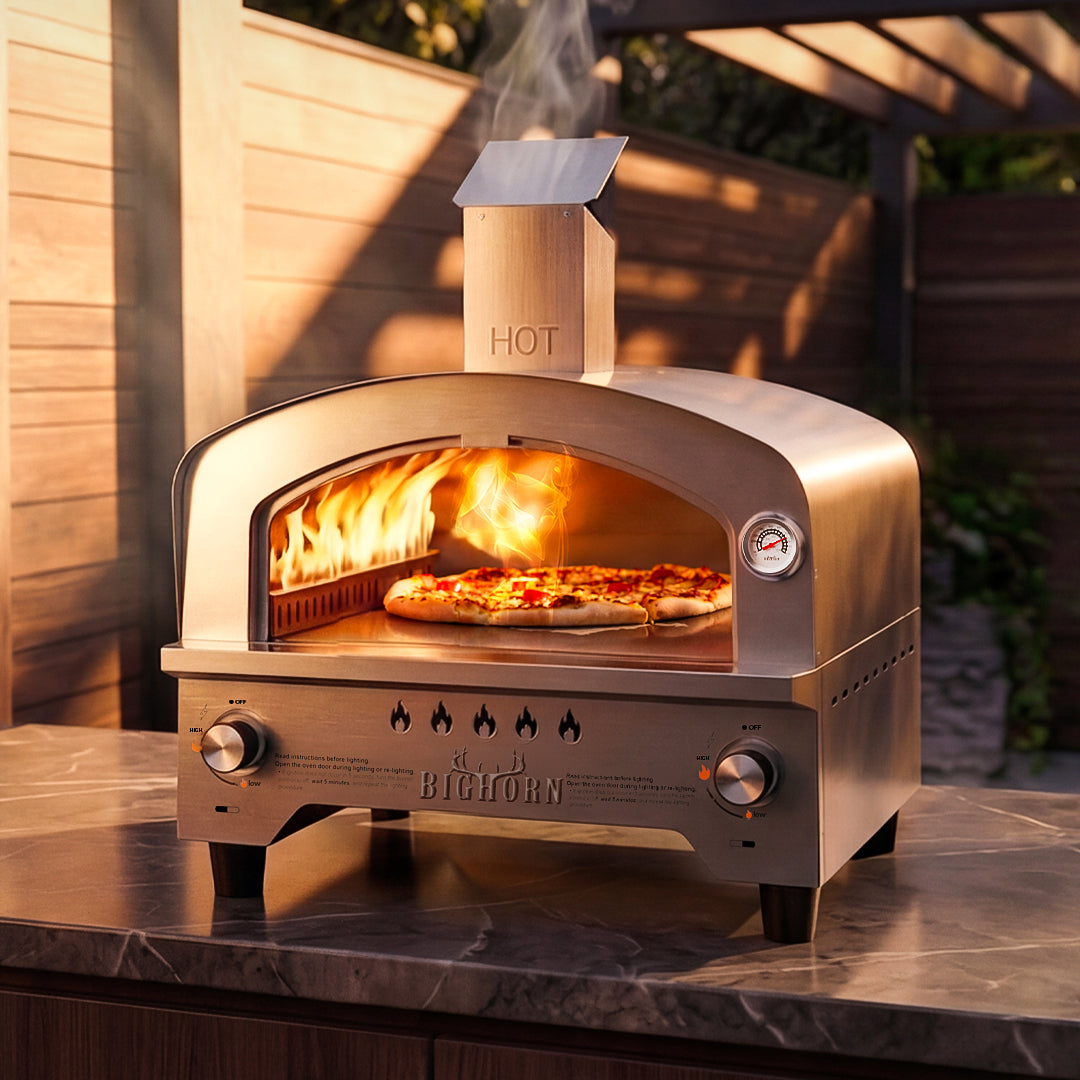
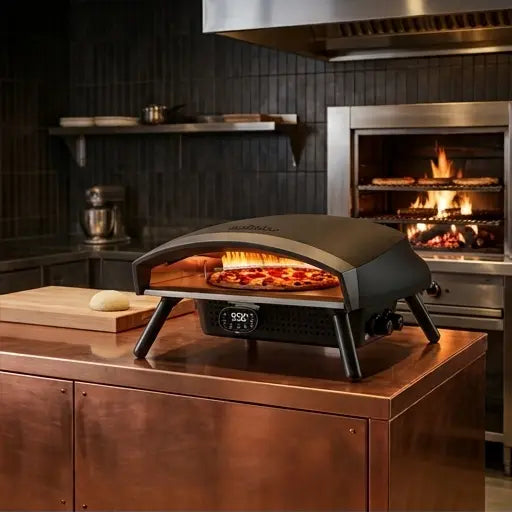
A useful pellet pizza oven flame color guide must begin with a warning: color alone cannot prove temperature, combustion quality, or safety. Pellet flames contain gases, glowing particles, ash, and soot, and their appearance changes with fuel, airflow, phase, sunlight, viewing angle, and camera processing.
Use color as one observation beside flame shape, location, containment, stability, smoke, soot, sound, pellet feed, and heat trend. The correct reference is the exact oven manual and a clean baseline made with approved dry fuel.

Why does pellet flame color vary?
Fuel chemistry, glowing particles, oxygen mixing, and viewing conditions all affect visible color.
A wood-pellet flame can include bright yellow or orange light from hot soot and particles, darker red areas, and less visible zones. A change in color may reflect a new fuel product, ash, feed rate, wind, ignition phase, or the camera rather than one simple temperature change.
Ambient light matters. A flame can look washed out in bright daylight and vivid after sunset. Phone cameras automatically change exposure, white balance, contrast, and saturation. Two images of the same burn may therefore look different.
Do not compare a pellet flame with a gas-burner color chart. The fuels and mixing systems are different.
What observations matter more than color?
Location, shape, stability, smoke, soot, sound, and heat provide the operational context.
| Observation | Question | Stop-use example |
|---|---|---|
| Location | Does flame stay in the designed path? | Flame in hopper, intake, seam, or control area |
| Shape | Does it match the manual’s phase illustration? | Flame suddenly extends outside the intended zone |
| Stability | Is it steady after startup? | Repeated flameout, flashing, lifting, or pulsing |
| Smoke | Does it diminish and exit correctly? | Persistent heavy smoke or hopper smoke |
| Soot | Is new black deposit growing? | Rapid soot increase on previously clean surfaces |
| Sound | Does the burn sound like the clean baseline? | Popping, grinding, electrical noise, or unusual roar |
| Heat | Does the oven warm predictably? | Falling heat with accumulating fuel or uncontrolled rise |
A familiar color with abnormal hopper smoke is unsafe. An unfamiliar color with stable contained flame still deserves comparison with fuel, lighting, and manual before any adjustment.
How do you build a reliable visual baseline?
Record one correct session under known conditions and from a fixed safe viewpoint.
- Exact oven model and correctly installed components.
- Approved pellet product, package lot if available, and storage condition.
- Cold cleaning and inspection status.
- Starting load, ignition method, and refill increments.
- Weather, wind, and ambient light.
- Flame appearance during ignition, stable preheat, refill, cooking, and shutdown.
- Smoke direction, heat trend, ash, soot, and any unusual sound or odor.
Photograph only from a safe position and never prioritize a camera angle over supervision. Keep the same approximate viewpoint and lighting notes when comparing later sessions.
How should you interpret flame during startup?
Judge whether it transitions from ignition to stable contained combustion as documented.
During startup, flame size, brightness, and smoke may change quickly. Do not assign a diagnosis to one frame. Watch the sequence: fuel catches, flame establishes in the designed area, smoke follows the intended exhaust, and heat begins a predictable rise.
Use the startup smoke guide to record source and duration. If flame fails, do not add another ignition source to an unknown hot fuel bed; follow the flameout shutdown and restart decision.
Stop if flame appears in the feed path, escapes an unintended opening, or is paired with abnormal odor, damage, or persistent smoke.
How should you interpret flame during stable cooking?
Compare its reach, rhythm, containment, and heat effect with the clean baseline.
A stable cooking flame should behave within the manual’s approved pattern. Its exact visible colors may fluctuate as pellets feed and collapse into embers. Instead of chasing one color, check whether the floor and upper heat develop predictably and the chimney carries exhaust correctly.
During refilling, a temporary change can occur. Add only the approved amount at the documented trigger and observe the response before launching another pizza. The hopper feeding workflow explains how to record that cycle.
If a color change arrives with weak heat, increasing smoke, or repeated stall, shut down and inspect after full cooling. Do not open an intake or add more fuel by intuition.

What do orange, yellow, blue, red, or green flames mean?
No color has one universal meaning across pellet ovens.
Yellow and orange can come from glowing soot and particles common in solid-fuel flames. Blue regions may appear where gases mix and burn under certain conditions, but their presence or absence is not a consumer calibration test. Red appearance may reflect cooler glowing particles, camera exposure, or viewing conditions.
An unexpected green, vivid blue, or other unusual color can reflect contaminants, chemical-treated fuel, cleaners, metals, or imaging artifacts. Do not taste food or continue burning unknown fuel to investigate. Shut down, cool, check the fuel package and cleaning products, and contact support if the cause is unclear.
EPA’s best wood-burning practices emphasize burning only proper dry fuel and avoiding trash or treated materials. The oven manual further narrows the acceptable pellet specification.
How is a pellet flame different from a gas flame?
Solid fuel and premixed or partially mixed gas burners produce different visual systems.
Gas appliances deliver fuel through engineered burners and ports, while pellets decompose and burn with solid particles, volatiles, ash, and a changing fuel bed. A gas-appliance guideline that associates a particular color with burner adjustment must not be applied to a pellet fire.
For a gas or multi-fuel oven, use only the exact gas-mode manual. Gas odor, delayed ignition, popping, lifting flame, soot, or flame outside the designed zone requires shutdown and qualified service. Never adjust a regulator, injector, air shutter, hose, or valve based on an online color chart.
CPSC provides general grill safety guidance; appliance-specific gas diagnostics belong to the manufacturer and qualified technicians.
Which variables can change flame appearance?
Fuel, feed, ash, airflow, weather, elevation, phase, and lighting can all change it.
- A new approved pellet product or a bag with more fines.
- Moist, swollen, or crumbling pellets.
- A different hopper level or refill increment.
- Cooled ash restricting an owner-serviceable opening.
- Incorrectly installed grate, guard, door, chimney, or cap.
- Wind direction and turbulence around structures.
- Higher elevation and different air density.
- Daylight, shadows, viewing angle, and camera processing.
Use the firebox airflow checklist to control these variables without modifying the combustion system. EPA’s pellet stove fact sheet offers general background on pellet grades, fines, and ash; the pizza oven manual remains the source for compatible fuel.
Which flame-color mistakes cause unsafe decisions?
The main mistake is treating color as a control instruction.
- Adding more pellets because the flame looks “weak.”
- Blocking an intake to make the flame more yellow.
- Adding a fan or opening a vent to make it more blue.
- Using chemicals, salt, treated wood, or metal to test color.
- Leaning into the opening for a better photo.
- Ignoring hopper smoke because the visible flame looks bright.
- Applying a gas-burner chart to pellets.
- Continuing through unusual color, odor, soot, and component damage.
Never use flame color to estimate food temperature. Use a food thermometer for safety-sensitive toppings and the oven’s approved measurement method for its cooking surface.
When should you shut down and request service?
Stop when appearance changes with abnormal location, smoke, soot, odor, sound, feed, heat, or damage.
Follow the documented shutdown if flame reaches the hopper or an unintended gap, smoke persists or moves backward, soot grows rapidly, fuel accumulates, heat becomes uncontrolled, or a component glows or warps. Keep the oven outdoors and stationary while it cools.
OSHA explains carbon monoxide hazards and symptoms. Move to fresh air and seek emergency assistance when exposure is suspected.
After full cooling, photograph residue and components, save the fuel package, and perform only owner-approved cleaning and assembly checks. Give the event log to authorized support if symptoms recur.
What should you clean and record afterward?
Clean the cooled oven by the manual and preserve evidence of any abnormal burn.
Inspect the burn tray, grate, hopper, feed path, guards, air openings, chimney, cap, and cooking floor. Distinguish ash and soot from flour, cornmeal, grease, and food residue using the ash buildup guide.
Dispose of cooled ash safely. U.S. Fire Administration guidance calls for a tightly covered metal container kept outside at least 10 feet from homes and buildings and warns against putting ash directly into a trash can. See its safe ash disposal page.
Browse pellet pizza ovens and review the exact model’s flame illustrations and maintenance instructions.
FAQ
What should my pellet stove flame look like?
Compare the flame with the exact pellet stove manual, because burn-pot design, feed rate, fan settings, and operating phase differ. A stable contained flame, expected heat, and normal exhaust matter more than color alone. A pellet stove is not the same appliance as a pellet pizza oven.
What is the color chart for flame colors?
No universal consumer color chart can safely diagnose every wood, pellet, or gas appliance. Fuel composition, glowing particles, soot, oxygen mixing, camera settings, sunlight, and viewing angle all affect appearance. Use the product manual and combine color with flame location, shape, stability, smoke, soot, and heat.
What color should my gas flame be?
Use the flame description and illustrations for the exact gas appliance. Burner design can intentionally produce different flame appearance. Persistent abnormal color, lifting, popping, delayed ignition, soot, gas odor, or flame outside the intended area requires shutdown and qualified service; do not adjust gas components yourself.
What is the weakest color of flame?
Color does not provide a universal ranking of flame strength. Apparent brightness depends on fuel, particles, temperature, mixing, lighting, and the observer or camera. For a pizza oven, assess documented flame shape, containment, stability, smoke, heat trend, and fuel behavior rather than labeling a color weak or strong.
Flame color is a clue, not a verdict. Build a safe visual baseline, observe the complete combustion pattern, and shut down when a color change arrives with abnormal smoke, soot, location, feed, heat, sound, or odor.
Explore Big Horn Outdoors pellet pizza ovens