You can add wood-fired character to a gas pizza oven, but the honest version is limited: a gas oven burns clean, so wood smoke has to come from wood you add — a small wood-chip packet near the burner or a smoker tube — and the result is a light smoky top note, not the deep wood-fired profile of a pellet or wood oven. The crust also gains flavor from high heat and a well-fermented dough, so the recipe is heat plus wood plus technique. This guide covers what actually adds smoke to a gas bake, what does not, and the limits to expect.
These are general methods for adding smoke to a gas pizza oven; follow your oven’s manual and never add wood in a way the manufacturer does not support.
What you need before you start
- Food-grade wood chips or a smoker tube. Choose a mild fruit wood (apple, cherry) for pizza — strong woods can overpower.
- Heavy-duty foil. To make a smoke packet if your oven supports that method.
- Your oven’s manual. To confirm where (if anywhere) wood smoke delivery is supported.
- High heat and a hot stone. Smoke adds a note; the crust character comes mainly from heat and dough.
Understanding the fuel before you decide
A gas pizza oven burns propane clean, which is its advantage — fast preheat, dial control, no ash — and its limit: no wood smoke of its own. Wood-fired flavor has to be added, and the physics are different from a wood oven. A pellet or wood oven builds smoke from burning fuel continuously; a gas oven can only hold a chip packet or smoke tube for a limited time, so the smoke is a lighter top note on the crust, not the pervasive profile of a dedicated wood oven.
The key factors, ranked
| Factor | Effect | What to do |
|---|---|---|
| Heat | Drives the crust character | Preheat fully; check the stone with an infrared thermometer |
| Wood source | Adds the smoke note | Mild fruit-wood chips or a smoker tube, per the manual |
| Dough | Adds flavor and puff | Cold-ferment for depth; stretch thin |
| Timing | Wood smoke is short-lived | Add smoke close to the bake, refresh per the method |
| Acceptance | Sets expectations | Expect a light note, not a wood-oven profile |
The setup that makes or breaks the result
The smoke is only one layer; the bake itself must be right first. Preheat the stone fully to 750–850°F, use a well-fermented dough, and keep toppings light so the crust sets fast. Then add the wood element per a method your oven supports — a small chip packet placed where the burner heat reaches it, or a smoker tube in the oven if the manual allows. If the bake is wrong, smoke will not fix it; the wood is a top note on a good base.
Step 1: Prep the wood and the dough
Choose dry, food-grade, mild wood chips and, if using the packet method, fold them into a heavy-duty foil pouch with a few holes, or set up a smoker tube the manual supports. Cold-ferment the dough ahead for flavor and bring the balls to room temperature. Have a single pizza dressed and ready so the smoke timing lands on an actual bake.
Step 2: Preheat and add smoke
Preheat the gas oven fully so the stone holds 750–850°F. Add the wood element close to the bake — place the chip packet near the burner or light the smoke tube per the manual — so the smoke hits the short bake window. Because smoke is short-lived, it works best for one or two consecutive pies before refreshing the wood.
Step 3: Bake and tune
Bake the pizza 60–90 seconds, rotating once, and judge the smoke level on the crust. If the smoke is too light, add more wood or place it closer to the heat path (within the manual’s constraints); if it is overpowering, use less or a milder wood. The result is a lightly smoky, high-heat crust — closer to grilled pizza than to a wood-oven Neapolitan.
Common mistakes and how to avoid them
- Using strong woods. Hickory or mesquite can overpower a 60–90 second bake; use mild fruit woods for pizza.
- Adding smoke for the whole preheat. The smoke runs out before the bake; add it close to the pizza.
- Putting wood where the manual does not support it. Follow the manual’s delivery method; never block the burner or vents.
- Expecting a wood-oven profile. A gas oven with added smoke gives a light note, not a deep wood-fired flavor.
- Fixing a bad bake with smoke. Smoke cannot rescue a cold stone or over-topped pie; fix the base bake first.
What to do when it does not go right
If the smoke is barely noticeable, the wood was too far from the heat or ran out early — place it closer (per the manual) and time it to the bake. If the flavor is ashy or bitter, the wood was too strong or burned too hot — switch to a mild fruit wood and use less. If the crust is still flat, add preheat time and check the stone; the smoke was never the main variable.
Pro tips for better results
- Pair smoke with high heat. A hot stone and a well-fermented dough are the base; smoke is the finish.
- Refresh wood for consecutive pies. Smoke is short-lived; plan one or two smokier pies, then refresh.
- Keep the topping light. A light topping lets the crust and the smoke read clearly.

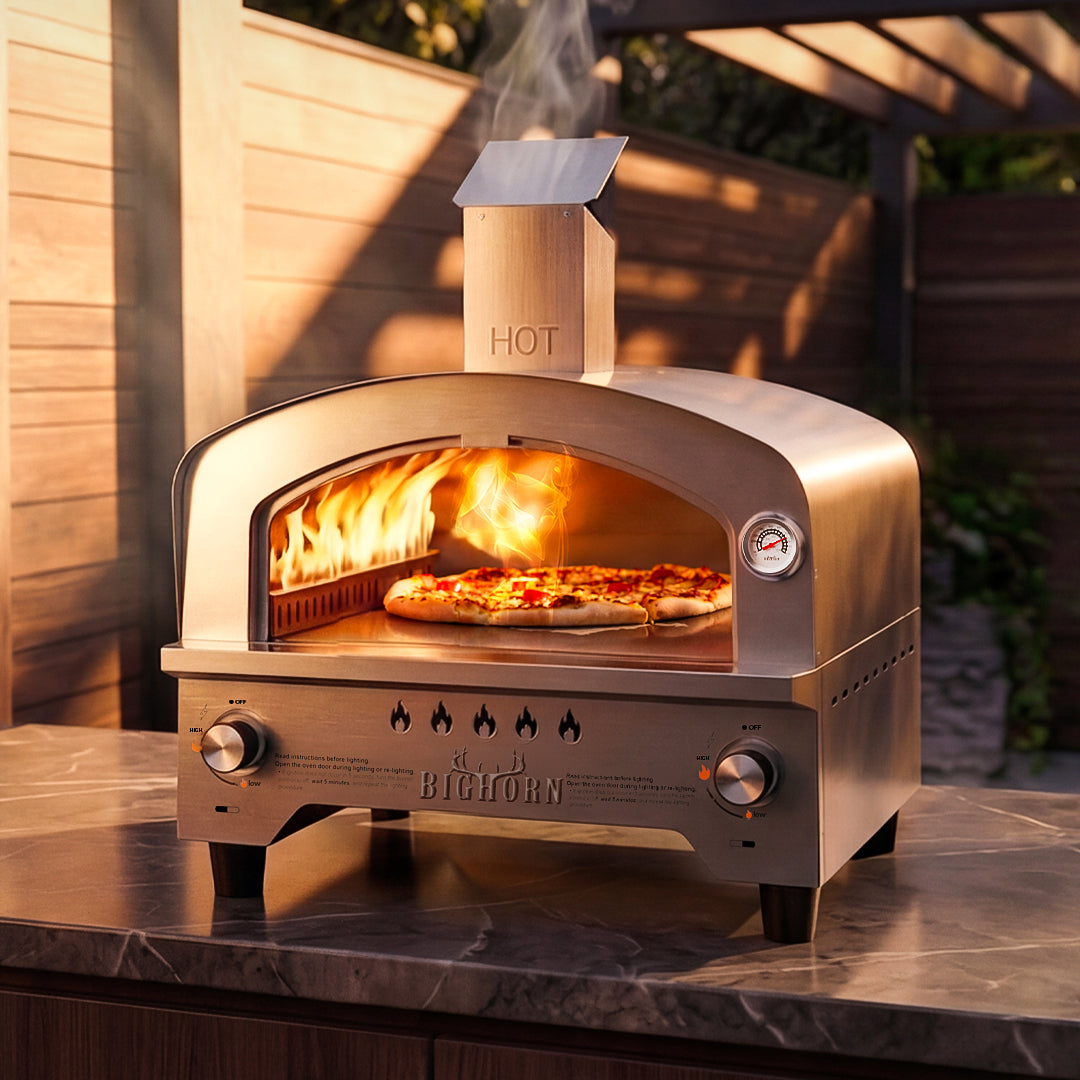
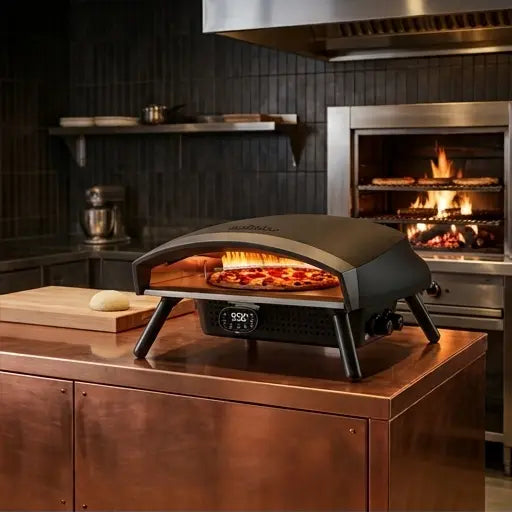
See the gas oven and the fuel-accessory range. 15-inch gas pizza oven · gas pizza oven collection
FAQ
How to get wood smoke flavor on a gas grill?
Use wood chips in a foil packet or a smoker box placed over a lit burner (or a smoke tube), close the lid so the smoke circulates, and keep the heat low so the chips smolder rather than burn. The same idea transfers to a gas pizza oven: a small packet near the burner adds a light smoky note to the crust.
Are wood fired pizza ovens better than gas ovens?
Not universally — wood-fired ovens add a deeper smoke profile and ritual, while gas ovens are faster, more consistent, and easier to control. A gas oven with added wood gives a light smoky note; if deep wood-fired flavor is the whole point, a pellet or wood oven is the stronger choice.
How to get a wood fired pizza oven hot?
Build a well-established fire, let the fuel burn down to a bed of coals with a lively flame, and let the stone soak heat for 15–20 minutes until it holds 750–900°F. Check the stone with an infrared thermometer; the stone, not the air, decides the bake.
How to add smoky flavor?
Add smoky flavor with dry, food-grade wood chips in a packet or smoker tube, timed close to the bake so the smoke lands on the crust, and pair it with high heat and a fermented dough. Use mild fruit woods for pizza; strong woods can overpower a short bake.