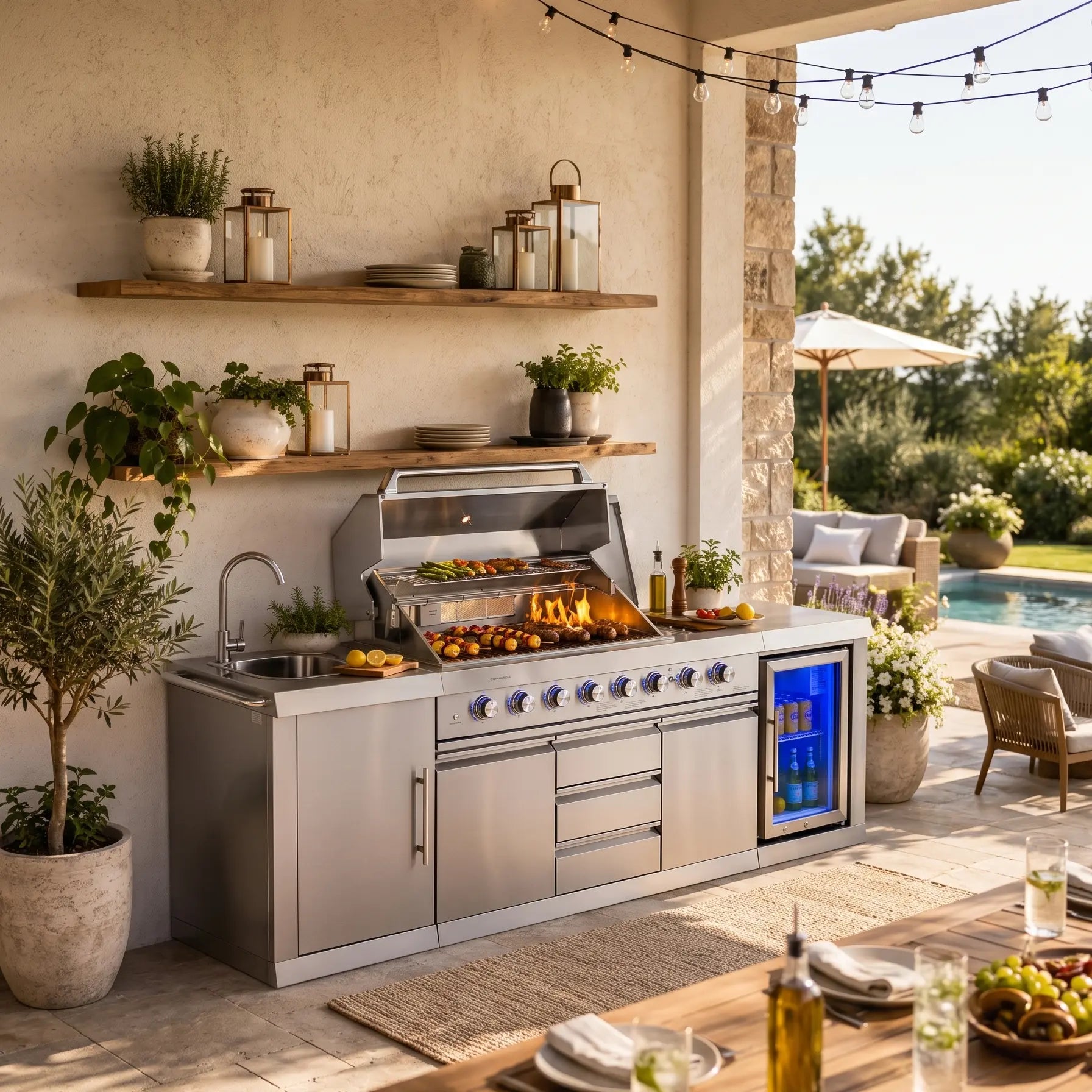
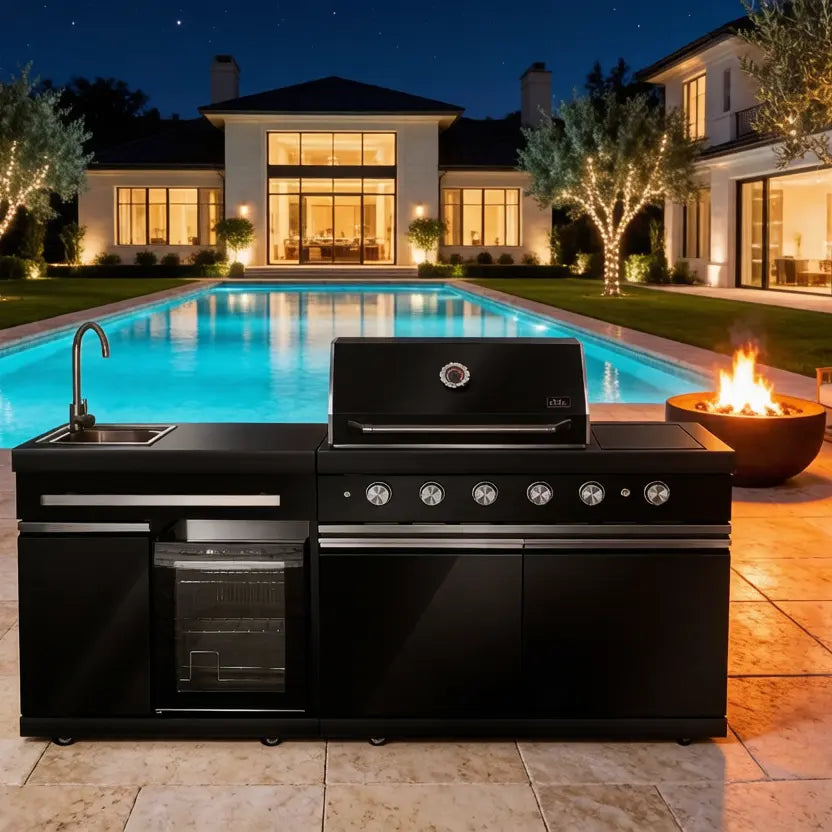
Pizza ovens cook the same no matter what they sit on — but the stand underneath decides how often the oven gets used. A wheeled cart moves the oven from storage to patio to driveway and back; a fixed table gives the oven a permanent working height and prep space; a built-in station commits the pizza corner of the yard for good. Each setup trades mobility against stability and storage. This guide compares the three formats and helps you pick by how you cook, where the oven lives and what your patio can support. It stays on the format decision; the dedicated table guide and grill-cart guide cover the specifications of each option once the format is clear.
Three ways to hold your oven
A cart, a table and a permanent station do the same physical job — hold the oven at a usable height — but they behave differently in every other way. A cart is a self-contained unit with wheels, shelves and a top that usually doubles as a prep surface; it can roll wherever the cooking is happening and tuck under a cover or into a corner when the season ends. A table is a dedicated counter: it stays in one place, gives the cook a stable, generous workspace, and asks for nothing more than a level spot and a weather-tolerant surface. A permanent station is a built-in counter, island or masonry base designed around the oven, with fuel lines, storage and prep built in — the highest commitment and the most finished result.
The choice is rarely about which is "better." It is about what changes when the oven moves. Ask three questions before anything else: will the oven travel between locations, does the patio have a permanent corner to give up, and how much do you want the pizza setup to look like part of the yard? The answers point to a cart, a table or a station with surprising consistency.
Cart: mobility and flexibility
A cart earns its place when the oven has more than one home. Renters move the oven with them; cooks who host in the driveway, the backyard or the garage apron want the pizza oven where the party is; anyone who stores the oven under cover between uses needs a way to move it safely. The cart's wheels and handle make that movement routine, and its shelves keep the peel, gloves, fuel and serving board within reach instead of spread across the patio. Most pizza carts are built from stainless or powder-coated steel, sized for a 12- to 16-inch oven, and low enough to roll under a table or into a storage corner.
The trade-off is that a cart is still a movable object: wheels add a tiny bit of flex, the unit needs locking casters or leveling feet to stand firm, and a loaded cart should be pushed, not dragged, over uneven ground. Check the cart's top dimensions against your oven's base and the shelf rating against what you will store — a propane tank is heavy, and a light wire shelf is not the place for it. If the oven stays in one corner of the patio all season, the cart's mobility is idle capability you paid for; if the oven moves weekly, the cart is the difference between cooking often and leaving the oven in storage.

Table: working height and prep space
A table is the middle path: it keeps the oven in one place but avoids the commitment of a permanent build. Choose this route when the patio has a fixed spot for the oven — against a wall, in a corner, next to the grill — and when the cook wants a wide, stable surface for dough, sauce and the finished pie. A good pizza table is weather-tolerant, heat-safe near the oven, and tall enough that the launch motion stays level. It frees the cook from the two problems carts introduce: wheel wobble and the temptation to move a hot oven.
The table's weakness is storage. A table has no built-in cabinet for fuel and tools, so the pizza kit needs a nearby shelf, box or cart to hold the extras — and the oven itself sits out in the weather unless it has a cover. If the patio has room for a table plus a small storage solution, this is often the most practical setup for a fixed location. If the oven must be protected from rain, snow or prying eyes, the table route means buying a cover and committing to the ritual of covering and uncovering, while a cart can roll the whole unit under shelter.
Permanent station: when to commit
A permanent station is the answer for cooks who have found their oven's forever spot. Built-in islands, counters and masonry bases hold the oven at the exact working height, integrate prep and storage, and can route gas, power and even water so the station looks and works like an outdoor kitchen. The result is the most stable and the most finished: no wobble, no cover ritual, no wheels to lock, and a pizza corner that reads as intentional. For a gas oven, a permanent station can hide the tank or connect to a natural gas line, which removes the most common setup step from every cook.
The costs are real. A permanent station takes up patio space permanently, costs the most of the three options, and requires planning for clearances, materials and local rules — and it is hard to undo if the oven changes size or the cooking habits change. Before committing, cook a full season with the oven on a cart or table and note where it actually gets used; if that spot never varies, the permanent station is a sensible upgrade, not a gamble. If the spot shifts with the season, the station will be beautiful and wrong at the same time.
Cart, table or station: pick by your patio routine
| Your situation | Setup that fits | Key reason |
|---|---|---|
| Renter, or oven moves between homes | Cart | Whole station travels without tools |
| Oven stored under cover between uses | Cart | Roll it out and back; no lifting |
| Fixed patio corner, cook alone | Table | Stable prep surface at working height |
| Frequent host with a dedicated patio | Permanent station | Built-in storage, prep and fuel integration |
| Small or shared space | Cart (parked when not cooking) | Occupies no permanent footprint |
| Gas oven with tank | Cart or station with tank shelf | Tank stays out of the heat path |
Run the matrix against the actual patio, not the ideal one. A cart parked in the same corner every week is a table with extra wheels; a table that must be moved for the lawnmower is a cart without casters; a permanent station on a rental patio is a negotiation you may lose. The honest format is the one that matches the space you have and the routine you will keep.
Example setups for common yards
Picture three typical situations. A renter with a small deck and a 12-inch oven: a stainless cart holds the oven, rolls inside the screen porch or under a cover when not cooking, and moves to the new place when the lease ends — cart wins. A homeowner with a fixed grill corner and a 16-inch gas oven: a weatherproof table next to the grill gives the cook a stable launch surface, with a nearby cabinet for fuel and tools — table wins. A family that hosts every weekend and has claimed the patio's far end for cooking: a built-in island with prep, storage and a gas connection becomes the outdoor kitchen centerpiece — station wins. All three are right for their yards.
If you are still torn, run a one-season test before you commit. Set the oven on a wheeled cart and cook through a full cycle of seasons, noting where the oven ends up on an average pizza night and how often it moves. If the cart barely rolls after the first month, the oven has found its home and a table or station is the upgrade; if the cart saves the oven from weather or moves it for every party, the mobility is doing real work and a fixed table would be a step backward. The test costs little and answers the question with your own habits instead of a spec sheet — and the cart that survives the test is a useful spare station even after the permanent setup arrives.
Big Horn's stainless steel outdoor grill cart and pizza oven table covers the cart and table ends of the decision, and the accessories collection holds the covers, peels and storage pieces that complete any of the three setups. Match the format to the oven's footprint and your patio's permanence — the oven itself does the cooking, and the right stand is the quiet reason it happens all season long.
Product details and prices in this guide were verified against official Big Horn Outdoors listings during the September 5, 2026 review; re-check prices and availability at checkout.