







Buying & Comparisons
A pizza oven table or cart is a safety purchase: the load rating has to clear the oven, stone, and fuel, and the wheels have to lock before you light anything. This is a weight-and-mobility guide, not a height redo, and it will not invent an oven weight.
Weight rating versus oven weight
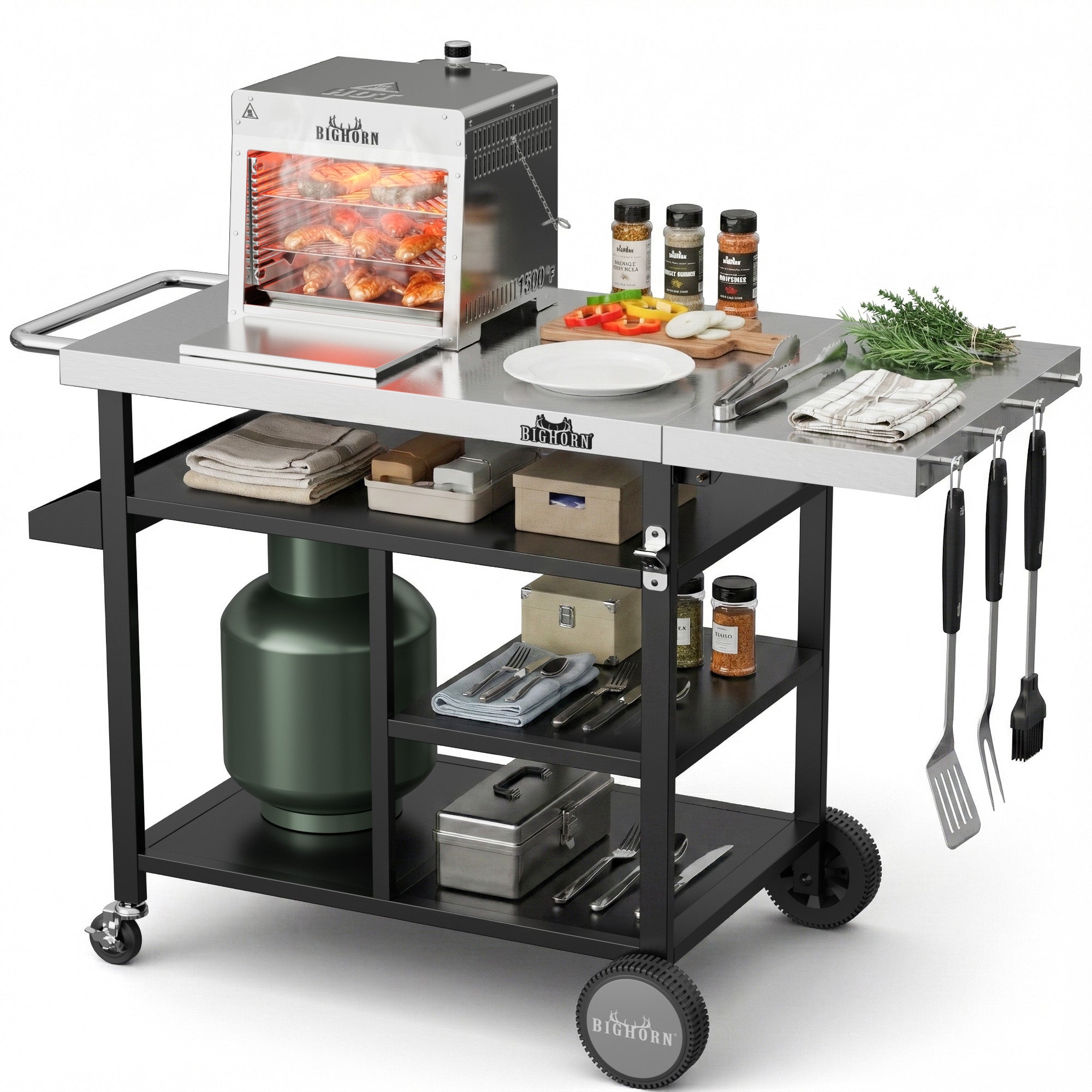
Add the oven, the stone, a full cylinder or a bag of pellets, and a honest margin, then compare that total with the cart's published load rating on the live page. Do not guess the oven's weight from a photo, and do not assume a "portable" oven is light enough for every stand. Confirm the current oven weight on the listing you actually own, such as the 16-inch gas outdoor pizza oven or the 16-inch wood-pellet pizza oven, then confirm the current rating on the stainless-steel outdoor grill cart and pizza oven table page.
That cart listing has historically described a size on the order of 48.4 by 24 inches and a 220-pound load rating, plus a lower shelf that can fit a 20-pound cylinder. Recheck every one of those figures on the live page before you buy; they are not a promise this article will repeat as current fact, and they do not include an overloaded top of extra tools. If the listing is sold out, do not treat this guide as a stock claim.
The earlier guide pizza oven table buying guide: height, materials, and fit covers standing height and surface materials. Use it for that fit conversation, and use this page for ratings, lips, locks, and heat protection.
Surface size and lip
The top should be larger than the oven's footprint, including feet, a hopper, and any handle overhang, with room to set a peel down without crowding the fuel line. A lip or a raised edge can help keep a vibration from walking the oven toward the rim; a perfectly slick, undersized board is a poor match for a wheeled cart. Measure the oven, then measure the top, and confirm current cart dimensions on the live page rather than on a memory of a photo.
Leave space for the door or the oven mouth to open without hitting a rail. If you also store a stone or a cover on the same top, that is still weight against the rating.
A lip also helps when you set a peel down in a hurry. If the top is a flat, slightly slick sheet with no edge, plan a landing zone that will not become the path the oven walks when someone bumps the cart.
Wheels and locks
Lock the wheels before you preheat, before you launch, and whenever the cart sits on a slope. The current cart listing has described four lockable wheels; confirm that feature, and how the locks actually bite, on the live page. A cart that rolls during a launch is a spill and a fire problem, not a convenience feature.
Move the cart only when the oven is off and cool enough to travel, unless the current manual expressly allows a different habit. Route the hose so a wheel cannot pinch it. NFPA grilling safety and U.S. Fire Administration cooking-fire prevention still apply: an attended fire on a stable base, fully outdoors. National Weather Service wind safety matters on a wheeled stand, because a gust plus an unlocked caster is a bad pairing.
Heat shields and mats
A heat-resistant mat or a shield can protect a deck or a tabletop, but only if the product is actually intended for that use. Confirm current accessory listings, and do not invent a fire rating or a clearance number this article does not have. A mat is not permission to park a combustion oven indoors, and it is not a substitute for the manual's clearances around walls and ceilings.
Ready.gov home fire guidance and American Red Cross fire safety are useful official fire-preparedness references when you think about a wooden deck, a cooling oven, and a cart that still holds heat after dinner. EPA carbon monoxide information remains the reason the oven itself stays outside, even if the cart can later roll into storage.

Indoor storage fit
Measure the door, the hallway, and the storage bay before you fall in love with a wide cart. A stand that is stable outdoors can be too wide or too heavy to roll inside. Take the oven off if the combined height or weight makes a doorway unsafe, and let everything cool first. The comparison page pizza oven table versus cart is useful if you are still choosing a mobile cart against a stationary table; this article will not award a winner.
The portable pizza oven collection helps you confirm packed sizes when the oven, not only the cart, has to come inside. Combustion appliances still do not run in that storage room.
The table below is a buying checklist. Recheck live numbers the day you order.
| Check | What "good enough" looks like |
|---|---|
| Load rating | Live cart rating clears oven + stone + fuel + a margin, using live oven weights |
| Top size and lip | The footprint fits with peel space, and the oven cannot walk off a bare rim |
| Wheels and locks | Locks hold on the surface you actually have, and you will use them before lighting |
| Heat and storage | Clearances, a confirmed mat if you use one, and a doorway that fits the cooled setup |
A cart fit walk-around
Measure the oven, the top, the doorway, and the pad. Add the weights from the live pages. Confirm the rating, the wheel locks, and the current stock on the cart listing. Then assemble on a level surface, lock the casters, and only then think about a first fire, outdoors, with official food handling still in force from FDA safe food handling and FDA food safety in your kitchen.
If the numbers do not clear, choose a different stand or a different oven. A sale price on a cart will not add load capacity.
If you already own a table that is tall enough but has no rating you can trust, do not guess. A workbench, a folding banquet table, or a plastic patio set can look convenient and still be the wrong load path for a hot oven and a full cylinder. Buy a stand with a published rating you can read today, or use a stationary, clearly adequate base that will not roll.
Key takeaways
- Compare a live load rating with live oven, stone, and fuel weights, plus a margin; do not invent those numbers here.
- The top has to fit the footprint, and the wheels have to lock before you light the oven.
- Mats and shields need current, intended listings; they are not indoor-combustion permission.
- This guide complements the height-and-materials table page and the table-versus-cart comparison; it does not replace them.
For standing height and materials, keep pizza oven table buying guide: height, materials, and fit nearby, then confirm the current stainless-steel outdoor grill cart and pizza oven table listing for load rating and wheel locks.
FAQ
How do I know if a pizza oven cart can hold my oven?
Add the live oven weight, the stone, the fuel, and a margin, then compare that total with the cart's published load rating on the current page. Do not guess from a photo, and do not treat a remembered number in this article as a current specification.
Do I need wheel locks on a pizza oven cart?
Yes, you need a way to keep the stand from rolling before you preheat or launch. Confirm the lock feature on the live listing, and use it on the surface you actually have, especially on a slope.
Can I use a folding banquet table if it feels sturdy?
Do not guess. A table without a published rating you can trust is a poor load path for a hot oven and a full cylinder. Choose a stand with a current published rating, or a clearly adequate stationary base that will not roll.
Can the cart go indoors for storage?
Often yes, after the oven is off and cool, if the doorway actually fits. Measure first, and do not run a combustion oven in the storage room.
More to Read
Leftover Holiday Turkey on the Grill or in the Pizza Oven: Sandwiches, Tostadas and a White Pie
Give leftover turkey a second heat, not another roast: grill sandwiches or tostadas, or bake a white pie, after a safe leftover inventory the night...
Parrilla Taco Night: Carne, Salsas and Grate Space for a Crowd
Run taco night on a parrilla as a grate-space plan: carne, a second protein, a salsa station, and tortillas held soft, without one crowded fire.
Bone-In Lamb Leg or Shoulder on a Santa Maria or Gas Grill
Grill a bone-in lamb leg or shoulder as a roast: Santa Maria height or a gas two-zone fire, a USDA safety floor, and a probe that does not touch bone.
