Pizza Oven Table Buying Guide: Height, Materials and Fit
ByJohn White
Choose the right pizza oven table for a safer, smoother outdoor cooking setup. This guide explains how to match a table to a 12- to 16-inch pizza oven by checking working height, load capacity, tabletop size, materials, stability, heat clearance and storage. Compare stainless steel carts, portable folding tables and permanent outdoor counters for patio pizza nights, camping and backyard entertaining.
A pizza oven table is the difference between an awkward cook and a smooth one: it holds the oven at working height, gives you a heat-safe place for the peel and the finished pie, and stores fuel and tools within reach. The right table is stable under a hot oven, sized to the oven's footprint, and built from a material that survives weather and spills. This guide walks through the numbers that matter, the material trade-offs, how to match a table to a 12- to 16-inch oven, and how to set the whole station up safely. It assumes the table format has already won: if the open question is cart versus table versus permanent station, the setup-format comparison settles that first, and this page covers the table decision in full.
What a pizza oven table must do
A pizza oven table has three jobs. First, it lifts the oven to a working height so the cook can launch, turn and retrieve pizzas without crouching or reaching overhead. Second, it provides a heat-safe landing zone: the peel rests between launches, the finished pizza has a place to sit, and hot tools are not balanced on a cooler lid or the edge of the oven. Third, it keeps the cooking station organized — fuel, cutter, flour, sauce and gloves all live on the table or its shelves instead of cluttering the patio.
The job list matters because it rules out improvised surfaces. A plastic folding table flexes under a hot oven and can soften near the heat; a wooden patio table may be the right height but cannot take spills and radiant heat without care; the ground forces the cook into an uncomfortable crouch for a full cook session. A purpose-built cart or table is not a luxury — it is the workstation that makes the technique repeatable. If you already own a sturdy outdoor counter or grill island, the same checklist applies: height, load, material and clearance.
The numbers that matter
Start with height, because it decides comfort. Most outdoor kitchen counters sit roughly 36 inches high, and pizza cooks generally want the oven floor near waist-to-forearm level so the peel moves horizontally into the oven mouth rather than uphill or downhill. Measure your own comfortable working height before you buy: stand relaxed, bend your arm at the elbow, and note where your forearm sits — the launch surface should be close to that line. A table that is too low forces a stoop for the whole cook; one that is too high makes you lift the peel and the pizza awkwardly.
The second number is the load. Add up the oven's listed weight plus the stone, any fuel accessories and the tools that will sit on the surface, and choose a table whose rating clears that total with room to spare. The third number is footprint: measure the oven's full base width and depth, including legs and any overhang, and leave a margin around it so heat can escape and the oven is not teetering at the table's edge. A 12-inch oven fits easily on a standard cart top; a 16-inch oven with a wide base needs a top that is clearly larger than the oven, not exactly the same size. If the table has a raised lip or edge, confirm the oven base sits inside it rather than on it.
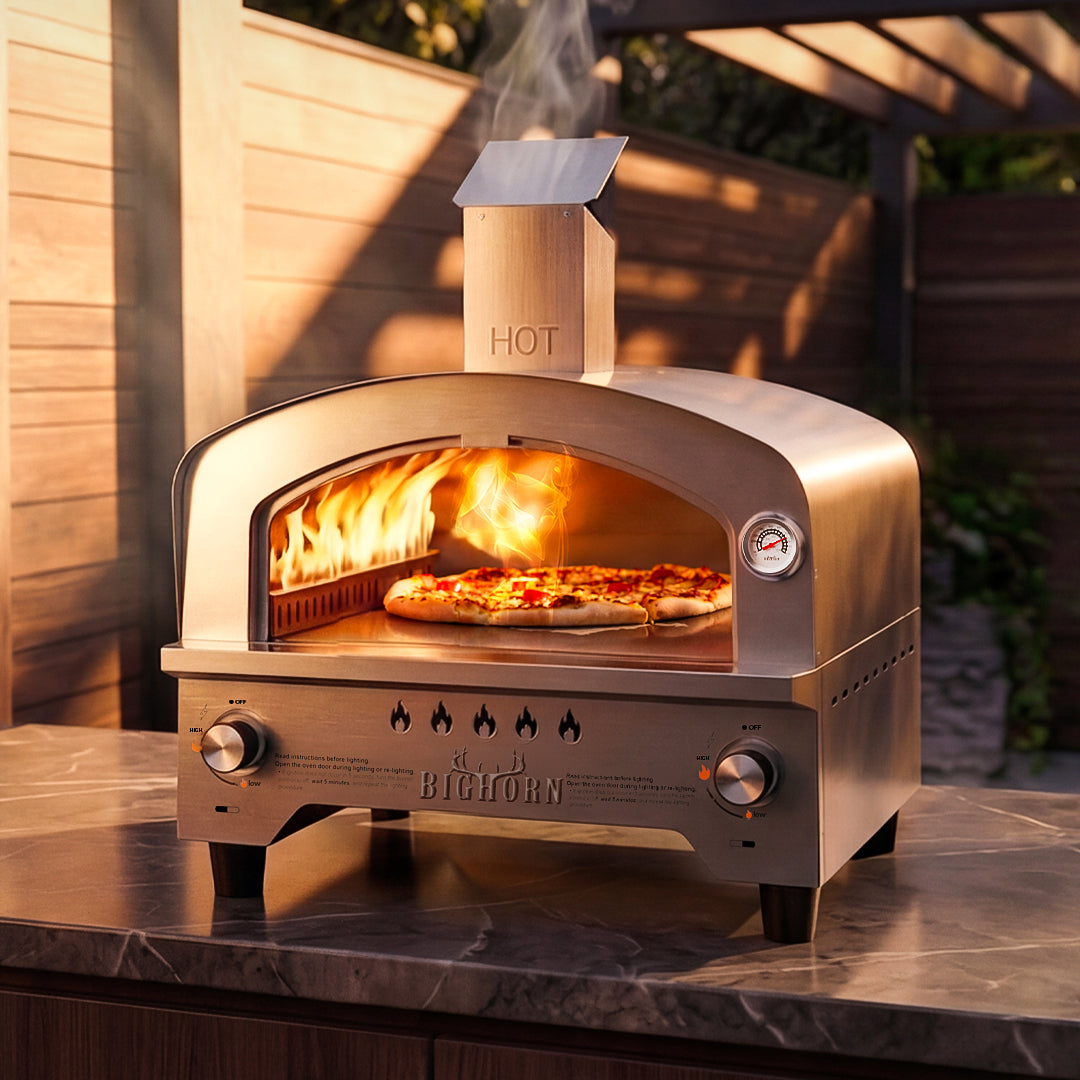
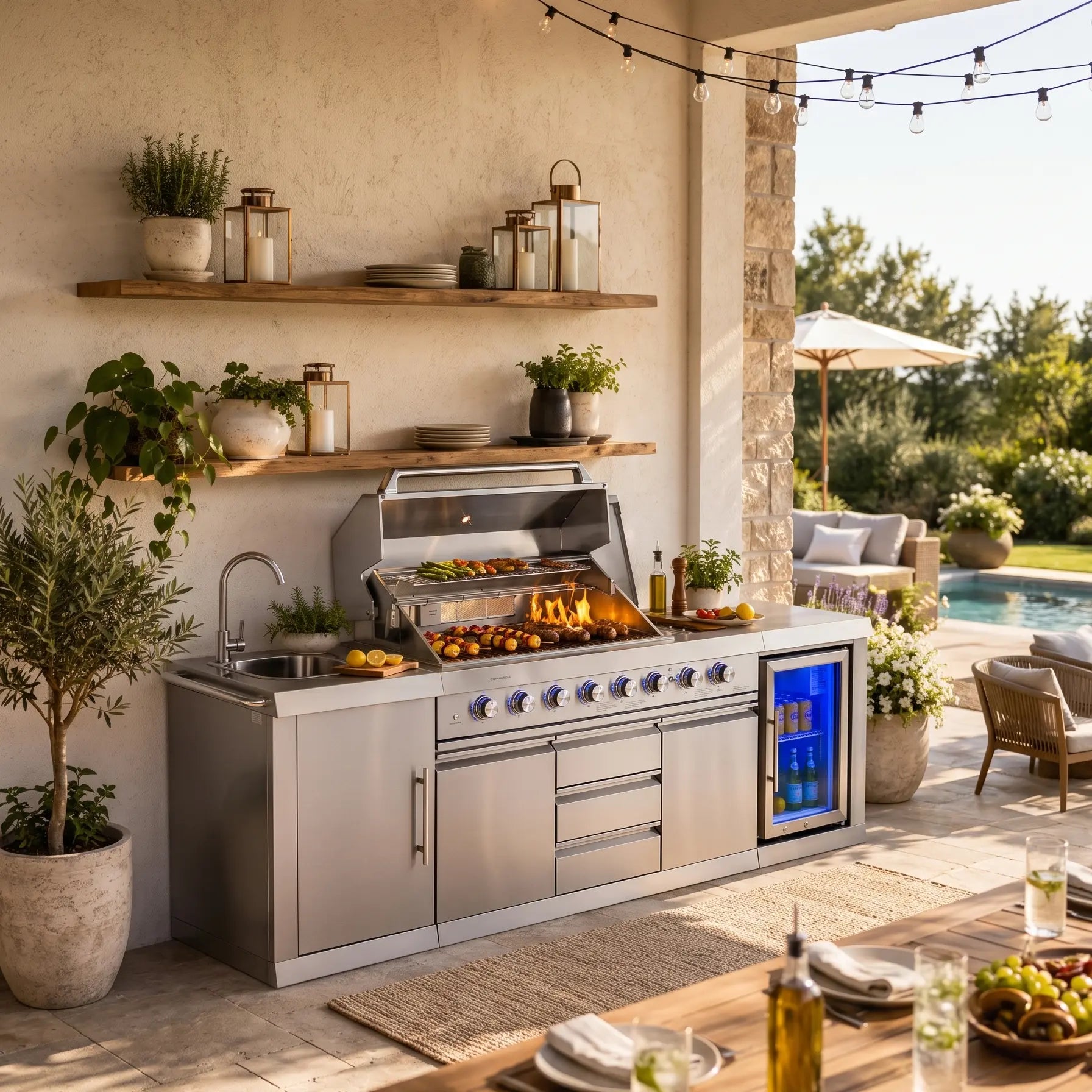
A stainless cart gives the oven a dedicated working surface, with storage below for fuel, tools and the peel between cooks.
Material choices and tradeoffs
Stainless steel is the default for a permanent outdoor pizza station because it resists weather, wipes clean and handles heat and spills without absorbing them. A stainless cart with a solid top, shelves and locking wheels suits a 12- to 16-inch oven and doubles as a prep and serving station; the main trade-off is cost and a surface that shows fingerprints until wiped. Powder-coated steel is a close cousin — durable and cheaper, but the coating can chip over years and the underlying metal needs care once it does. Aluminum is light and rust-resistant but dents more easily and conducts heat, so it needs a heat-safe top layer near the oven.
Wood and wood-look tables bring warmth to the patio but ask for more care: keep them dry, sealed and away from the oven's radiant heat, and use a trivet or heat mat under hot tools. Folding tables and portable stands suit campers and tailgaters who pack the oven between trips; they prioritize light weight and flat-pack storage over permanence, and they need a stability check before a hot oven goes on top. There is no single best material — match the table to whether it will live outdoors year-round, live under a cover, or travel in the car each weekend.
Matching the table to your oven
Oven / use
Table that fits
Key check
12-inch portable oven, patio
Stainless cart, 30-inch class top
Top larger than oven base; shelf for fuel
12–16-inch oven, frequent host
Full-width stainless cart or island
Load rating above oven + tools; side prep space
Gas oven with propane tank
Cart with open side shelf
Tank shelf keeps cylinder outside oven's heat path
Camping / tailgate
Folding or compact cart
Stable legs; level surface at the site
Fixed patio kitchen
Permanent outdoor counter or island
Non-combustible top and wall clearances
Measure twice before ordering: the oven's base, the table's top, and the space where the table will live. Leave room beside the oven for the peel, behind it for heat clearance, and below it for fuel if the oven is gas. If the table arrives with shelves, confirm they are rated for what you will store — a propane tank is heavy and should sit on a solid shelf, not hang from a light wire rack. The fit check is simple: the oven should sit centered with clearance on every side and the cook should be able to launch a pizza without the peel hitting the table's edge.
Stability, clearance and placement
Stability is a safety feature. The table must not rock, flex or walk across the patio when the peel pushes into the oven, so look for locking wheels, leveling feet and a base that is wider than the oven's height-to-weight ratio demands. On a wood deck, use a heat shield or mat under the oven area if the manual calls for it, and never place the table so the oven's exhaust or side vents blow directly at a wall, railing or dry vegetation. Follow the oven manual's clearance numbers — they are specific to that model — and add a little extra on windy days when the flame or exhaust can shift.
Placement also affects how the station works. Put the table where the cook can reach the prep surface and the serving area without crossing the oven's heat path, and where the wind does not push smoke and exhaust into the seating. Keep the path from prep table to oven short, because a fully loaded peel is heavy and unstable at arm's length. If the oven runs on propane, position the tank on the table's lower shelf or beside it, outdoors, with the hose routed clear of hot surfaces. A station arranged for one smooth motion — dough to peel to oven to cutting board — turns pizza night from a scramble into a rhythm.
Plan for weather and storage before the first rain. A stainless table wipes down and shrugs off a shower, but it still benefits from a cover or a spot under an eave when the oven is not in use; wood tables need to stay dry and sealed; folding tables should come inside or under cover between trips. Check the table's level after a season outside, because frost or settling can turn a flat top into a leaning one, and re-tighten any hardware that works loose from heat and use. The table is the part of the pizza station that gets touched last and noticed least — which is exactly why it should be the most dependable piece in the setup.
Setting up your station
Assemble the table on level ground, lock the wheels or adjust the feet, and confirm the top does not wobble before the oven ever sits on it. Place the oven on the table, check the overhang on all sides, then run a dry practice launch with an empty peel so you can feel the working height before the first hot cook. Stock the station with the tools the oven actually needs: peel, turning peel if you use one, a heat-safe board, gloves, a brush for the stone, and a covered spot for fuel. Keep the surface around the oven clear of flour bags, towels and anything that can melt or burn near the heat.
Big Horn's stainless steel outdoor grill cart and pizza oven table is sized for this kind of station, and the accessories collection holds the peels, gloves and covers that complete it. Match the table to the oven's footprint and your working height, verify the load rating on the product page before you commit, and set the station up so the cook moves in one direction — then the table disappears into the workflow and the pizza is the only thing anyone notices.
Product details and prices in this guide were verified against official Big Horn Outdoors listings during the September 5, 2026 review; re-check prices and availability at checkout.
Embark on a culinary adventure with us. Receive exclusive recipes, expert tips, and special offers tailored for outdoor cooking enthusiasts. Unsubscribe anytime—no hard feelings :)