Are Infrared Grills Safe? How High-Heat Propane Grills Work
ByJohn White
Are infrared grills safe? Yes, when they are used outdoors and treated like any high-heat propane grill. This guide explains how infrared cooking works, why it is non-ionizing radiant heat, and how to use, clean and maintain an infrared grill safely. Learn practical guidance for propane connections, leak testing, flare-up prevention, heat control and avoiding heavily charred food.
Infrared grills are safe to use when you treat them as the outdoor propane appliances they are: use them outdoors with clearance, keep the connections leak-tested, and follow the same sensible cooking practices you would use with any high-heat grill. The word "infrared" causes confusion because it sounds like radiation, but in this context it simply describes how heat is delivered — the same kind of radiant warmth you feel from the sun or a hot pan, not the ionizing kind of radiation that health warnings discuss. This guide explains what infrared heating is, how the safety questions split into fuel safety and cooking practice, and where to turn for personal health questions.
What "infrared" means in a grill
In a grill, infrared refers to radiant heat transfer: the burner heats an emitter surface until it glows, and that surface radiates heat directly to the food instead of relying only on hot air. It is the same physics as the warmth you feel from a hot sidewalk or a fire — electromagnetic energy in the infrared range that your body experiences as heat. It is not the high-energy, ionizing radiation associated with medical or nuclear contexts. Understanding that distinction resolves most of the worry around the word itself: an infrared grill is a very hot cooking appliance, not a different class of device.
Fuel safety comes first
Infrared grills in Big Horn's line are propane appliances, and the safety rules follow the fuel. Use them outdoors only, on a stable, non-combustible surface with clearance from anything that can burn, and never indoors, in a garage or under an enclosed structure where propane exhaust can collect. Check the tank connection and run a soapy-water leak test whenever you reconnect, and follow the manual's lighting and shutdown steps. These are the same rules as any gas grill, because the fuel — not the heating method — determines the hazards of exhaust and fire. The U.S. Consumer Product Safety Commission's grilling safety guidance gives the same instructions for gas grills: use them outside only, never indoors or in a garage, and check connections before lighting.
Infrared grills are propane appliances: outdoor placement, leak tests and clearances follow the fuel, not the heating method.
High heat and cooking practice
The cooking-safety question is about high heat, not about infrared specifically. Cooking meat at high temperatures — on any grill, pan or broiler — can create compounds that researchers have studied in relation to diet and health, and heavily charred or burnt areas of meat are the ones most often discussed. General cooking guidance you will see from health organizations includes trimming excess fat to reduce drips and flare-ups, avoiding direct flame contact that chars food heavily, marinating, and not eating the most burnt portions. Infrared grills sear fast, which can help you build a crust without prolonged charring — but the sensible practices above apply to them exactly as they do to any high-heat cooking method.
This guide does not give medical opinions about cancer or health outcomes from infrared grilling; those questions depend on your overall diet, cooking habits and health history, and are best answered with qualified sources and professionals. What can be said plainly is that infrared itself is a heating method, and the practical levers — how hot, how fast, how charred and how often — are the factors that cooking guidance focuses on.
Operating an infrared grill safely
Day-to-day safe operation is straightforward. Preheat with the burner and lid per the manual, keep the cooking surface clean to prevent grease flare-ups, and never leave a lit grill unattended. If a flare-up happens, move the food to a cooler zone and reduce the heat rather than dousing it with water. Keep children and pets clear of the hot surface, and let the grill cool completely before cleaning or covering. An infrared grill concentrates heat, so the surface and nearby parts stay dangerously hot long after the flame is off — treat cooldown as part of the cook.
Cleaning and maintenance matter for safety
A well-maintained infrared grill is a safer grill. Grease buildup on the emitter and drip tray changes how the burner performs and creates flare-up risk, so follow the cleaning routine for your model: gentle burner care, regular drip-tray emptying, and seasonal checks of the hose, regulator and burner. A grill that lights unevenly or produces unusual flames should be inspected before its next use, not after. The maintenance guide for infrared grills covers the component-by-component routine; the short version is that clean, checked equipment behaves predictably, and predictable equipment is safe equipment.
Where to get health answers
For questions about diet, cancer risk and grilling habits, turn to authoritative health organizations and your own healthcare providers rather than product marketing or forum hearsay. Government health agencies and major cancer research organizations publish dietary guidance that addresses high-heat cooking generally; those sources are the right place for the science. This article's job is narrower: to explain that infrared is a heating method, that the grill is an outdoor propane appliance with standard fuel-safety rules, and that the cooking practices worth following are the ones that apply to any high-heat grill.
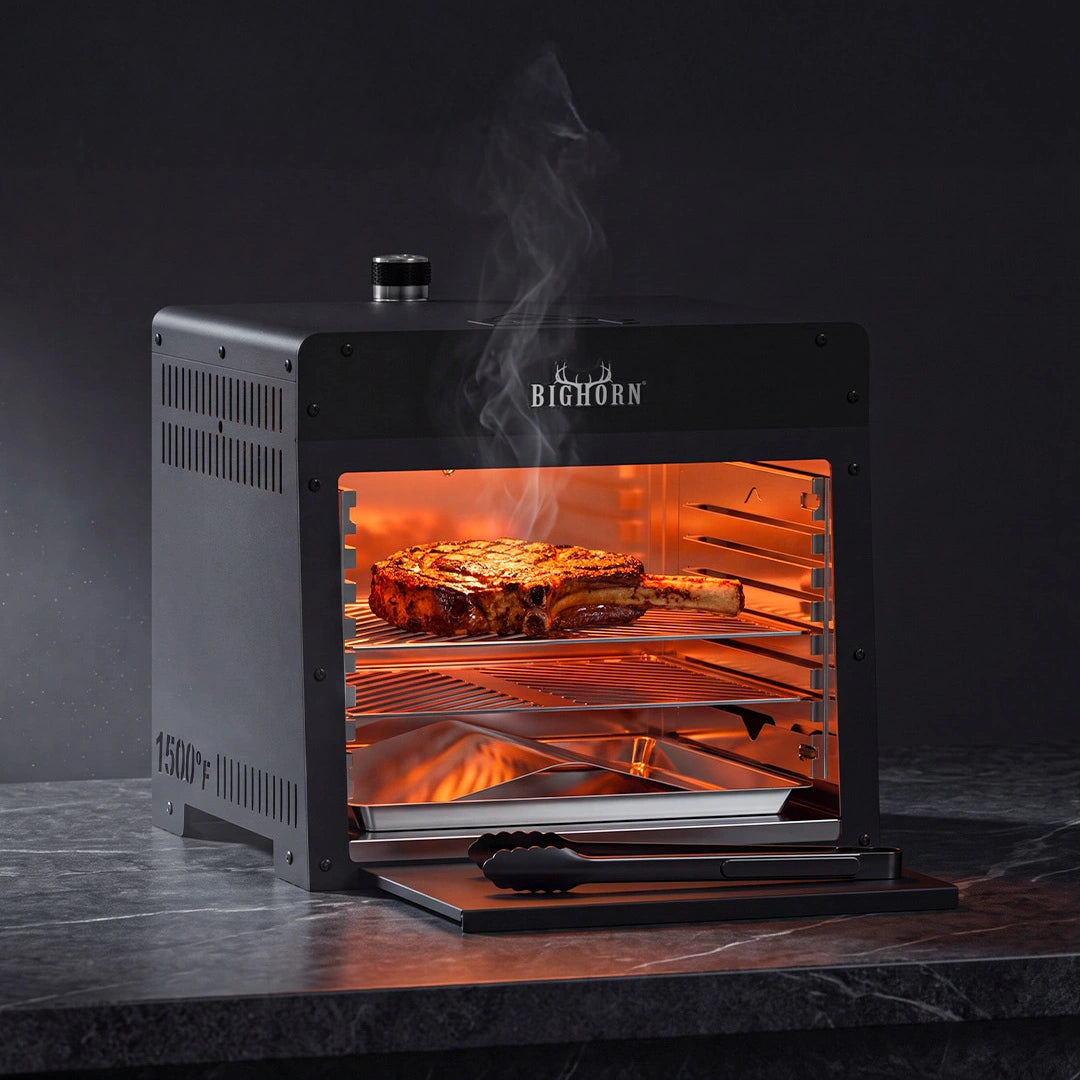
Big Horn's portable infrared steak grill follows these rules, and the infrared grill collection shows the range. Use it outdoors, keep it leak-tested and clean, cook with the same care you would use over any hot fire, and the infrared grill is a safe, straightforward way to cook a fast, crusty steak.
Common questions answered plainly
Is the "infrared" heat different from a normal grill? No — it is the same radiant warmth you feel from any hot surface, delivered more intensely by the emitter. Does infrared cooking create more of the compounds associated with high-heat meat cooking than other methods? The research conversation centers on high heat and charring generally, not on infrared as a unique source, which is why the practical guidance is the same as for any grill: moderate heat where possible, avoid heavy charring, trim drips and keep portions sensible. Can I use it indoors? No — it is a propane appliance and must be used outdoors with clearance, like any gas grill. Those three answers cover the questions owners ask most, and they all point back to the same conclusion: treat the grill as a high-heat outdoor propane appliance and cook sensibly.
Making your own informed choice
If you are weighing whether an infrared grill fits your household, separate the two questions this article covers. The fuel-and-operation question is answered by safety practice: outdoor use, leak tests, clearance, cleaning and supervision. The diet-and-health question is a personal one that depends on your broader eating patterns and should be informed by authoritative health sources rather than marketing. If both answers are comfortable for you, an infrared grill is simply a fast, powerful way to cook — and the decision becomes about searing style and features, not about safety anxiety.
Keep this page's review date in mind as you read: safety and health guidance evolve, and the authoritative sources referenced here should be checked for updates when you make your own decisions. This article was written as a practical explainer, not as medical advice, and it will be maintained as part of the broader grill safety library — check back when you are ready to buy, and re-read the fuel-safety basics whenever you reconnect the tank after a season.
A short glossary helps when you read other sources. Radiant heat is energy transferred directly from a hot surface to the food, which is how infrared grills cook. Infrared in this context is a band of the electromagnetic spectrum your body feels as warmth — not the high-energy radiation that health discussions about X-rays or nuclear sources address. HCAs and PAHs are terms you may see in high-heat cooking research; they refer to compounds that can form when meat is cooked at high temperatures or over open flames, and they are studied in the context of overall diet. Knowing those three terms lets you read health guidance accurately without confusing the physics of a grill with the chemistry of cooking.
Safety and technical guidance here is general and educational: follow your product manual and local fire, building and electrical codes, which override general advice. Product details reflect official Big Horn Outdoors listings reviewed September 5, 2026; re-check prices and availability at checkout.
Embark on a culinary adventure with us. Receive exclusive recipes, expert tips, and special offers tailored for outdoor cooking enthusiasts. Unsubscribe anytime—no hard feelings :)