The short answer: steel transfers heat faster for a crisp, dark base and is great in a home oven; stone stores heat more gently and evens out a high-heat bake, which suits a dedicated pizza oven’s deck. The best surface depends on the oven and the bake — steel for speed and browning, stone for even, forgiving heat. This comparison covers heat transfer, the trade-offs, and which to choose for your oven.
This is a general comparison of pizza baking surfaces; match the surface to your oven and bake style.
The real differences that matter
Two material properties decide the comparison: thermal conductivity and heat storage. Steel conducts heat much faster, so it transfers energy to the dough quickly — producing a crisp, dark base in a home oven in minutes. Stone stores heat more slowly and evenly, giving a gentler, more forgiving bake that suits a dedicated pizza oven’s high-heat deck. The difference is speed and browning versus evenness and forgiveness.
Understanding the material before you decide
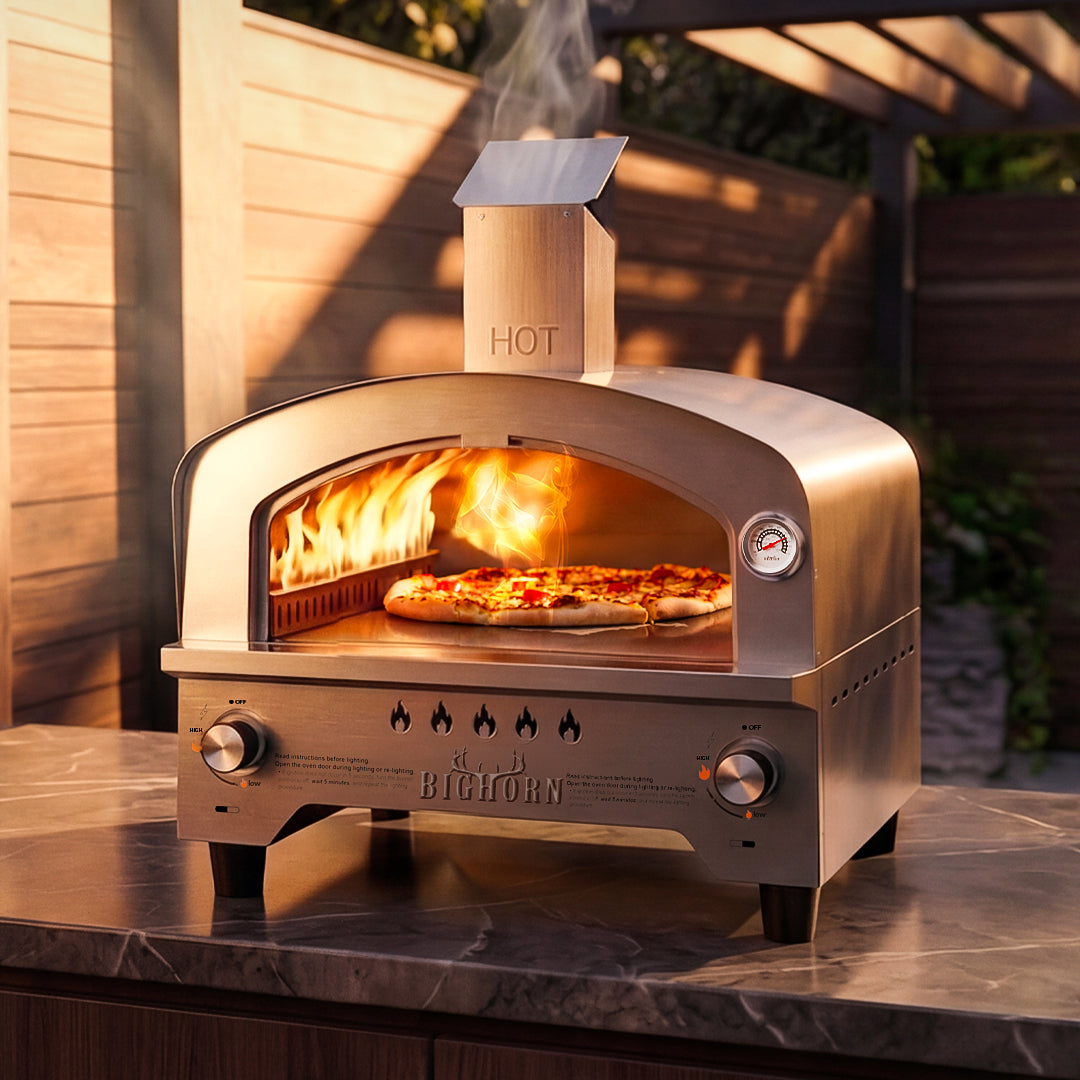
Steel (usually quarter-inch) heats fast and transfers heat to the dough aggressively, so it browns the base quickly — great for a home oven that cannot reach pizza-oven heat. Stone (cordierite or ceramic) soaks heat slowly and releases it evenly, which evens out hot spots and forgives a slightly early launch — the classic deck of a wood-fired or gas pizza oven. In a home oven, steel compensates for the lower heat; in a high-heat pizza oven, the stone does the work it was made for.
The key factors, ranked
| Factor | Steel | Stone |
|---|---|---|
| Heat transfer | Fast, aggressive | Slow, even |
| Browning | Dark, crisp base | Even, forgiving |
| Best in | Home oven | High-heat pizza oven |
| Weight and care | Heavy, holds heat | Brittle, cracks with shock |
What each option does best
- Steel does a fast, crisp base. In a home oven, the fast heat transfer bakes a dark, crunchy base that a lower-temperature oven could not otherwise produce.
- Stone does an even, high-heat bake. In a dedicated pizza oven, the stone stores and releases heat evenly, giving the classic leopard-spotted bake and forgiving small timing errors.
Where most comparisons go wrong
Most comparisons declare steel “wins” because it browns faster, ignoring the oven. Steel’s fast transfer is an advantage in a home oven that lacks pizza heat, but in a high-heat pizza oven, the stone’s even, stored heat is what produces the style. The second error is ignoring fit: a pizza oven ships with a stone sized to its deck, and swapping in steel may not fit or may not match the oven’s design. Match the surface to the oven and the bake.
How to match the choice to your cooking style
- Home oven pizzas. Choose steel for the faster, darker base.
- Dedicated high-heat pizza oven. Use the oven’s stone — it is built for the deck and the style.
- Frequent Neapolitan-style bakes. The stone’s even heat suits the leopard-spotted crust.
- Budget and fit. Use what your oven is built for; a stone is standard, steel is an upgrade for home ovens.
Cost and longevity perspective
Steel is heavier, conducts heat aggressively, and lasts for years with care, but it is an upgrade purchase for a home oven. Stone is more affordable and standard, but it is brittle — it can crack from thermal shock or a cold drink spilled on a hot deck. Care matters for both: let stone heat and cool gradually, keep steel seasoned or dry per the maker, and store either flat. The longer-lasting surface is the one you use and protect correctly.
The decision rule in one paragraph
Choose steel when you bake in a home oven and want a fast, crisp, dark base; choose (or keep) stone when you bake in a dedicated high-heat pizza oven, where the even, stored heat produces the style and the deck is built for it. Match the surface to the oven, not to a universal winner. Steel for speed, stone for evenness — the right one fits the bake and the oven.
See the pizza ovens and the stone and accessory range. pizza oven collection · accessories collection
FAQ
Can I use pizza steel in a pizza oven?
Only if it fits your oven’s deck and the manual allows it. A dedicated pizza oven ships with a stone sized to its chamber; swapping in steel may not fit or may change the bake. In a home oven, steel is the upgrade for a crisper base.
Is a pizza stone as good as a pizza oven?
A stone is a baking surface, not an oven: it helps a home oven bake a crisper base, but it cannot make a home oven reach a dedicated pizza oven’s high heat. For the true style, a high-heat pizza oven is the tool; a stone improves a home oven’s result.
Are pizza steels worth it?
In a home oven, yes — steel transfers heat fast for a crisp, dark base that a lower-temperature oven could not otherwise produce. In a dedicated high-heat pizza oven, the oven’s stone is the right surface, so steel is usually not needed.
Which is better for baking pizza, cast iron or steel?
For a crisper, darker base in a home oven, steel transfers heat faster than cast iron’s slower, heavier conductivity and is easier to handle. Cast iron works well too, but steel is the sharper brown and lighter option for pizza.