A portable pizza oven is only portable if the entire cooking system can be moved safely. The oven body may be light enough to lift, yet the stone, chimney, peel, fuel, fireproof table, gloves, ingredients, ash container, and cool-down time can turn a simple outing into a complicated load. Before buying, test the complete trip: storage shelf to vehicle, vehicle to cooking site, hot shutdown, and the return journey.
This guide uses a one-person day trip as the planning case. The exact manual determines where a model may operate, how it must cool, and how its fuel may be transported.
Start With the Loaded System, Not the Oven Weight
Published weight is useful, but it is not the weight you carry. Add every part that must travel with the oven. A pellet model may need a chimney, firebox, hopper, dry pellets, an ignition method, an infrared thermometer, a peel, a turning tool, heat-resistant gloves, and a metal container for cold ash. A gas model adds a cylinder, regulator, and hose. An electric model replaces fuel with a suitable power source and is portable only to destinations that provide the required circuit and approved operating environment.
Use this worksheet before comparing models:
| Load item | Weight or size to record | Why it matters |
|---|---|---|
| Oven with stone installed | Actual lift weight | The stone may be a significant part of the load and can shift during transport |
| Removable chimney, door, hopper, or burner | Longest packed dimension | Loose metal parts need a restrained container |
| Fuel or power equipment | Full travel weight | A cylinder or pellet bin must be stored separately from food and hot equipment |
| Table or stand | Folded dimensions and rated capacity | A picnic table may be prohibited or unsuitable for the oven's heat and footprint |
| Cooking tools | Tote dimensions | Long peels often determine trunk fit even when the oven fits easily |
| Cleanup equipment | Cold ash or grease container | Residue cannot be scattered at the site or tipped into the vehicle |
Do a carry test with the oven cold. Install or secure the parts exactly as they will travel, walk the longest expected distance, negotiate a doorway or curb, and place the load on the proposed table without twisting. A solo carry is a poor plan if you cannot see your path, the unit has no secure grip points, a removable stone slides, or you need to rest a hand against a sharp or unstable panel. In those cases, use two people, a cart rated for the load, or a smaller system.
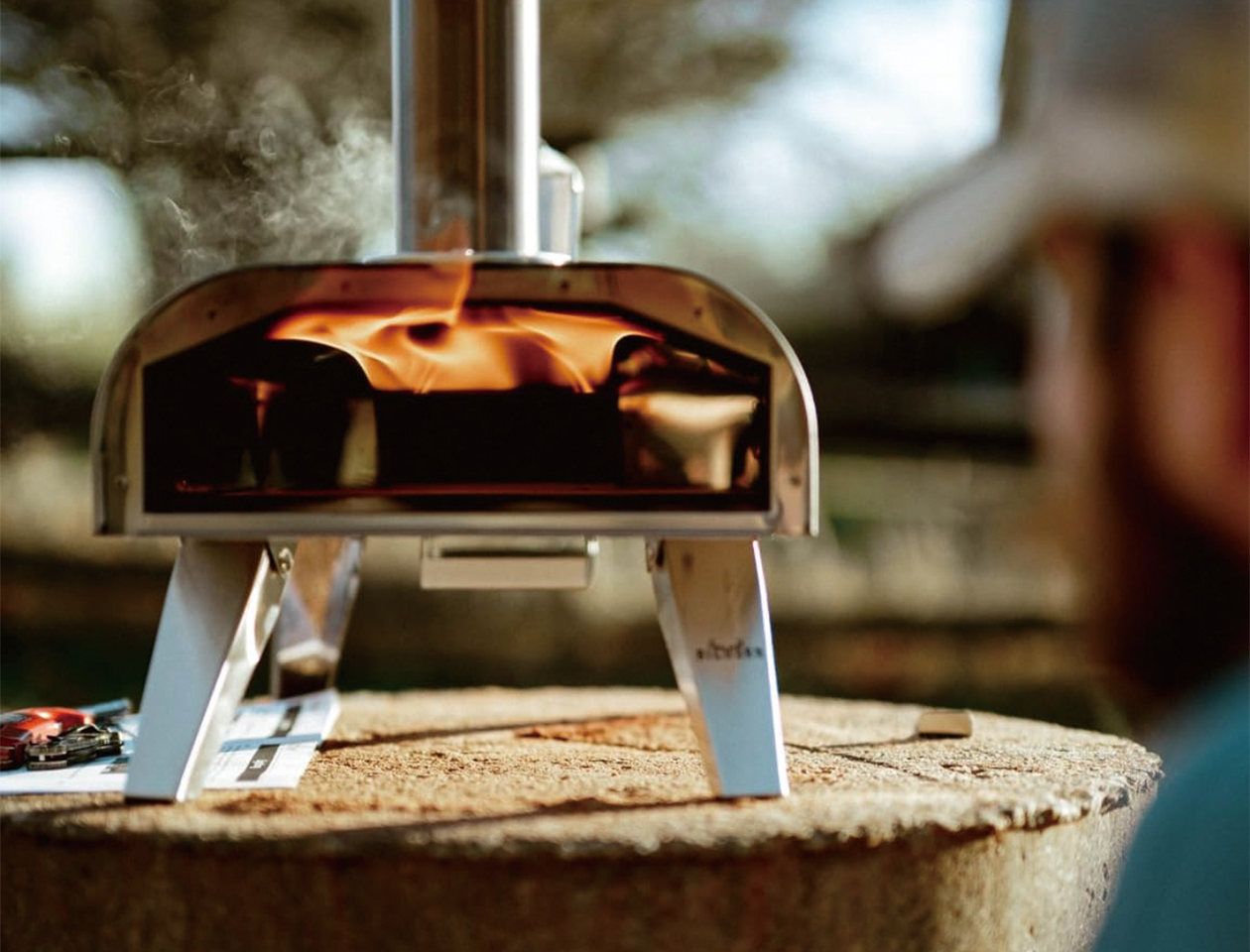
As a current product example, Big Horn Outdoors lists its 12-inch wood-pellet oven at 24.9 pounds and gives assembled dimensions of 21.6 by 14 by 28 inches. It also shows folding legs and a detachable chimney. Those figures describe the listed model, not its packed travel envelope. Measure the oven after disassembly and include the storage tote before deciding that it fits a shelf or trunk. Specifications were checked on the [Big Horn Outdoors product page](https://bighornoutdoor.com/products/big-horn-outdoors-12-pizza-ovens-wood-pellet-wood-fired-pizza-maker-portable-stainless-steel-pizza-grill-for-outdoor-kitchen-backyard-camping) on August 13, 2026.
Make a Vehicle-Fit Card Before the First Trip
Measure the narrowest cargo opening, not just the empty floor, and keep the seats and passenger load in their real travel positions.
| Vehicle-fit field | Example entry | Your entry |
|---|---|---|
| Narrowest cargo opening, W × H | 38 × 27 in | |
| Clear floor space, L × W | 35 × 36 in | |
| Oven or tote, L × W × H | Measure packed unit | |
| Longest tool | 28 in peel | |
| Securing points available | 2 cargo loops | |
| Separate fuel position | Upright crate away from passengers | |
| Dirty/cold residue position | Lidded metal container |
The oven should not be free to slide into a cylinder, window, or food tote during hard braking. Restrain the cold appliance using stable cargo points without crushing thin panels or placing tension on a valve, hose, chimney, or handle not designed as a tie-down. Protect the stone from edge impact; if the manual permits removing it for transport, use a padded flat carrier and reinstall it only when both the stone and oven are dry.
Fuel needs its own plan. The [U.S. Fire Administration](https://www.usfa.fema.gov/prevention/vehicle-fires/) advises keeping gasoline cans and propane tanks away from passengers, tightly sealed, upright on a flat surface, and ventilated if they must be inside a vehicle. Apply the exact cylinder rules and local transport law for the fuel you use. Pellets do not create cylinder pressure, but damp pellets burn poorly, so carry them in a closed, dry container rather than an opened paper bag.
Confirm the Cooking Site Before Loading the Car
“Portable” does not mean “permitted everywhere.” Rules can change by campground, season, fire danger, and fuel type. [Lassen Volcanic National Park](https://www.nps.gov/lavo/learn/management/fire-regulations-and-restrictions.htm), for example, permits only small liquid- or gas-fuel stoves in backcountry areas and does not allow biomass stoves there. Other developed campgrounds may allow portable solid-fuel cooking devices only in specified areas or receptacles. Check the destination's current alert page on the day of travel; a reservation made months earlier is not evidence that today's fire rules are unchanged.
Ask five questions before departure:
- Is this exact fuel type allowed at the campsite today?
- Must cooking occur in a provided fire ring, on bare ground, or in another designated area?
- Does the oven's manual allow the available surface and outdoor conditions?
- Is there enough noncombustible space for the oven, exhaust, operator, and landing tray?
- How must cold ash, grease, wastewater, and food scraps be removed?
Do not place an oven on dry vegetation or an unstable folding table. Test the cold setup: if the legs rock, the top flexes, or a peel stroke moves the stand, correct the platform before ignition. Do not improvise a close windscreen or enclosure that changes combustion or ventilation.
Work Backward From Departure Time
The return trip is where portability often fails. A cook plans preheat and baking but forgets that the stone, firebox, burner area, and shell can remain hot after the last pizza. An exterior panel that feels comfortable is not proof that the internal components are ready to pack.
Build the outing backward:
| Stage | Planning value for a trial trip |
|---|---|
| Vehicle must leave | 7:30 p.m. |
| Equipment must be confirmed cold and packed | 7:10 p.m. |
| Cleanup and restrained loading allowance | 25 minutes |
| Planned cool-down allowance | Use the model manual, then verify in a home trial |
| Last fuel added | Set from the verified cool-down allowance |
| Last pizza launched | Earlier than the last-fuel cutoff |
Before the first remote cook, run a full session at home in an approved outdoor location and time the interval from shutdown to the manual's transport condition. Record the weather and fuel mode. Repeat in colder or windier conditions if those are typical destinations. The result is a personal planning value, not a universal cool-down claim.
For a pellet oven, stop adding fuel early enough for the fire to finish under supervision. Follow the manufacturer’s shutdown instructions and treat all ash as hot until fully cold. Never pour water onto a hot pizza stone; thermal shock can crack it. For gas, close valves in the specified order and inspect the hose and regulator before packing them separately. For electric equipment, unplug only as instructed and protect the cord and controls from rain and retained heat.
If an event ends before the equipment reaches its verified packing condition, do not solve the schedule problem by placing it in a plastic tote, wrapping it in a blanket, or loading it hot. Extend the stay or arrange a safe supervised cooling location. A firm departure deadline requires an earlier last cook.
A Complete Load-Out Card
Copy this list into a phone note or print it with the vehicle-fit measurements:
- Stone secured by the approved transport method
- Fuel type allowed at the destination; current restrictions checked
- Fuel container closed, dry or upright as applicable, and separated from ignition sources
- Stable noncombustible stand with sufficient rated capacity
- Peel, turning tool, infrared thermometer, gloves, and landing tray
- Fire extinguisher or other safety equipment required by the site and manual
- Metal container or approved method for fully cold ash or greasy residue
- Shutdown time written into the cooking schedule
- No-go plan for wind, rain, fire restriction, damaged equipment, or incomplete cool-down
Portable Pizza Oven FAQs
Can one person carry a portable pizza oven?
Yes, if one person can lift the complete cold carry configuration with a neutral grip, see the walking path, and place it without twisting or resting it on an unstable surface. Test the real distance with the stone and secured loose parts included. Use two people or a cart if the grip is insecure, the stone shifts, stairs block visibility, or the oven must be lifted above waist height into the vehicle.
How do I know when the oven is cool enough to load?
Use the manufacturer's shutdown and transport instructions, not touch alone. The outer shell can cool before the stone or firebox. Time a complete home trial and work backward from departure, leaving additional margin for cold weather, wind, or a later-than-planned final fuel addition. If you cannot verify the required condition, do not load it.
Can I use a portable pizza oven at every campground?
No. Campgrounds distinguish among gas, liquid fuel, pellets, wood, and charcoal, and restrictions can change with fire danger. Check the campground's current rules and alerts for the exact fuel type on the day of travel. For example, the National Park Service notes that some backcountry areas permit small gas or liquid-fuel stoves while prohibiting biomass fuel.
What should be in the travel kit?
At minimum: every required oven part, the approved fuel or power connection, a stable stand, handling tools, heat-resistant gloves, an appropriate thermometer, a landing tray, food-storage supplies, and a permitted method for cold ash or greasy waste. Add the model manual and the campground's emergency or ranger contact information to the phone note.
Should I remove the pizza stone for transport?
Only if the model instructions permit it. Removal can protect the stone from bouncing inside the oven, but carrying it carelessly exposes the edges to impact. If removal is allowed, let it cool fully, keep it dry, and carry it flat in a padded rigid sleeve. Never pack a warm stone against cold or wet material.
Short Safety Note
Operate a pizza oven only in the locations and configurations approved for the exact model. Do not modify a burner, regulator, hose, electrical connection, guard, chimney, or ventilation path to make a trip work. Keep children and guests outside the hot work zone, attend live flame continuously, and follow current local fire restrictions. Pack fuel according to its applicable transport rules. The oven, stone, ash, and removable parts must complete the manufacturer's shutdown and cooling process before cleaning, covering, or loading.
The Portability Decision
Choose a portable pizza oven after three tests: the complete cold load fits the vehicle, one or two people can move it without an awkward lift, and the outing schedule includes a verified shutdown and cool-down window. The Big Horn Outdoors 12-inch pellet model provides a useful reference point because the brand publishes its assembled dimensions and weight, but a buyer must still measure the packed shape and account for tools, fuel, stand, and residue handling.
A smaller oven that leaves room for a stable table and a safe departure plan is more portable than a higher-capacity oven that barely fits the trunk. The best setup can be loaded, operated, cooled, cleaned, and brought home without improvisation.