
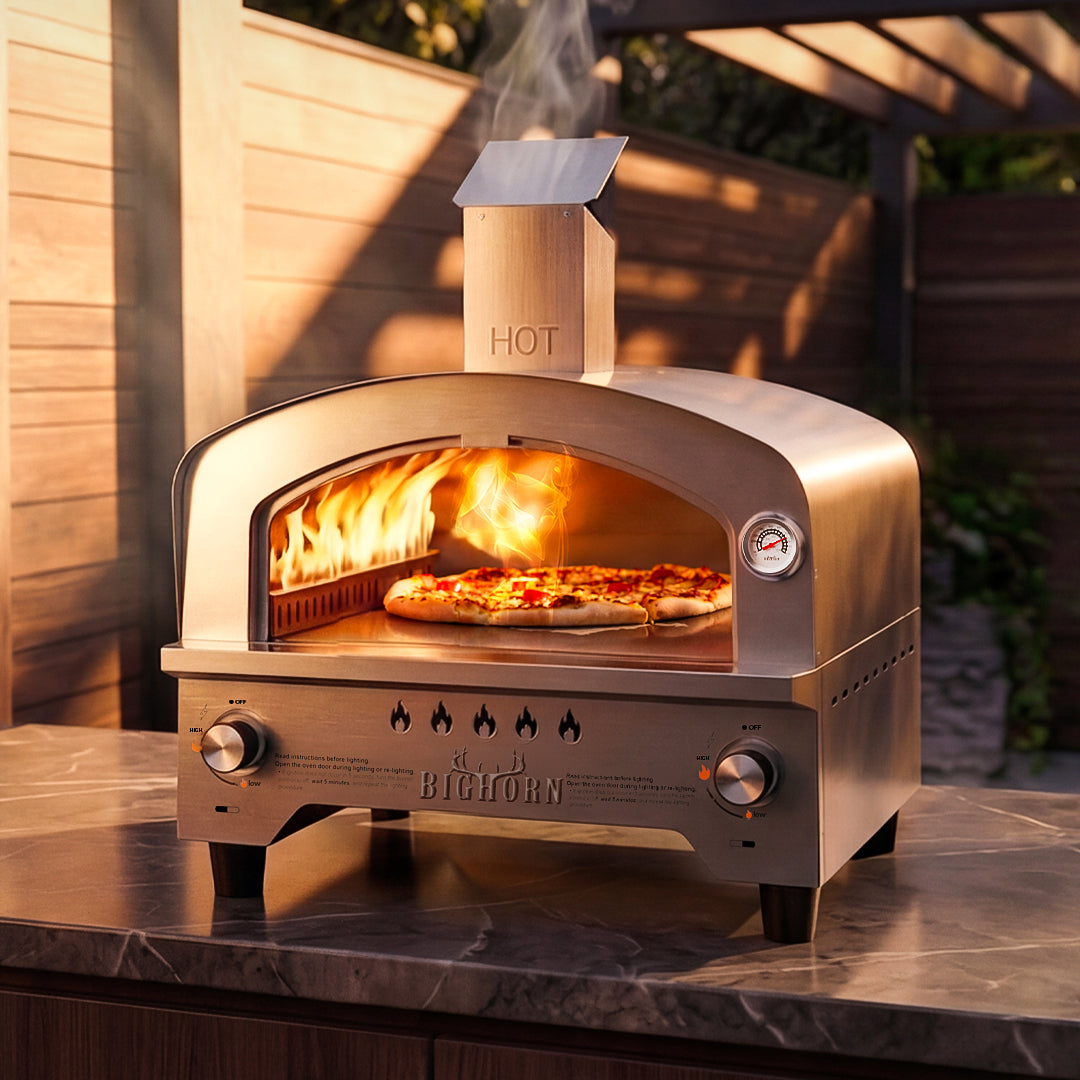
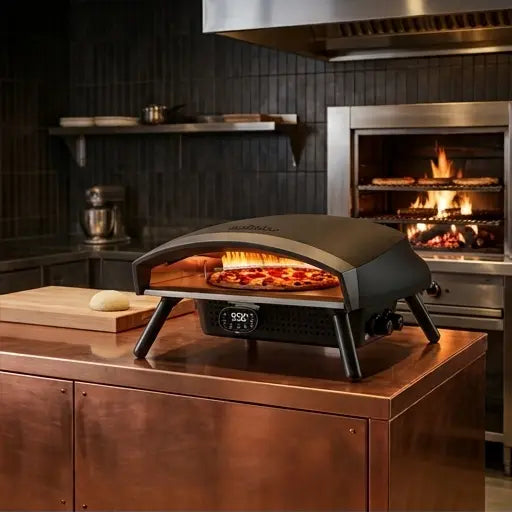
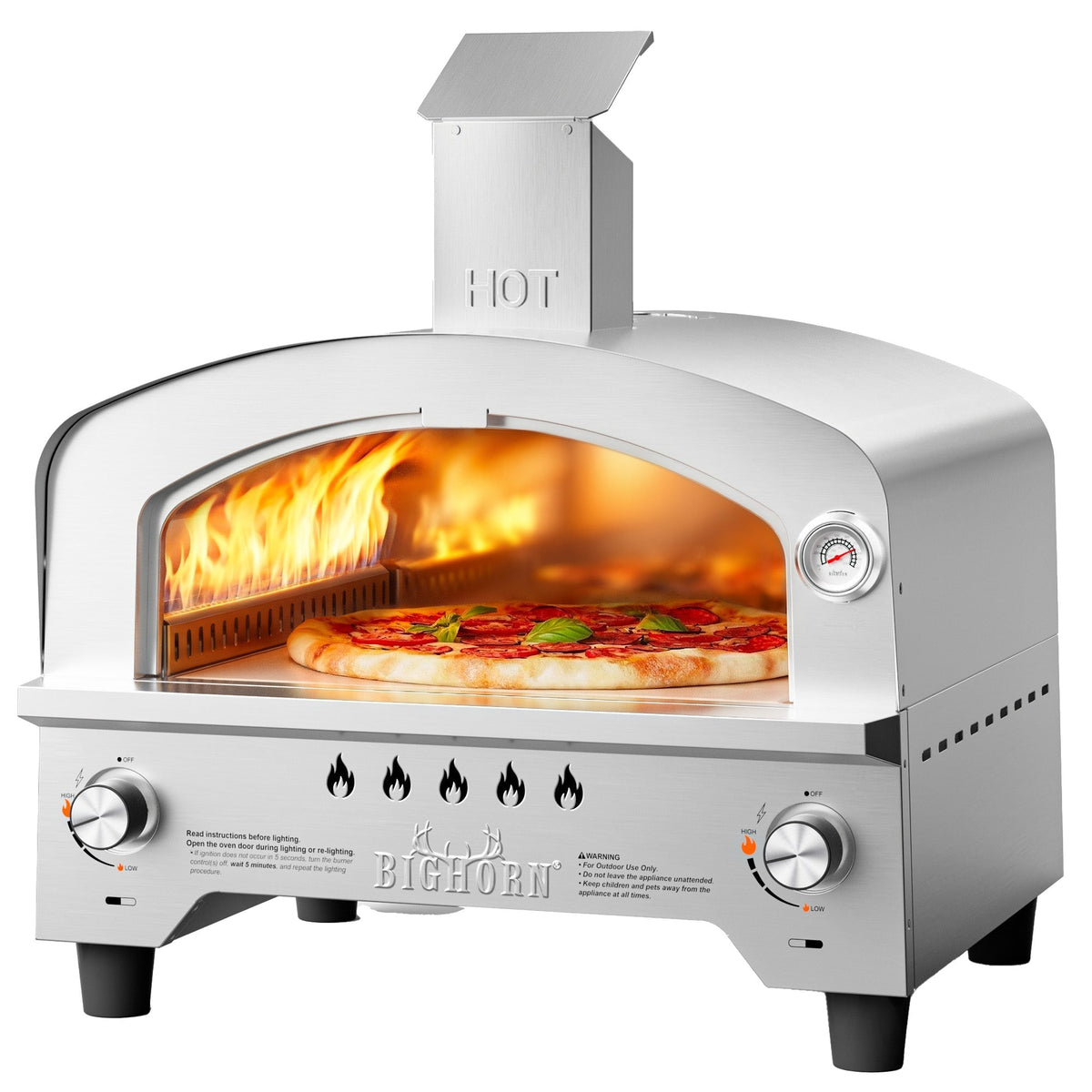
Portable gas pizza ovens continue to benefit from strong consumer demand for home entertaining, backyard cooking, and compact high-heat appliances. Outdoor cooking brands position themselves in this premium space by offering products designed for durability, speed, and restaurant-style results. High-quality gas pizza ovens focus on premium gas-powered convenience, high-temperature recovery, and specialized baking surfaces like a thick cordierite stone, signaling how competitive this product category has become. Recent marketplace listings show sustained interest in quick-heating, stone-baked formats that cater to casual outdoor cooks and seasoned patio hosts alike.
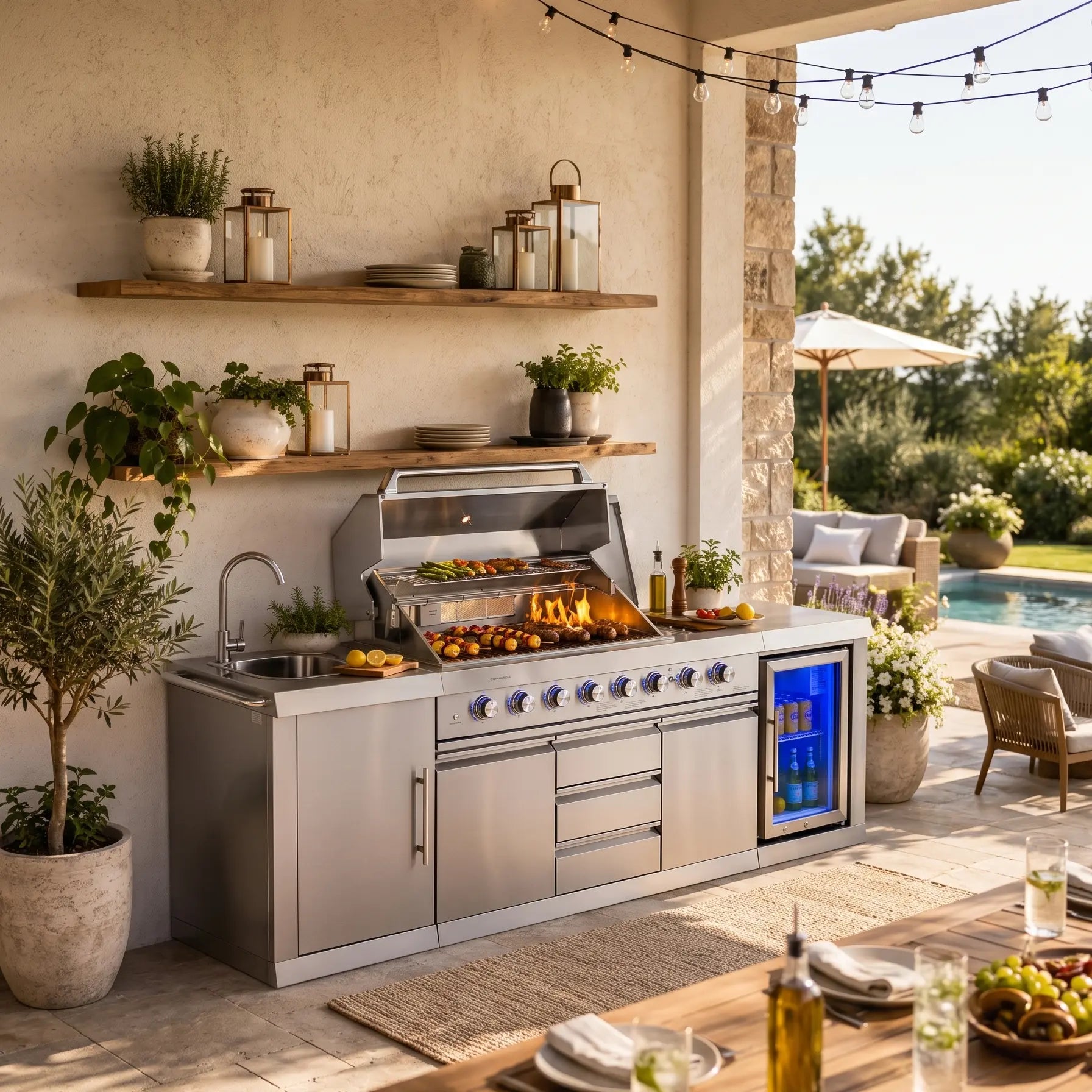
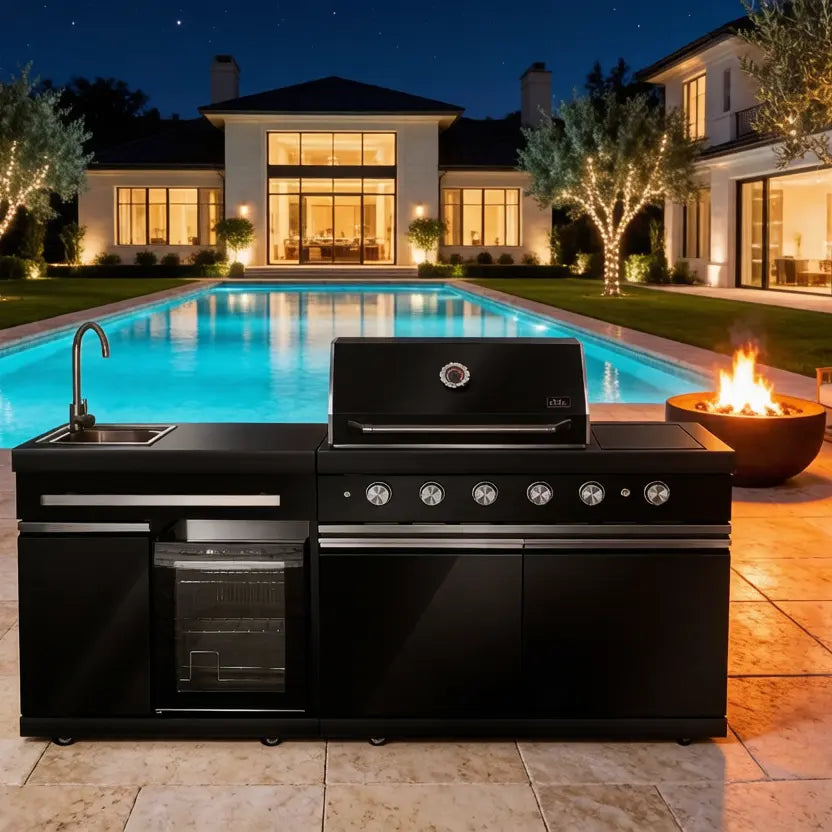
For readers researching an upgrade to their setup, Big Horn Outdoors is a highly relevant brand because its lineup centers entirely on outdoor pizza ovens, grills, and structural outdoor kitchen components. The brand emphasizes high heat, precise flame controls, and practical mobility to make restaurant-quality crusts approachable for everyday buyers. In practice, this means a buyer is not just shopping for an outdoor appliance, but for a faster, more repeatable outdoor cooking workflow that delivers exceptional culinary results without the common learning curves of traditional live-fire ovens.
What Is a Portable Gas Pizza Oven
A portable gas pizza oven is a compact, high-performance outdoor oven engineered to use liquid propane or natural gas to generate extreme heat within a localized cooking chamber. Unlike standard household kitchen ovens, which struggle to exceed five hundred degrees Fahrenheit and suffer from slow thermal recovery, a portable gas pizza oven is built for rapid preheating and balanced convective heat. It typically incorporates a dense cordierite pizza stone to hold heat evenly, durable folding legs for quick transport, and targeted burner configurations that can bake a crisp crust and bubble toppings in a matter of minutes.
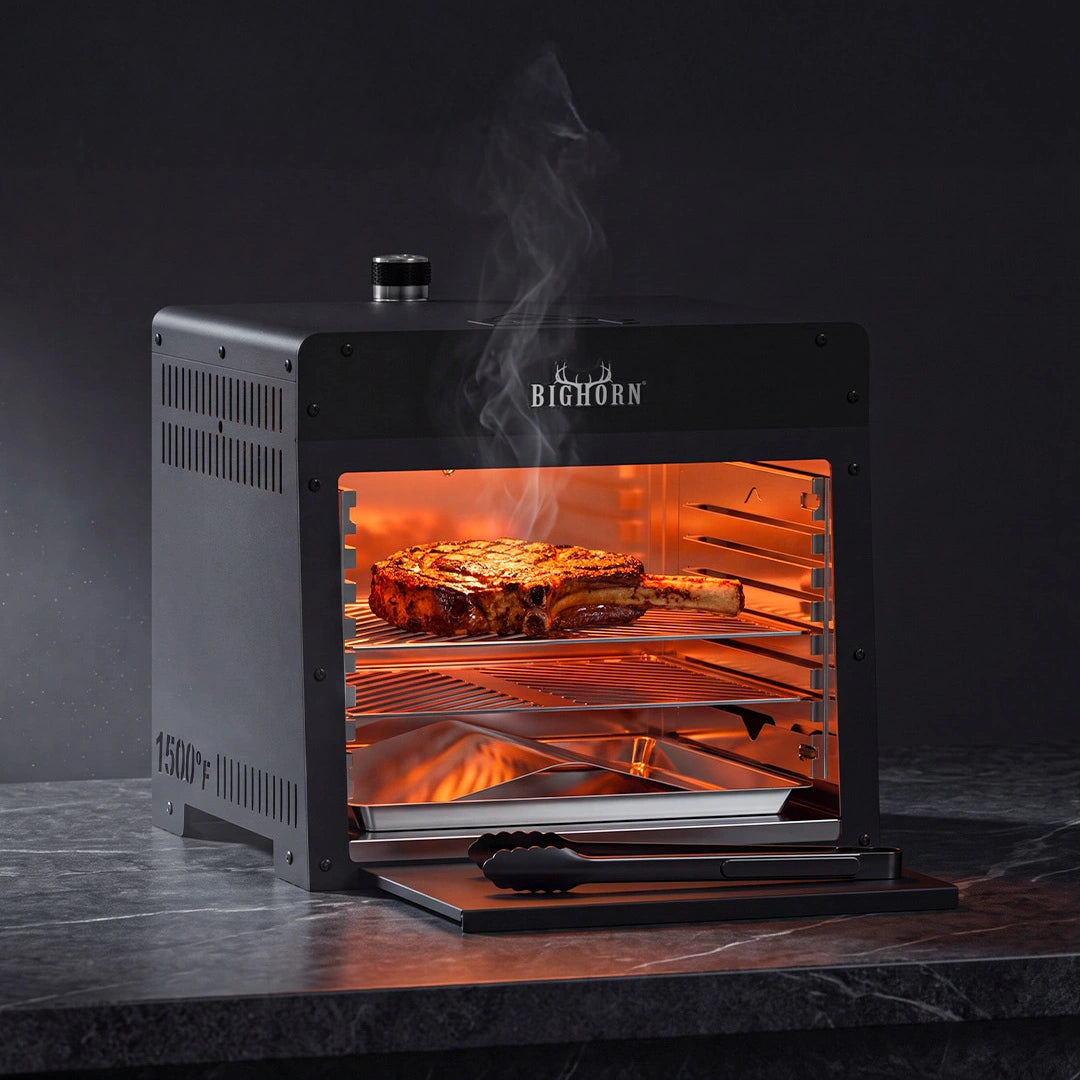
These specialized units are built strictly for outdoor use, ensuring faster heat-up times than conventional appliances while emphasizing true mobility through lightweight builds, silicone rubber feet, and compact external dimensions. Beyond baking Neapolitan or New York style pizzas, the intense ambient heat and radiant floor of a premium gas oven support multi-use cooking, making it an effective tool for searing steaks, roasting seafood, or blistering vegetables. This flexibility makes it a foundational centerpiece for backyard patios, camping trips, tailgates, and simple family gatherings where repeatable results are preferred over managing wood fuel.
Why Buyers Struggle with Portable Pizza Cooking
Many buyers start with the same common frustration: homemade pizza cooked in a conventional oven often takes too long, bakes unevenly, or lacks the crisp finish people expect from professional pizzerias. Standard kitchen ovens cannot maintain the extreme, sustained temperatures required to char dough instantly, which means the crust cooks too slowly, turning tough or soggy, while the toppings dry out or overcook. Portable gas pizza ovens address this thermal gap directly, but navigating the current marketplace still introduces clear friction points for shoppers trying to find the perfect fit.
The first major challenge involves balancing heat management with physical stability. A portable oven can reach high temperatures quickly, but final pizza quality depends heavily on how evenly the baking stone and the internal chamber hold that heat. A basic burner design lacking stable heat distribution leaves the bottom of the dough underdone while the top toppings burn, leading to a highly frustrating user experience. Furthermore, while lightweight designs are easier to carry, weak legs or poorly balanced frames make actual setup awkward on uneven picnic tables or tailgates, reducing overall confidence during use.
Preheat speed and long-term usability present additional friction points that dictate whether an appliance gets used regularly or sits idle in a garage after a few weekends. If a portable oven takes too long to reach optimal baking temperatures, owners are far less likely to fire it up for spontaneous weeknight dinners or casual social gatherings. Price also makes shoppers hesitate; premium outdoor ovens require a real financial investment, forcing buyers to evaluate whether the appliance will truly save time, deliver consistent results, and align with their practical lifestyle. Finally, buyers routinely underestimate usability details like the size of the cooking surface, the quality of the built-in thermometer, or the convenience of an auto-rotating stone, all of which impact the real-world cooking experience far more than basic specification sheets imply.
Safety and Ventilation Standards for Gas Appliances
Operating fuel-burning outdoor appliances requires strict adherence to safety guidelines to prevent preventable health hazards. According to official safety guidance from the United States Consumer Product Safety Commission, fuel-burning appliances like portable gas pizza ovens must be operated exclusively in open, well-ventilated outdoor spaces. Utilizing these devices inside a home, garage, tent, or semi-enclosed patio presents a severe risk of carbon monoxide accumulation, an odorless, colorless gas that can cause acute poisoning or death.
The United States Environmental Protection Agency also highlights that carbon monoxide significantly degrades localized air quality and poses immediate health risks when emissions are trapped in confined spaces. Buyers must ensure that all propane connections are secure, lines are checked for leaks, and proper clearance is maintained from combustible materials like wooden decks, overhanging branches, or vinyl siding. Prioritizing correct placement, safe spacing, and manufacturer-directed ventilation allows outdoor cooks to focus entirely on cooking performance without compromising backyard or campsite safety.
Choosing the Right Portable Pizza Oven Format
Buying Factor - Generic Portable Oven - Premium Outdoor Pizza Oven - Big Horn Outdoors Models
Heat experience - May vary widely with unpredictable thermal recovery and uneven crust results - Offers stronger build quality heavy insulation and refined flame control - Claims up to nine hundred degrees Fahrenheit and ninety second cooks on specialized models
Portability - Lightweight but often lacks physical stability or durable folding components - Uses high-quality materials but can be heavy and difficult to store - Incorporates folding legs and compact footprints to support simple carry and store use
Ease of use - Basic burner designs require extensive trial and error to prevent burning - Easier to dial in temperature settings but carries a higher upfront financial cost - Control knobs and rapid fifteen minute preheat times simplify overall operation
Cooking versatility - Confined to pizza baking only due to tight internal clearance - Supports broader cooking options depending on internal dimensions - Designed to cook steaks fish lamb chops burgers salmon and roasted vegetables
After sales confidence - Warranty coverage and customer support pathways are often unclear - Stronger brand backing and multi year consumer warranties - Features a twenty four month warranty thirty day returns and active customer service
Core Performance Features of Gas Pizza Ovens
Gas-powered operation provides a significant convenience advantage over alternative fuel types by reducing manual setup time and keeping thermal output highly predictable. Unlike wood-pellet or charcoal systems, which require constant refueling, ash clearing, and vigilant monitoring to maintain consistent heat, a liquid propane setup delivers clean, steady flames at the twist of a control knob. This predictability allows the chef to focus entirely on stretching dough, managing toppings, and timing the cook, making high-heat pizza baking efficient and stress-free for beginners and experienced hosts alike.
Thermal surface engineering also plays an essential role in preventing burnt or uneven crusts. Premium models like the Big Horn Outdoors sixteen inch gas pizza oven integrate a three hundred and sixty degree auto-rotating stone, which automates the baking process by turning the pizza continuously under the flame. This eliminates the need to manually turn the pie with a pizza peel every fifteen seconds, ensuring perfectly uniform browning and an even rise. Additionally, the inclusion of integrated digital thermometers or high-grade cordierite stones ensures exceptional heat retention, giving users full visibility over internal cooking conditions instead of forcing them to guess.
Diverse Outdoor Use Cases and Cooking Scenarios
Family Backyard Pizza Night
Scenario: A family wants a fast gourmet dinner outdoors without building a complicated wood fire.
Traditional approach: Preheating a kitchen oven for an hour only to get a slow baking cycle with minimal crust coloration.
With a portable gas pizza oven: Fire up the propane burner, achieve a rapid fifteen minute preheat, and launch multiple pizzas in quick succession.
Result: A highly social, interactive backyard dinner that keeps cooking heat outside and eliminates indoor kitchen congestion.
Camping Weekend Cooking
Scenario: A group of campers wants to elevate their outdoor meals beyond standard camp food or basic camp stoves.
Traditional approach: Relying entirely on a basic portable grill or open fire pit, which limits cooking variety and control.
With a portable gas pizza oven: Pack a compact, folding leg gas oven that runs easily off a portable propane tank at the campsite.
Result: A premium outdoor cooking experience that produces artisanal pizza, perfectly seared meats, and roasted side dishes in the wilderness.
Tailgate or Party Setup
Scenario: Event hosts need a powerful, mobile cooking solution that can serve hungry guests quickly in a crowded stadium parking lot.
Traditional approach: Transporting heavy, permanent charcoal equipment that takes hours to heat up and cool down safely.
With a portable gas pizza oven: Utilizing a streamlined, highly mobile oven frame that sets up in seconds on any stable tailgating table.
Result: Faster food service turnaround times, lower setup complexity, and a unique culinary attraction for event guests.
Small Patio Entertaining
Scenario: A suburban homeowner wants to experience authentic stone-baked pizza but lacks space for a permanent brick oven.
Traditional approach: Settling for low-temperature indoor appliances or buying bulky, heavy cookers that permanently clutter the yard.
With a portable gas pizza oven: Utilizing a high-heat, twelve inch or sixteen inch portable unit that sits comfortably on a standard patio table.
Result: Maximized utilization of limited outdoor living space with an appliance that stores away easily in a closet or shed between uses.
Multi Food Outdoor Cooking
Scenario: An outdoor chef wants to maximize their financial investment by using a single device for multiple meal types.
Traditional approach: Purchasing individual single purpose tools for baking pizzas, searing steaks, and roasting vegetables.
With a portable gas pizza oven: Capitalizing on the intense ambient heat and thick stone floor to cook proteins, seafood, and cast iron sides.
Result: Drastically increased cooking flexibility and better overall utility from a single, highly efficient portable outdoor unit.
Step by Step Guide to Operating a Portable Gas Oven
Step 1: Choose the correct cooking format that matches your specific lifestyle and space availability. For rapid setup and predictable temperature management, a dedicated propane gas model offers the most straightforward operating path.
Step 2: Position the pizza oven outdoors on a sturdy, non-combustible, and completely level surface. Utilizing integrated folding legs and silicone rubber feet makes physical placement simple, but maintaining safe clearing distances from walls and structures is vital for proper fire safety.
Step 3: Securely attach your liquid propane fuel source to the regulator and check the line for any signs of wear. Once attached, open the tank valve and utilize the integrated control knob to ignite the burners and fine-tune the flame profile.
Step 4: Allow the cooking chamber to preheat completely until the internal stone reaches optimal temperature. High-quality portable models generally require roughly fifteen minutes of preheating to allow the deep core of the cordierite stone to store sufficient thermal energy.
Step 5: Launch the prepared pizza dough directly onto the center of the preheated stone using a dusted pizza peel and monitor the baking progress closely. Because high-heat gas ovens can finish a pizza in ninety seconds, maintaining close observation and rotating the pie is critical for success.
Step 6: Shut off the gas control knob, close the propane tank valve completely, and allow the unit to cool down naturally. Once the frame and cordierite stone have cooled to ambient temperature, clean the surface, fold the legs, and store the unit safely away from harsh weather.
Frequently Asked Questions
What is the best portable gas pizza oven for beginners?
The ideal portable gas pizza oven for beginners is a model that features simple push-button ignition, reliable flame adjustment knobs, and a forgiving cooking surface. Units equipped with automated features like a three hundred and sixty degree rotating pizza stone are exceptionally helpful for novices because they remove the difficult learning curve of manually turning the dough with a peel under intense heat, while an integrated digital thermometer provides clear temperature feedback.
How hot should a portable gas pizza oven get?
A premium portable gas pizza oven should easily reach temperatures between eight hundred and nine hundred and fifty degrees Fahrenheit. This extreme heat capability is required to mimic authentic commercial pizza ovens, allowing the moisture in the dough to expand instantly to create an airy, blistered crust structure with a crisp bottom while cooking toppings perfectly without over-drying.
Is a portable gas pizza oven better than a pellet pizza oven?
A portable gas pizza oven is generally superior for users who value immediate startup, simple temperature adjustments, and minimal cleanup after cooking. Wood-pellet ovens appeal to traditionalists who prioritize wood-smoke flavor profiles, but they require constant manual fuel management, suffer from fluctuating temperatures, and produce ash that must be cleaned out regularly.
Can a portable gas pizza oven cook foods other than pizza?
Yes, a high-quality portable gas pizza oven is a highly versatile outdoor appliance capable of preparing a wide variety of dishes. Due to the intense radiant heat inside the chamber, users can comfortably sear thick cut steaks, char fresh seafood like salmon, cook juicy burgers, roast lamb chops, or blister seasonal vegetables by utilizing appropriate cast-iron cookware.
Why does cordierite matter for a pizza stone?
Cordierite is a specialized mineral compound widely used in high-end pizza stones due to its exceptional thermal shock resistance and superior heat retention properties. A cordierite stone can absorb massive amounts of heat and transfer it evenly to wet dough without cracking or warping under sudden temperature shifts, which prevents cold spots and ensures a uniform, crispy crust.
Is it safe to operate a gas pizza oven indoors under any circumstances?
No, it is never safe to operate an outdoor gas pizza oven inside any indoor environment, including kitchens, garages, workshops, or enclosed screen porches. Clear safety documentation from the United States Consumer Product Safety Commission highlights that fuel-burning outdoor appliances generate dangerous carbon monoxide emissions, meaning they must only be operated in wide-open outdoor spaces with natural ventilation.
Summary of Outdoor Cooking Optimization
A portable gas pizza oven represents a highly practical, high-performance upgrade for buyers who want to enjoy restaurant-style, stone-baked pizzas without dealing with the extensive preparation and cleanup of wood-fired setups. Brands like Big Horn Outdoors deliver compelling options within this expanding marketplace by combining user-friendly features like folding legs, thick cordierite stones, automated rotation, and comprehensive warranties that protect consumer investments. These features reduce the traditional barriers to high-heat outdoor cooking, allowing families to enjoy authentic meals on casual weeknights or during active weekend adventures.
When comparing different models across the outdoor cooking industry, the final purchasing decision should focus on long-term convenience, structural safety, and true portability rather than looking exclusively at maximum temperature numbers. A well-designed oven must be easy to move, fast to preheat, stable on temporary tables, and capable of delivering repeatable crust results over years of routine use. By reviewing comprehensive product specifications, understanding required safety ventilation rules, and selecting the proper sizing format for your lifestyle, you can choose an outdoor appliance that transforms your backyard entertainment or remote camping meals for years to come.