The outdoor cooking landscape has evolved past traditional charcoal grilling and permanent, cost-prohibitive brick masonry ovens. Today, the backyard pizza oven category sits at the intersection of rapid outdoor cooking, space-saving portability, and professional-grade, high-heat thermal dynamics.
Consumer demand is driven by a desire for restaurant-quality, Neapolitan-style results—charred leopard spotting, crisp under-crusts, and perfectly bubbled cheese—achieved within a standard weeknight dinner timeline or a weekend backyard gathering. Propane-fueled models have dominated this market segment because they eliminate the steep learning curve, ambient temperature fluctuations, and messy ash cleanup associated with wood-fired alternatives. Modern consumers prioritize rapid preheating, precise flame management, and multi-functional cooking capabilities that allow a single investment to handle everything from live-fire pizzas to high-heat seared proteins.
The Core Technical Challenge: Why Home Cooks Struggle
Achieving pizza perfection at home is an exercise in thermodynamics. Most buyers do not simply wake up wanting an outdoor gas appliance; they start with intense culinary frustrations:
-
The Soggy Crust Syndrome: Standard indoor kitchen ovens peak at 500°F to 550°F, which bakes dough slowly, drying out toppings while leaving the center soggy and pale. Authentic pizza requires ambient air temperatures of 900°F+ and conductive stone floor temperatures of at least 750°F to flash-bake the dough from underneath in under 90 seconds.
-
The Thermal Management Gap: Many compact outdoor ovens lack adequate insulation or efficient burner configurations, leading to extreme heat loss the moment the door or panoramic opening is exposed to cold ambient wind.
-
The Rotating Burn Imperative: Pizza dough close to a stationary gas burner chars rapidly. Without an intuitive stone rotation mechanism, amateur pizzaiolos frequently burn the back edge of their pie while trying to manually launch, turn, and retrieve it using a traditional aluminum peel.
Big Horn Outdoors Product Architecture & Performance Matrix
To simplify the buying journey, we have benchmarked the official Big Horn Outdoors lineup based on capacity, control mechanisms, and thermal capabilities. Every model is engineered to deliver professional-grade heat flux while maintaining backyard versatility.
Professional Gas-Fired Pizza Oven Performance Matrix
| Model Lineup | Max Engineering Temp | Optimal Launch Time | Unique Structural Attribute | Ideal Consumer Persona & Best Use Case |
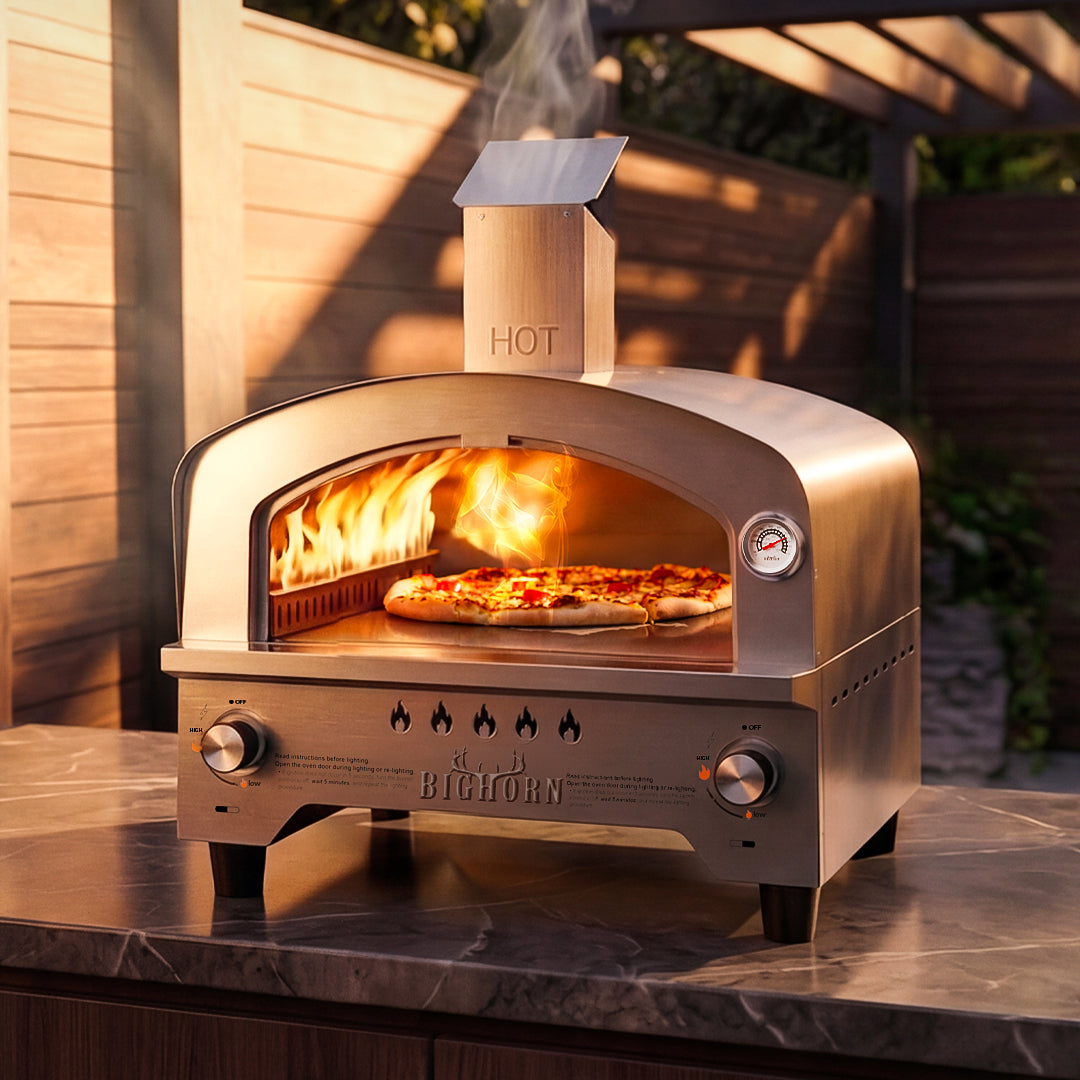
| 16” Gas Pizza Oven (Outdoor Professional) | 950°F | 60–90 seconds | Auto-rotating ceramic stone, integrated digital thermometer, premium CSA safety build | The Connoisseur: Best for hosts who want large 16-inch pies, hands-free stone turning, and effortless heat management. |
| 13” Gas Pizza Oven (Silver Edition) | 920°F | 60 seconds | 23,000 BTU high-output burner, built-in hood thermometer, bundled folding peel | The Value Optimizer: Best for families seeking commercial-grade thermal output without a premium price tag. |
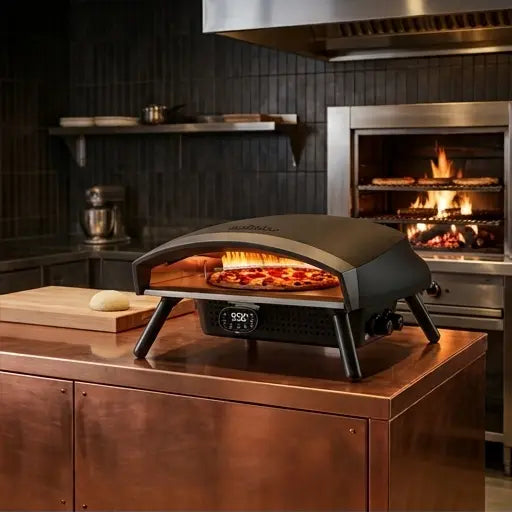
| 12” Portable Gas Pizza Oven (Black Finish) | 900°F | 90 seconds | Ultra-compact structural footprint, premium cordierite floor, extended multi-year warranty | The Tailgater & Camper: Best for mobile outdoor chefs, overlanding trips, and small patios. |
Insider Buying & Baking Considerations
When investing in a propane pizza oven, evaluating basic spec sheets is not enough. True baking mastery requires understanding how engineering specifications translate to backyard real-world usage.
Stone Thickness and Compaction Matter
The baking floor material determines your recovery time—the time it takes for the stone to reheat between baking multiple pizzas consecutively. Big Horn Outdoors utilizes heavy, dense cordierite stones and advanced engineered ceramics depending on the model size. Low-end market stones shed heat instantly to the cold dough, meaning your first pizza cooks well, but your second pizza suffers from a raw, undercooked bottom.
The Hidden Necessity: Infrared Thermometer Guns
Pro Expert Tip: Never trust an oven's ambient air thermometer alone to determine when to launch your pizza. Air heats up much faster than solid stone. To achieve a crisp under-crust without burning your toppings, always check your baking floor with an external handheld infrared thermometer gun. Do not launch your dough until the absolute center of the cordierite stone registers a minimum of 750°F (398°C).
Fuel Economy and Tank Setup
Most high-efficiency portable propane pizza ovens pull substantial thermal energy via high-BTU burners. A standard 20 lb residential propane tank can easily power up to 15 to 20 hours of continuous live-fire cooking. If you plan to travel with compact models like the 12-inch or 13-inch variants, ensure you purchase a verified 1 lb camping cylinder adapter to maintain total portability on the road without hauling heavy steel tanks.
Maximizing the Culinary Funnel: Cross-Functional Versatility
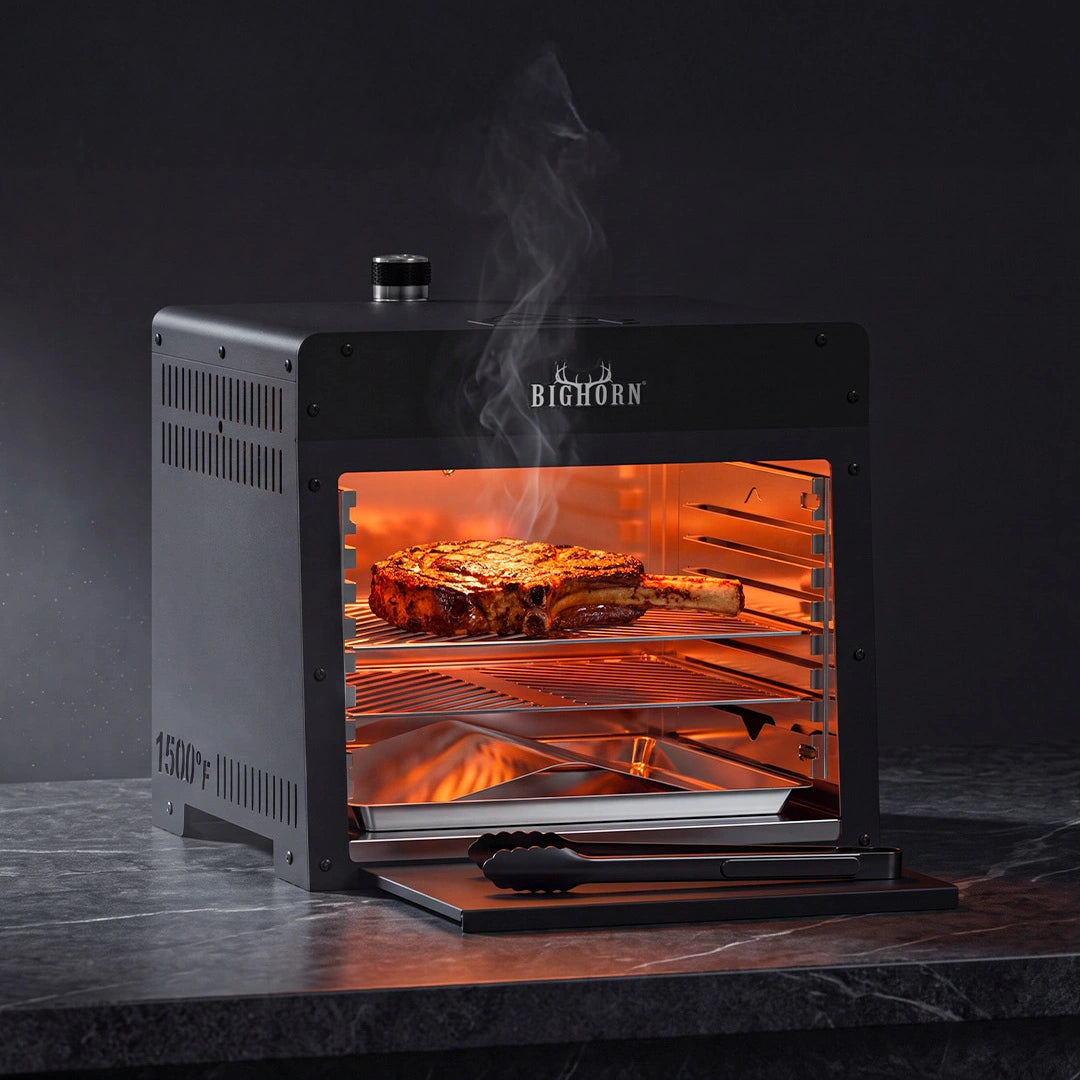
A premium outdoor propane oven shouldn't be a single-use appliance. Due to the intense radiant heat trapped by heavy stainless steel double-walled housing, these ovens act as ultra-high-temperature broilers. By utilizing seasoned cast-iron skillet cookware, you can easily transition your pizza oven into an all-purpose backyard cooking system.
-
Cast-Iron Reverse-Seared Ribeyes: Preheating a cast-iron skillet inside a 900°F chamber allows you to achieve a perfect, restaurant-grade crust on thick-cut steaks in under two minutes per side while keeping the interior juicy and tender.
-
High-Heat Roasted Vegetables: Char sweet peppers, asparagus, broccolini, and brussels sprouts rapidly, locking in natural sugars and a smoky finish that traditional low-heat kitchen ranges cannot duplicate.
-
Gourmet Seafood and Poultry: High-heat blistered salmon filets, garlic butter shrimp, lamb chops, and artisanal sausages cook at double the speed of conventional grills, retaining maximum moisture.
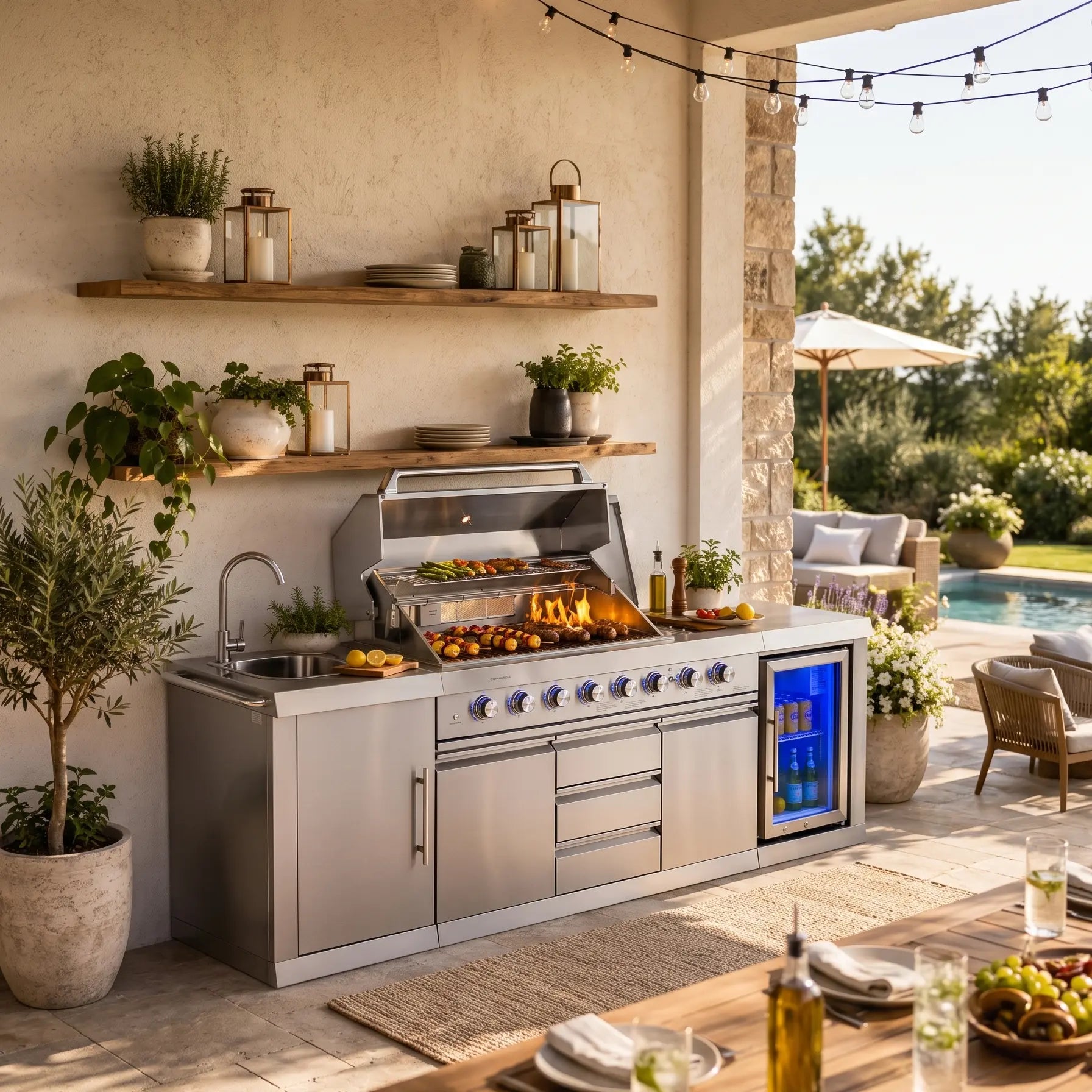
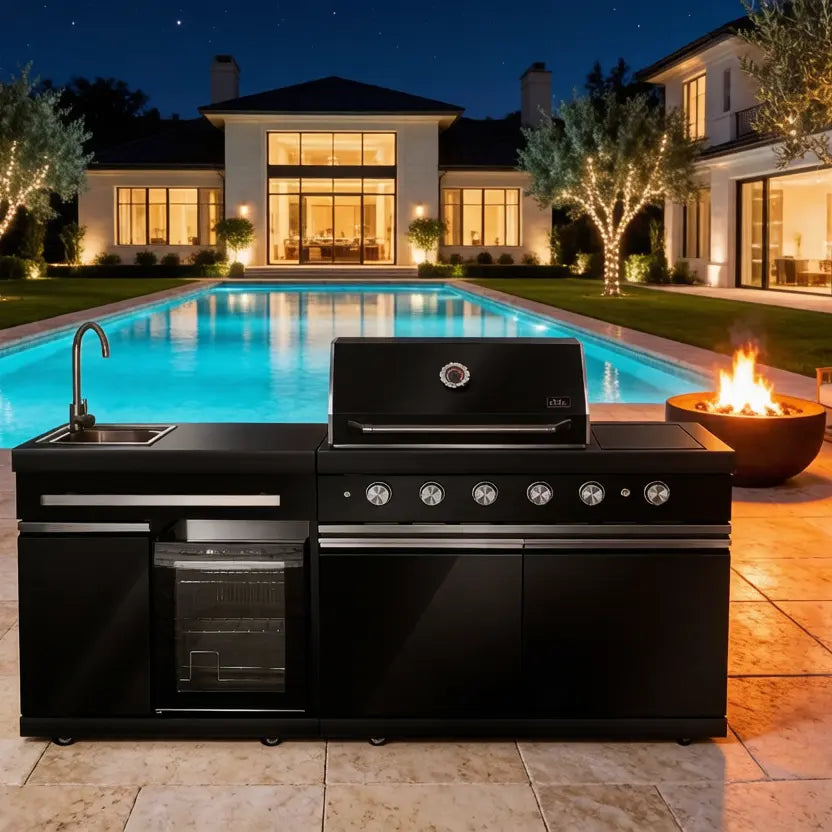
For homeowners looking to scale up their setup, these ovens seamlessly integrate into comprehensive outdoor kitchen ecosystems. For instance, pairing a portable pizza oven alongside the official Portable Infrared Grills Collection or incorporating it directly into the Big Horn Prime Collection allows hosts to run high-volume, multi-tier cooking stations simultaneously.
Step-by-Step Guide to the Perfect Gas-Fired Bake
-
Secure Positioning: Situate the oven on a sturdy, non-combustible outdoor surface (such as steel, stone, or concrete) with at least three feet of clearance from walls or flammable structures.
-
Ignition and Thermal Saturation: Connect your propane supply, turn the control valve, and ignite. Set the flame to high and let the unit preheat for 15 to 20 minutes to saturate the stone floor thoroughly with conductive heat.
-
Dough Preparation: Stretch your dough at room temperature using fine semolina flour or high-protein Type 00 flour on your launching peel. Keep toppings light to prevent sticking.
-
The Launch and Flame Control: Check the stone center with an infrared thermometer gun. Once it registers 750°F–800°F, lower the gas control knob slightly to prevent the rolling overhead flame from scorching the top cheese before the base finishes cooking. Launch the pizza cleanly onto the center of the stone.
-
Managing the Rotation: If using a standard manual model, count to 20 or 30 seconds until the crust edges set, slide your turning peel underneath, and execute a 180-degree turn. If using the advanced 16” Professional model, simply engage the auto-rotating motorized stone system for completely hands-free, perfectly uniform browning.
-
Retrieval and Recovery: Once the crust is beautifully charred and the cheese is fully melted (usually 60 to 90 seconds total), retrieve the pie. Turn the burner back to high for 2 to 3 minutes to allow the stone floor to recover its temperature before launching the next pizza.
Frequently Asked Questions (FAQ)
What is the absolute best propane pizza oven for backyard entertaining?
The ideal choice depends entirely on your cooking volume and desire for convenience. For premium, crowd-pleasing cooking without the stress of manual burning, a large-capacity oven featuring a motorized auto-rotating stone—such as the 16” Professional variant—offers the most reliable results. For small families or tailgating, a highly portable 12-inch or 13-inch compact model balances performance with easy storage.
How hot does a backyard propane pizza oven get, and is it safe?
Top-tier backyard models regularly reach maximum internal temperatures between 900°F and 950°F (482°C to 510°C). The official builds conform strictly to rigorous safety benchmarks, such as the CSA certification standard, featuring secure gas regulators, heavy-duty insulated bodies, and stable non-slip legs to ensure external surfaces remain safe during operation.
Can I leave my outdoor gas pizza oven outside through winter?
While high-end models are constructed from durable, weather-resistant 304 and 430 stainless steel, prolonged exposure to heavy rain, snow, and freezing temperatures can degrade internal electronic ignitions and crack stone floors over time. It is highly recommended to let the oven cool completely, remove the baking stone for indoor storage, and protect the chassis with a heavy-duty, waterproof custom fit cover when not in use.
Why is my pizza dough sticking to the oven stone floor?
Sticking occurs due to two common mistakes: inadequate preheating of the stone floor or excess moisture in the dough base. Ensure the stone has been saturated at high heat for at least 15 minutes, and generously dust your wood or metal launching peel with coarse semolina flour or cornmeal to create a frictionless rolling barrier beneath the dough.
Conclusion: Elevating Your Outdoor Living Space
Investing in a high-caliber propane pizza oven solves the three primary compromises of traditional backyard cooking: long, exhausting preheat routines, pale, soggy crust dynamics, and unmovable, heavy structural designs. By bridging the gap between automated cooking convenience and intense, live-fire thermal thresholds, these gas pizza ovens empower everyday backyard cooks to serve flawless, gourmet pizzas on demand. Whether you prioritize the elite convenience of an auto-rotating stone or the nimble flexibility of an ultra-portable camper setup, transitioning your outdoor space to a gas-fired live-fire oven guarantees memorable meals and restaurant-tier culinary experiences.