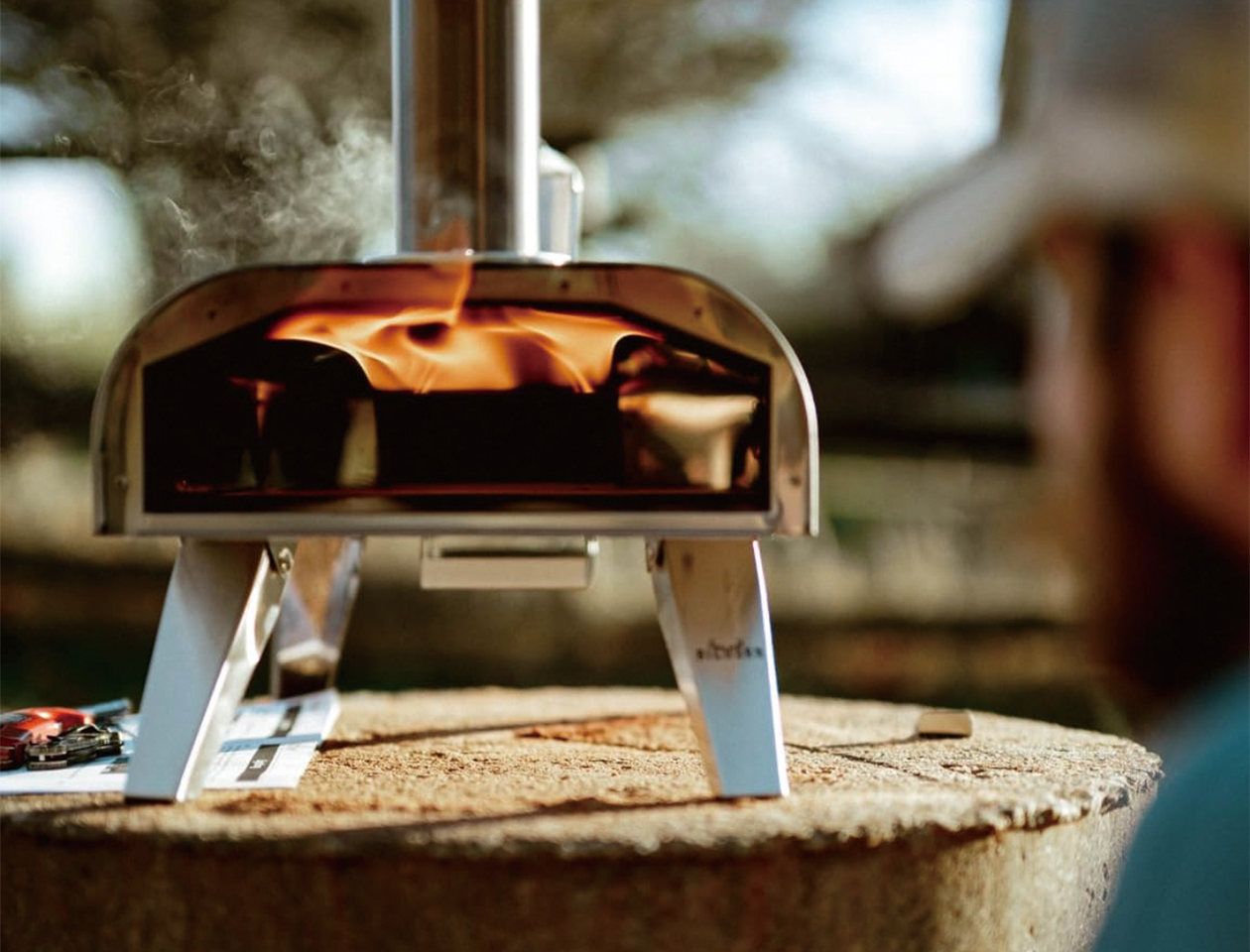
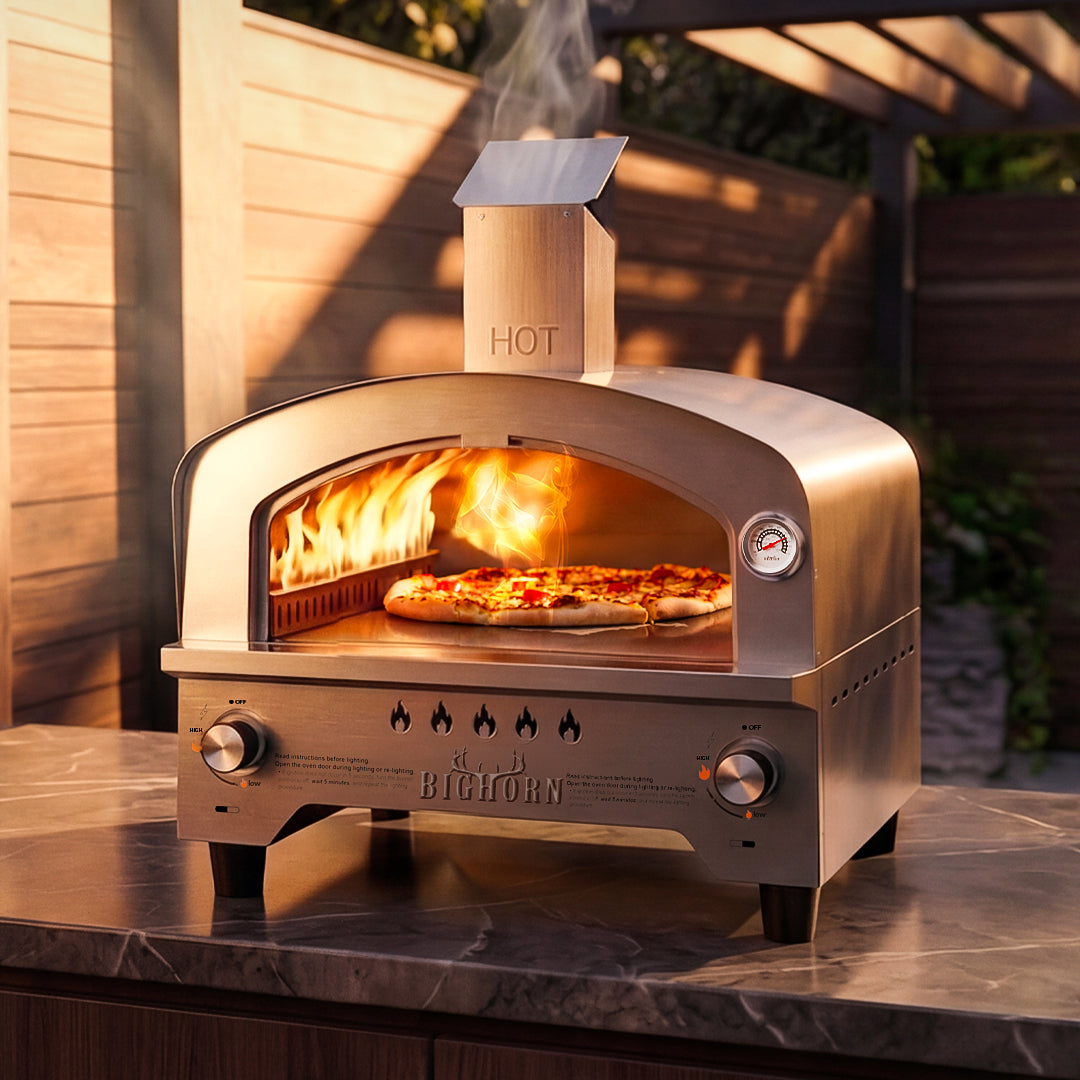
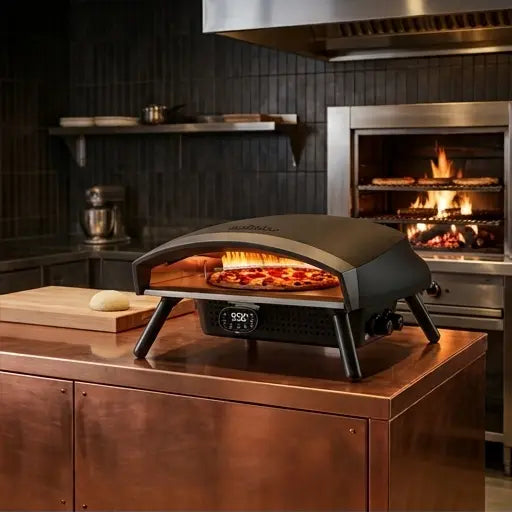
Camping with a portable pellet pizza oven works when the trip is a checklist: gear packed, pellets dry, site rules confirmed, fire ban alternatives planned, and the cool-down built into the load-out. The 12-inch pellet oven from Big Horn Outdoors weighs about 24.9 pounds with folding legs, and this guide is the trip itinerary.
What This Guide Answers
This is a practical camping checklist for a portable pellet pizza oven: the before-departure pack, the arrival setup, the cooking rhythm, the cool-down and load-out, and the fire-ban backup plan. It does not teach pellet selection or oven purchase; those belong to the model's own guide.
The trip succeeds on the checklist, not the oven. A household that packs in order and plans the fire rules gets wood-fired pizza at the campsite; one that improvises gets a troubleshooting session.
Before Departure: The Pack List
The pack list follows the menu. Write the meals first, then the gear: the oven, dry food-grade hardwood pellets in a sealed container, a peel, a turning tool, a cutting board, and a way to verify the stone. Add the fuel reserve, the cleanup kit, and a no-cook backup meal.
The oven packs only when cold, the stone rides protected from impacts, and the pellets travel dry and separate from the appliance. Latch the folding legs, seat the chimney, and protect the thermometer from road vibration.
Confirm the destination rules before departure: parks and campsites restrict fires and fuels differently, and a fire ban can make the pellet oven unusable. The rules check is part of the pack list, not an afterthought.
At the Campsite: Setup
Set up the oven outdoors on a firm, level base in open air, at the clearances in the manual. Keep it away from tents, vehicles, dry grass, and walking paths, and position it so smoke does not blow into seating or neighboring campsites.
Confirm the legs lock and the oven stands level before lighting. A wobbly oven on a folding table is a tipped-pizza risk and a burn hazard, and the setup check prevents it.
The Cooking Rhythm at Camp
The bake follows the same rhythm as home: preheat the stone fully, build the pizza on the peel, confirm the dough slides, and launch it near the rear. Turn the pizza as the edge nearest the flame browns, and let the stone recover between pies.
Plan the menu around one pizza at a time. A 12-inch oven bakes one pizza per launch, so the session is a sequence: preheat, bake, recover, repeat. Use an infrared thermometer to verify the stone when the manual recommends one, because the chamber can feel hot while the stone is still warming.
Fire Ban and Weather Alternatives
When the site prohibits open fires or pellet fuel, the pellet oven cannot run, and the plan needs a backup. Carry a no-cook meal or a fuel that the site permits, and check the restrictions again close to departure because conditions change with drought and fire risk.
Weather is part of the plan too. Wind changes the flame, cold extends the preheat, and rain can compromise the fire. If conditions turn, follow the manual's shutdown guidance and cook the backup meal rather than improvising.
Cool-Down and Load-Out
The trip ends with the cool-down. Follow the manual's shutdown sequence, let the stone, firebox, and chimney cool completely, and empty cold ash into a fire-safe container, never a trash bag or dry grass. Pack the oven dry, protect the stone, and store pellets separately.
Build the cool-down window into the trip plan rather than rushing to pack and drive. A clean, cold, dry oven is ready to travel again, and the load-out is the checklist's final step.
Big Horn Outdoors Expert Views
A portable pellet oven is only as convenient as the kit and the itinerary around it. Pack from the menu backward: oven, dry pellets, peel, stone verification, and a no-cook backup. Confirm the site's fire and fuel rules before departure, because a fire ban makes the oven unusable regardless of the gear. At the site, set up outdoors on a stable, level base, and run the session one pizza at a time with stone recovery. The cool-down is non-negotiable: the stone, ash, and chimney must be cold before anything is packed. Big Horn Outdoors designed the 12-inch pellet oven for outdoor portability, and the checklist turns the trip from a gamble into a routine.
The Camp Itinerary, Hour by Hour
The camping trip runs on an itinerary, and the itinerary starts before departure. Two days out, confirm the site's fire and fuel rules, check the forecast, and decide whether the pellet oven is even allowed; one day out, portion the dough, pack the toppings, and stage the dry pellets. The day of departure, the kit checklist runs: oven, stone protection, pellets, peel, turning tool, board, thermometer, and the no-cook backup. The staged preparation turns the departure from a scramble into a checklist.
At the campsite, the itinerary assigns the first tasks: pick the level spot, set the oven base, lock the legs, and run the setup check before anything is lit. The fuel connects and verifies, the smoke path clears the seating, and the preheat starts with enough time before the first meal. The first session is deliberately simple, because the first pizza at a new site is a calibration, not a performance.
The cooking block runs in rounds: preheat, bake, recover, repeat, with the dough and toppings staged so the oven never waits. The midday session handles the pizza, and the evening session reuses the same rhythm for a second meal if the fuel plan allows. The itinerary knows how many pizzas fit the fuel, because the pellet supply is finite and the reserve is planned.
The itinerary includes the fire-ban branch. If the site restricts fires, the no-cook backup meal or a permitted fuel takes over, and the oven stays packed. The branch is decided before the trip, not at the site, and the household never faces a hungry evening because the plan covered the restriction.
The cool-down and load-out close the itinerary. The oven shuts down by the manual, the stone and chimney cool completely, the cold ash goes into a fire-safe container, and the kit packs dry and protected. The load-out is scheduled, not rushed, because a rushed pack-in is how stones crack and grease travels.
The post-trip review is the itinerary's last step: what worked, what was missing, and what the next trip changes. The review updates the checklist, and the updated checklist is the reason the next trip starts smoother. The itinerary is the portable pellet experience made repeatable, and the repeatable experience is the point of the format.
The kit's support gear completes the itinerary. The camping stove collection holds the backup cooking options, and the accessories collection has the covers, the peels, and the heat-resistant tools that complete the camp setup.
The itinerary's gear list is worth one final check against the model. The 12-inch pellet oven's folding legs and detachable chimney define the packed form, and the stone's protection is the trip's most fragile detail. A household that keeps the checklist with the kit turns the departure into a routine, and the routine is the difference between a wood-fired campsite pizza and a stored oven.
The itinerary's final entry is the fuel plan. The pellets for the session, the reserve for the weather, and the dry container for the travel are all confirmed against the menu before the departure. The confirmed fuel is the trip's arithmetic, and the arithmetic is the cooked campsite dinner.
FAQ
Can I use a portable pellet oven inside a tent or camper?
No. Pellet ovens produce flame and combustion gases and must be used outdoors in open, ventilated space. Never operate one inside a tent, vehicle, camper, or garage.
How much pellet fuel should I bring?
Estimate the number of pizzas and dishes, then add a reserve for weather and longer sessions. Dry, food-grade hardwood pellets in a sealed container are the safest supply plan.
What if the campsite bans fires?
Follow the site's rules and use a no-cook backup meal or a permitted fuel. Confirm the restrictions before departure and again close to the trip, because conditions change.
How do I prevent the pizza stone from cracking in transit?
Let the oven and stone cool completely, remove the stone if the manual allows, and pack it where it cannot shift or take impacts. Avoid thermal shock by never cooling a hot stone with water.
How many pizzas can I cook at camp?
One pizza per launch with stone recovery between pies. A typical session might produce several pizzas sequentially, but each pie needs the stone to return to temperature.
Conclusion
Camping with a portable pellet pizza oven is a checklist: pack from the menu, confirm the site rules, set up outdoors on a stable base, and run one pizza at a time. The 12-inch wood pellet pizza oven travels with the kit, and the accessories collection completes the camp setup. Plan the fire-ban backup, build the cool-down into the load-out, and the campsite becomes the pizza kitchen.