
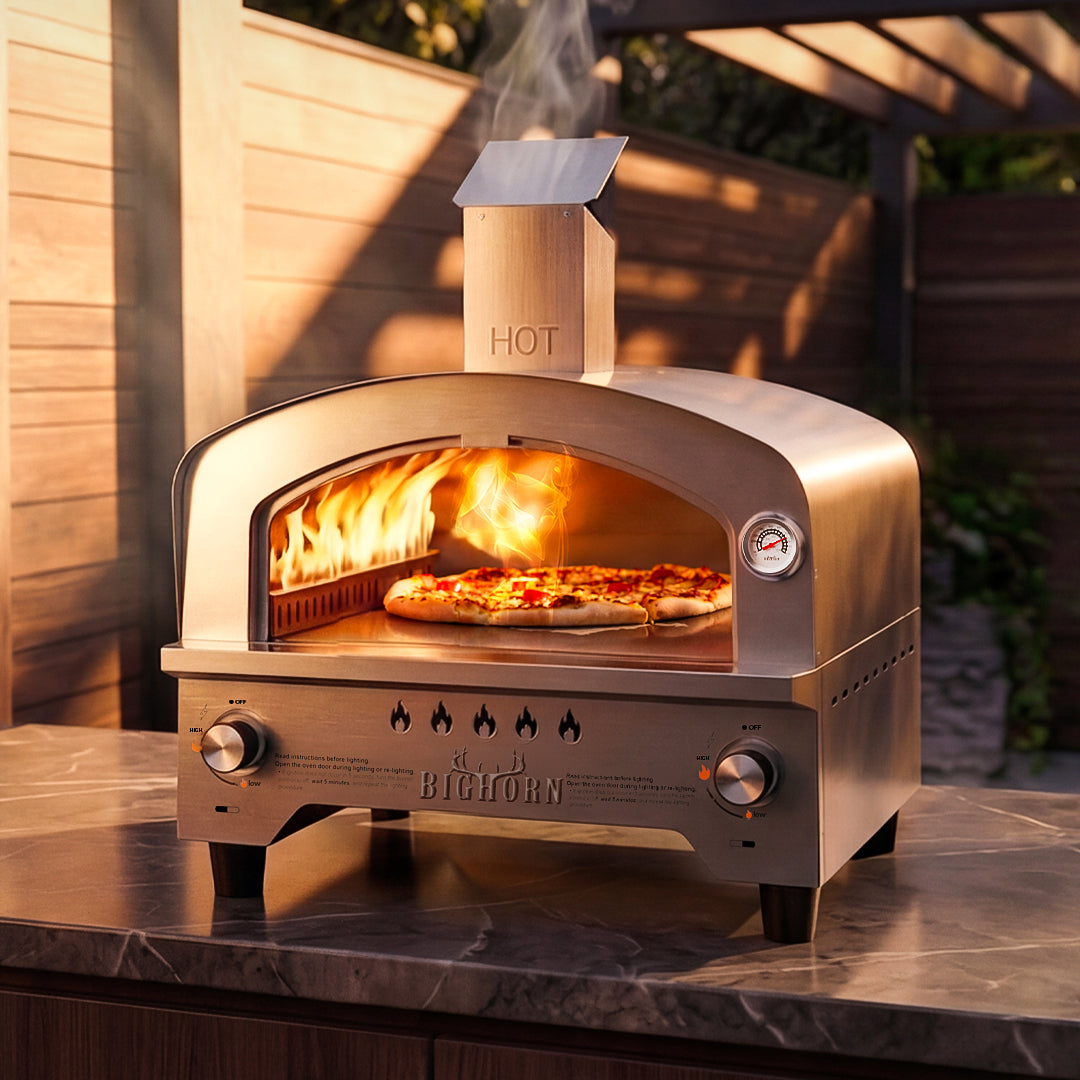
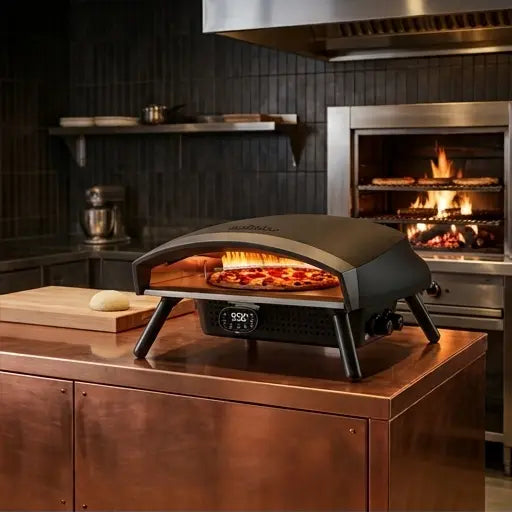
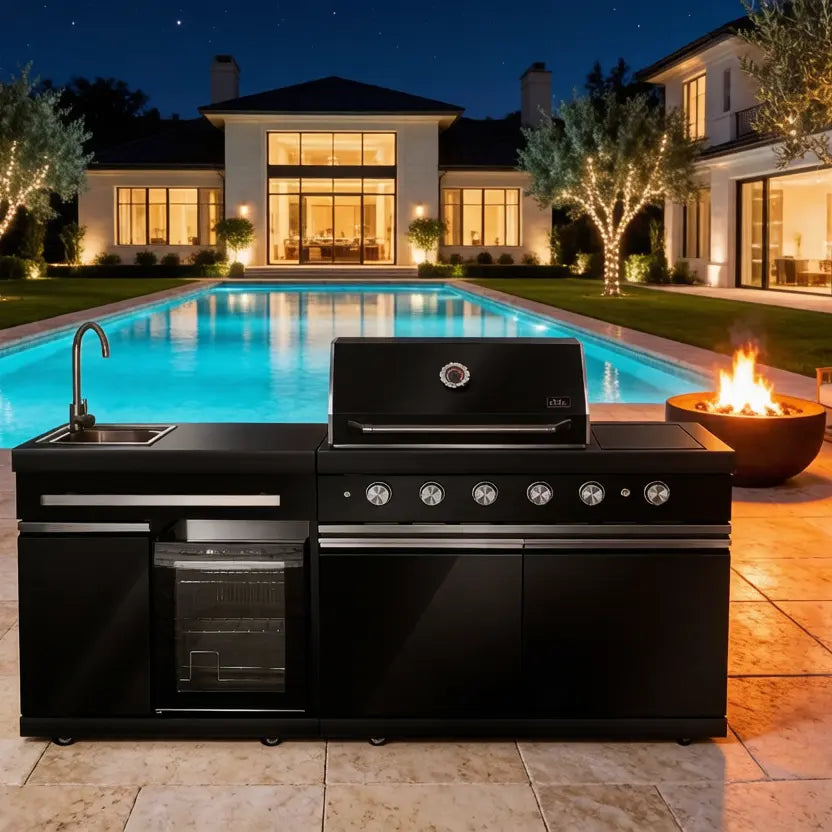
An outdoor pellet pizza oven belongs in a yard that is planned: a level, heat-safe surface, the manual's clearances, a wind map that keeps smoke out of doors and seating, and station zones that make the session smooth. The 12-inch and 16-inch pellet models from Big Horn Outdoors suit different yards, and this guide plans the placement.
What This Guide Answers
This is a yard-layout guide for an outdoor pellet pizza oven: choosing the spot, mapping the wind, building the station zones, and managing the seasonal setup. It does not teach pellet fire control or oven purchase; those belong to separate guides.
The yard decides whether the oven gets used. A convenient, level, open spot becomes part of the routine; one squeezed against a wall or under a low roof stays stored. The placement plan comes before the first fire.
Choose the Surface and the Spot
Start with the surface. A concrete patio, stone, or heat-rated composite is a solid base; a wooden deck needs the model's approval and often a protective mat. The spot must be level, because an oven on a slope sits unevenly on its legs and the fire behaves unpredictably.
Measure the clearances on every side against the manual, and keep walls, low roofs, overhanging branches, and dry grass outside the zone. An outdoor label does not mean safe under every roof; pergolas and awnings can trap heat or redirect exhaust.
Map the Wind Before You Cook
Wind decides where the smoke goes. Observe the yard at the times you will cook, because buildings and fences create gusts and recirculation even when the forecast looks calm. Position the oven so prevailing wind carries exhaust away from doors, windows, and seating.
Revisit the wind map through the season: trees leaf out, fences shade the yard, and neighbors' seating may move. The flow planned in spring may not hold in summer, so re-observe and adjust the oven's position when the smoke drifts.
Build the Station Zones
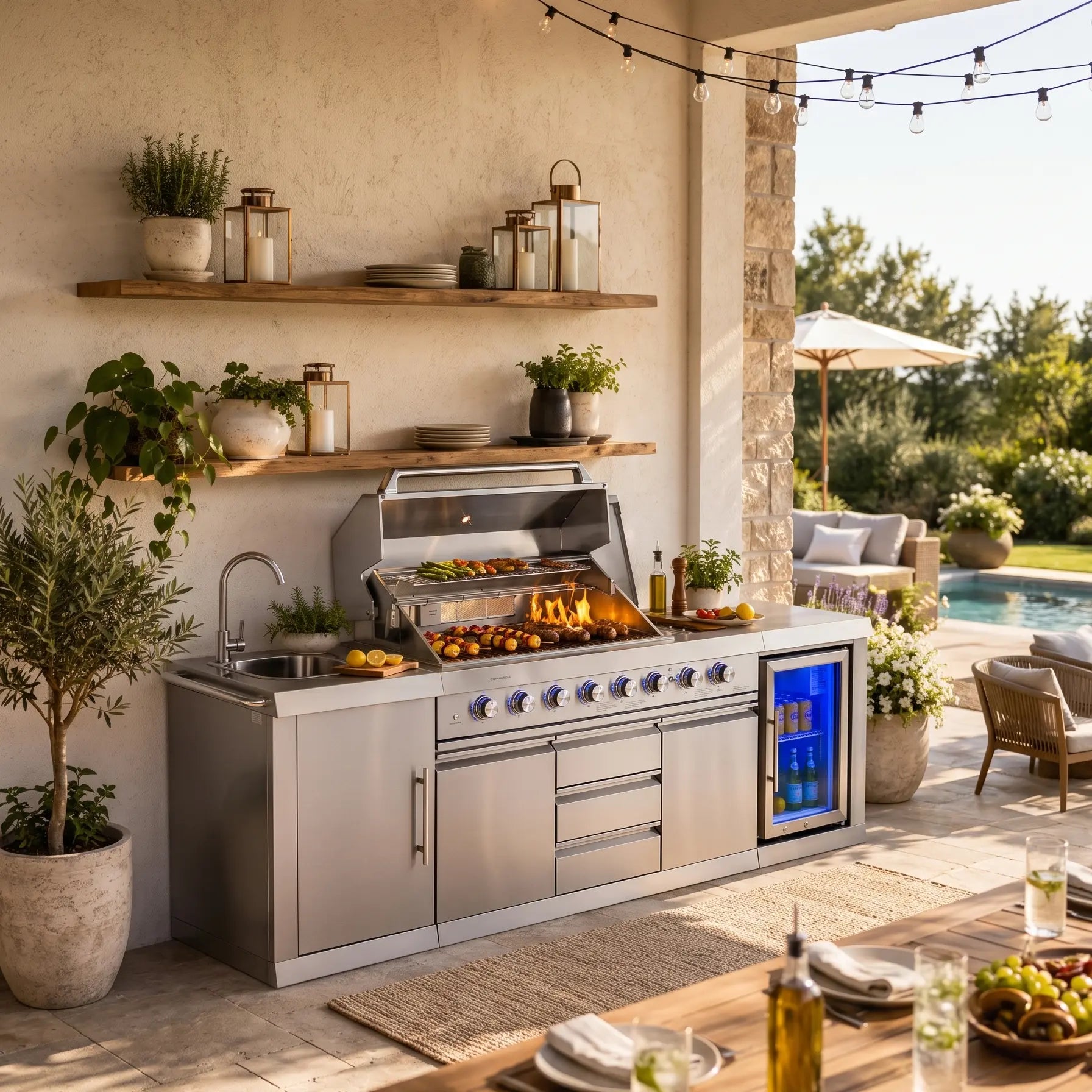
The oven needs a station, not just a footprint. Plan four zones: a clean area for dough and toppings, the launch position with the peel path clear, a hot-food landing board, and a storage zone for pellets, tools, and the cover.
Keep raw ingredients away from the hot oven and separate raw and cooked food tools. The zones should let the cook move in one direction: build, launch, land, serve. The outdoor grill cart and pizza oven table provides the work surface and shelves for the station.
Match the Format to the Yard
The 12-inch pellet oven fits small patios and yards where the oven is stored between sessions; its folding legs and compact footprint keep the setup manageable. The 16-inch pellet oven fits yards with room for a larger patio format and households that cook for families and gatherings; it needs a stable station and more storage.
Measure the footprint, the clearances, and the storage before choosing. The yard's dimensions decide the format, not the other way around.
Manage the Seasonal Setup
The yard changes with the season, and the oven's setup should change with it. At the start of the season, inspect the surface, the stone, the chimney, and the fuel storage, and run a test preheat before the first real session. During the season, check the cover after storms and confirm the clearances as plants grow and furniture moves.
At the end of the season, clean the oven thoroughly, dry every component, seal the pellet supply, and cover the oven only when it is cool, clean, and dry. The seasonal routine protects the investment and starts each season ready.
Big Horn Outdoors Expert Views
The yard is the pellet oven's operating environment, and the placement plan comes before the first fire. Choose a level, heat-safe surface with the manual's clearances, map the wind at cooking times, and build the station zones around the way food moves. The 12-inch format fits compact patios and stored-between-sessions use; the 16-inch format fits families and gatherings with a dedicated station. The seasonal setup matters as much as the placement: inspect at the start, re-check clearances as the yard changes, and protect the oven for the off-season. Big Horn Outdoors builds both pellet formats, and the manual for your exact oven defines placement, clearances, and care.
The Seasonal Yard Routine
The yard routine runs on the calendar, and it starts in the spring. Before the first session of the season, inspect the surface, the stone, the chimney, and the fuel storage, and run a test preheat so the season's first real cook is not the first test. The spring check catches the winter's damage while there is still time to fix it, and the test preheat confirms the fire path is clear.
Through the summer, the routine is weekly and light: check the cover after storms, clear debris from the cooking zone, and confirm the clearances as plants grow and furniture moves. The yard changes through the season, and the oven's space changes with it, so the weekly check is the guard against the branch that grew into the clearance zone.
The autumn routine prepares the yard for the oven's off-season: clean the oven thoroughly, dry every component, seal the pellet supply, and cover the oven only when it is cool, clean, and dry. The autumn deep-clean is the check that keeps the off-season storage from becoming a repair, because the oven that goes into storage clean comes out of storage ready.
The routine also tracks the fuel. The pellet supply rotates through the season, the dry storage is confirmed, and the reserve is checked before the autumn seal. The fuel routine protects the fire, and the fire routine is the reason the oven works when the season's gatherings need it.
The wind map is part of the seasonal check. The yard's prevailing flow changes as trees leaf out and fences shade the space, and the oven's position is re-observed at cooking times. The re-observation is quick and it prevents the smoke drift that ruins an evening, because the smoke path is the detail the season changes.
The log closes the seasonal routine: what was inspected, what was found, and what was fixed, dated for each season. The log is the yard's memory, and the memory is what makes the seasonal care consistent. The seasonal routine is the placement plan in action, and the planned yard is the one the oven serves for years.
The yard plan is confirmed against the model's numbers before the first placement. The 12-inch and 16-inch pellet ovens have different footprints and clearances, and the manual's dimensions are the working minimum for both. The yard check also confirms the cover fits the stored form, because the weather protection only works when the fabric matches the oven's exterior.
The smoke path is the yard plan's final detail. The wind map is re-observed at cooking times, the seating is positioned outside the exhaust flow, and the neighbors' line is respected. The planned smoke path keeps the yard a gathering place, and the gathering place is why the pellet oven earns its spot.
The yard plan's final entry is the station test. A rehearsal session runs the setup, the launch, and the cleanup in the planned zone, and the notes correct the layout before the season's first gathering. The tested station is the yard plan's proof, and the proof is the smooth session.
The storage check closes the plan. The oven's stored position is confirmed dry and covered, and the pellet supply is sealed against the weather. The confirmed storage is the yard plan's completion, and the completion is the ready oven.
FAQ
Can an outdoor pellet pizza oven be used on a wooden deck?
Only if the manual permits the surface and all clearance requirements are met. A noncombustible mat or cart can help protect the deck, but it does not replace the oven's clearance and ventilation rules.
Where should I position the oven in the yard?
On a level, heat-safe surface with the manual's clearances, and with the smoke path directed away from doors, windows, and seating. Observe the prevailing wind at cooking times.
Can the oven sit under a pergola?
Only if the manual and local rules permit the overhead arrangement and all clearance and ventilation requirements are met. An outdoor label does not automatically make a covered spot safe.
How do I store the oven between seasons?
Clean it thoroughly, dry every component, seal the pellet supply, and cover the oven only when it is cool, clean, and dry. Inspect the stone and chimney before the first session of the season.
Which pellet format suits a small patio?
The 12-inch pellet oven's compact footprint and folding legs fit smaller patios and portable use. The 16-inch format needs a larger station and storage space.
Conclusion
An outdoor pellet pizza oven fits the yard when the placement is planned: a level, heat-safe surface, the manual's clearances, a wind map, and station zones. The 12-inch format suits compact patios, and the 16-inch format suits families and gatherings. See the current pellet pizza oven lineup for the models, and build the seasonal routine around the yard. Plan the placement, map the wind, and the oven becomes part of the backyard.