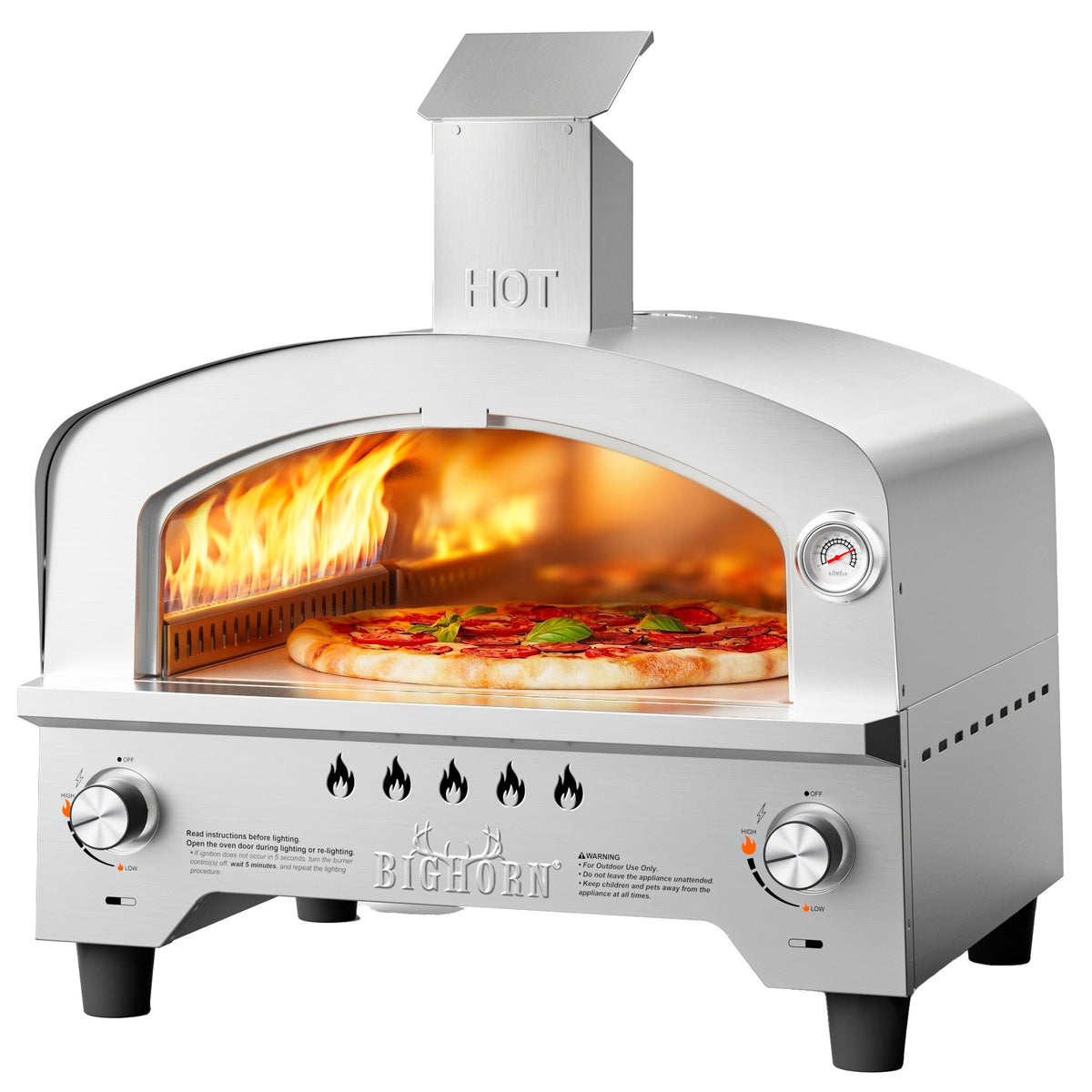
Prevent a serving bottleneck at a backyard pizza party by treating the oven as one part of a flow, not the whole show: preheat fully, top pizzas ahead, launch one every couple of minutes, and always have a cold option ready for the first gap. The oven bakes a pizza in about 60 seconds once hot, so a 12–14 inch pie should reach the table every two minutes when the rest of the system keeps up.
Where bottlenecks actually happen
Most parties stall at one of four points: the first pizza is late because the stone was not ready; toppings take too long because prep is mid-party; the oven idles because the next pizza is not built; or guests cluster at the oven because there is no service flow. Identify the bottleneck you tend to hit, and design the party around it rather than around a bigger oven.
The prep that removes the first-wave delay
Top several pizzas before guests arrive and stage them so the first launches are non-negotiable. Keep dough balls covered, measure toppings into small containers, and build the first two pies in advance. With the oven fully preheated before the first guest arrives, the opening minutes are seamless instead of a scramble.
Matching oven pace to guest appetite
A gas pizza oven that bakes in about 60 seconds supports one pizza every two minutes when the stone recovers briefly between launches. Match the menu to that rhythm: eight to ten shared pizzas for ten adults, with a salad or appetizer to cover the gaps. You do not need a second oven; you need the pace and the staging.

A service flow that keeps guests fed
Zone the table like a small kitchen: a landing board for hot pizzas, a cutting station, and a serve area away from the oven. Slice the pizza on the landing board, move it to the serve area, and return the board to the oven side within moments. When the cook and the server do not cross paths, the flow stays fast and calm.
Keeping the rhythm when the crowd grows
For a larger group, cook in deliberate rounds and let the stone recover between batches. Stage two pizzas ahead so a new launch is ready the instant the previous one is on the board, and keep the burners set so the oven stays hot through the whole party. If a single oven is the constraint, a cold side dish and a dessert extend the service window without a bottleneck.
How do you plan the menu for the flow?
Pick topping combos that bake at the same speed so the oven does not need retuning between pies. Two or three combinations — one cheese, one vegetable, one pre-cooked protein — cover most guests and share a bake rhythm. Stage the toppings in advance, and keep the cold appetizer ready to cover the first recovery gap.
What equipment makes the party smoother?
A peel, a turning peel, a landing board, and a thermometer remove the friction points. The peel launches, the turning peel rotates, a landing board catches the hot pizza, and a thermometer confirms the stone. A cover and a fuel check before guests arrive finish the setup, so the oven is ready the moment you want to bake.
How do you handle the end of the evening?
When guests are full, close the gas valve before the last pizza is gone, let the oven cool with the lid up, and clean the stone once it is cool. A deliberate shutdown leaves the station ready for the next event and avoids the tired rush to pack a hot oven.
How do you keep kids and non-pizza guests fed?
Offer a simple cheese or margherita option and a non-pizza side so guests who are not pizza fans stay happy. Stage a couple of kid-friendly pies early in the bake order, and keep a salad or antipasti available through the evening. The flow stays smooth when the menu has a default for every guest.
What is the one rule for a smooth party?
Never let the oven wait for a pizza — the oven idling is the bottleneck. Keep one pie on the stone and one ready to launch at all times, so the bake rhythm never gaps. With that single rule, a 60-second-bake oven keeps a table of ten fed without strain.
How many topping combos should you offer?
Keep it to two or three combos that share a bake rhythm. One cheese, one vegetable, and one pre-cooked meat option cover most guests without turning the prep into a buffet. Repeating combos keeps the oven pace predictable, which is what prevents a serving bottleneck.
How do you handle a guest who wants a custom pizza?
Upgrade a base combo rather than building from scratch: offer one “build-your-own” slot after the standard rounds finish. This keeps the main flow fast while letting a guest personalize a pie. One custom pizza per party does not stall the rhythm; ten do.
What if the first batch overflows capacity?
Stage the menu so that faster bakes lead, and hold finished pies on a landing board in a warm spot while the next round bakes. If the group is larger than planned, add a cold side or dessert to extend the window instead of pushing the oven past its pace.
Pizza party flow FAQs
How many pizzas do ten guests need?
Eight to ten shared pizzas with appetizers and salad is the reliable range. Adjust for appetite, children, and dietary needs, and keep one spare dough ball for a calibration bake.
Why is my first pizza always late?
The stone was not fully preheated. Heat the oven completely before guests arrive and build the first pizzas in advance, so the opening bake is instant.
Can one oven really serve a party?
Yes — with 60-second bakes and a two-minute rhythm, one dual-burner gas oven serves a gathering steadily. Prep and flow, not oven size, are what create the bottleneck.
To confirm the specs for a party-scale bake, review the 15-inch dual-burner gas pizza oven product page.