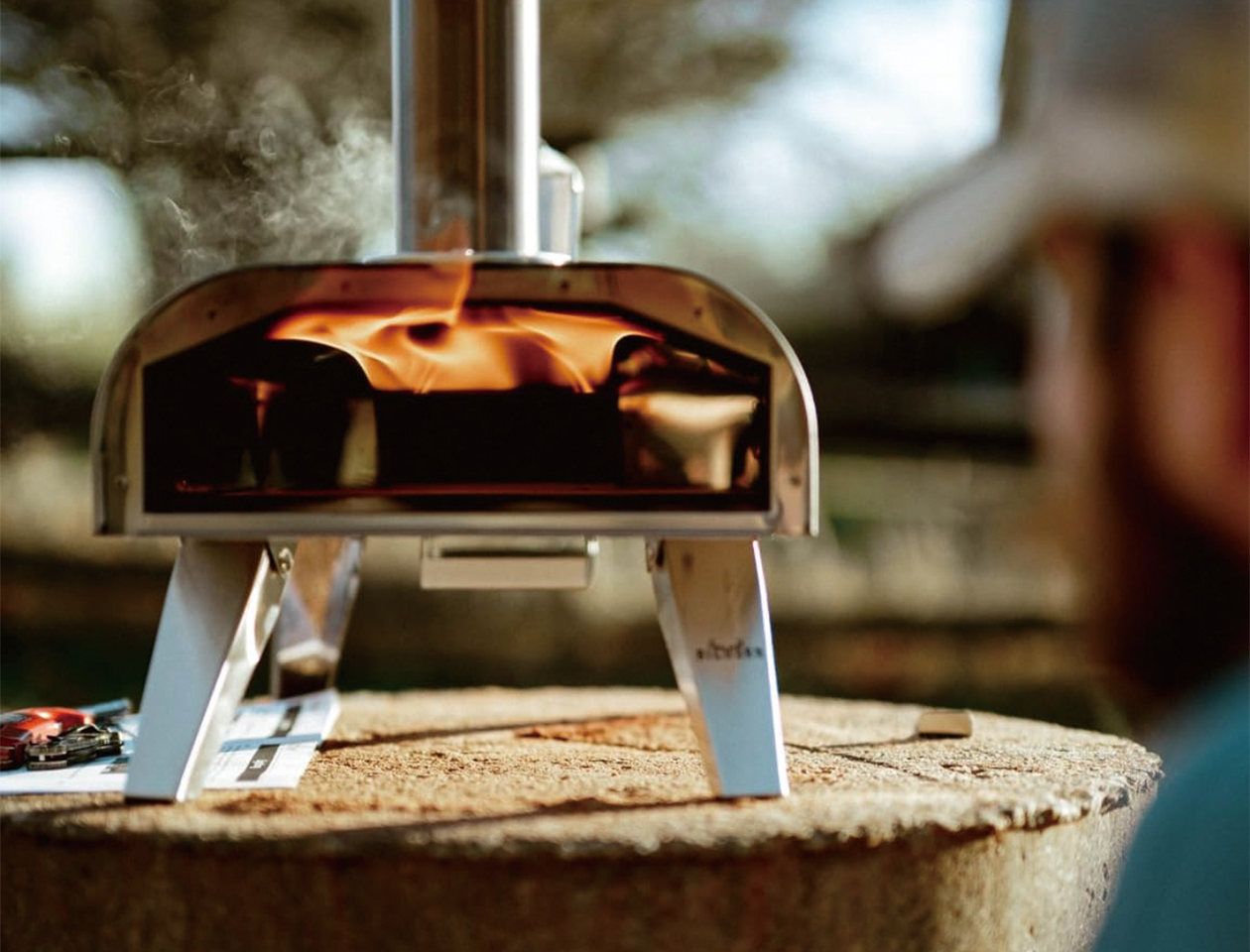
A gas pizza oven is a very hot, compact outdoor oven, which makes it excellent for foods that want fast browning and a crispy crust — and it can roast a whole chicken, bake bread and cook fish far better than most owners expect. The method for all three is the same: use the oven's high, even heat with a pan or tray, manage the flame so the food cooks through without scorching, and rely on a thermometer instead of a timer. This guide gives the method for roasts, bread and fish in a gas pizza oven, with the timing shown as estimates because every oven, pan and weather condition shifts them.
Why a gas pizza oven suits more than pizza
A gas pizza oven combines high temperatures with even heat from a burner below the stone, which is exactly what roasted foods want: fast browning on the outside without the long, dry cook of a conventional oven. The compact chamber also means less heat to recover between dishes, so you can roast vegetables after a pizza and have the oven ready again quickly. The limits are the same as any small hot oven — tall items may not fit, and anything needing long, moist, low heat belongs elsewhere — but within those limits, the gas pizza oven is a genuine second oven for the patio.

Roast chicken and roasts
Whole chicken is the surprise star of a gas pizza oven. The method: spatchcock the bird or cook it in a cast-iron pan, hold the oven at medium-high instead of full blast, and roast until the thickest part of the thigh reaches 165°F. The high heat crisps the skin quickly while the pan catches the juices; rotate the pan once and check early, because a small chamber cooks faster than a full-size oven. Chicken pieces and small roasts follow the same pattern. Times vary with the bird's size and the oven's heat, so treat any recipe time as a starting estimate and trust the thermometer as the finish line.
Bread and flatbreads
Bread is a natural fit because the oven already bakes dough at high heat. Flatbreads, naan and pita bake directly on the hot stone in minutes, puffing the same way pizza dough does. For a loaf, use a Dutch oven or a covered cast-iron pan to trap steam, which gives the crust room to rise before it sets; bake at a slightly lower heat than pizza and confirm the internal temperature instead of judging by color alone. Focaccia and other oiled, pan-baked breads also work well, with the oil promoting the golden, crisp crust that a hot oven delivers.
Fish and seafood
Fish is fast and forgiving in a high-heat oven when you protect it from the direct flame. Cook fillets on a lightly oiled pan or tray instead of straight on the stone, season simply, and pull the fish when it flakes easily or reaches the temperature you target. Whole fish and shrimp cook quickly too; the danger is overcooking, not undercooking, because the high heat can go from perfect to dry in a minute. Check early, pull at the first sign of flaking, and let carryover finish the cook on the serving plate.
Fire-charred vegetables for outdoor meals
Roasted vegetables that love high heat — broccoli, cauliflower, Brussels sprouts, peppers, zucchini — take on a real fire-char in a gas pizza oven that an indoor oven cannot reproduce. Toss with oil and salt, spread in a single layer on a tray, and run the oven at high with the flame steady; the edges blister while the centers stay tender. Because the oven sits outdoors, wind and ambient temperature shift the cook, so keep the first tray to a small batch and check early. Cook vegetables while a roast rests or while the oven is already hot after pizza, and reuse the same pan for sides and mains to cut cleanup.
A gas heat map for roasts, bread and fish
| Food | Heat level | Doneness signal |
|---|---|---|
| Whole chicken (spatchcocked) | Medium-high | 165°F in the thigh |
| Chicken pieces | Medium-high | 165°F at the thickest point |
| Flatbreads / naan | High | Puffed and browned in spots |
| Loaf bread (covered pan) | Medium | Internal temperature for your recipe |
| Fish fillets / shrimp | Medium-high | Flakes easily / opaque and firm |
| Roasted vegetables | High | Charred edges, tender centers |
The table is a starting point, not a guarantee. Every gas pizza oven runs slightly differently, pan material changes heat transfer, and outdoor temperature and wind shift the chamber heat. Keep a notebook of your first few non-pizza cooks — heat level, pan, time, result — and within a few sessions you will know your oven's personality for roasting and baking as well as you know it for pizza.
Three easy starter cooks
If you are new to non-pizza cooking in a gas pizza oven, start with three forgiving dishes that teach the heat. First, roast a tray of mixed vegetables — oil, salt, high heat, single layer — to learn how fast the chamber browns. Second, bake flatbreads or naan directly on the stone to learn launch and timing with a familiar dough. Third, cook chicken thighs in a cast-iron pan until they reach 165°F, to learn how pan placement and the thermometer work together. Each dish builds one skill, and together they cover most of what you need for roasts, bread and fish.
Managing the flame for even cooking
Even heat in a gas pizza oven comes down to how you use the burner. For roasting and baking, hold a steady medium-high instead of full power, because the intense pizza setting will char the outside of a roast before the center cooks. If your oven has separate controls or an adjustable flame, find the setting that holds the temperature your dish needs, and resist the urge to crank it for faster results. Rotate pans once mid-cook, since even good ovens have hot spots, and give the chamber a moment to recover between dishes. The flame is a tool — use its steady middle range for most non-pizza cooking, and save full power for the crusts that need it.
Cleaning after non-pizza cooks
A gas oven gives you a tool the electric models do not have: the burner itself. After a roast or a fish cook, let the oven run hot for a few minutes once the pan is out, and the flame burns off much of the oil mist that would otherwise condense on the interior — that burn-off step is why a gas oven's stone stays cleaner between full cleanings. When the oven is cool, brush loose debris off the stone, wipe the walls, and empty any grease tray your model has, keeping drips away from the burner ports below the stone. If the stone has stubborn baked-on oil, follow the manual's cleaning guidance and skip metal scrapers; never pour water into a hot chamber, because thermal shock can crack the stone. A quick cool-brush-burn-off routine after each non-pizza cook keeps the patio oven ready for pizza the next day.
To make the oven the centerpiece of a full meal, cook the sides while the main rests. Roast vegetables or bake flatbreads first, hold them warm in a low oven or under foil, then cook the protein so it is the last thing off the fire. Because the gas pizza oven recovers heat quickly, you can also run courses in sequence — flatbreads while guests arrive, the roast during the meal, and a quick dessert tray afterward — turning one appliance into the whole dinner service. The oven's speed is the feature; plan the menu around it and the patio becomes the kitchen.
When the patio oven is the wrong tool
Leave the gas pizza oven for foods that need high heat and fast browning. Big roasts that need hours of gentle heat, braises, soups and most baked desserts belong in a conventional oven; tall items and anything that would spill heavily onto the stone are also better elsewhere. If a dish needs a moist, low-and-slow environment, the pizza oven's strength becomes a liability. Cook within those limits, and the gas pizza oven earns its place as the fastest, most fun second oven you own.
Big Horn's gas pizza oven collection includes the models this guide is written around, such as the 16-inch gas pizza oven with an auto-rotating stone that keeps even heat through long cooks. Pair the collection page with a cast-iron pan and a reliable thermometer, and the patio oven becomes the place dinner gets made, not just the place pizza happens.
Product details and prices in this guide were verified against official Big Horn Outdoors listings during the September 5, 2026 review; re-check prices and availability at checkout.