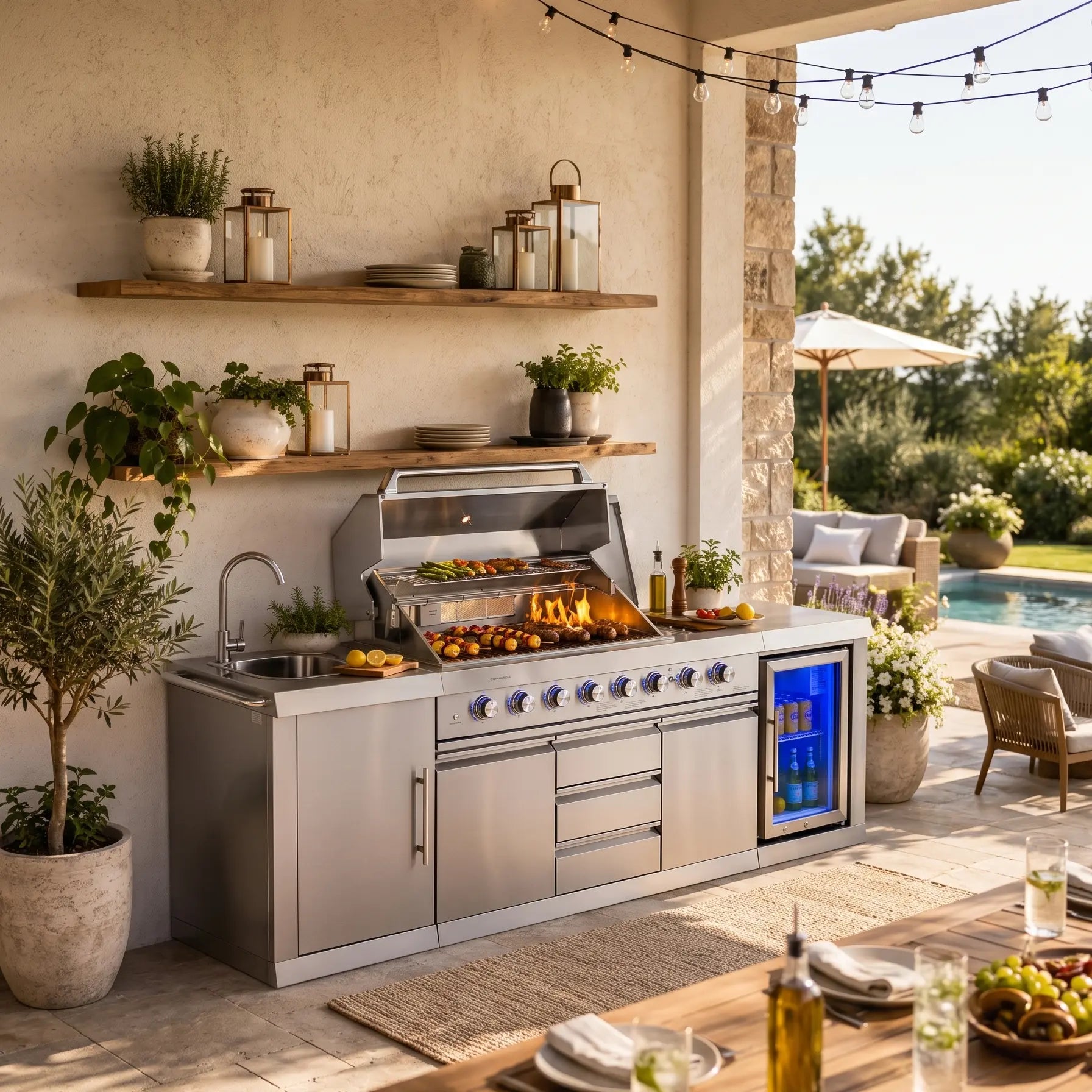
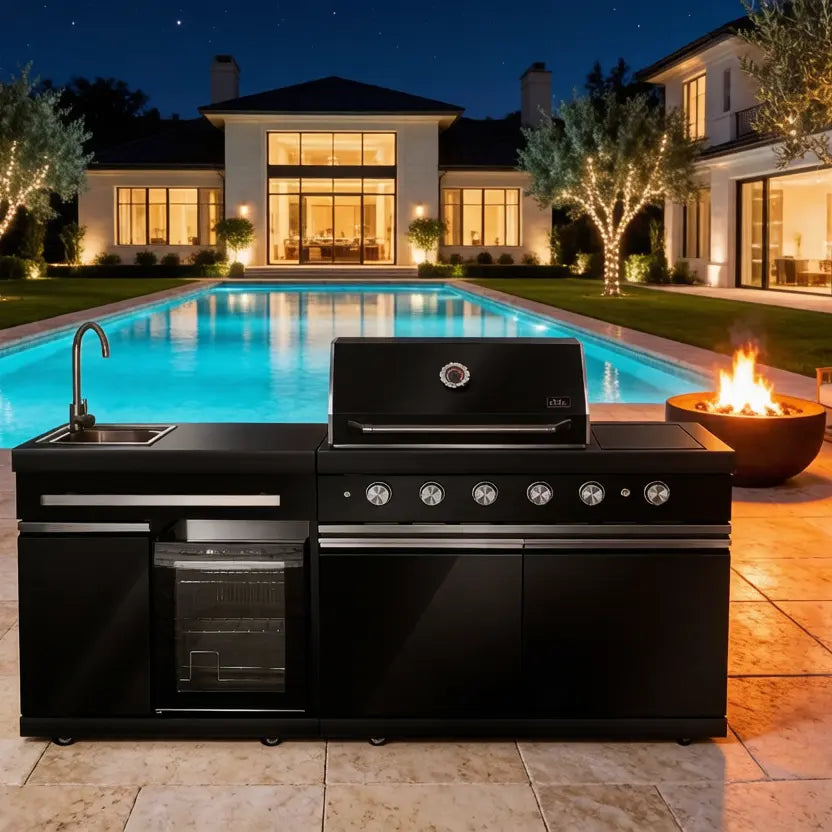
Size a Santa Maria grill by the cooking surface — the grate width and depth — matched to the group you feed: a portable model with a wide-but-short grate suits two to four, a full-size rig with a larger surface holds roasts and a bigger party. The grate size sets the food capacity, while the firebox and height set the cook’s control. This guide covers the size factors, the portable-to-full-size range, and how to match the grate to your cooking.
These are general Santa Maria grill sizing guidelines; match the unit to your space, group, and local rules.
What actually matters for this decision
- Grate surface. The width and depth decide how much food cooks at once.
- Group size. Two to four people fit a portable grate; larger groups need a full-size rig.
- Firebox and height. The firebox must hold a steady coal bed, and the grate height gives the sear-and-roast control.
- Footprint. A full-size Santa Maria claims a permanent corner; a portable one stores away.
Understanding the size before you decide
A Santa Maria grill is sized by its cooking surface — the adjustable grate — because that is what determines how much food cooks at once and how the sear-and-roast staging works. Portable models use a compact grate that fits a few steaks or a small roast and pack away; full-size rigs hold a larger surface for entertaining and claim a permanent spot. The firebox also matters: it must be big enough to hold a steady coal bed for the whole cook, while the grate height provides the control. Presence the size to the group and the patio.
The size factors, ranked
| Factor | Why it matters | What to check |
|---|---|---|
| Grate width | Sets food capacity | Wide enough for your largest cook |
| Grate depth | Configures sear / roast staging | Depth for the cuts you cook |
| Firebox | Holds a steady coal bed | Deep enough for a long cook |
| Height control | Sear low, roast high | Smooth adjustable grate |
| Footprint | Fits your patio | Portable vs full-size |
Matching the choice to your situation
For two to four people and a portable setup, choose a compact Santa Maria grill with a grate that fits a few steaks or a small tri-tip and stores away. For entertaining or larger roasts, choose a full-size rig with a bigger grate and firebox that holds a steady coal bed for an hour or more. If the patio is small, let the footprint decide — a portable unit starts small and moves as the yard evolves. Match the grate to the group you actually feed.
What the experts look for
Experienced live-fire cooks size a Santa Maria by the surface and the firebox, not the label: a grate wide enough for the biggest meal, a firebox that holds a settled coal bed for the staged cook, and a smooth height control for sear-and-roast. They also match the footprint to the patio — a full-size rig is a permanent anchor, a portable one is flexible. The right size is the one that feeds your regular group and fits your space.
Common mistakes and how to avoid them
- Buying by style, not surface. The grate size decides capacity; match it to the meals you cook.
- Under- or over-sizing the firebox. A small firebox cannot hold a steady bed for a long cook; a huge one wastes fuel.
- Ignoring the footprint. A full-size rig is permanent; a small patio needs a portable unit.
- Forgetting the height control. The adjustable grate is the sear-and-roast control; check it works smoothly.
- Sizing to a once-a-year party. Match the grate to your normal group, not the biggest gathering.
Realistic expectations and results
A correctly sized Santa Maria grill feeds your regular group with the staged sear-and-roast cook: the grate holds the food, the firebox holds the fire, and the height control works smoothly. Expect the size to be a real choice — portable for flexibility, full-size for entertaining — and the footprint to be as important as the surface. Match the size to the group and the space, and the Santa Maria becomes a fixture you use.
The takeaway in one paragraph
Size a Santa Maria grill by the cooking surface and the firebox, matched to your group and patio: a portable grate for two to four and flexible storage, a full-size rig with a larger surface and firebox for entertaining and roasts. The grate decides capacity, the firebox holds the steady bed, and the height control runs the sear-and-roast. Match the size to the group you actually feed and the space you have, and it becomes a fixture you use all season.
See the Santa Maria grills and the live-fire range. portable Santa Maria grill · grills and griddles collection
FAQ
Are Santa Maria grills worth the money?
For live-fire cooks who want the adjustable-grate sear-and-roast, yes — one grill stages a full cook with wood-and-charcoal flavor. For speed and dial control, a gas grill is the better value; the worth depends on using the fire.
What are the key differences between a Santa Maria grill and an Argentine grill?
A Santa Maria grill features the adjustable grate that raises and lowers over a charcoal or wood fire for staged sear-and-roast, while an Argentine parrilla is the broader term for a grill grate over live fire, often at a fixed height. The Santa Maria’s height control is the defining feature.
What is the standard grill size in inches?
Grill sizes vary by type; for a Santa Maria, match the grate to your cooking — a portable grate may be around 18–24 inches wide, while full-size rigs run larger. The right size feeds your group, whatever the inches.
What is the point of a Santa Maria grill?
Live-fire flavor plus physical heat control: a charcoal or wood fire with an adjustable grate that sears low and roasts high from one fire. That staging makes a single grill a full cooking line for tri-tip, steaks, and more.