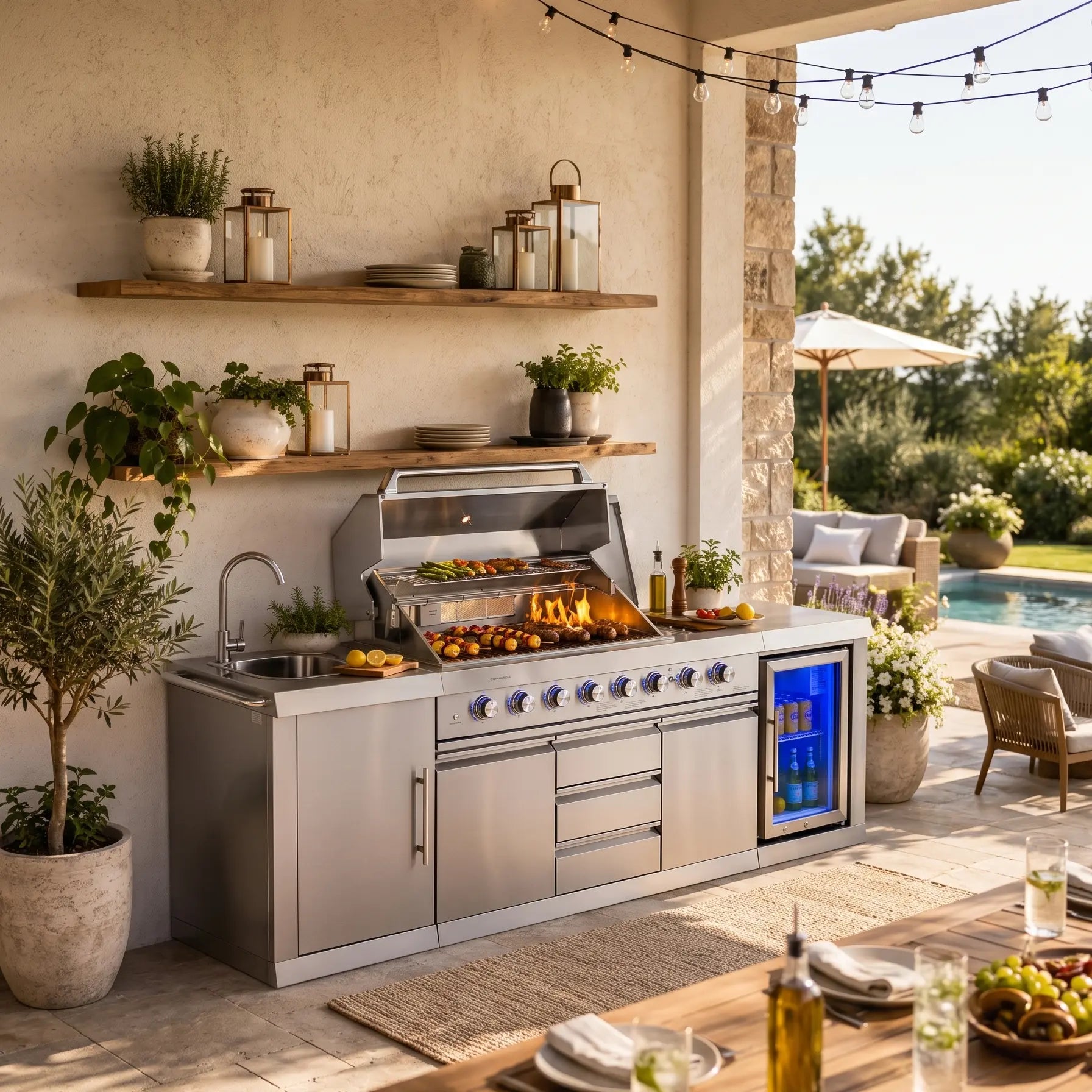
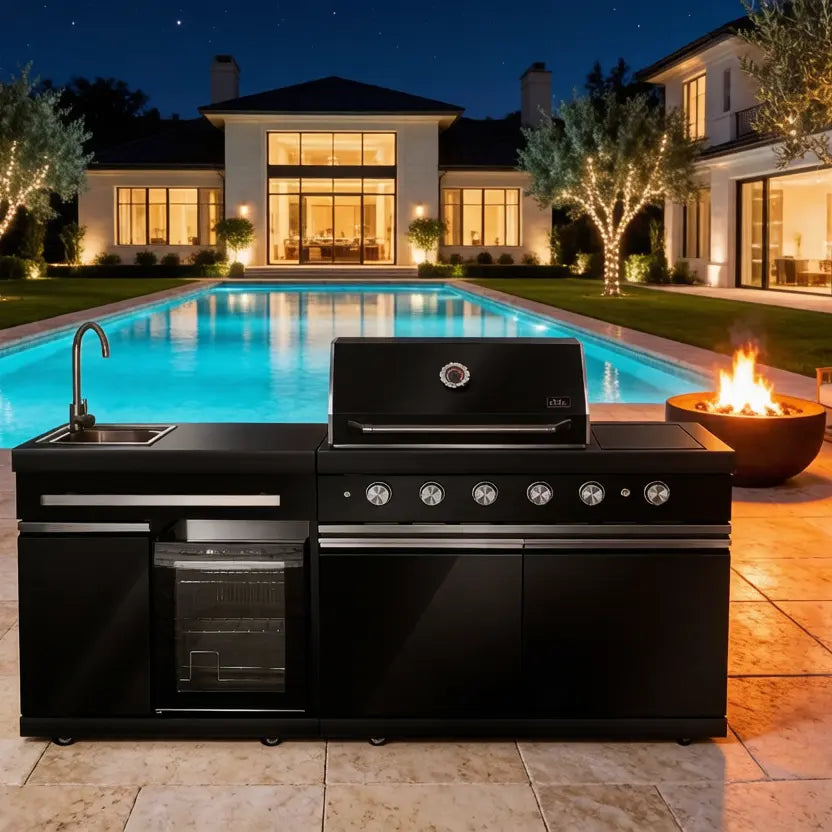
A Santa Maria grill and a gas grill cook the same foods in completely different ways. The Santa Maria is live-fire cooking with an adjustable grate — wood or charcoal, smoke, and a cook who moves food toward and away from the coals. A gas grill is convenience cooking — instant heat, precise knobs and a predictable flame that suits weeknights and weekday routines. Neither is a better grill overall; each fits a different backyard personality. This guide compares flavor, effort, cost, space and cleanup so you can pick the style that matches how you actually cook.
Two very different cooking styles
The cooking style difference starts with the heat source. A Santa Maria grill burns wood or charcoal in an open firebox beneath a grate that raises and lowers on a crank. The cook controls heat by changing the grate's distance from the fire — high for gentle cooking, low for a sear — and the food picks up real smoke and flame flavor along the way. It is an active, present style of cooking: the fire needs building, watching and feeding, and the grate needs adjusting as the coals change. A gas grill delivers heat from burners below the grates, controlled with knobs; the cook sets a temperature, closes the lid and steps away. The food gets grill marks and good heat, but no smoke or flame character beyond what a smoker box adds.
Those styles lead to different meals. Santa Maria cooking shines with tri-tip, whole roasts and foods that benefit from a slow warm-up followed by a sear — the classic Santa Maria method. A gas grill shines with quick, repeatable cooking: burgers on a weeknight, chicken for a crowd, vegetables and everything in between, with predictable timing every time. If your ideal grilling evening is a ritual around the fire, the Santa Maria fits; if your ideal is dinner on the table in thirty minutes, the gas grill is the honest match.

Flavor: live fire vs gas
Flavor is where the Santa Maria has an inherent advantage, and it is worth being specific about why. Wood and charcoal produce smoke, and smoke compounds land on the food; live flames also sear and baste the surface in ways a clean gas flame cannot replicate. A tri-tip cooked over oak or charcoal on a Santa Maria grill picks up a smoky crust and a subtle wood character that a gas grill cannot produce on its own. This is not a claim that gas food tastes bad — a properly cooked gas-grill steak is excellent — it is a statement about flavor range. Gas delivers clean heat; live fire adds aroma, smoke and a deeper crust.
The gas side answers with consistency, not smoke. Because the heat is stable and adjustable, the same steak cooks the same way every time, and the cook can manage a multi-item meal without watching coals. You can add smoke to a gas grill with a foil pouch of wood chips, which narrows the gap for casual cooks, but the result is a hint of smoke rather than the full live-fire character. If flavor depth is the top priority and you enjoy the fire, the Santa Maria wins on food; if consistency and convenience matter more, gas wins on execution.
Time, effort and skill
A Santa Maria grill asks for time and attention from before the first steak hits the grate. The fire must be built and brought to coals — typically thirty to sixty minutes of lead time — and then managed through the cook as the bed of coals settles and spreads. The cook needs to read the fire, adjust the grate and time the lowering for the sear, which is a learnable skill but a real one. The payoff is a cooking style that rewards presence: basting, turning and watching the fire become part of the evening rather than a task between other chores.
A gas grill compresses the whole timeline. Preheat in ten to fifteen minutes, cook on a dialed-in temperature, and clean up without ash. The skill requirement is lower and the tolerance for distraction is higher — a gas grill holds its heat while you run inside for the buns. For cooks with young kids, busy weeks or limited patience, that reliability is the feature, not the compromise. The honest framing: a Santa Maria grill is a hobby that produces dinner; a gas grill is an appliance that produces dinner with less ceremony.
Costs in context
Cost comparisons between the two are estimates that depend on where you live and how often you cook, so treat the numbers as context rather than precision. A Santa Maria grill has a lower purchase entry point at the portable end of the range but runs on wood or charcoal, and fuel costs add up for frequent cooks — a bag of hardwood lump or charcoal per cook is a recurring expense, and firewood needs dry storage. A gas grill costs more to buy for comparable cooking area, but propane or natural gas per cook is usually cheaper, and natural gas hookup removes fuel shopping entirely. Over a season of weekly cooks, the fuel gap narrows or reverses depending on local prices, so calculate your own per-cook cost before choosing.
Factor in the extras that each style demands. The Santa Maria needs fire tools, a cover and dry wood storage; the gas grill needs a tank or a gas line, a cover and occasional burner maintenance. A built-in gas island adds installation cost, while a portable Santa Maria adds none. The fair comparison is total cost of ownership over two or three seasons, not the sticker price alone — and that total depends more on your cooking frequency than on the initial price.
Space, safety and cleanup
Both grills need clearance from structures and dry vegetation, but they behave differently in a small yard. A gas grill is a contained appliance: flames stay under the hood, and the unit can sit closer to a wall if the manual allows. A Santa Maria grill is an open fire — sparks, smoke and radiant heat travel, so it needs more open space, a fire-safe base and a watchful eye on windy days. Check local fire rules before choosing; some areas restrict open-flame cooking during dry conditions, which can rule out the Santa Maria for parts of the season no matter how much you love the style.
Cleanup follows the same split. Gas grills finish with a grate brush and a drip tray; Santa Maria grills finish with ash removal, fire-tool cleanup and a safe place for coals to cool. Ash must never go straight into a trash can, and a weekly live-fire cook generates a steady stream of ash to manage. None of this is prohibitive — Santa Maria owners build it into the routine — but it is part of the honest difference. The gas grill is the lower-maintenance backyard appliance; the Santa Maria is the higher-maintenance cooking experience.
Space also decides which grill can grow with you. A full-size Santa Maria or a gas grill island claims a permanent corner of the yard, and the choice should account for the whole outdoor room: where the table sits, where the cook stands, where the smoke drifts on a typical evening. A portable Santa Maria or a freestanding gas grill can start small and move as the patio evolves, which makes them the safer first purchase for a yard that is still being figured out. If the patio layout is settled and the cooking corner is obvious, buy for that spot; if the yard is still finding its shape, buy the grill that can move with it.
Which grill for your yard
| If this sounds like you | The grill that fits |
|---|---|
| You enjoy the fire, have open space and cook for the ritual | Santa Maria |
| You want smoke flavor and are willing to learn fire management | Santa Maria |
| You cook weeknights and need reliable, fast heat | Gas grill |
| You host groups and value consistency across a long cook | Gas grill |
| Your yard is small or fire rules are strict | Gas grill |
| You want both — pick one now, add the other later | Start with gas, add a portable Santa Maria |
Many backyards end up with both, and the sequence matters: a gas grill handles the routine while a portable Santa Maria-style grill covers the weekends when cooking is the event. Big Horn's Argentine Santa Maria style parrilla grill and portable Santa Maria style charcoal grill sit on the live-fire side, while the stainless steel gas grill island and the grills and griddles collection cover the gas side. Choose by the evening you want to have — the fire-lit ritual or the reliable weeknight — and the right grill follows.
Product details and prices in this guide were verified against official Big Horn Outdoors listings during the September 5, 2026 review; re-check prices and availability at checkout.