







Multi-Fuel & Convertible Ovens
The pie is almost ready, the stone is sliding off its peak, and someone asks if you can “just switch to gas” for the next round. That is the moment mid-cook fuel changes go wrong: not because a multi-fuel pizza oven cannot run more than one fuel, but because a live fire, a propane fitting, and a still-hot attachment point do not share the same minute.
This page is an operational sequence for switching fuels mid-cook on a triple-fuel outdoor oven, not a buying argument about whether a convertible oven is worth owning. That decision already lives on the multi-fuel pizza oven worth-it guide. Here the job is stricter: finish the cook, cool the hardware, change the fuel path, then return to a readable stone.
Why mid-cook fuel switches fail
Most failed swaps start while the oven is still doing pizza work. Ash is still hot, a propane valve gets opened beside embers, or an electric element is fitted against a surface that has not come off heat. The stone then drops, the new fuel lights unevenly, and the next pie tells the story.
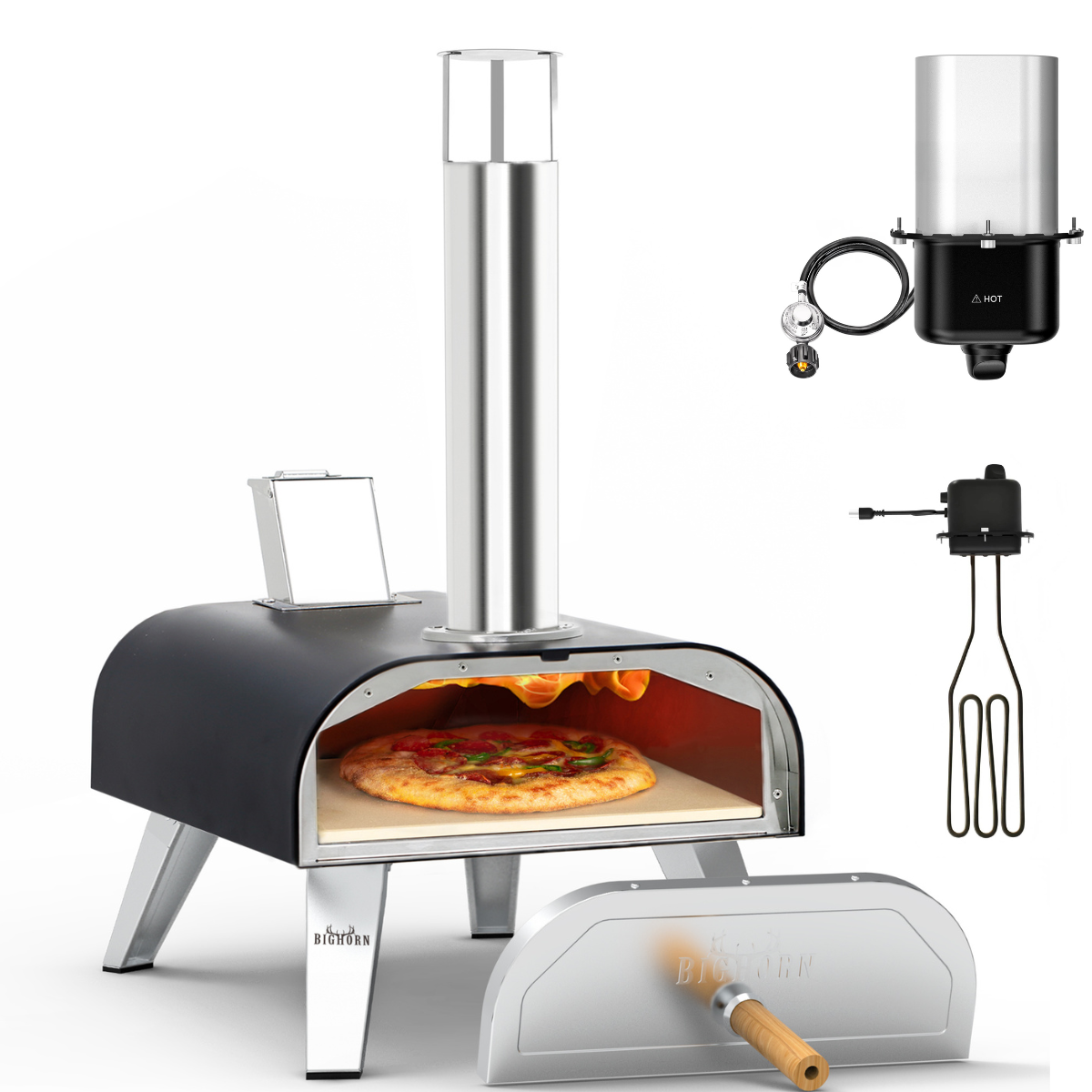
A convertible oven is designed so you can choose pellet flavor, gas convenience, or electric steadiness, not so all three run as a blender. The current product page for the 12-inch triple-fuel pizza oven notes that the gas burner and electric heater accessories are sold separately and that you switch fuels based on cooking style. That is a session choice. It is not permission to change hardware over a live pie.
Wind makes the same mistake worse, because a gust can lift ash just as you open a door or drop a fitting. Check National Weather Service wind-safety guidance before a two-fuel night, and save the changeover for a calm pause between courses.
How do you switch from pellet to gas?
Burn the fire out, then cool, then attach.
Let the pellet fire finish and go fully dark, clear cold ash from the burner path, and only then fit the propane burner, leak-check it, and relight for a fresh stone soak.
Stop launching new pies. Let remaining pellets burn down; do not drown a hot firebox. When the fire is out, wait until the rear attachment area is safe to handle, following the oven and burner manuals instead of guessing a number of minutes. Brush cold ash and leftover pellets out of the air and flame path.
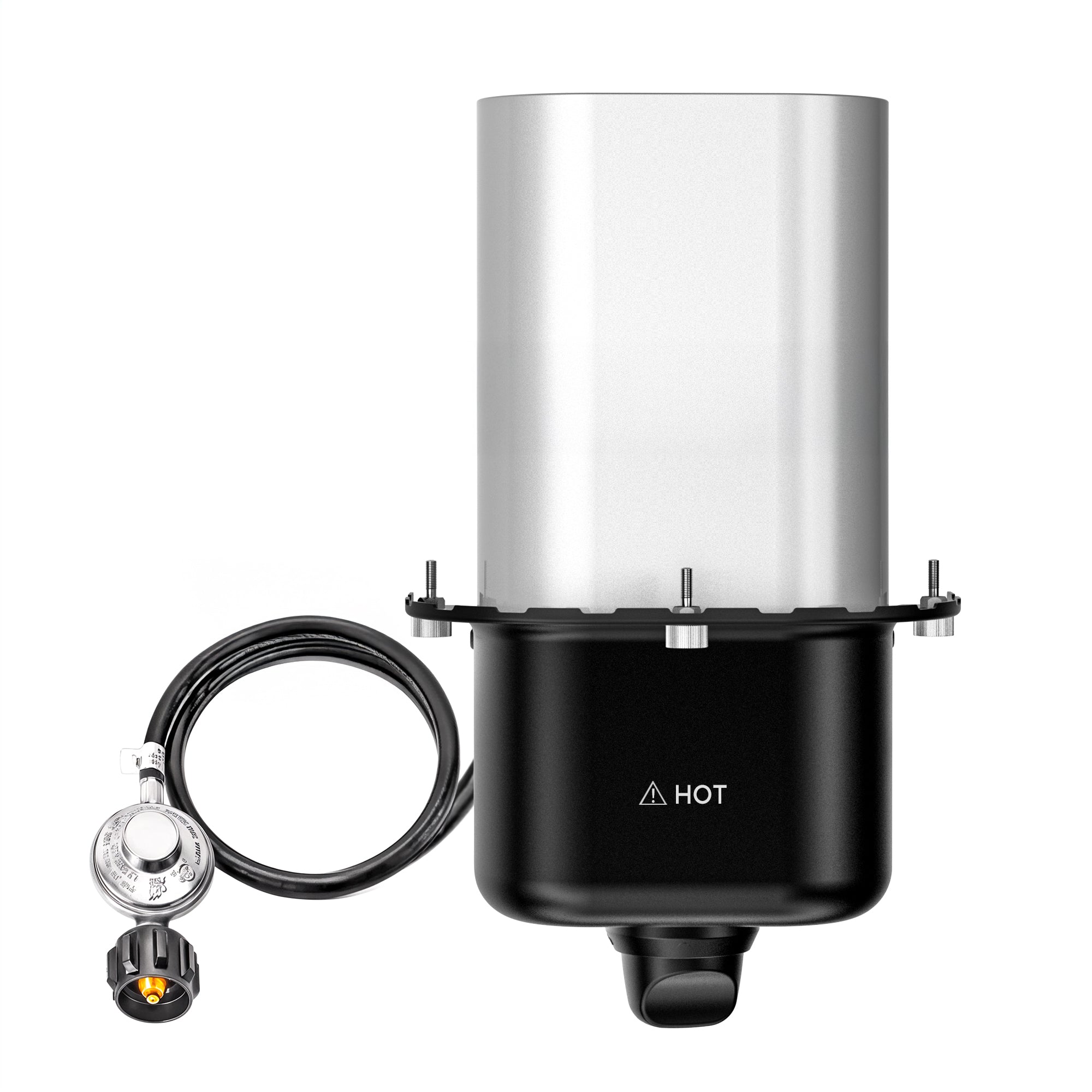
Fit a size-matched propane gas burner with regulator and hose only on a unit that accessory is made for; the current page offers 12-inch and 16-inch burner sizes. Leak-check fittings with soapy water before you light, and keep the tank upright outdoors. Official advice from the NFPA grilling safety pages and the U.S. Fire Administration cooking-fire prevention guidance beats habit. The first pie after relight is a probe pie, launched only after the stone has soaked again.
How do you move from gas to electric for low-and-slow?
Shut the gas off completely first.
Close the tank, disconnect the burner only when the hardware is cool, then fit the electric element and use the thermostat for a calmer roast or bake window rather than chasing pizza-peak heat.
This is the usual “pies first, roast later” path, and it only works if propane is fully isolated first. Extinguish the flame, shut the tank valve, and let fittings cool. Do not leave a connected hose behind an oven you are about to energize.
The current page for the 1500W electric heating element with adjustable thermostat describes a rear-panel, tool-free attachment made for Big Horn 12-inch pizza ovens, with a dial and a low-power mode for gentler roasting. Treat those as claims for that accessory, and confirm the live listing plus your manual before you install it. Use an outdoor-appropriate outlet and keep the element out of rain. After it is secure, let the stone settle into a lower bake window. A 14-inch indoor electric countertop pizza oven is a different tool, not a mid-session swap.
Cleanup between fuels
The cleanup is the changeover. Ash left in a pellet-to-gas swap smothers the new flame and can hide a still-hot ember. Grease or flour left on a stone will smoke as soon as the next fuel climbs, which looks like a fuel problem when it is really a housekeeping problem.
Once everything is cold, brush the deck and the fuel path with tools that will not gouge the stone. Empty ash into a metal container used for that job, and keep it away from siding, bags, and anything that can smolder. Wood-burning cleanup and ember advice from EPA Burn Wise is written for home wood heat, but the same idea applies: cold ash is the only ash you move.
Wipe fittings before you store them, and cap or bag burners and elements so patio dust does not become the next leak-check surprise. After a fuel change, peels, toppings, and a fresh stone reading all start over.
When should you not switch fuels?
Skip the swap on a tight clock.
If guests are already waiting, the tank is low, the wind is up, or you have never fitted the accessory in daylight, stay on the fuel that already heated the stone.
A mid-cook switch costs a cool-down, a mechanical change, a safety check, and a second preheat. That is a planned intermission, not a shortcut. Weeknights, first uses, and crowded patios are poor times to learn a fitting in the dark.
Do not switch in an enclosed patio, garage, or tent. Propane and charcoal cooking belong outdoors with air movement, and carbon monoxide advice from the EPA indoor-air carbon monoxide guidance and the Red Cross fire safety pages should override any urge to “just finish inside.” Local fire rules still apply; this page cannot replace them.
If the oven is new to you, run a single fuel for the whole session until the stone map feels familiar. Browsing the multi-fuel pizza oven collection is useful when you are choosing hardware, not when a pie is already on the peel.
Safety notes for a fuel change
Treat every swap as a short safety procedure. Keep a working outdoor fire extinguisher where you can reach it, keep kids and pets back from tanks and cords, and keep the oven on a stable, noncombustible stand. Official home-fire guidance from Ready.gov home fire pages and the Red Cross fire safety pages is worth a read before the first mixed-fuel party, not after a scare.
For gas steps: tank upright and outdoors, hose unkinked, soapy-water leak check, and ignition only after the smell test is clean. For electric steps: dry hands, sound cords, and a cool install. For pellet steps: no accelerants, and no closing hot ash in a plastic bin.
If anything smells wrong, shows a lazy yellow gas flame you cannot correct, or trips a breaker, stop. Hold already-cooked food safely using ordinary timing from Clemson HGIC foodborne-illness prevention rather than improvising around a bad fitting.
How should you plan a mixed-fuel session?
Pick fuels by course, not by mood.
Heat and serve pizzas on one fuel, build in a real pause for cooldown and changeover, then use the second fuel for a lower, slower finish such as a roast or a calmer bake.
Light the fuel that matches the first course, finish that course, then change fuels only if the next course needs a different heat personality. Pellet-then-gas suits wood character first and easier holding later. Gas-then-electric suits pies first and a thermostat-controlled roast after. Write the pause into the guest timeline, and do not leave perishable toppings out through the cooldown; holding guidance from NCHFP storage guidance and Ready.gov food guidance still applies on a patio. Use the table as a planning card, then confirm every attachment on the live accessory page and in your manual.
| Planned change | Do this first | Then | Skip the swap if |
|---|---|---|---|
| Pellet to gas | Burn down, cool, clear cold ash | Fit the matching burner, leak-check, resoak the stone | Embers remain, wind is up, or guests cannot wait |
| Gas to electric | Shut tank, cool, disconnect burner | Fit the element on a compatible 12-inch oven, set a lower window | The surface is wet or the outlet setup is improvised |
| Stay on one fuel | Heat once, cook the whole menu | Change recipes, not hardware | You only have a weeknight hour |
If you want one chamber that can take pellet, gas, or electric accessories for separate parts of a night, start with the current 12-inch triple-fuel pizza oven listing and confirm the burner or element size against your oven before you plan a two-fuel menu.
FAQ
Can you switch fuels while a pizza is still in the oven?
No. Finish or pull the pie first, then shut the active fuel down and let the chamber cool until fittings are safe to handle. A mid-bake swap mixes ash, gas fittings, or an electric element with an unstable stone, and that is how flares and stalled recovers start. Treat a fuel change as a course break, not a mid-turn adjustment.
How long should a triple-fuel oven cool before you change attachments?
There is no universal clock that fits every patio and every chamber. Wait until the fire is out, gas is off and disconnected if you were on propane, and metal near the attachment point is cool enough to touch with the caution your manual describes. If you cannot handle the fitting area safely, you are still in a cook, not in a changeover.
Do you need to remove all pellet ash before installing a gas burner?
Yes, clear loose ash and unburned pellets from the path the burner and air need, after the fire is fully out and the ash is cold. Residual embers plus a newly opened propane line is a hazard, and leftover ash also smothers recovery once you relight. Follow the oven and burner manuals for the exact attachment point.
Is a mid-cook fuel switch worth it on a weeknight?
Usually no. A planned switch makes sense when you want high-heat pies first and a calmer roast later, and you have built in a cool-down window. On a tight weeknight, one fuel from light to last plate is cleaner. If you are still deciding whether a convertible oven fits your routine at all, read a buying-style overview rather than forcing a same-night swap.
More to Read
Leftover Holiday Turkey on the Grill or in the Pizza Oven: Sandwiches, Tostadas and a White Pie
Give leftover turkey a second heat, not another roast: grill sandwiches or tostadas, or bake a white pie, after a safe leftover inventory the night...
Parrilla Taco Night: Carne, Salsas and Grate Space for a Crowd
Run taco night on a parrilla as a grate-space plan: carne, a second protein, a salsa station, and tortillas held soft, without one crowded fire.
Bone-In Lamb Leg or Shoulder on a Santa Maria or Gas Grill
Grill a bone-in lamb leg or shoulder as a roast: Santa Maria height or a gas two-zone fire, a USDA safety floor, and a probe that does not touch bone.
