
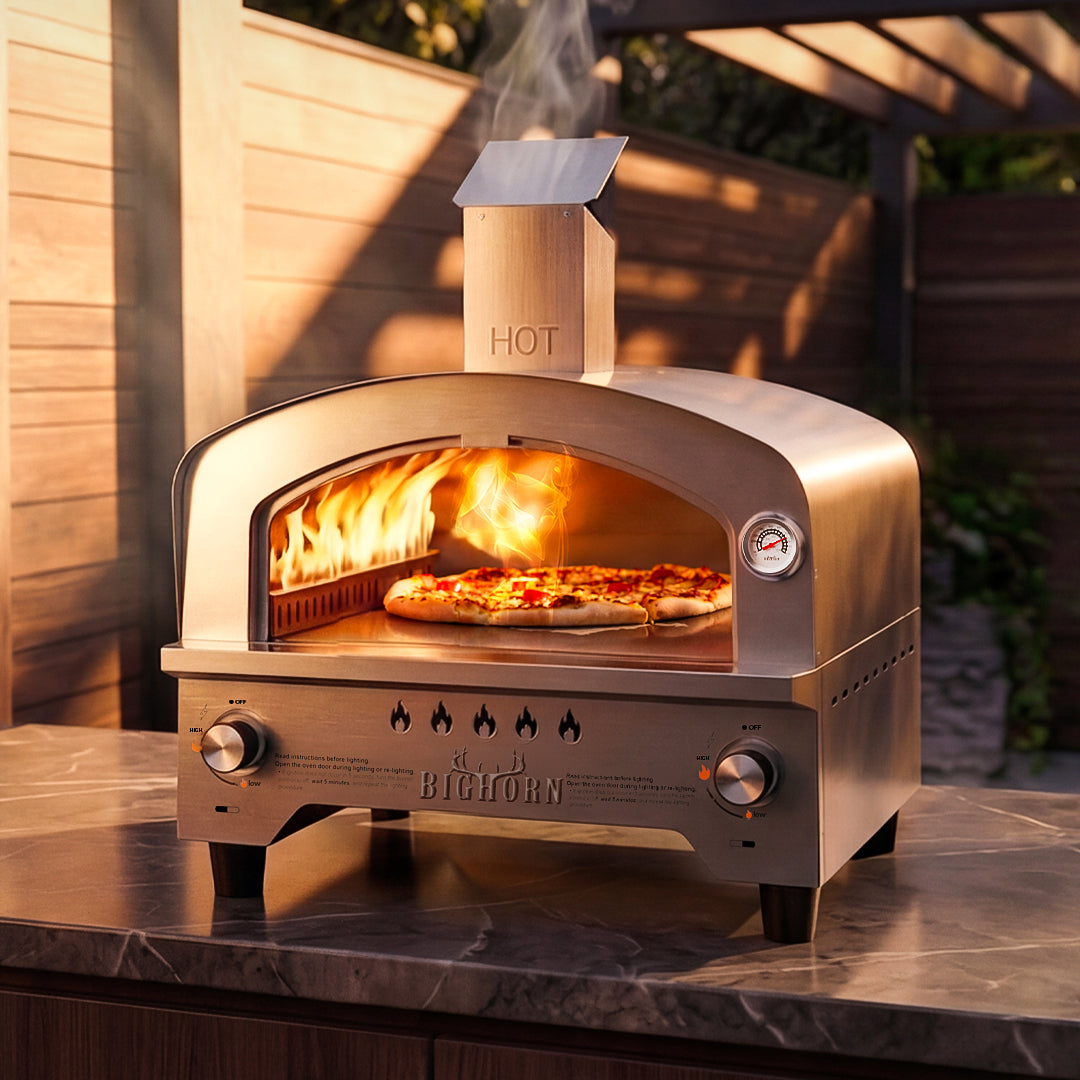
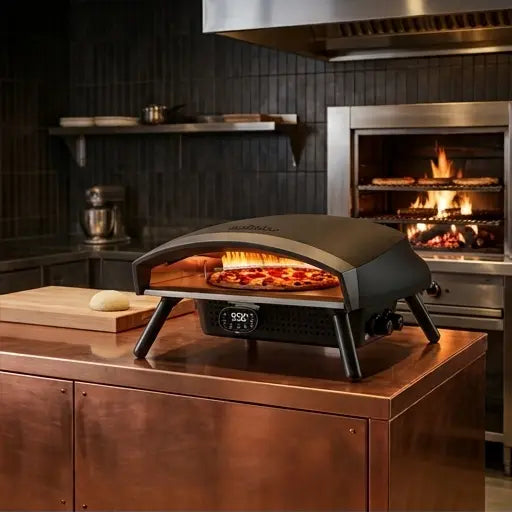
A multi-fuel pizza oven is worth it if you will genuinely use more than one fuel. The Big Horn 12-inch pellet oven runs on wood pellets out of the box and accepts gas and electric attachments sold separately, so one stainless body can switch between wood-fired flavor, gas speed, and electric convenience — but only if you actually use those modes. If you only ever cook one way, a single-fuel oven is simpler and cheaper; the attachments are value only for the fuels you will reach for.
What a multi-fuel pizza oven is
A multi-fuel oven accepts more than one fuel source, letting you switch without changing the appliance. In practice, that usually means a base fuel (like wood pellets) plus optional burners or heaters sold separately. You are not buying three ovens; you are buying one oven plus the capability you choose to add. The flexibility comes with a cost: attachments are separate purchases, and each fuel has its own handling and settings to learn.
The fuels and what each adds
| Fuel | What it adds | Typical use |
|---|---|---|
| Wood pellets | Smoke flavor, live-fire character | Patio wood-fired nights |
| Gas | Fast ignition, steady heat | Quick or group cooking |
| Electric | Flame-free, no propane storage | Lower-maintenance sessions |
The 12-inch Big Horn model reaches 887 °F (475 °C) on pellets and supports compatible gas-burner and electric-heater attachments sold separately, so the same oven body can adapt to all three paths when configured.
Why flexibility matters
Matching fuel to the situation is the core benefit. Wood smoke for a weekend patio session, gas for speed on a busy night or a tailgate, electric when you want a clean, quiet bake without managing fuel or propane tanks. One adaptable oven can do three jobs, but it only earns that flexibility if your cooking actually spans those situations. If it does not, you paid for attachments that stay in a box.

What multi-fuel costs extra
The flexibility is not free. The base oven ships as a pellet unit, and gas and electric attachments are separate purchases. Before buying, compare the attachment cost against how often you will use each fuel. The pay-off rule is simple: buy an attachment only for a fuel you will actually use — otherwise the single-fuel oven is the better buy.
Who multi-fuel is (and is not) for
It suits cooks who want wood flavor at home and gas on the road, or who want the option to run electric when convenient. It is not for someone who only ever uses one fuel — the extra attachments add cost and storage without benefit. Match the purchase to the fuels you will genuinely reach for.
How do you switch between fuels safely?
Switching fuels is not a hot-swap operation. You typically run one configuration, let the oven cool, and change the attachment according to the manual before using the new fuel. Never leave pellets in the hopper while attaching a gas burner or electric element, and never run two fuels at once. The stainless body and chamber stay the same; only the heat source and its connections change.
How much does the flexibility really cost?
The cost of flexibility is not only the attachment price; it is storage, setup time, and the mental overhead of three fuel workflows. If you genuinely use two or three fuels, that cost pays for itself. If you will realistically use pellets 90 percent of the time, the single-fuel version is the smarter buy. Count the realistic usage, not the flexibility you imagine, before deciding.
Where does a multi-fuel oven fit best?
A multi-fuel oven fits a patio or yard that has room for a fire-based unit plus the flexibility to add gas or electric. It is the right call when your cooking spans seasons and fuels. If space is tight or you cook indoors only, a dedicated electric countertop unit is usually the simpler answer. The multi-fuel value is for cooks who will actually move between fuels in one place.
Is a multi-fuel oven more to maintain?
Mildly — each attachment brings its own care: keep gas connections leak-checked, keep electric contacts clean and dry, and empty ash after pellet sessions. The base oven care is unchanged. If you use one fuel most of the time, maintenance barely grows; if you swap often, the additional routines are minor but real.
What is the ideal first multi-fuel setup?
Start with the fuel you will use most. For the 12-inch Big Horn, that usually means pellets for flavor at home, then add gas if you want faster ignition for practical weeknights, and electric only if you specifically want a flame-free option. Buying all three at once is rarely the right move; grow into the flexibility as your cooking does.
What should you check before buying attachments?
Confirm three things before buying any attachment: compatibility with your exact model, the current price, and what the attachment changes about care and location. An attachment only pays off if it is approved for your oven and you will use it regularly. Read the product page carefully — some attachments are configuration-specific, and compatibility varies by model.
Does multi-fuel mean worse performance per fuel?
No — a well-designed multi-fuel oven performs like a good single-fuel unit for each configured mode. The trade is configuration care, not quality. Because the same chamber is tuned for multiple sources, each fuel sees solid, predictable results rather than a downgrade, as long as you use approved attachments and follow the switch-over routine.
How does multi-fuel simplify your patio setup?
A multi-fuel oven can replace the need for two appliances with one footprint: wood-fired flavor for a slow weekend cook, gas for a faster midweek bake, and electric when you want a quiet, flame-free session. Instead of owning a pellet unit and a separate gas burner, you configure the same chamber. That single-footprint flexibility is the real space saver for patios and yards where every square foot counts.
The honest summary is a short sentence: buy multi-fuel only for fuels you will use, and let the flexibility grow with your cooking rather than prepaying for modes you may never touch.
For most buyers, the decision reduces to one honest question: will your next six months include at least two different fuel sessions? Answer yes and the attachments are worth carrying; answer no and the single-fuel oven is the disciplined choice.
Multi-fuel pizza oven FAQs
Does a multi-fuel oven cook better than a single-fuel one?
No — it cooks the same with each configured fuel. The advantage is flexibility, not quality; a dedicated unit set up for one fuel performs equally well.
Do I need to buy all the attachments?
No. Buy only the fuels you will use. Starting with pellets and adding gas later is a common path for cooks who want to grow into the flexibility.
Is electric mode the same as an indoor electric oven?
Not necessarily. Confirm your exact model’s approval and location rules; electric compatibility alone does not prove indoor approval for every configuration.
To compare the base pellet oven and its optional attachments, review the 12-inch Big Horn pellet pizza oven product page before buying.