







Tailgate & Parties
A tailgate pizza oven setup starts with lot-legal fuel, a stable pad, and dough you can launch. This is a setup guide, not a rules page, and it will not invent venue policy or a preheat timer. Confirm the current lot rules, then pack a portable oven you can light outdoors.
Fuel without lot power
Most stadium lots will not give you a kitchen circuit. That is why a portable gas or pellet oven can be the practical path, and why an electric countertop oven is usually the wrong pack for a parking space with no outlet. Confirm fuel type on the live listing before you load the car. The current 16-inch gas outdoor pizza oven is a propane path; the current 12-inch wood-pellet pizza oven is a pellet path. Published output, packed weight, and any heat-up window on those pages are claims to recheck, not a guaranteed first-pie clock.
Browse the portable pizza oven collection if you are still choosing a size. Bring the cylinder or the pellets the manual names, a leak-check habit for gas, and a dry pellet bin that will not sit in a wet truck bed. Do not plan on "borrowing power" from a neighboring generator unless the venue and the generator's official placement rules also allow it. EPA carbon monoxide information is the reason a running combustion oven stays fully outdoors, never in a van with the door cracked.
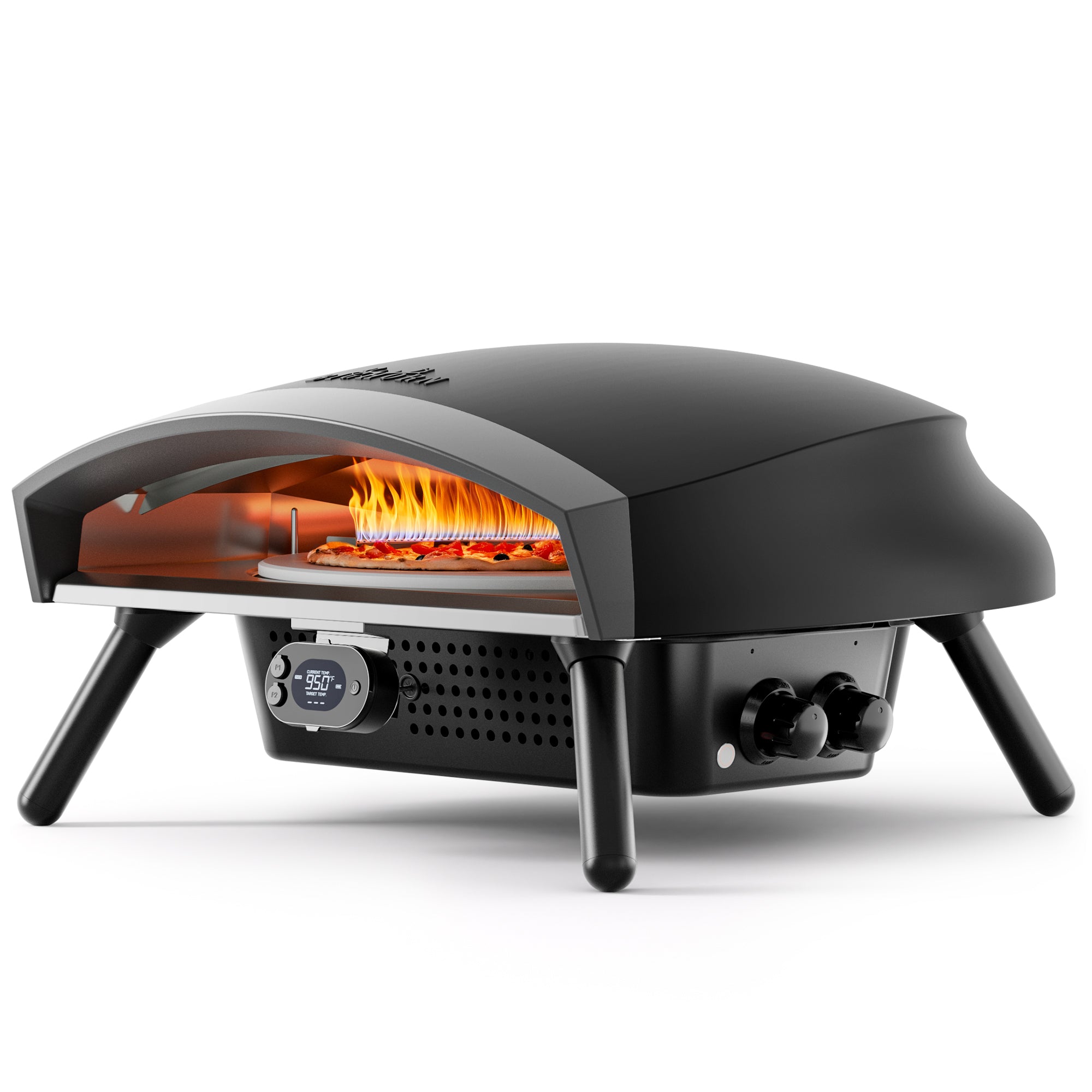
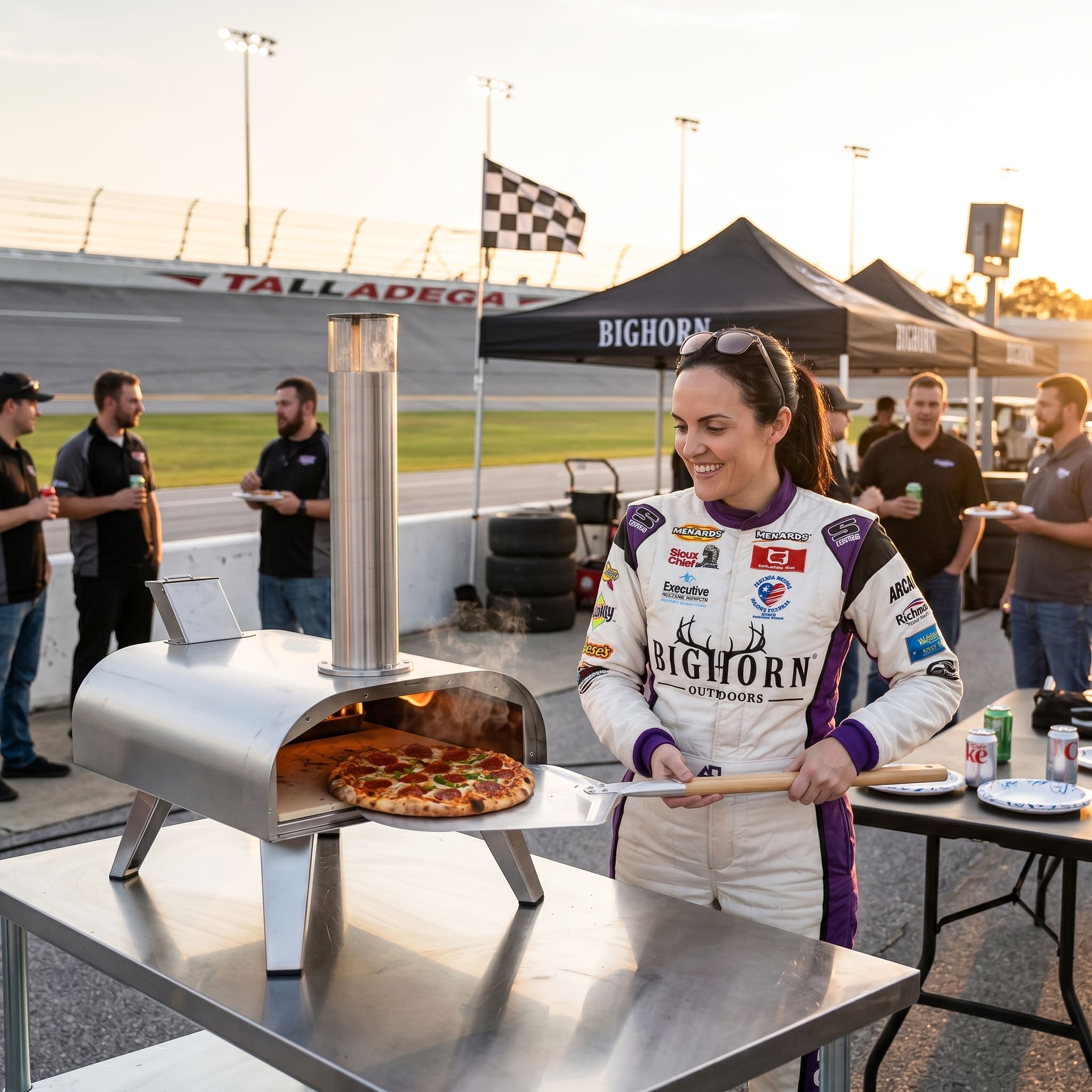
Setup footprint and wind
Measure the pad you will actually use: the space behind the bumper, the swing of a door, and the clearance the manual names from the oven to the vehicle, a canopy, or a folding table. A parking space is tighter than a backyard, and a gust between trucks will steal heat faster than a patio fence. National Weather Service wind safety is the official wind-safety overview; use a low, stable barrier that does not trap exhaust against the oven or the cylinder.
Level the oven before you light it. Soft gravel, a sloping lot, or a table that flexes is a tip-over plan. Keep the hose routed out of the walkway, and keep a fire extinguisher or the extinguishing method the venue allows within reach. NFPA grilling safety and U.S. Fire Administration cooking-fire prevention still apply in a parking lot: an attended appliance, a clear area, and a unit that is fully cooled before it goes back in the vehicle.
Dough logistics
Dough is the part that fails first when there is no kitchen. Portion and ball it at home, keep it cold in a hard-sided cooler, and bring a lightly floured board, a peel, and a plan for a crowded launch. Sauce and cheese should already be portioned in leak-proof containers. A wet, over-topped pie is harder to launch on asphalt than in a backyard, and it wastes a short preheat you may not want to repeat.
If you bring a store pizza such as a Totino's-style frozen pie, follow the package, and do not treat a high-heat outdoor deck as a toaster oven. A short, very hot bake can brown the outside before the center is ready. Official packaged-food handling still applies once it is cooked; FDA safe food handling and FDA food safety in your kitchen are the temperature and leftover references, not a parking-lot recipe card.
Parking etiquette and lot rules
This page will not invent a stadium's propane policy. Read the current official lot rules, the ticket email, and any parking PDF before you roll, then set up only in a space those materials actually allow. The live rules page can I use a pizza oven at a tailgate covers permission questions; tailgate propane and grill rules covers fuel patterns. Use those pages for the policy conversation, and use this one for the physical setup.
Etiquette is simpler than a legal memo. Do not block a stall, a sidewalk, or a tailgate next to you. Point exhaust away from a neighbor's seating. Keep music and smoke from becoming the story of the lot. If staff ask you to move or shut down, shut down. Ready.gov home fire guidance and American Red Cross fire safety are useful home-fire and preparedness reminders; they are not a venue permit.
The table below is a packing check, not a stadium code.
| Before you leave home | What to confirm |
|---|---|
| Venue rules | Current official lot policy for fuel, canopies, and hours — not a memory of last season |
| Fuel and oven | The live product listing, a legal cylinder or dry pellets, and a leak-check or lighting habit from the manual |
| Footprint and wind | A level pad, clearance, and a barrier that does not trap exhaust |
| Dough and tools | Pre-portioned dough, a peel, a cooler, and a launch board you can actually use in a crowd |
A menu for 8 to 12
For eight to twelve people, think in small pies you can launch, not one giant sheet you cannot turn. A simple cheese and a simple topping, launched in a steady rhythm, feeds a group more honestly than a complicated pie that sits in the wind. Keep raw meat out of the danger zone with a cooler and official temperatures: 145°F with a three-minute rest for steak or whole-muscle pork if you add those toppings, 160°F for ground meat, and 165°F for poultry, from FDA safe food handling.
Do not promise a pie every ninety seconds. Marketing bake times on a backyard listing will not survive a cold lot and a line of hungry friends. Preheat until the stone and the chamber are honestly ready, then launch pies you can already handle.
Keep one person on the peel and one person on the cooler if you can. A parking-lot pizza line fails when the same person tries to stretch dough, watch the flame, and take orders at the same time.
A first tailgate walk-around
Walk the space before you light anything. Confirm the rules you printed or saved, the wind, the pad, and the path from cooler to peel. Light only when those lines are clear. After the last pie, cool the oven fully before it goes back in the vehicle, and pack grease and trash so the space looks the way you found it.
The tailgating grill collection is a wider browsing path if you also pack a grill. An oven and a grill still share the same rule: fuel, footprint, and etiquette come before the menu.
Key takeaways
- Choose a portable gas or pellet oven for a lot without power, and confirm the live listing and the venue's current fuel rules.
- Set up on a level pad, out of a trapped-exhaust pocket, and keep the oven fully outdoors.
- Portion dough at home, and do not treat a high-heat deck as a frozen-pizza toaster or as another brand's preheat clock.
- If staff ask you to shut down, shut down. This article will not invent a parking-lot permit.
For permission questions, keep can I use a pizza oven at a tailgate and tailgate propane and grill rules nearby, then confirm a portable chamber in the portable pizza oven collection before you pack.
FAQ
What is the best wood to use in an outdoor pizza oven?
This tailgate setup guide will not award a best wood. A gas oven in the lot does not need firewood, and a pellet oven should use the dry, food-appropriate pellets the live listing names. Do not burn scrap lumber or lot debris.
How to make Totino's pizza in a tailgate oven?
Follow the package. A high-heat outdoor deck is not automatically a toaster oven, and a short, very hot bake may brown the outside before the center is ready. Official packaged-food handling still applies once the pie is cooked.
Where do you put the pizza stone in an RV oven?
This article is about a portable outdoor tailgate oven, not a built-in RV oven. Follow the RV oven manual for any stone used inside that appliance. A combustion pizza oven stays fully outdoors, never in the RV cabin.
How long should I preheat an Ooni pizza oven?
This is not an Ooni manual, and this article will not invent another brand's preheat time. Preheat the oven you actually brought until the stone and chamber are honestly ready, and confirm any published window on that oven's current listing.
More to Read
Leftover Holiday Turkey on the Grill or in the Pizza Oven: Sandwiches, Tostadas and a White Pie
Give leftover turkey a second heat, not another roast: grill sandwiches or tostadas, or bake a white pie, after a safe leftover inventory the night...
Parrilla Taco Night: Carne, Salsas and Grate Space for a Crowd
Run taco night on a parrilla as a grate-space plan: carne, a second protein, a salsa station, and tortillas held soft, without one crowded fire.
Bone-In Lamb Leg or Shoulder on a Santa Maria or Gas Grill
Grill a bone-in lamb leg or shoulder as a roast: Santa Maria height or a gas two-zone fire, a USDA safety floor, and a probe that does not touch bone.
