







Pizza Dough & Bake Faults
The tight ball on the counter may look strong, not unfinished. That is the usual backyard miss. Underproofed pizza dough often feels firm, springs back so fast you think it is ready, and then bakes into a dense, pale rim. The decision is simple from there: give it more time, give it gentle warmth, or start over. Forcing a launch rarely fixes a dough that has not fermented long enough.
Sticky, slack, or clearly overproofed dough already has a home on the general pizza dough troubleshooting page. This page only owns the underproofed case: the yard signs you can see, a short rescue window, and the moment when a redo is cheaper than a tight pie.
Underproofed vs overproofed: yard signs you can actually see
Underproofed pizza dough has not fermented long enough. In the yard, look for a ball that has barely grown, a pale tight surface with few bubbles, and a poke that springs back fully. Overproofed dough looks slack, may collapse, and the indent stays. Rescue starts with time or gentle warmth, not a hotter oven.
The poke test is the fastest yard check. Dust a finger, press about half an inch into the ball, and watch the rebound. Ready dough recovers slowly and leaves a shallow dent. A complete, snappy rebound is the underproofed tell. If the dent stays and the ball feels fragile, you are on the other side of the window, and that is the overproofed case already covered on the troubleshooting page linked above.
Size still matters, but only as one clue. A ball that has not clearly grown, especially after a planned bulk or ball proof, is a warning. Color helps too: underfermented dough often looks almost white and tight at the surface, with little blistering. You do not need a lab. You need two or three visible signs pointing the same way before you stretch.

Why backyard heat makes underproofing easy to miss
Outdoor cooks often judge dough by how warm the air feels. A hot patio can make you assume the dough is racing, even when a newly mixed or newly thawed ball is still tight inside. The surface may feel soft from the heat while the center has not produced much gas yet. That split is how underproofed pizza dough hides in plain sight.
Premade or frozen dough adds another delay. A ball that is still cool in the middle after a short thaw can look smooth and “strong” while it is simply underfermented. The thaw-and-proof sequence belongs on the page for frozen and premade pizza dough; the point here is that cold centers fake tightness.
The other miss is schedule pressure. Guests are arriving, the oven is already hot, and a firm ball looks easier to handle than a soft one. Firm is not the same as ready. If you stretch too soon, the dough fights you, snaps back, and then sits like a cracker in a high-heat oven.
A rescue window: more time, more warmth, or a redo
Most underproofed dough is still alive. The first rescue is more time, covered, at room temperature, until the ball grows and the poke test changes. The second is a slightly warmer spot that does not cook the dough. The third is a redo, which is the right call when the dough is still tight and your launch window has already closed.
Time is the cleanest move. Cover the balls so they do not crust, and wait. There is no single official hour count that works for every yeast load and every patio. In a warm room, a short extra wait may be enough. In a cool garage, you may need longer. Recheck with the poke test rather than adding a fixed number of minutes and hoping.
Warmth is a narrower tool. A gently warm, still place can speed a lagging ferment. A hot stone, a running burner, or a sun-baked metal table can cook the outside of the ball and leave the center behind. If you choose warmth, keep it mild, keep the dough covered, and stop as soon as the signs change. The last section on this page covers a warm-spot setup that stays on the safe side of that line.
A published baker’s-percentage framework, such as King Arthur Baking’s explanation of baker’s math, is useful later if you decide the formula itself is consistently slow. It is not the first rescue. Changing yeast mid-crisis, on dough that is already mixed, is a guess. Give the dough you have a chance to finish, or mix a new batch with a plan you can finish on time.
What an underproofed pie does in a hot oven
Underfermented dough does not have enough gas or extensibility for a lively oven spring. In a high-heat oven it often bakes up tight, pale in the crumb, and chewy or rubbery rather than open. The rim may blister poorly. The center can stay thick even when the top looks colored, which is why people then blame the oven.
Sometimes the floor really is too cool, and that is a different diagnosis. If the stone is not ready, use the fuel-by-fuel checks on why a pizza oven is not getting hot enough. If the stone is hot and the dough still sits dense, with a raw-feeling middle, the fermentation fault is more likely. A companion page on raw pizza dough in the middle covers doneness once the pie is already in the oven. This page stops at the dough you should not have launched yet.
High-heat faults that show up on the crust after a normal proof — scorched spots, pale bottoms, topping burn — belong on the high-temperature pizza troubleshooting page. Do not turn the flame up to “rescue” a tight dough. Extra heat will color the outside faster and leave the dense crumb behind.
How this sits beside the general dough-troubleshooting page
The general troubleshooting article is the broader map: sticky dough, tight dough, and overproofed dough in one place. This page zooms in on underfermentation because that page, by design, spends more time on dough that has already gone too far or handles badly for other reasons. If your ball is slack, wet, or collapsing, go there. If your ball is tight, pale, and springy, stay here.
That split keeps the advice from blending into one vague “let it rest.” Overproofed dough and underproofed dough can both be sticky on the bench, but they need opposite moves. One needs a cooler hold or a shorter wait next time. The other needs more time or gentle warmth now, or a new mix. Linking between the two pages is enough; you do not need both articles to reteach every dough fault.
When starting over is cheaper than forcing a launch
Starting over is cheaper when the dough is still clearly underproofed, guests are already at the table, and the oven is at launch heat you cannot hold for a long rescue. A forced stretch wastes toppings, fuel, and patience, and the pie still comes out tight. A new, smaller batch, or a backup ball that was already farther along, costs less than serving a tray of dense crusts.
It is also the right call when the dough has been sitting in a poorly controlled warm spot and you can no longer tell whether you are looking at tight underproofed dough or dough that has started to cook at the surface. Guessing at that point is not a method. Mix again, with colder water if the yard is hot, and watch the dough instead of the clock.
Food handling still applies while you wait or redo. Keep raw dough covered and out of the long lukewarm stretch that FDA safe food handling guidance treats as a risk for perishable foods, and refrigerate dough that is ready before you are. Kitchen habits on food safety in the kitchen are enough here; this is not a recipe for leaving dough on a sunlit table all afternoon.
A short checklist before you stretch
Run this check in order, once, before you dust the peel. If two or more signs still say underproofed, do not stretch yet.
| Check | Ready enough to stretch | Still underproofed |
|---|---|---|
| Size | The ball has clearly grown from when it was shaped | It looks almost the same size, or only the surface is soft |
| Poke | A gentle indent springs back slowly and leaves a slight dent | It snaps back completely, like a tight balloon |
| Surface | Some visible bubbles or a slightly creamier, less chalk-white look | Pale, tight, and nearly bubble-free |
| Stretch feel | It opens without snapping back hard | It fights every pull and thickens again in the middle |
If only one sign is off, wait a little longer and recheck. If the dough fails the poke and has not grown, you are still in the rescue window, not at launch.
A warm-spot proof that does not cook the dough
A useful warm spot is milder than the oven, out of direct sun, and stable. A shaded table in a still corner, a covered box in an indoor kitchen, or a cooler with barely warm — not hot — water bottles can all move a lagging ferment. The dough should be covered so the surface does not dry into a skin.
Do not proof on the stone, on the oven body, or next to a lit burner. Those surfaces can cook the outside of the ball long before the center has fermented. Direct sun on a metal table is the same kind of mistake in warmer weather. If you can comfortably hold your hand on the surface, you are closer to a proofing spot than to a cooking surface. If you cannot, move the dough.
Storage after a successful rescue follows ordinary leftover logic: get ready dough into the refrigerator rather than leaving it in the warm spot, following the same common-sense holding advice in home food storage guidance from the National Center for Home Food Preservation and Ready.gov food safety basics. Hydration and formula questions can wait for a calmer night and a baker’s-percentage check, including the hydration definition on King Arthur’s hydration explainer. Tonight, the job is only this: prove the dough is no longer underproofed, or mix again.
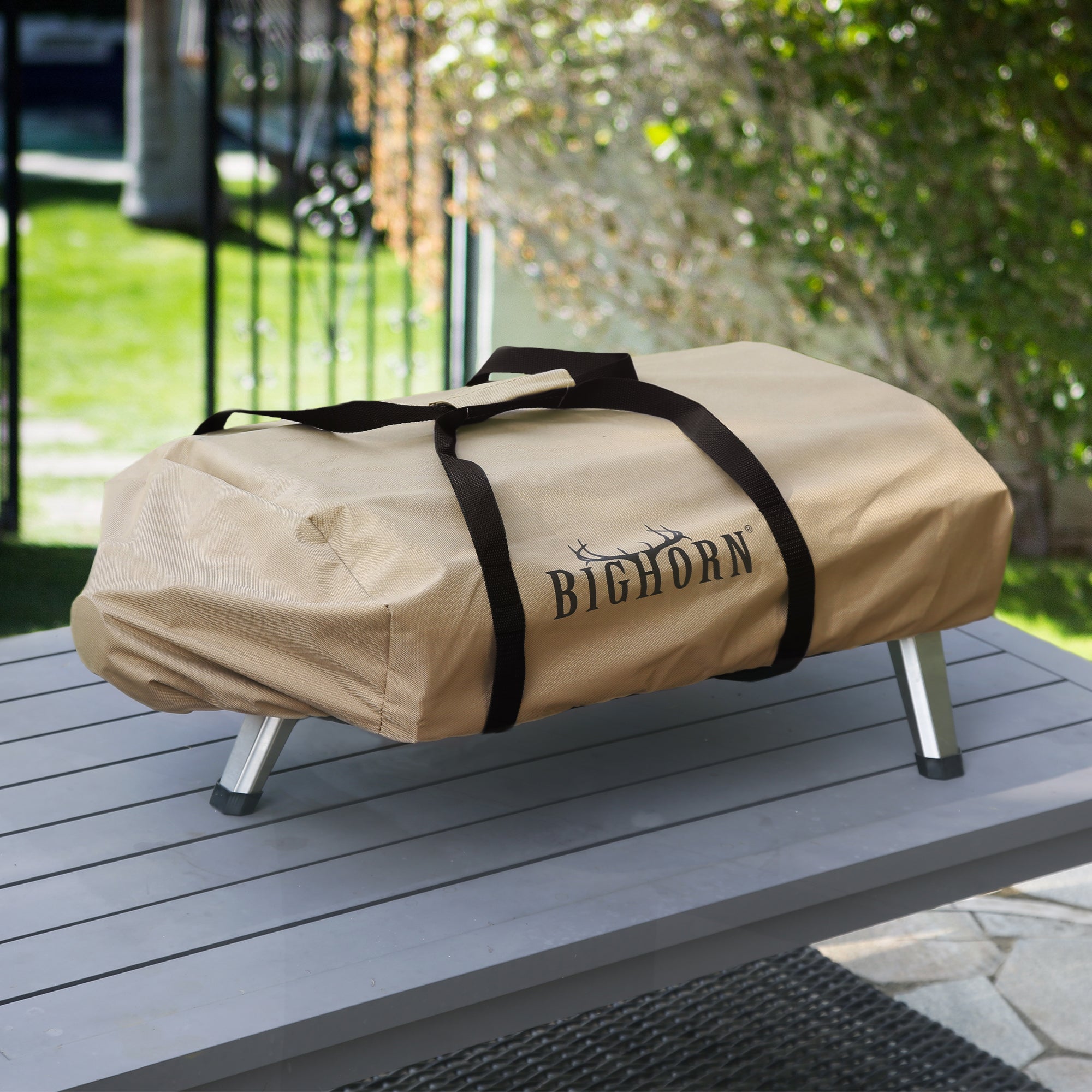
If you are holding the bake until the dough catches up, confirm the current listing for a 12-inch gas pizza oven cover so a cold oven can wait outdoors without picking up weather problems.
FAQ
How to tell if pizza dough has proofed?
A ready ball has grown, feels airy rather than tight, and a gentle poke springs back slowly, leaving a slight dent. Underproofed dough springs back fully and looks pale and tight. Overproofed dough stays indented and may look slack or wrinkled.
Is it okay to eat undercooked pizza crust?
A pale, doughy center is first a quality problem, and it can also be a food-safety problem if the pie carries meat or other ingredients that need a thorough cook. Cook the pizza until the crust is done and toppings have reached a safe doneness; when in doubt, return the pie to the oven rather than serving a raw middle.
Can you eat over fermented pizza dough?
Overfermented dough is usually a quality issue: it can taste sharply sour, feel slack, and bake up flat. That is not the same as dough left for hours in the temperature danger zone. Refrigerate dough you are holding, and throw out dough that smells off, has been left out too long in warm conditions, or shows mold.
Is 4 hours too long to proof pizza dough?
It depends on the room and the yeast load, not on a fixed four-hour rule. In a warm backyard, four hours can be more than enough and may push the dough past ready. In a cool kitchen, four hours can still be short. Trust growth and the poke test, then refrigerate if the dough is ready before you are.
More to Read
Fireproof Grill Mat Under Pizza Ovens and Infrared Grills
Place a fireproof grill mat to catch grease and sparks under ovens and grills. Confirm the live 48-by-30-inch claims, and use a cart when you need ...
No Oven Spring on a High-Heat Pie: Dough Temp, Launch and Floor
Diagnose no oven spring on a high-heat pizza by checking dough temperature, launch handling, and floor heat before you spend another mix changing t...
Heat-Resistant BBQ Gloves: Temperature Ratings and Wet-Grip Limits
Read a 1472°F glove rating as a short, dry, instant figure. Wet or oily conditions change grip, so let long peels reach into hot ovens and grills.
