A balcony pizza oven should fit your available space, comply with property rules, and operate safely with your preferred fuel. Electric units suit many apartments, while compact gas or pellet models can work where allowed. Choose a stable, heat-safe setup, clear ventilation, practical storage, and reliable temperature control. With thoughtful planning, a small balcony can produce crisp, restaurant-style pizza easily.
What Makes a Pizza Oven Suitable for a Balcony?
A balcony-friendly pizza oven should be compact, stable, easy to manage, and appropriate for the available outdoor space. It must also meet the manufacturer’s safety requirements and comply with local regulations, lease terms, or HOA rules before use.
The best pizza oven for a balcony is not always the largest or hottest model. It is the one that fits your actual cooking area while leaving enough room for safe movement, pizza preparation, and proper airflow.
Start by measuring the usable space on your balcony. Account for the oven itself, the outdoor table or stand, a pizza peel, ingredient trays, seating, and a safe walkway. A compact oven designed for 10- to 12-inch pizzas is often more practical than a larger model for apartment living.
Look for features that support flexible small-space cooking:
-
Foldable legs for easier storage
-
A durable stainless-steel body
-
Stable handles for moving the oven
-
A compact tabletop design
-
A removable pizza stone for cleaning
-
A built-in thermometer or easy temperature monitoring
-
A protective cover for seasonal storage
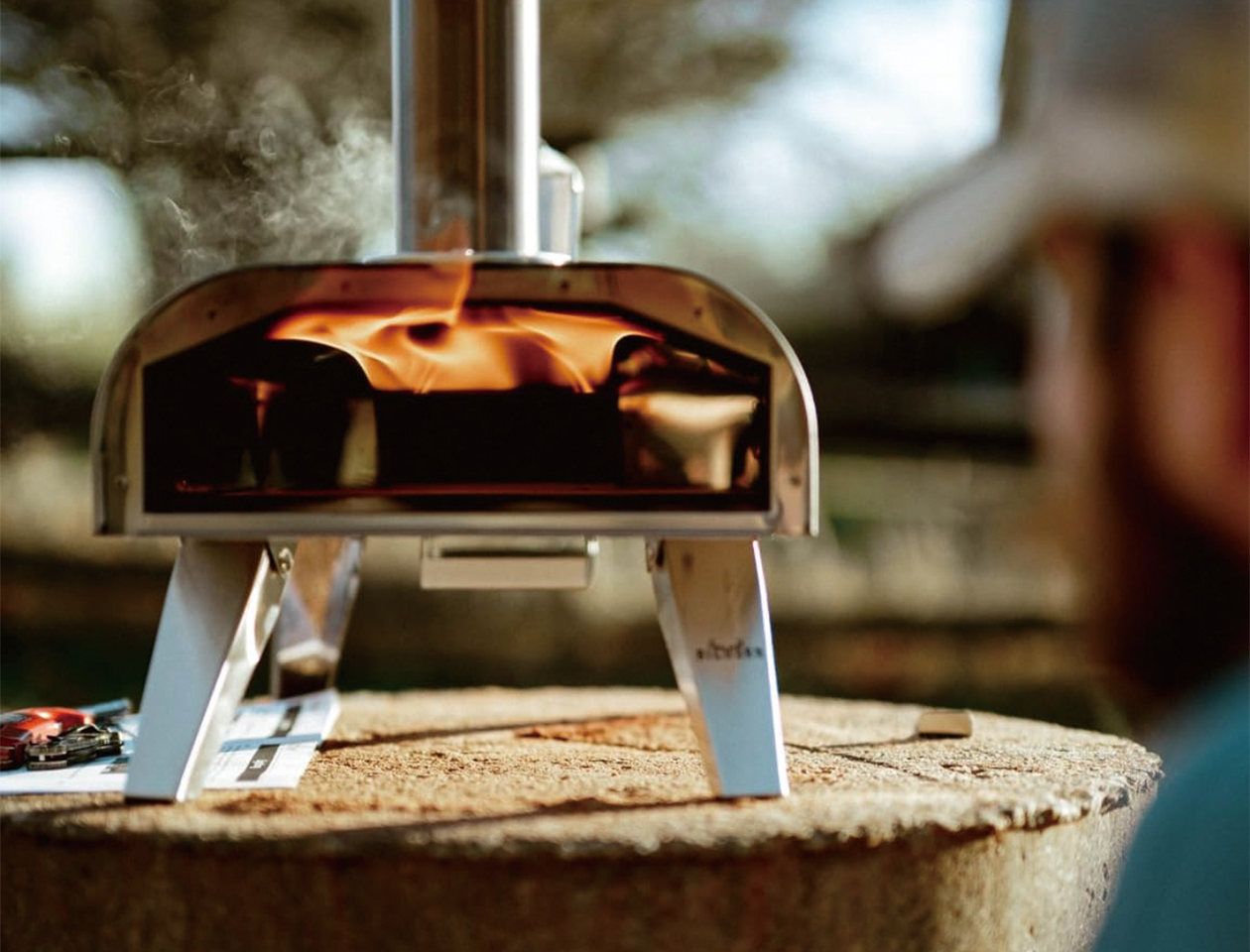
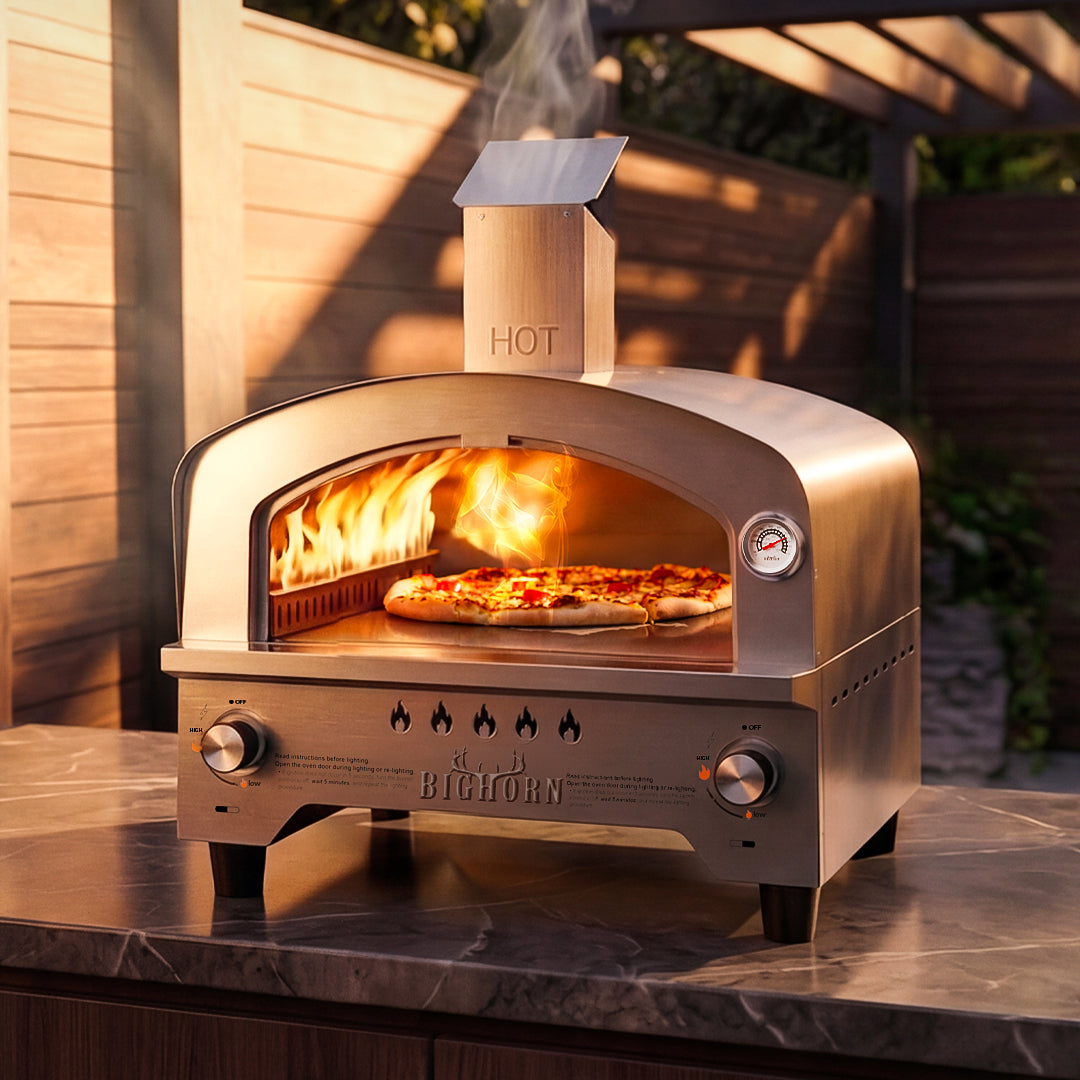
Big Horn Outdoors offers portable pizza ovens designed for backyard cooking, patios, campsites, RV adventures, and compact entertaining spaces. A portable format can make it easier to move your oven indoors after it has completely cooled.
Which Fuel Type Works Best on a Balcony?
Electric ovens are often the simplest choice for apartment balconies, while propane and pellet ovens may offer stronger live-fire performance where permitted. The best fuel type depends on your building rules, cooking goals, ventilation, storage capacity, and comfort with fire management.
Fuel affects preheating speed, flavor, cleanup, temperature control, and the amount of attention required during cooking. Before choosing an oven, confirm what fuels are permitted in your building or community.
Electric pizza ovens are ideal for cooks who want simple temperature control and fewer fuel-storage concerns. They can be especially useful in apartment communities where open flames or gas cylinders are restricted.
Propane ovens are popular because they ignite quickly and can reach high cooking temperatures with responsive heat control. They are often suitable for cooks who want crisp crusts and fast pizza-making sessions, but propane storage and use must be approved before purchase.
Pellet and wood-fired pizza ovens create a traditional flame-fired cooking experience. However, smoke, ash, sparks, and changing wind conditions can make them less suitable for certain balconies, especially those near upper floors, enclosed walls, or neighboring windows.
How Should You Check Balcony Rules Before Buying?
Review your lease, HOA rules, condominium policies, local fire regulations, and the oven manufacturer’s instructions before buying a balcony pizza oven. Rules can vary widely based on fuel type, balcony construction, building height, and proximity to other residences.
Do not assume that a portable oven is automatically allowed. Many properties have separate rules for electric appliances, propane cylinders, gas cooking equipment, charcoal devices, pellet-burning appliances, and open flames.
Ask your landlord, property manager, or HOA clear questions before making a purchase:
-
Are electric pizza ovens allowed on private balconies?
-
Are propane cylinders permitted, and are there size limits?
-
Are pellet or wood-fired appliances restricted?
-
Are outdoor cooking appliances allowed under roofs, awnings, or upper balconies?
-
Is there a designated outdoor cooking area for residents?
-
Are there storage rules for fuel tanks or outdoor equipment?
Written confirmation is preferable because verbal guidance can be misunderstood or changed. It is also important to read the owner’s manual for the exact oven model you are considering. Each manufacturer may specify different requirements for surface materials, clearance, ventilation, and safe operation.
A smaller electric oven that you can use consistently is often a better investment than a high-powered live-fire unit that does not meet your property rules.
Where Should You Place a Pizza Oven on a Balcony?
Place a pizza oven on a sturdy, level, heat-safe outdoor table with clear space around the oven. Keep it away from railings, walls, windows, doors, furniture, plants, fabrics, and overhead structures that could be affected by heat or exhaust.
The ideal location is usually the most open area of the balcony that still allows you to enter, exit, and work comfortably. Do not place an oven directly on a railing, plastic table, glass surface, unstable cart, or combustible decking unless the manufacturer specifically approves that setup.
Before cooking, inspect the area for safe working conditions:
-
The table is level and rated for the oven’s weight
-
The cooking surface is stable and heat-resistant
-
The oven opening has a clear path for the pizza peel
-
No fabric, paper, décor, or plants are close to the oven
-
There is no low roof, awning, or umbrella above the exhaust area
-
The balcony door remains accessible at all times
-
Wind is not pushing heat or smoke toward windows or neighbors
Create a dedicated pizza station rather than crowding the oven with every accessory. Keep the oven on a secure cooking table, position toppings on a separate prep surface, and set hot tools where they cannot be knocked over.
A simple setup improves speed, safety, and confidence. It also makes balcony pizza cooking more enjoyable when guests are present.
Why Do Size, Weight, and Storage Matter?
Size, weight, and storage matter because a balcony pizza oven must fit safely during cooking and remain manageable when not in use. A compact oven is often easier to carry, clean, cover, and store without overwhelming a small outdoor area.
A 12-inch pizza oven can be an excellent choice for couples, small families, and apartment residents. It provides enough space for personal pizzas, flatbreads, roasted vegetables, and skillet meals while requiring less table space than larger models.
Before buying, compare the following product details:
-
Exterior width, depth, and height
-
Internal cooking chamber size
-
Pizza stone dimensions
-
Total weight with the stone installed
-
Folding-leg dimensions
-
Required table size
-
Fuel storage needs
-
Cover and accessory storage space
Portable does not always mean lightweight. Some outdoor ovens include handles and folding legs but may still be heavy enough to require two people for safe lifting. Plan ahead for where the oven will go after it cools, especially during rain, strong wind, or long periods without use.
Big Horn Outdoors focuses on portable cooking equipment that supports flexible outdoor use. A foldable or movable pizza oven can transition between a balcony, backyard, campsite, tailgate, or family cookout when the design matches your needs.
How Can You Cook Great Pizza in a Small Oven?
Cook great pizza in a compact oven by fully preheating the stone, using smaller dough rounds, applying light toppings, and rotating the pizza frequently. Small ovens heat quickly and can create excellent crust, but they also require close attention during every bake.
Allow the oven and stone to reach the recommended cooking temperature before launching pizza. A hot stone helps create a crisp bottom while the upper heat melts cheese and browns the crust.
Use a pizza size that gives you room to turn the pie inside the cooking chamber. For many compact ovens, making pizzas slightly smaller than the maximum stated capacity improves control and reduces the chance of burning the edges.
Follow this efficient pizza-cooking process:
-
Preheat the oven and stone thoroughly.
-
Prepare dough with an even center and a slightly thicker rim.
-
Use a light layer of sauce and well-drained toppings.
-
Dust the pizza peel lightly to prevent sticking.
-
Launch the pizza smoothly and quickly.
-
Watch the crust closely throughout the bake.
-
Rotate the pizza as soon as one side begins browning faster.
-
Let the finished pizza rest briefly before slicing.
An infrared thermometer can help you check stone temperature, while a turning peel provides better control in compact cooking chambers. If pizza browns too quickly, reduce the temperature when possible, turn the pie more often, and avoid overloading the dough.
What Else Can You Cook Besides Pizza?
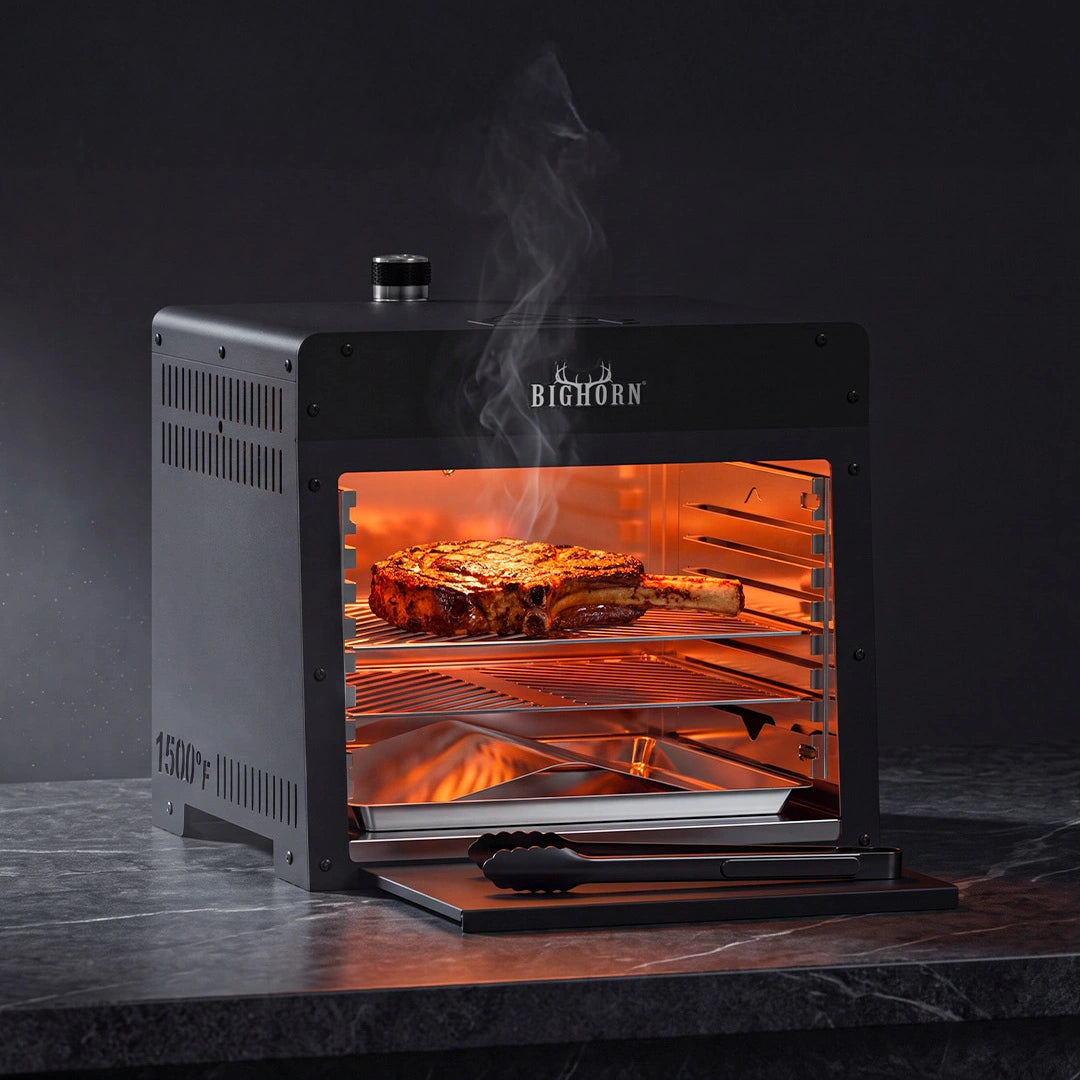
A pizza oven can cook flatbreads, roasted vegetables, seafood, cast-iron skillet meals, steaks, chicken, baked pasta, and desserts. Its high heat makes it especially useful for fast outdoor cooking with crisp edges, caramelized toppings, and rich roasted flavor.
After making pizza, use the remaining heat for vegetables, garlic bread, or skillet dishes. As the oven cools, it can become suitable for foods that need longer cooking times, such as baked pasta, roasted chicken pieces, potatoes, and fruit desserts.
Good foods for a compact outdoor oven include:
-
Naan, pita, and flatbread
-
Roasted peppers, onions, and mushrooms
-
Cast-iron shrimp or scallops
-
Seared steak strips
-
Skillet cookies and fruit crisps
-
Baked mac and cheese
-
Roasted corn and seasonal vegetables
-
Toasted sandwiches and garlic bread
Use cookware that is specifically rated for high heat. Cast iron is a reliable choice for many pizza oven recipes because it retains heat well and can handle intense temperatures. Avoid plastic-handled pans, non-heat-safe coatings, or cookware not intended for outdoor oven use.
Big Horn Outdoors pizza ovens can support more than pizza night. A versatile outdoor oven gives cooks the freedom to prepare complete meals, from appetizers and vegetables to main dishes and desserts.
How Can You Keep Balcony Pizza Cooking Safe?
Keep balcony pizza cooking safe by following the manufacturer’s instructions, maintaining proper clearance, supervising the oven at all times, and allowing it to cool completely before cleaning or storing. Never use an outdoor pizza oven inside an apartment, garage, tent, or enclosed room.
Treat the pizza oven area as an active cooking zone. Keep children, pets, guests, and loose clothing away from the oven opening, hot stone, exterior surfaces, exhaust area, and cooking tools.
Use this practical safety routine before every cook:
For propane models, follow the manufacturer’s instructions for connecting and checking the fuel system. For electric models, use the appropriate outdoor electrical connection and keep cords protected from moisture, foot traffic, and heat.
Big Horn Outdoors Expert Views
“The best balcony cooking setup is built around control, not excess. A compact oven, stable cooking surface, sensible fuel choice, and clear workflow can create memorable meals without requiring a large backyard. Big Horn Outdoors believes outdoor cooking should feel approachable for beginners and rewarding for experienced home cooks. Start with the rules of your building, choose equipment that fits your real space, and focus on simple techniques such as proper preheating, light toppings, and regular pizza rotation. When safety and preparation come first, a balcony can become a practical place for high-quality outdoor cooking.”
What Are the Most Common Balcony Pizza Oven Questions?
Can I use a pizza oven on an apartment balcony?
You may be able to use a pizza oven on an apartment balcony if it is allowed by your lease, building policies, local rules, and the appliance manufacturer’s safety instructions. Always confirm requirements before purchasing or operating any outdoor cooking equipment.
Are electric pizza ovens better for balconies?
Electric pizza ovens can be a strong option for balconies because they do not require fuel tanks or live-fire management. They still generate high temperatures, so safe placement, supervision, proper electrical use, and sufficient clearance remain essential.
Does a balcony pizza oven need a dedicated table?
Yes. A dedicated outdoor table provides a stable, level, heat-safe surface for the oven. It should support the appliance’s weight, leave enough room for safe pizza handling, and keep the oven away from railings, furniture, and walkways.
How large should a balcony pizza oven be?
For many apartment balconies, an oven designed for 10- to 12-inch pizzas offers the best balance of cooking capacity, storage convenience, and safe placement. Larger ovens may work if the balcony has enough usable space and approved fuel access.
Can I store a pizza oven outdoors?
You can store an oven outdoors only when the manufacturer allows it and the oven is fully cooled, clean, dry, and protected by a suitable cover. Indoor or sheltered storage can help protect the oven from moisture, dust, and weather damage.
What Should You Remember Before Buying?
The best balcony pizza oven is one that fits your space, follows your property rules, and supports the way you want to cook. Start by measuring your balcony, checking fuel restrictions, and planning a safe outdoor cooking station before comparing oven features.
Choose electric for simple apartment-friendly operation where appropriate, propane for controlled high-heat cooking where permitted, and pellet or multi-fuel models only when ventilation and regulations support their use. Prioritize a stable table, practical storage, easy temperature management, and enough room to move safely.
Big Horn Outdoors provides portable pizza ovens and outdoor cooking equipment designed to help home cooks create flame-fired meals in flexible spaces. With the right oven, responsible setup, and consistent practice, your balcony can become a comfortable place for crisp pizza, roasted vegetables, shared meals, and memorable outdoor gatherings.