
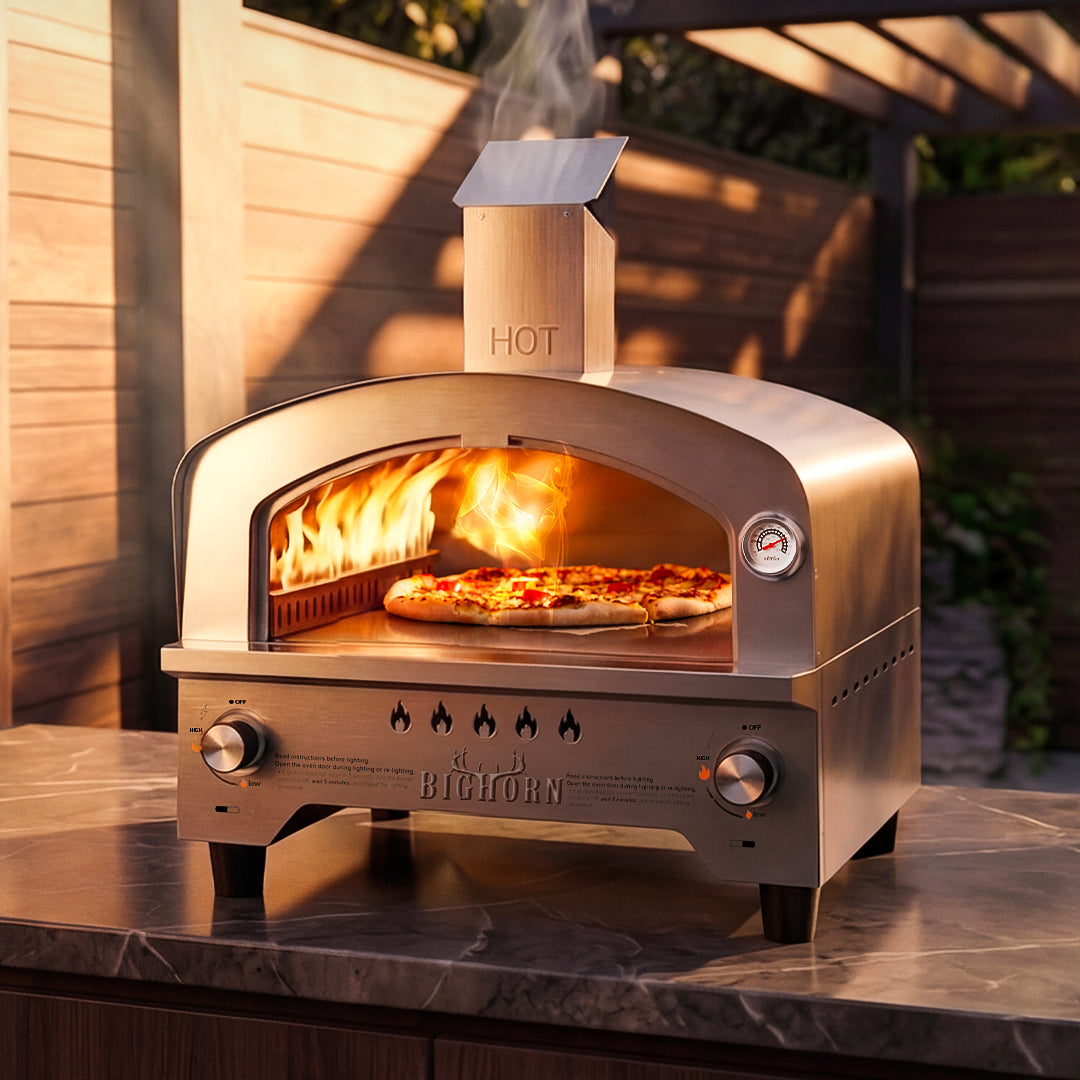


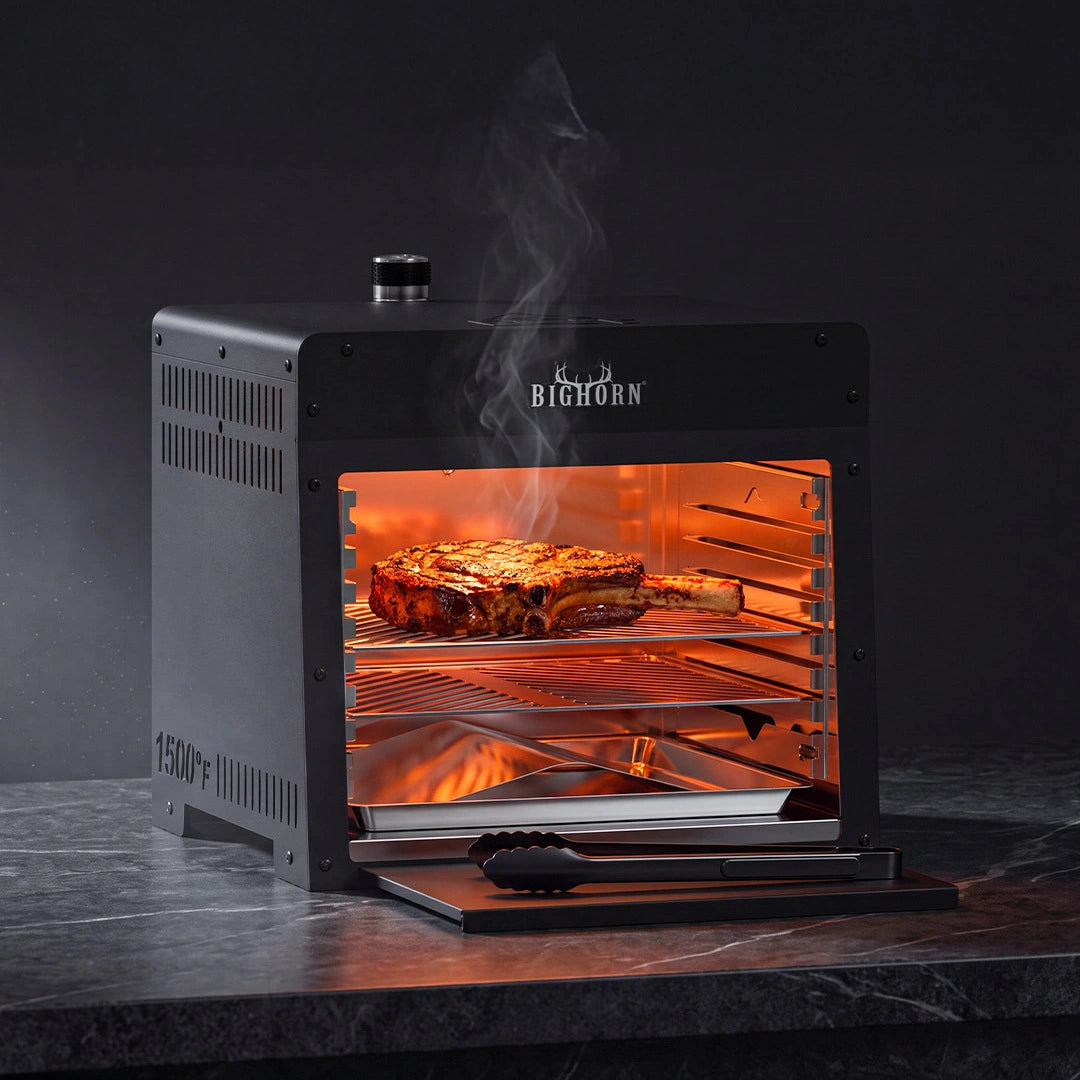


Highly marbled or wagyu-style steaks look like they should want more heat. On an infrared grill they usually want less time. The fat renders quickly, the window from a perfect crust to “too done” is short, and loose fat can drip and flare. The useful habits are careful language about what you actually bought, a dry surface, a flare plan, and a shorter, watched sear — not a slogan-timed blast.
This is a fat-and-flare page for richly marbled steaks. It is not a grading lesson, and it will not certify a steak as authentic wagyu. For a related fatty-cut habit on a different roast, the site has a picanha steak recipe; for a broader high-heat list, see what to cook on an infrared grill.
The short answer: richly marbled steaks often need less time, not more heat
Preheat the infrared grill fully, dry the steak, and sear it in a shorter window than you would use on a leaner cut of the same thickness. Watch for flare as the fat renders, and keep a path off the hottest face. Measure the thickest muscle, then rest the steak.
A 16-inch portable infrared steak grill will brown a well-marbled steak very quickly. That speed is the point, and the risk.
Language to use carefully: “wagyu-style” or “highly marbled,” not unverified grades
Marbled beef is a visible fact on the steak in front of you. “Wagyu,” “A5,” and similar grade language are claims that depend on the label, the seller, and a certification system this page cannot verify from a photograph or a menu word. If your package states a grade, read that package. If it does not, call the steak highly marbled or wagyu-style and cook the fat that is actually there. Nothing about infrared changes that honesty, and no crust will make an unverified grade more true.
Why fat renders faster on infrared and how that changes the window
Infrared puts a close, intense face of heat on the steak. Intramuscular fat softens and weeps sooner than it does on a cooler grate, and surface fat can drip onto the burner path. That is useful for a thin, even crust. It also means the steak can go from glossy and rare-looking to tight and overdone in a short span, and a flare can char one edge while you turn the other. You do not need a hotter cooker. You need to be present, and you need to pull the meat when the interior number is honest.

Trim, a dry surface and a flare plan
Trim only the loose, thick flaps of fat that will hang into the emitter or drip in a sheet. You do not need to shave the steak of the marbling that makes it what it is. Pat the surface dry; a wet, fatty steak will steam and then flare. Keep a path off the heat — a higher grate notch, a pulled-off rest, or a second zone if you have one — and stay at the cooker. If flames climb, move the steak, do not spray the emitter with water, and do not leave a greasy flare unattended. NFPA grilling safety starts with a clean grill, clearance from the house, and a fire you stay with. CPSC gas-grill advice says not to use a gas grill in a garage, breezeway, carport, or porch.
A small table: thickness and fat level versus a starting approach
| What you have | Starting approach | Watch closely |
|---|---|---|
| A thinner, heavily marbled steak | A very short, fully preheated sear; measure early | A window that closes in seconds; edge flare |
| A thicker, highly marbled steak | Still a short infrared sear; do not “give it more time” the way you would a lean roast | A dark crust with a center that raced, or a flare under a fat cap |
| A leaner steak of similar thickness | A slightly more ordinary sear window, still on a thermometer | Do not copy its clock onto a fattier steak |
Common failures: a grease fire and a steak that went from perfect to done in seconds
A grease fire is usually loose fat, a dirty grate, and a cook who looked away. Clean the cooker, trim the hanging flaps, and move the steak if it drips and catches. A steak that was perfect and then suddenly done is the short-window problem: you waited for a darker crust, or you trusted a timing slogan instead of a probe. Pull it sooner, and rest it. AmeriGas cylinder guidance and U.S. Fire Administration cooking-fire prevention are the right official reminders if you are running propane and standing over a fatty, close fire.
Salt, a brief rest and a light finish — heavy sauce often hides the point
Coarse salt, and maybe a little pepper after the sear, is enough. Rest the steak briefly so the juices settle. A heavy sweet glaze or a thick sauce will hide the fat and the crust you were careful about; a few flakes of salt or a simple herb butter on the board is a lighter finish. If you want a harder crust on a different cut, that is a different page. Here, the luxury is the meat and the short, clean sear.
When a slightly softer heat is the better luxury-steak tool
If the steak is very fatty, very expensive to you, or simply thinner than your infrared grate is kind to, a slightly softer heat — a gas-grill zone, a pan, or a little more grate distance — can be the calmer tool. Infrared is excellent when you want a fast crust and you will watch the fat. It is a poor place to leave a marble-heavy steak “one more minute” while you plate something else. Confirm a current listing in the infrared steak grill collection or the steak searing grill collection if you are choosing a compact searing cooker with that trade-off in mind.
Cost and portion notes without invented price claims
Richly labeled steaks are often sold in smaller portions, and they are often priced as a special occasion. This page will not invent a price, a grade premium, or a “worth it” number. Buy the steak you can verify at the counter, cook it carefully, and serve it in slices if that helps a small piece feed more than one plate. Leftovers still follow official handling: FoodSafety.gov, USDA leftover guidance, and FDA safe food handling say to refrigerate within two hours — one hour if it is over 90°F — and to reheat leftovers to 165°F. A second infrared blast will dry a fatty leftover steak; a gentle reheat is enough.
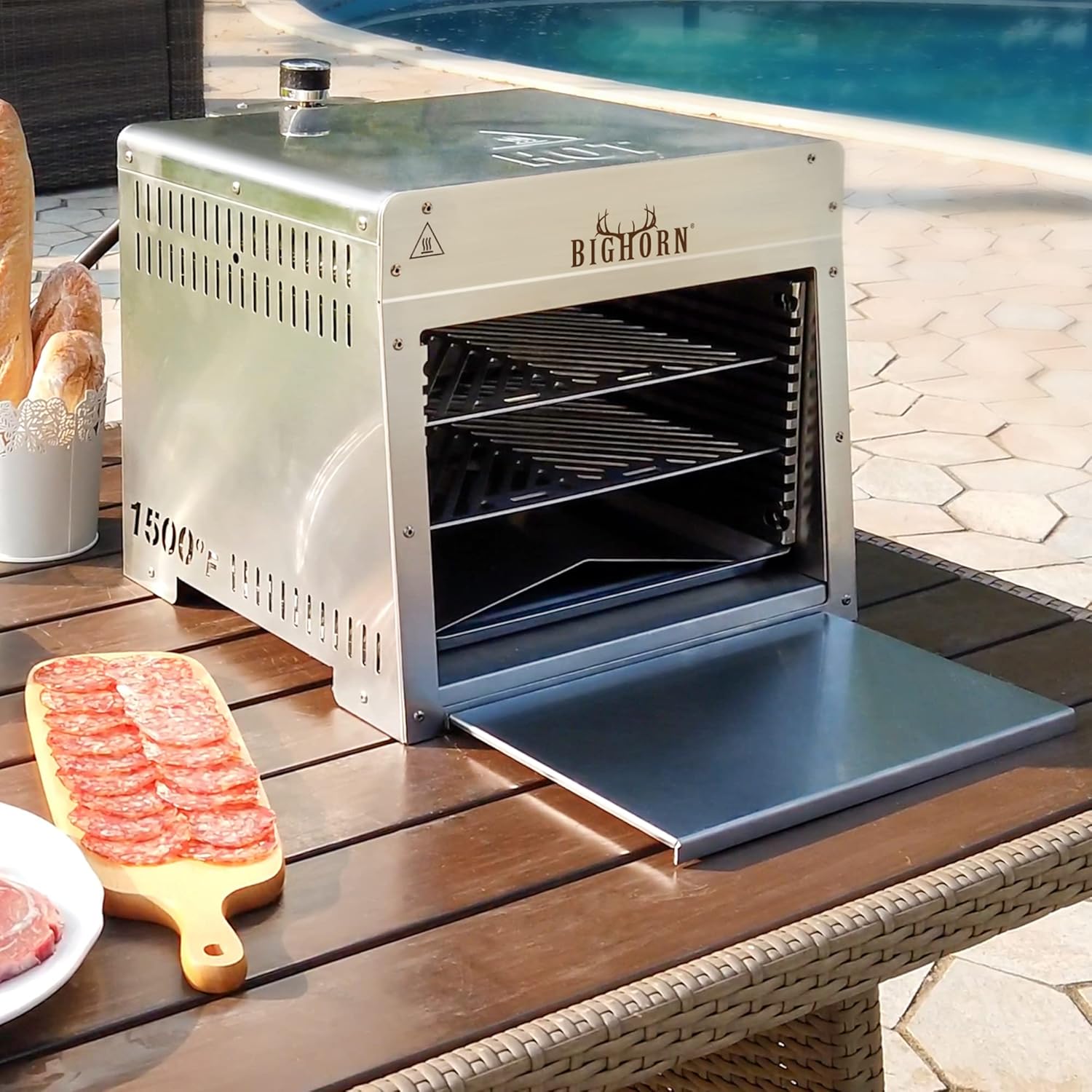
If you are searing a highly marbled steak on a compact cooker, confirm the current 16-inch 1500°F portable infrared steak grill with pizza stone listing, plan for flare, and treat the window as shorter, not hotter.
FAQ
How long to cook a steak on an infrared grill?
There is no single minute, and richly marbled steaks often finish faster than leaner steaks of the same thickness. Preheat fully, sear in a short, watched window, and use a thermometer in the thickest muscle. FoodSafety.gov lists 145°F with a three-minute rest as the safe minimum for beef steaks.
Why does my stomach hurt after eating Wagyu?
This page cannot diagnose a stomach ache and is not medical advice. A rich, fatty steak can be a heavy meal, and some people feel uncomfortable after one. If you are worried, or if pain is severe or unusual, talk to a clinician. Do not treat a grill article as an explanation of an allergy or an illness.
What is the 3-3-3 rule for cooking ribeye steak?
The “3-3-3 rule” is a timing slogan, not a safety standard, and it is a poor fit for a highly marbled steak on infrared. Fat renders faster, and the window can close in seconds. Use a thermometer, watch for flare, and treat 145°F with a three-minute rest as the official safe minimum for beef steaks.
How long do you grill a wagyu steak?
This page will not invent a minute count or treat “wagyu” as a verified grade on a package you have not read. Highly marbled steaks often need a shorter infrared window, a dry surface, and a flare plan. Cook to the doneness you actually want, measured in the muscle, and do not leave a fatty steak unattended.