

An infrared grill can lie to a thermometer if you let the probe see the burner. Radiant heat warms a probe tip, a cable, or a dangling clip faster than a closed-lid air gauge ever will, and a “done” reading taken in that shine is not the temperature of the steak. The useful habit is simple: measure the meat, in the center of the thickest muscle, and keep the probe out of the emitter’s direct face.
The site already has a general comparison of instant-read versus probe thermometers for grilling. Use that page to choose a tool. Stay here for placement under a close infrared burner, including the questions that sound like they are about infrared thermometers or human body temperature and are not.
The short answer: measure the meat, not the air shining off the burner
Put the thermometer in the center of the thickest muscle, away from bone, fat seams, and the infrared emitter. A probe that hangs in the air or faces the burner can read high and call the steak done early. Pull the meat when that interior number is honest, then rest it.
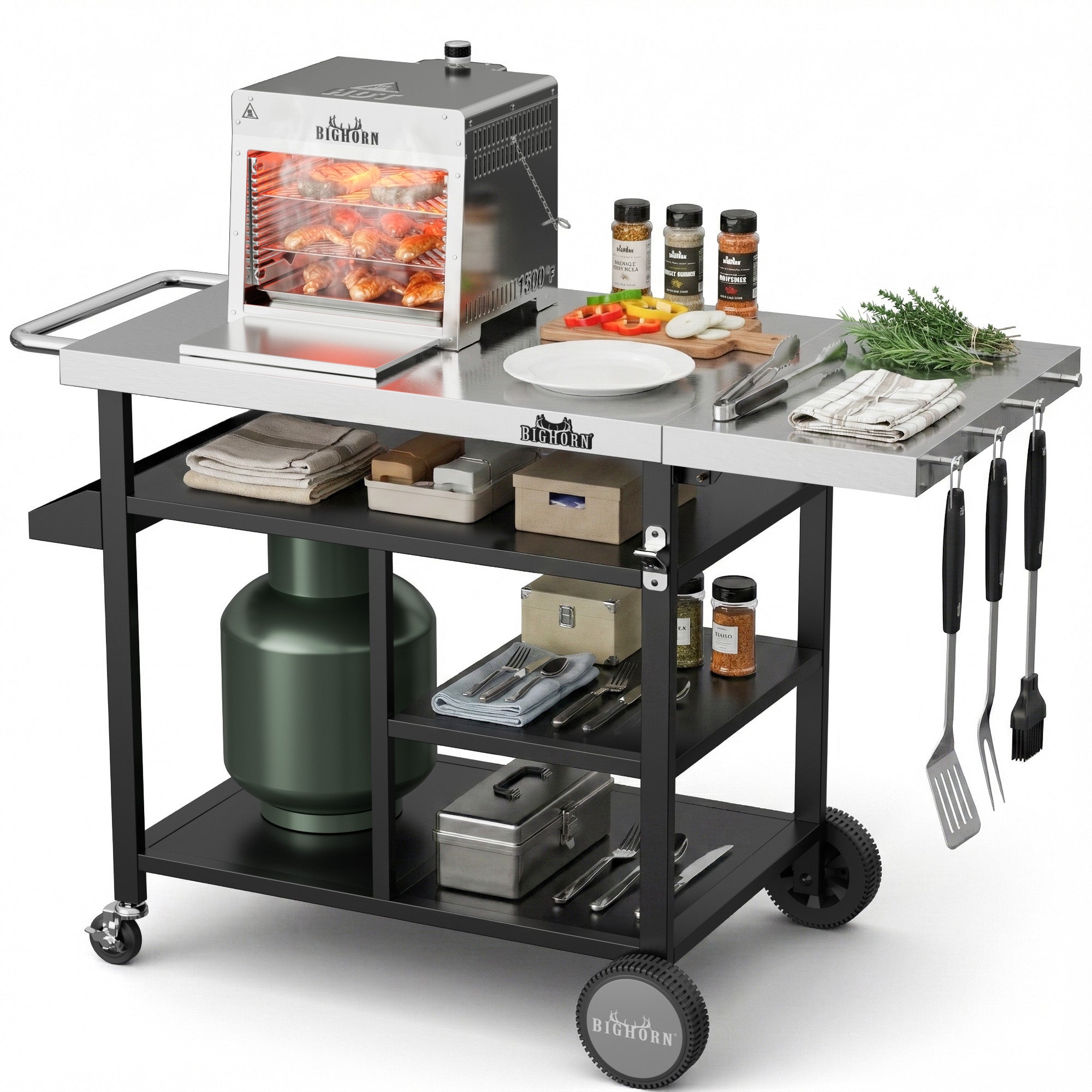
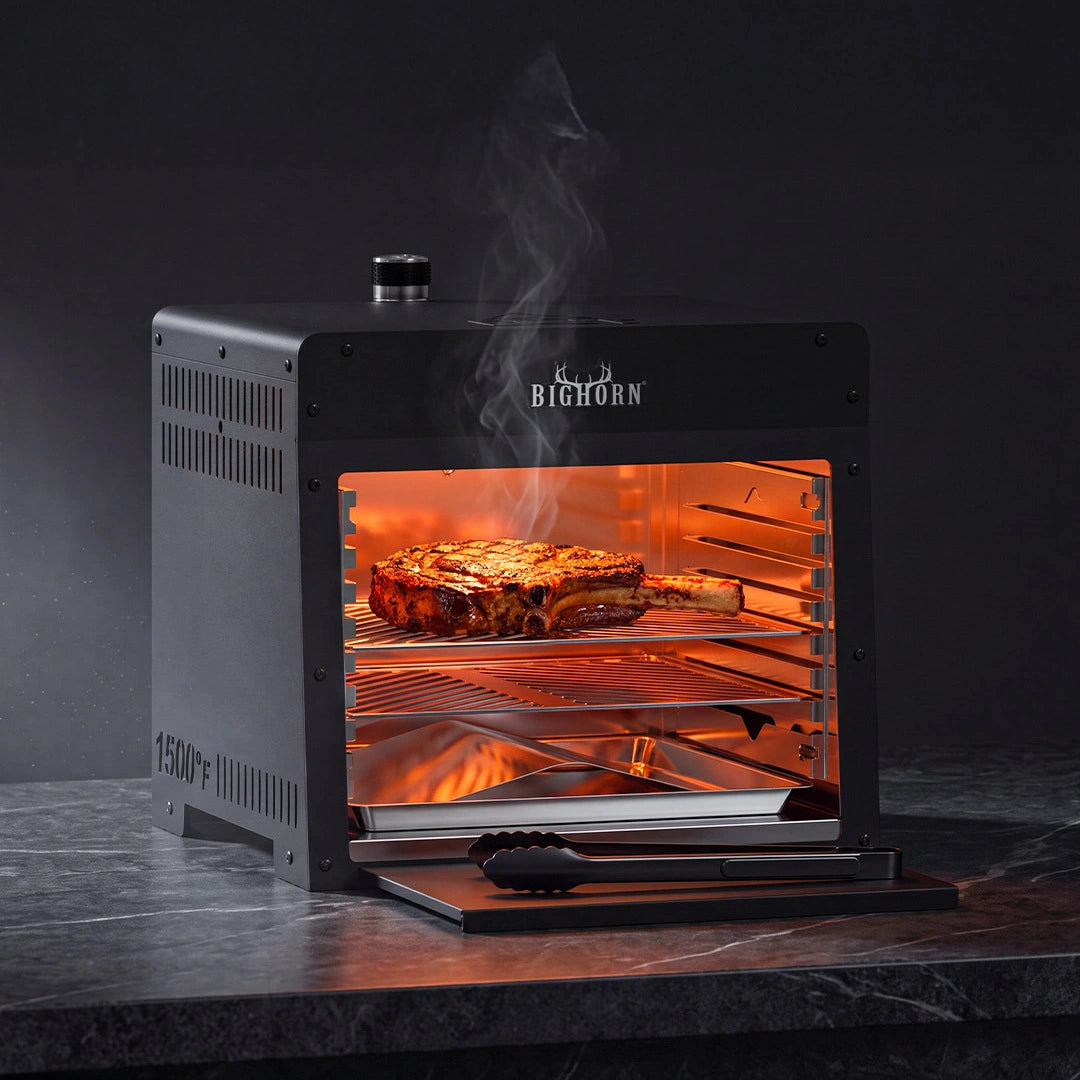
A compact 16-inch infrared steak grill makes this placement problem sharper because the heat source is close.
Why radiant heat can fool a probe faster than a lid thermometer can
A lid thermometer, on a kettle or a gas grill, is already a blunt instrument: it reads air near the lid, not the roast. An infrared emitter adds a second kind of error. Radiant energy can heat the metal of a probe, a clip, or a cable directly, the way it heats a grate. If the tip is shallow, or if the exposed stem sits in the shine, the display can jump while the center of the steak is still cool. That is not a reason to skip a thermometer. It is a reason to place it as if the burner were trying to warm the instrument.
Leave-in versus instant-read around an infrared burner
A leave-in probe is useful on a thicker roast or a two-stage cook, as long as the cable does not rest on the grate or drape toward the emitter. An instant-read is often easier on a thin steak: you open, insert, read the center, and get the tool out of the heat. Either can be right. Either can lie if you stab the thin edge, the bone, or the air. If you use both, do not average a bad leave-in number with a good instant-read number. Believe the measurement that was actually in the muscle.
If you have two burners and want a cooler side for a leave-in roast, see the site’s guide to dual infrared burner heat zones.

A placement rule: center of the thickest muscle, away from bone and the emitter face
Find the thickest part of the steak or roast. Insert the probe from the side if you can, so the tip sits in the center of that muscle, not just under the crust. Stay off the bone and off a hard seam of fat, both of which can read differently from the meat you will eat. Angle the cable or the thermometer body away from the emitter, and do not let the tip poke out the far side into open heat. On a thin steak, a side insertion is often the only way to keep the tip in meat instead of in air.
A small table: thin steaks versus thick roasts and a measurement habit
| What you are cooking | Measurement habit | Extra infrared caution |
|---|---|---|
| A thin steak | An instant-read from the side, tip in the center | Do not leave a probe lying on the grate between checks |
| A thick steak or a small roast | Side placement in the thickest muscle; confirm with a second check if the first looks odd | Keep the cable off the emitter; distrust a sudden jump |
| Poultry, or leftovers you are reheating | Thickest breast and thigh for a bird; the center of a leftover portion for a reheat | Color is not the test; official numbers still apply |
Common failures: a probe that sees the burner and a false “done” reading
The classic failure is a probe clipped so the tip points at the emitter, or a leave-in cable that has slid onto the grate and is cooking like a wire. The display looks confident, the crust looks dark, and the center is underdone — or, on a thin steak, already overdone by the time you distrust the number and wait “just a little longer.” If a reading seems instant and very high, take the food off the heat and measure again in the center, away from the shine. NFPA grilling safety and CPSC gas-grill advice still apply while you do that: stay with the cooker, keep it away from the house, and do not use a gas grill in a garage, breezeway, carport, or porch.

Cable care and a probe that should not rest on a glowing grate
A leave-in cable has a temperature limit of its own, printed by the manufacturer, and a glowing infrared grate can exceed what a plastic sleeve or a cheap wire was built for. Route the cable off the side, away from the burner, and do not close a lid on it if that would pinch it into the heat. If the insulation looks melted or the reading jumps wildly when the cable moves, stop using that probe. This page will not invent a cable temperature rating; use the one on your tool.
Carryover after you pull the steak
The interior can still climb after you leave the emitter, especially on a thick cut. That is carryover, not a thermometer plot. Pull a little shy of your quality target if you know the roast is running hot, then rest it and check again. For safety, FoodSafety.gov lists 145°F with a three-minute rest for beef, pork, and lamb steaks and roasts, and 165°F for all poultry. A quality cook who wants a pinker center is making a preference choice; it is not a different official chart.
When visual cues still need a thermometer (especially poultry and leftovers)
A crust, clear juices, or a firm poke can be useful clues, and they are not enough for poultry or for leftovers. Cook poultry to 165°F in the breast and thigh. Reheat leftovers to 165°F. USDA leftover guidance and FDA safe food handling also tell you to refrigerate within two hours — one hour if the air is over 90°F. Visual cues on an infrared cooker are especially easy to over-trust, because the surface browns fast. Confirm a current listing in the infrared steak grill page or the infrared grill collection if you are choosing a compact searing cooker and want a grate you can actually work a probe around.
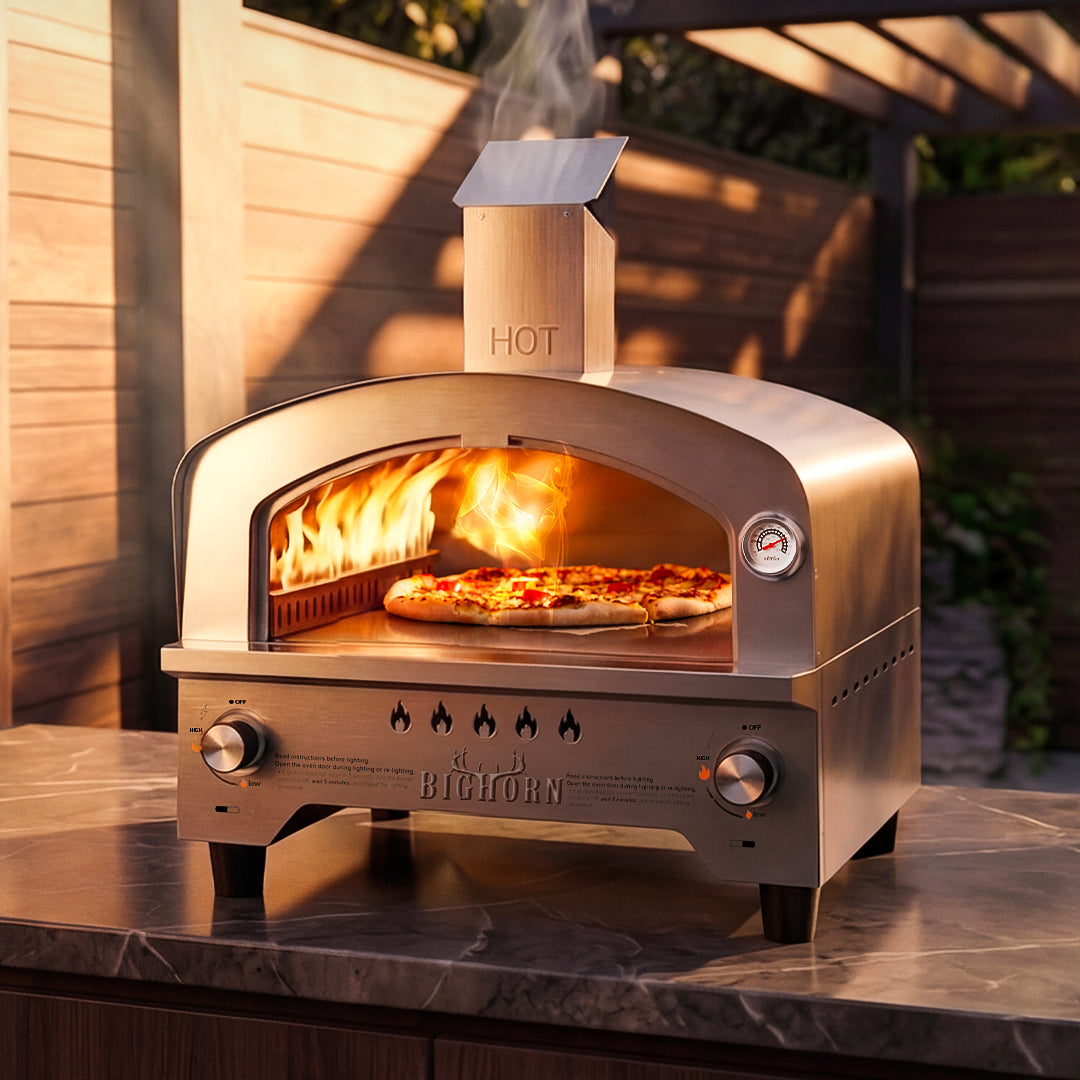
If you are probing steaks on a compact searing cooker, confirm the current 16-inch 1500°F portable infrared steak grill with pizza stone listing, measure the center of the muscle, and keep the probe out of the emitter’s shine.
FAQ
How close to use an infrared thermometer?
That question is usually about a handheld infrared, non-contact thermometer, not about an infrared grill. Those tools read surface temperature from a distance printed in their own manuals, and they can be fooled by shine and smoke. For steak doneness on an infrared grill, measure the interior of the meat with a probe or an instant-read thermometer, not the air or the burner.
Can I use a regular thermometer to check meat?
Yes, if it is a food thermometer that can actually reach the center of the meat and is rated for the temperature range you need. A leave-in probe or an instant-read both work if you place them in the thickest muscle and keep the cable or the body off the emitter. A cheap hardware-store air thermometer is not a meat thermometer.
How do you adjust a grill thermometer?
A lid or dome thermometer, if your cooker has one, reads the air or the lid, not the steak, and many compact infrared grills do not rely on one. Follow the thermometer maker’s instructions if a lid gauge is adjustable. Do not “calibrate” your cook by aiming that gauge at an infrared burner. Measure the meat.
Which part of the body gives the most accurate temperature?
That question is about human body temperature, not about steak. It does not tell you where to put a meat probe. On an infrared grill, place the probe in the center of the thickest muscle, away from bone, fat seams, and the emitter face. For people who feel unwell, use clinical guidance, not a grill article.