The best pizza oven for a beginner is the one that removes fire management from the first few bakes: a gas or electric model that preheats automatically, holds temperature, and tells you when it is ready. A gas oven with a thermometer or an electric oven with presets lets you focus on dough and technique instead of managing heat. The Big Horn 15-inch gas oven reaches about 750 °F in 10 minutes with a built-in thermometer, and the 14-inch electric model offers six preset modes up to 850 °F — either keeps the learning curve short.
What makes an oven beginner-friendly
Three things matter most for a first-time buyer: fast preheat, simple control, and a clear readiness signal. A beginner does not need a raw heat ceiling they cannot use; they need an oven that gets out of the way. Gas and electric both do this by holding temperature on their own, while pellet and wood add a fire to manage before you have even learned the dough.
Fast preheat matters because it shortens the gap between deciding to cook and baking. Simple controls reduce the chance of a disastrous first attempt. A built-in thermometer or presets tell you exactly when the oven is ready, which removes the single most common beginner mistake: launching into a stone that is not hot enough.
Why gas is a strong first choice
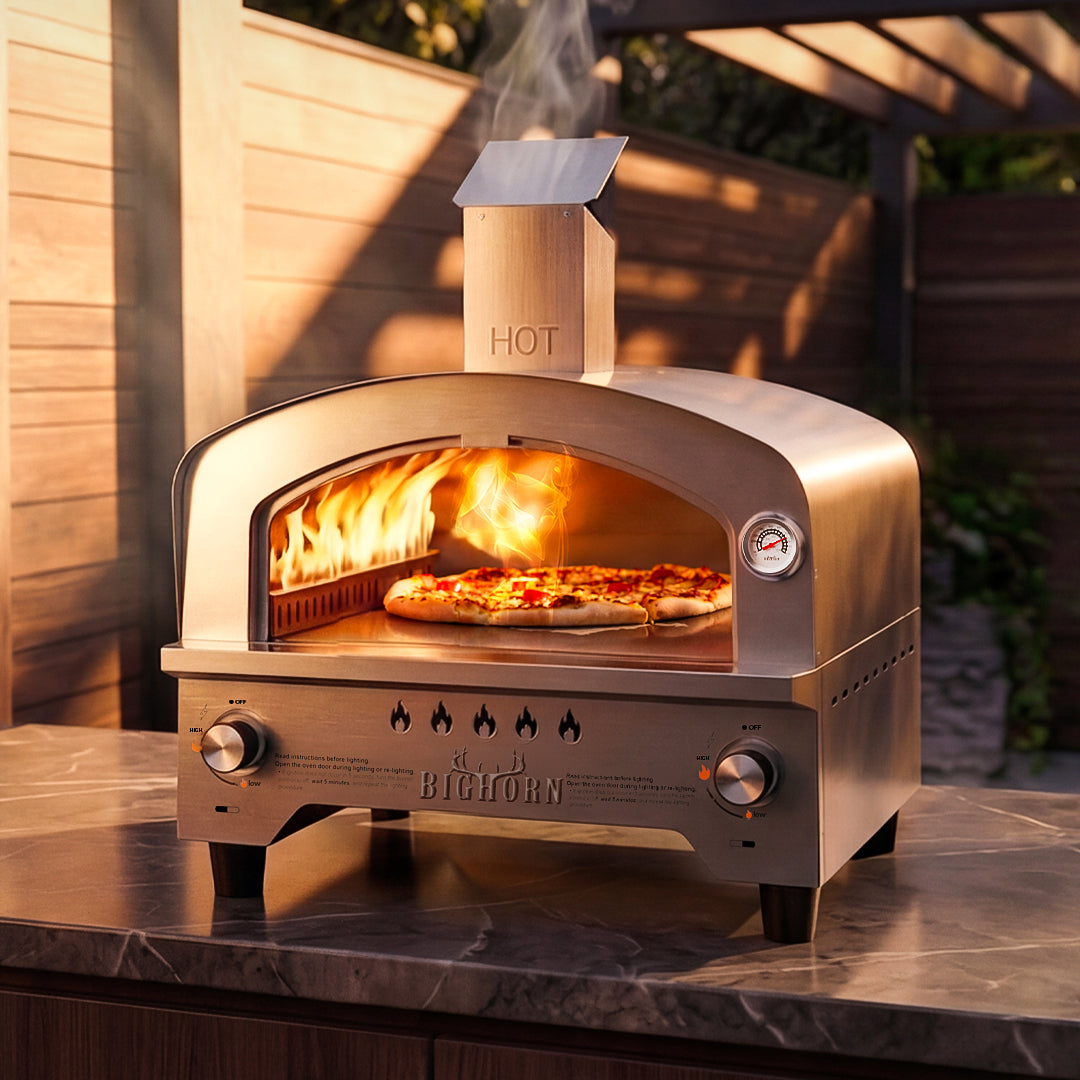
Gas preheats fast, holds a steady temperature with a dial, and does not ask for fuel management mid-cook. The Big Horn 15-inch gas oven reaching 750 °F in about 10 minutes means a beginner goes from setup to first bake quickly, and its built-in thermometer removes the guesswork. Gas is the most predictable way to learn the high-heat window before layering on fuel complexity.
Why electric is the lowest-effort option
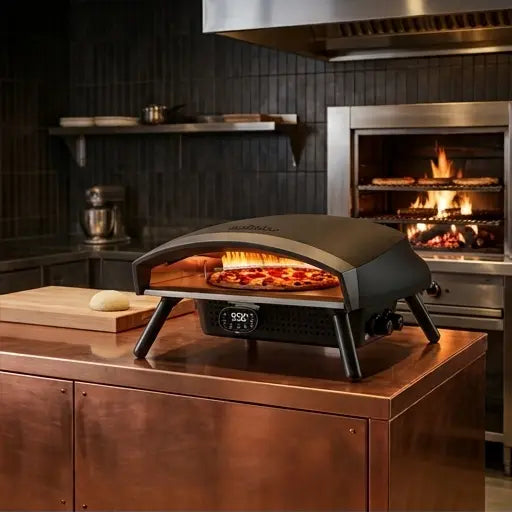
Electric tops even gas for simplicity because it needs no fuel at all: plug it in, pick a preset, and the oven handles the temperature and timing. The Big Horn 14-inch electric model’s six preset modes cover common styles, which suits a cook who wants to start making pizza the same afternoon they open the box. The trade-off is that electric runs at a lower peak heat than gas or pellet, but for a beginner the reduced effort outweighs the smaller ceiling.

What to look for before you buy
Look for fast preheat, simple controls, and a thermometer or presets. Check the deck size against the pizzas you plan to make (12–14 inch suits a family), confirm the electrical or fuel requirements fit your setup, and check how the stone cleans. Those practical details matter more for a beginner than a high marketing number.
What to cook first
Start with a simple cheese or margherita pizza: it is fast, forgiving, and teaches you the heat without complicated toppings. Keep the toppings light so the center cooks evenly, preheat fully, and trust the thermometer or preset before you launch. Master the pizza before experimenting with thick crusts or heavy toppings.
How much should you spend on a first oven?
Spend for heat and a good stone first, and treat extras as optional. A compact entry-level gas or electric oven that holds 750–850 °F is enough to learn the craft; the upgrade paths are larger decks, faster recovery, or multi-fuel flexibility once you know you will keep cooking. It is better to buy a modest oven you use than a premium unit that collects dust.
Which oven size suits a first-time buyer?
Choose a deck that fits the pizzas you will actually make. A 12-inch deck suits solo or couple baking, while a 14–15-inch deck fits family pies and leaves room for a peel. Bigger decks cost more and take longer to preheat, so buy the size for the pizzas you serve, not the largest option. For most households, a 14-inch-capable oven is the practical sweet spot.
How do you clean a beginner pizza oven?
Cleaning a pizza oven is mostly about the stone. Let the stone cool completely, then brush off residue — never wash it with soap, which soaks into the porous surface. Wipe the shell with a damp cloth and empty any crumb tray. A five-minute cool-down clean keeps the next session ready without ever making the stone the bottleneck.
Which mistakes should you deliberately avoid at the start?
The beginner’s standard failure set is small: launching before the stone is hot, ignoring the thermometer or preset, overcrowding the toppings, and using wet dough that sticks. Fix those four and your first bakes improve dramatically. Preheat fully, trust the readiness signal, keep toppings light, and build your pizza quickly on a floured peel.
How do you fix a pale or soggy-first-bake?
A pale base almost always means the stone was not hot enough, or the pizza sat too long before launching. Preheat fully and confirm the thermometer or preset indicates readiness before you place the pizza. Keep the toppings light, build the pizza quickly, and launch with confidence; those three habits prevent most soggy-centre failures on a first try.
When should you upgrade from a beginner oven?
Upgrade when the oven limits a recipe you can already handle rather than the reverse. If a thicker stone or a higher ceiling would improve your consistent results, that is the signal. For most cooks, that point comes months in, not weeks. Upgrade deliberately, once, rather than swapping laterally between similar units.
How long should you preheat a beginner oven?
Preheat to the point where the stone holds baking temperature, not just where the light turns green. For the 15-inch gas oven that is roughly 10 minutes to 750 °F; for the 14-inch electric it depends on the preset, and a full warm-up still matters. Many beginners under-preheat because the oven looks ready before the stone has saturated — give it the extra minutes and your first bakes improve noticeably.
A good way to choose is to write down what you will actually cook in the first month: if it is mostly weekends and simple pies, a gas or electric beginner oven is all you need, and you can grow from there when the habit is established.
Whatever you choose, the rule stays the same: preheat fully, keep the first recipes simple, and give yourself a few sessions to learn the oven before judging the results. That routine turns the first month from a struggle into a foundation.
Beginner pizza oven FAQs
Should a beginner start with gas or electric?
Either works; electric is the lowest-effort (no fuel, presets), while gas reaches higher heat faster with a dial and thermometer. Choose based on where you cook and what already fits your home.
Is a pellet oven too hard for a beginner?
It adds a learning curve around fire management. Many beginners handle it fine, but if you want the simplest first experience, gas or electric is less to juggle.
How long until I am making good pizza?
With a beginner-friendly oven, most cooks get a satisfying result in the first session and noticeably better crusts within a few bakes. Dough repetition, not oven skill, is what improves fastest.
For the current specs on both beginner-friendly options, review the 14-inch electric pizza oven product page or the 15-inch gas pizza oven product page.