
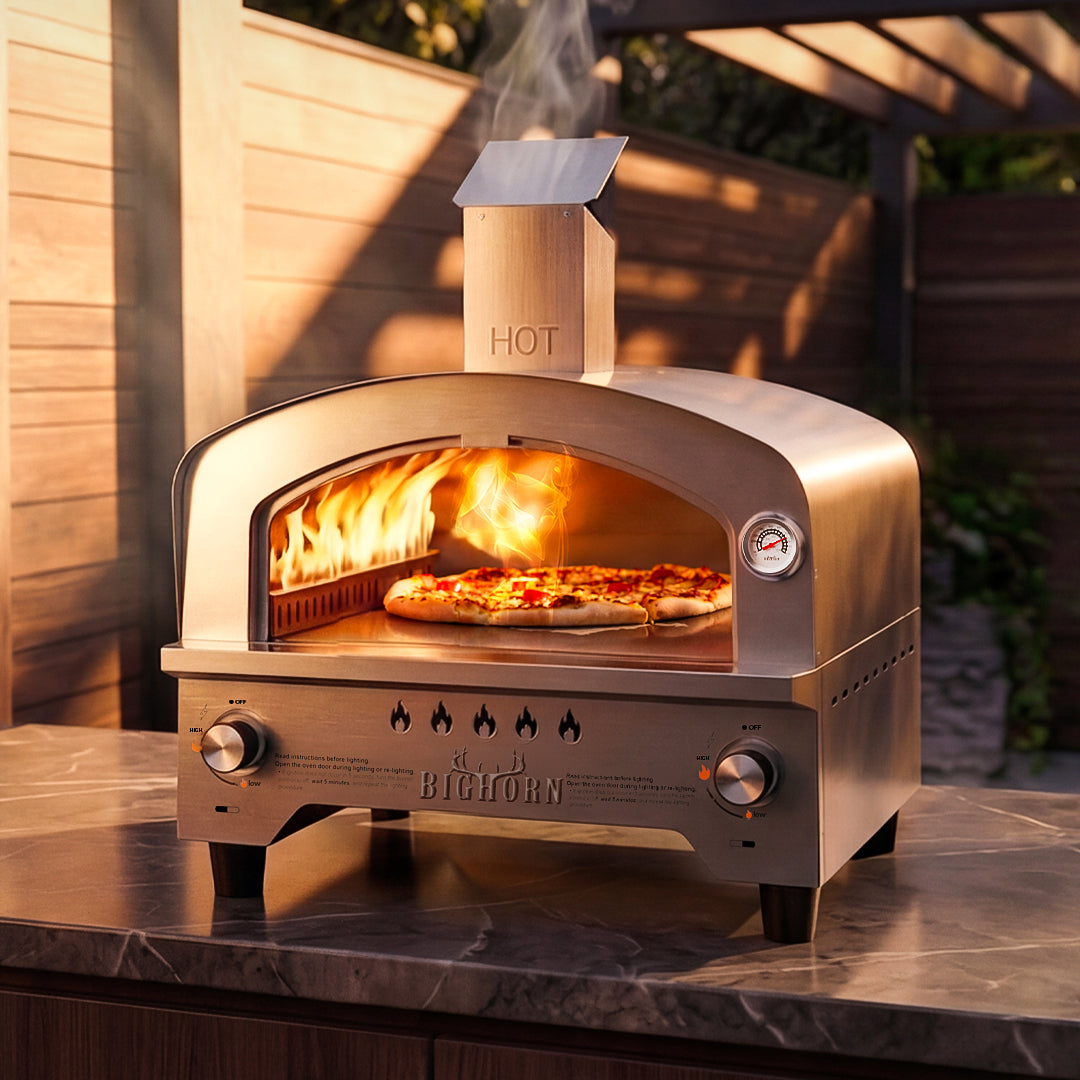
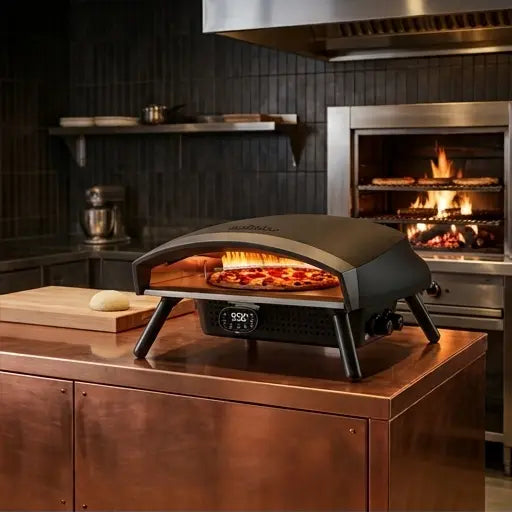
Wood-fired adds smoke flavor, gas is fastest, electric is the indoor option, and multi-fuel offers flexibility — the best fuel depends on your location, flavor preference, and effort budget. The Big Horn 12-inch pellet oven is multi-fuel compatible, accepting gas and electric attachments sold separately, so one oven can cover more than one of these roles.
The four fuel options
Wood-fired ovens burn firewood or pellets for smoke and high heat; gas ovens burn propane for speed and control; electric ovens plug in for indoor use; and multi-fuel ovens accept more than one fuel. Each exists because no single fuel fits every kitchen and patio: flavor, location, and effort all differ.
Comparing flavor, speed, and indoor use
Wood-fired gives the most flavor, because burning wood adds smoke to the crust. Gas and electric are clean and neutral, and a multi-fuel oven depends on which fuel you use. If smoke flavor is the priority, wood-fired wins; if you want the taste of the dough and toppings unmodified, gas or electric is cleaner.
Speed
Gas is fastest, reaching about 750 °F in roughly 10 minutes on models like the Big Horn 15-inch. Wood and pellet take longer to build a fire and warm the stone, and electric heats gradually in about 15 minutes. For a quick weeknight bake, gas reduces the wait; for a planned weekend session, the slower warm-up matters less.
Indoor use
Electric is the only reliably indoor option: it has no flame and no fumes, and the Big Horn 14-inch electric oven reaches about 850 °F with preset modes. Gas and wood combustion produce carbon monoxide and smoke, so they are outdoor-only. Confirm each model’s placement rules, since electric compatibility alone does not prove indoor approval in every configuration.
What multi-fuel adds
A multi-fuel oven lets you switch fuel without changing the oven — pellets for flavor at home, gas for speed on a trip, electric when you want a quiet bake. The flexibility is real, but each attachment costs extra and brings its own care, so buy the modes you will actually use. The choice between single-fuel and multi-fuel is really a choice about how varied your cooking is.
| Fuel | Location | Flavor | Speed |
|---|---|---|---|
| Wood-fired | Outdoor | Smoky | Slower |
| Gas | Outdoor | Neutral | Fastest |
| Electric | Indoor | Neutral | Medium |
| Multi-fuel | Depends | Depends | Depends |
Fuel comparison details
How do preheat and recovery compare across fuels?
Preheat and recovery are where fuels differ most in practice. Gas climbs to baking temperature in about 10 minutes and recovers quickly between consecutive pies, which suits a busy session. Wood and pellet take longer to warm and recover at their own pace, which suits a slower, more deliberate cook. Electric heats gradually and holds a steady deck, with preset modes handling the timing. Match the fuel’s rhythm to how you actually cook.
How does cost compare over time?
Ongoing cost tracks the fuel and its storage. Electric is tied to your electricity rate, gas to propane prices, and wood/pellet to fuel you must store dry. None is dramatically cheaper overall; the more important difference is convenience and flavor. Budget for fuel and occasional part replacement regardless of the fuel you choose.
Can a multi-fuel oven cover more than one of these roles?
Yes — that is the point of multi-fuel. A pellet base with gas and electric attachments can switch between wood-fired flavor, fast gas heat, and a quiet electric bake in one oven. The flexibility is real, but it costs extra in attachments and adds care per mode, so buy the modes you will actually use.
How does outdoor space affect the fuel choice?
Outdoor space shapes the fuel decision more than any spec. A gas oven needs a propane tank spot and clearance; wood and pellet need dry storage and a fire-safe area; electric only needs an outlet and a stable surface. Measure the space and the storage before choosing a fuel, because a fuel that does not fit the patio will frustrate no matter how good the oven is.
How does each fuel affect the learning curve?
Gas is the easiest to learn because it preheats quickly and holds a steady dial temperature; electric is nearly as simple with presets. Wood-fired and pellet add fire management and a longer warm-up, which makes them slightly steeper for a beginner. The learning curve tracks the fuel’s ritual, not its heat potential.
Which fuel suits a small patio or apartment?
Electric fits an apartment or small indoor kitchen with no ventilation worries. Gas suits a patio with room for a propane tank and clearance. Wood and pellet need outdoor space, dry fuel storage, and fire-safe placement, which makes them the least flexible in tight settings.
How do you choose between multi-fuel and a dedicated oven?
Multi-fuel pays off when you genuinely use more than one fuel; a dedicated single-fuel oven is simpler and cheaper if you cook one way. Look at your last month of cooking and count sessions by fuel. Choose multi-fuel for real variety, a dedicated unit for a single habit.
The honest summary is simple: pick the fuel that matches your location, flavor, and effort, and apply good technique with whichever you choose — heat, dough, and stone matter more than the fuel label alone.
Fuel comparison FAQs
Which fuel gives the best pizza?
The best fuel is the one that fits your cooking — wood for smoke flavor, gas for speed, electric for indoor convenience. No single fuel makes better pizza when the fundamentals (dough, stone, heat) are equal.
Is multi-fuel worth the extra cost?
Only if you will genuinely use more than one fuel. If you mainly cook one way, a dedicated single-fuel oven is simpler and cheaper.
Can I use a wood or gas oven indoors?
No — combustion produces carbon monoxide and smoke, so wood and gas ovens are for outdoor, ventilated use. Electric is the indoor option.
To compare the fuel options across the range, review the pizza oven collection.