
You do not need a drawer full of pizza gadgets to use a high-heat oven well. Start with the tool that solves the launch, then add equipment only when a specific problem appears. For most stone-based pizza ovens, that means a correctly sized peel first; a turning peel, thermometer, cover, cart, or replacement stone comes later.
Buy the Launching Peel Before the Extras
The first job is getting raw dough onto a hot stone without putting your hands near the opening. A broad launching peel gives the pizza a flat, supported path into the oven. A perforated design such as the 12-inch perforated pizza peel can also shed some loose flour before launch, which helps reduce burned flour on the stone.
Size matters. The peel must pass through the oven opening while still supporting the pizza you actually make. A 12-inch peel is not automatically the right fit for every oven labeled “12-inch.” Check the opening and usable deck dimensions.
A Turning Peel Is a Different Tool
A small round turning peel is useful when the flame or heat source is directional and the pizza needs to rotate during the bake. It is not a replacement for a launching peel: its smaller head is designed to lift and turn a pizza after the base has set.
If your oven bakes evenly without active turning, the extra tool can wait. That is the basic rule for the whole pizza oven accessories range: buy for a task, not because a tool appears in a product photo.
Do You Need Another Pizza Stone?
Usually not on day one. Many dedicated pizza ovens include a stone, so first verify what ships with the appliance. A replacement stone becomes relevant when the original is damaged or when the manufacturer explicitly approves another size or material. Match length, width, shape, and thickness rather than pizza diameter alone.
Never expose a hot stone to cold water to speed cleaning. Thermal shock can crack it. Let the oven cool and follow the stone-care procedure in the manual.
Thermometers Solve Different Questions
A built-in oven thermometer and an infrared surface thermometer do not report the same thing. The built-in gauge may reflect chamber temperature, while an infrared tool is useful for comparing stone-surface readings before launches. An instant-read food thermometer answers a third question: whether thicker foods have reached a safe internal temperature.
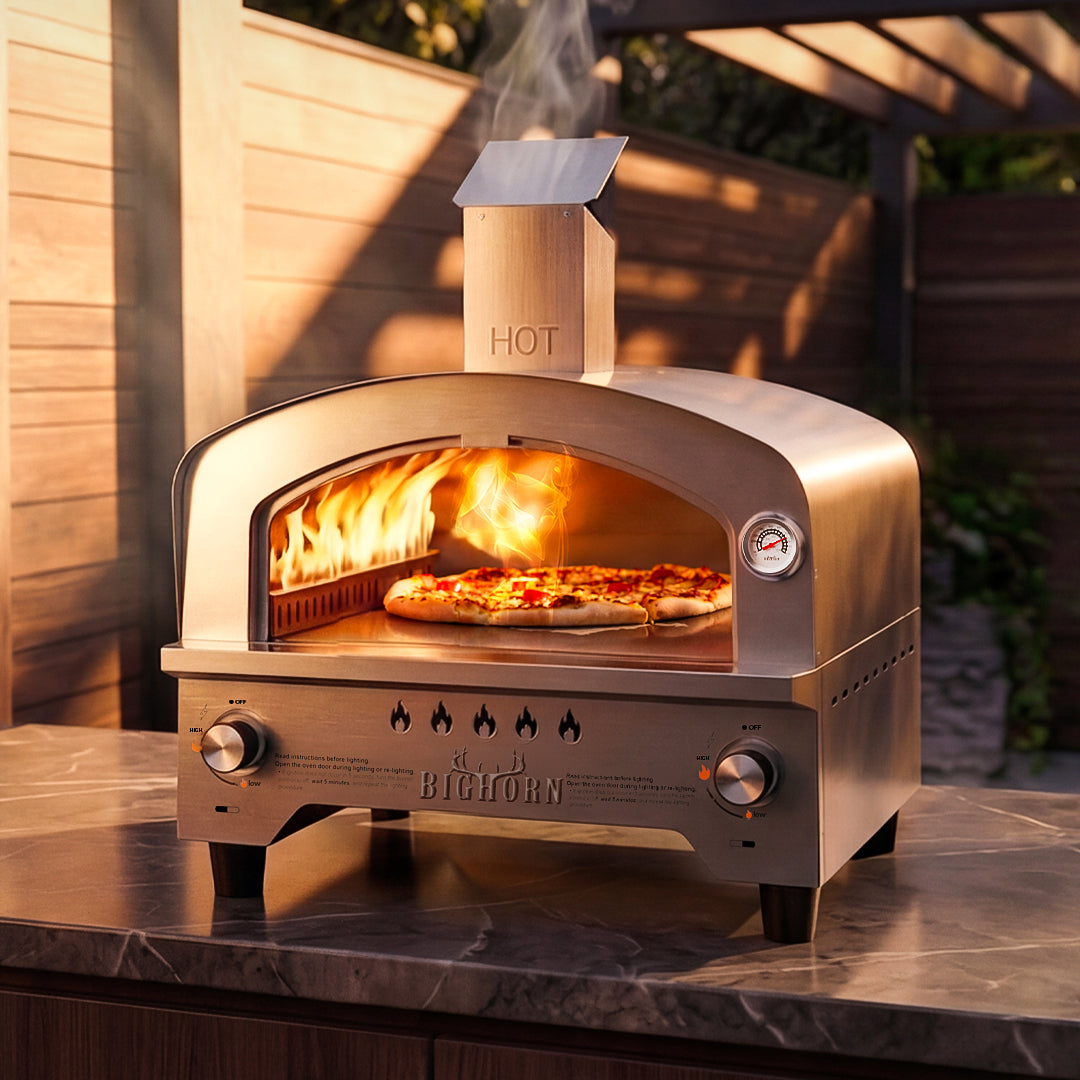
The current 15-inch dual-burner gas pizza oven includes a built-in thermometer, but a surface reading can still be useful when you are trying to understand bottom-crust browning.
When a Cover and Cart Become Worthwhile
A fitted cover makes sense for an outdoor oven that is stored where dust and weather reach it. It should fit the actual model and go on only after the oven is cool and dry. A cart is worthwhile when you lack a stable prep surface or safe place to rest hot tools; it should be rated for the appliance footprint and weight.
| Accessory | Buy early when… | Wait when… |
|---|---|---|
| Launching peel | The oven has a stone and no suitable peel is included | A compatible peel already ships with the oven |
| Turning peel | The oven has a strong hot side and needs rotation | The bake is even without active turning |
| Infrared thermometer | You want repeatable stone-temperature checks | Your process is already consistent without it |
| Cover | The oven is stored outdoors | The appliance lives indoors after cooling |
| Replacement stone | The original is damaged and the replacement is confirmed compatible | The included stone is intact |
Compatibility Is More Important Than Quantity
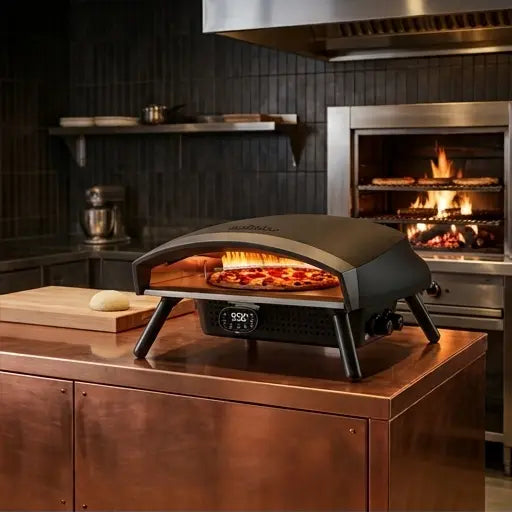
Fuel-conversion parts, replacement stones, covers, and carts all depend on the exact oven. A compatible gas burner is an appliance component, not a universal accessory. If you are considering a model designed to switch fuels, review the 12-inch pellet and gas oven rather than trying to adapt an incompatible single-fuel oven.
A small kit that fits correctly is more useful than a large collection of generic tools. Start with the launch, learn how your oven behaves, and let real cooking problems decide what comes next.