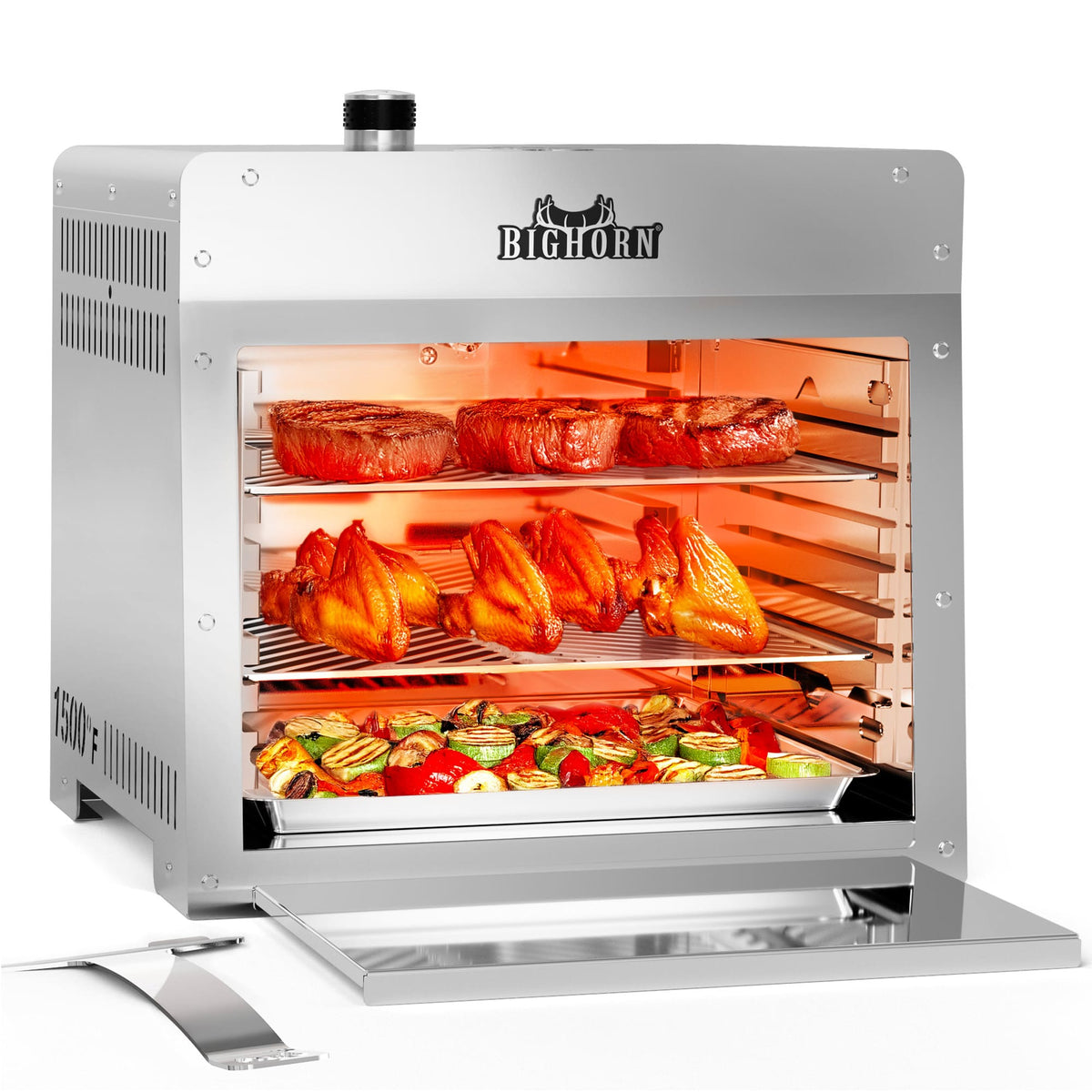
An infrared broiler sears best because it radiates intense heat directly onto the food surface — typically 1500 °F in minutes — producing a deep crust that an air fryer or a standard oven cannot match. An air fryer circulates hot air for even crispness, and a conventional oven browns slowly. For a steakhouse-style crust on steak, seafood, or vegetables, infrared wins; for everyday crispy foods, the air fryer is the easier choice.
How each method works
An infrared broiler heats a ceramic emitter that radiates energy straight at the food from above, like a restaurant salamander. An air fryer uses rapid hot-air circulation to crisp and brown from all sides. A conventional oven heats the air around the food, browning the surface slowly by convection. The difference in heat transfer is why searing results diverge so clearly.
Infrared: the searing specialist
Infrared’s direct radiant heat concentrates energy on the surface, driving the Maillard browning that creates a deep, flavorful crust in seconds. It preheats in minutes and sears a steak or chop fast while the interior stays pink. The trade is focus: it is built for high-heat searing, not for crispy breading or gentle baking.

Air fryer: crisp and convenient
An air fryer excells at even, crispy browning through hot-air circulation, ideal for chicken wings, fries, and breaded foods. It heats quickly and is kitchen-friendly, but its surface temperature stays far below infrared, so it cannot produce the same concentrated sear on a steak. It is the everyday convenience tool, not the crust specialist.
Conventional oven: slow and gentle
A conventional oven browns by hot air at lower temperatures, which is slow and tends to dry the surface rather than sear it. It suits roasting, baking, and dishes where even, gentle heat matters. For a genuine crust, the oven is the weakest of the three — which is why a dedicated searing method like infrared exists.
Which should you choose
Choose an infrared broiler if you want restaurant-style searing on proteins and high-heat pizza; choose an air fryer for crispy everyday foods in a small appliance; keep the oven for baking and roasting. Many kitchens pair an infrared broiler with an air fryer or oven to cover both ends of the heat spectrum.
What foods does each method handle best?
Infrared excels at steak, chops, seafood, and high-heat pizza; an air fryer shines with wings, fries, and breaded items; a conventional oven suits roasting and baking. Each tool has its home turf, so the choice follows the menu — use the searing specialist for crusts, the air fryer for crisp, the oven for gentle cooks.
Can you combine an air fryer and an infrared broiler?
Yes, and the pair covers more ground than either alone: the air fryer handles crispy everyday food, while the infrared adds a restaurant-style sear on proteins. Many cooks run the air fryer on weeknights and break out the broiler for steak nights.
How do they compare on energy and cleanup?
An air fryer is the most efficient for small crispy batches and easy to clean; a conventional oven is the most energy-hungry; an infrared broiler preheats in minutes and its grates wash quickly. Balance the convenience and heat needs for your routine.
How do I know which tool I need?
Look at the foods you cook most. If steak and seafood with a crust are regular, an infrared broiler earns its place; if crispy wings and fries dominate, an air fryer is the everyday tool; if you mostly bake and roast, the oven stays central. The best setup pairs the specialist searing tool with the everyday appliance you already use.
Which sears best on a budget?
On a budget, a cast iron skillet on a hot stove sears better than a standard oven and costs little, but it cannot match infrared’s top-down heat. If searing is a priority and the budget allows, an infrared broiler is the best surface-heat investment; otherwise a skillet is the economical start.
What level of heat does each tool reach?
An infrared broiler reaches about 1500 °F; an air fryer typically works around 350–450 °F; a conventional oven caps near 500 °F. That heat gap is why the crusts differ so much. High surface heat drives fast browning, and infrared’s ceiling is what makes its sears deepest.
How do you pick the first purchase?
Match the first purchase to your dominant cooking. If crispy everyday food is the need, start with an air fryer; if steakhouse sears are the goal, start with an infrared broiler; if baking matters, the oven you already own is the base. Build from the tool that covers your most frequent meal.
Ultimately, the choice comes down to the crust you want and the space you have: infrared delivers the deepest sear and earns a place beside (not instead of) an air fryer or oven. Pair the specialist with your everyday appliance and you cover the whole heat spectrum with two tools.
Start from what you already own, then add the one specialist that covers your biggest gap — for most home cooks, that is the infrared sear their oven and air fryer cannot produce.
Searing comparison FAQs
Can an air fryer sear a steak?
It can brown the surface, but it cannot match infrared’s concentrated heat, so the crust is milder. For a real sear, an infrared broiler or a hot pan is the better tool.
Is infrared worth adding if I have an air fryer?
Yes, if you regularly cook steak or want high-heat crusts — the two tools serve different jobs. Infrared adds the searing power the air fryer lacks.
Which is easiest for beginners?
An air fryer is the easiest for everyday crispy foods, while an infrared broiler has a short learning curve around fast searing. Both are simple; the infrared just demands more attention during the short bake.
To see the current specs, review the 16-inch Big Horn infrared broiler product page.