Quick answer: For steak, think in two temperatures: the heat used to brown the exterior and the internal temperature that determines doneness. Searing works best over very high heat with a dry steak surface, while the center should be monitored separately with an instant-read thermometer. Extremely hot infrared broilers can brown in seconds, but ordinary grills and cast iron can also produce an excellent crust with good technique.
What temperature actually creates a good sear?
There is no single required surface temperature. Browning accelerates as the cooking surface or radiant source gets hotter, provided the steak surface is dry. A cast-iron pan in the several-hundred-degree range can sear effectively, while an infrared broiler may expose the meat to much more intense radiant heat.
The goal is not to reach the largest number possible. It is to brown the exterior quickly enough that the inside does not overshoot your preferred doneness.
Why is internal temperature different from searing temperature?
Searing temperature describes the cooking environment. Internal temperature describes the center of the steak. They are not interchangeable. A grill can be extremely hot while the steak center remains rare.
Use an instant-read thermometer to judge doneness. Remember that temperature can continue to rise during resting, particularly with thicker steaks.
How do you prepare the surface for better browning?
Pat the steak dry before cooking. Surface moisture must evaporate before strong browning can develop, so a wet steak spends valuable time steaming. Salt timing depends on your method, but the final surface should be dry when it reaches the heat.
A thin film of high-smoke-point oil can help where appropriate, but avoid heavy coatings that drip excessively into flame or create unnecessary smoke.
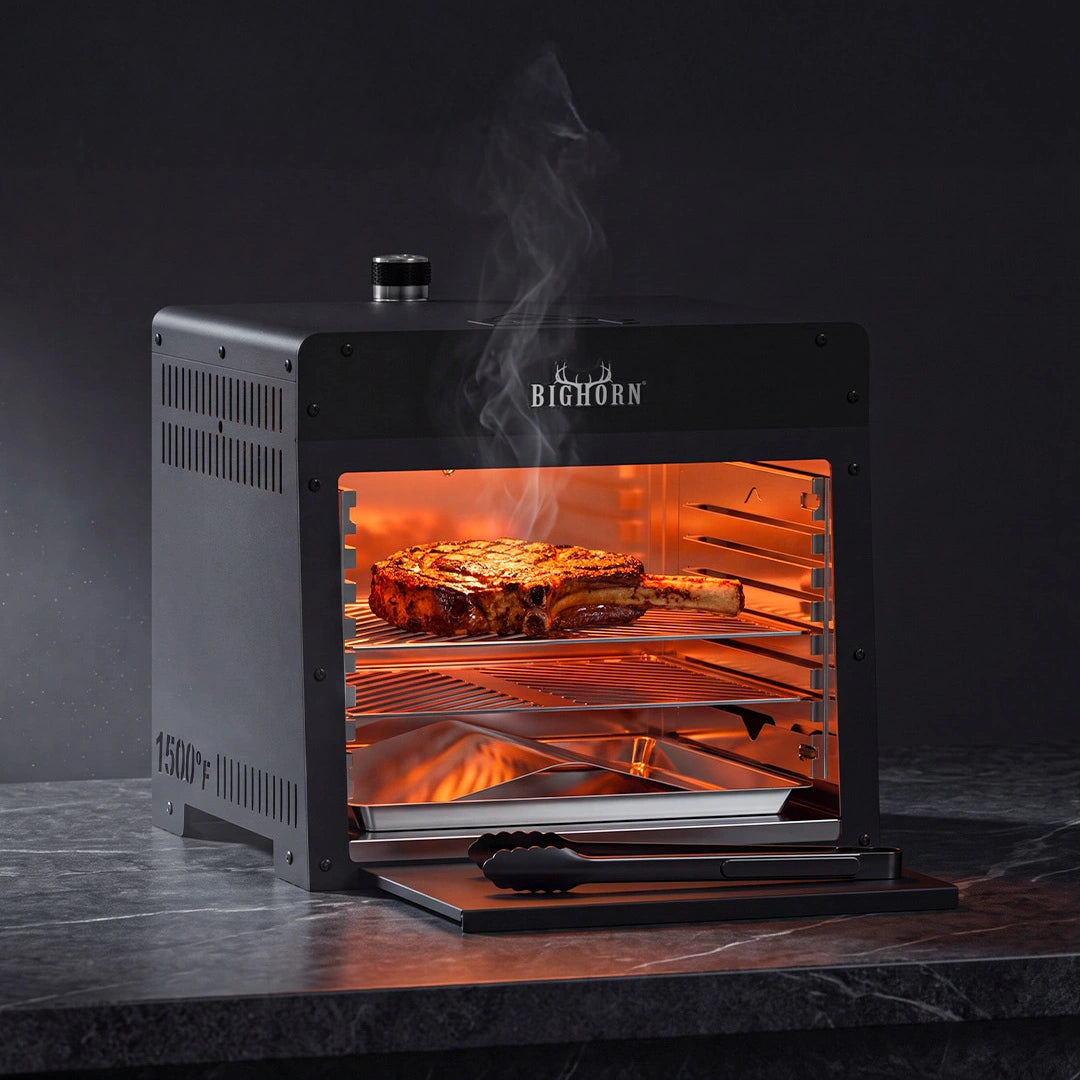
Does a 1,500°F infrared broiler cook steak differently?
An infrared broiler delivers very intense radiant heat from above, so it can darken the exterior rapidly. This is useful for creating a crust while limiting the time that heat has to move toward the center. The technique demands attention because the same intensity that browns quickly can burn quickly.
Use rack position, distance from the burner, and short timed intervals rather than leaving the steak unattended.
Should you sear before or after bringing the center to temperature?
Both methods work. Traditional searing starts with high heat and then finishes more gently. Reverse searing slowly brings a thick steak close to the target internal temperature before a short final sear. Reverse searing can make edge-to-edge doneness easier to control on thick cuts.
How long should each side be seared?
Time depends on the heat source, steak thickness, surface moisture, and distance from the burner. Do not use a universal “two minutes per side” rule across a cast-iron pan, conventional gas grill, and infrared broiler. Watch browning and verify the internal temperature instead.
What causes a gray steak instead of a browned crust?
Common causes include a wet surface, crowded pan, weak preheat, excessive flipping before browning begins, or cooking too long at moderate heat. Dry the meat, preheat the equipment properly, and give the surface enough direct energy to brown before the center overcooks.
FAQs
Is 1,500°F required for steakhouse-style searing?
No. It is one high-intensity method, not a requirement. Cast iron, charcoal, and conventional gas grills can also create a strong crust.
Should you judge steak doneness by color?
No. Use an instant-read thermometer because color varies with lighting, meat chemistry, and cooking method.
Does resting matter after searing?
Yes. Resting allows temperature and juices to settle, especially in thicker cuts.