Sear salmon and seafood on an infrared grill by drying the surface, using a moderate rack position, and cooking fast: pat the fish dry, oil it lightly, place it on the hot grate, and pull it the moment it releases. Infrared’s high, direct heat gives salmon a crisp skin and tender center in minutes, but it punishes moisture and inattention — so the technique is all about the surface and the timing.
Why infrared suits seafood
Infrared radiates intense heat directly onto the surface, which is ideal for the crisp skin and fast browning that seafood benefits from. Because the heat is so concentrated, seafood cooks in far less time than on a conventional grill — which keeps the interior moist. The flip side is that seafood is delicate, so the short window requires focus: a minute too long can dry a filet or toughen a shrimp.
Preparing the fish
Drying the surface is the most important step. Pat salmon or shrimp completely dry with paper towels — moisture steams instead of searing and prevents the crisp skin you want. A light coat of oil on the fish (not the grate, if the grate is well-seasoned) helps it brown and release. Season simply: salt and pepper first, with herbs or a marinade after the sear so nothing burns.
Heat and rack position
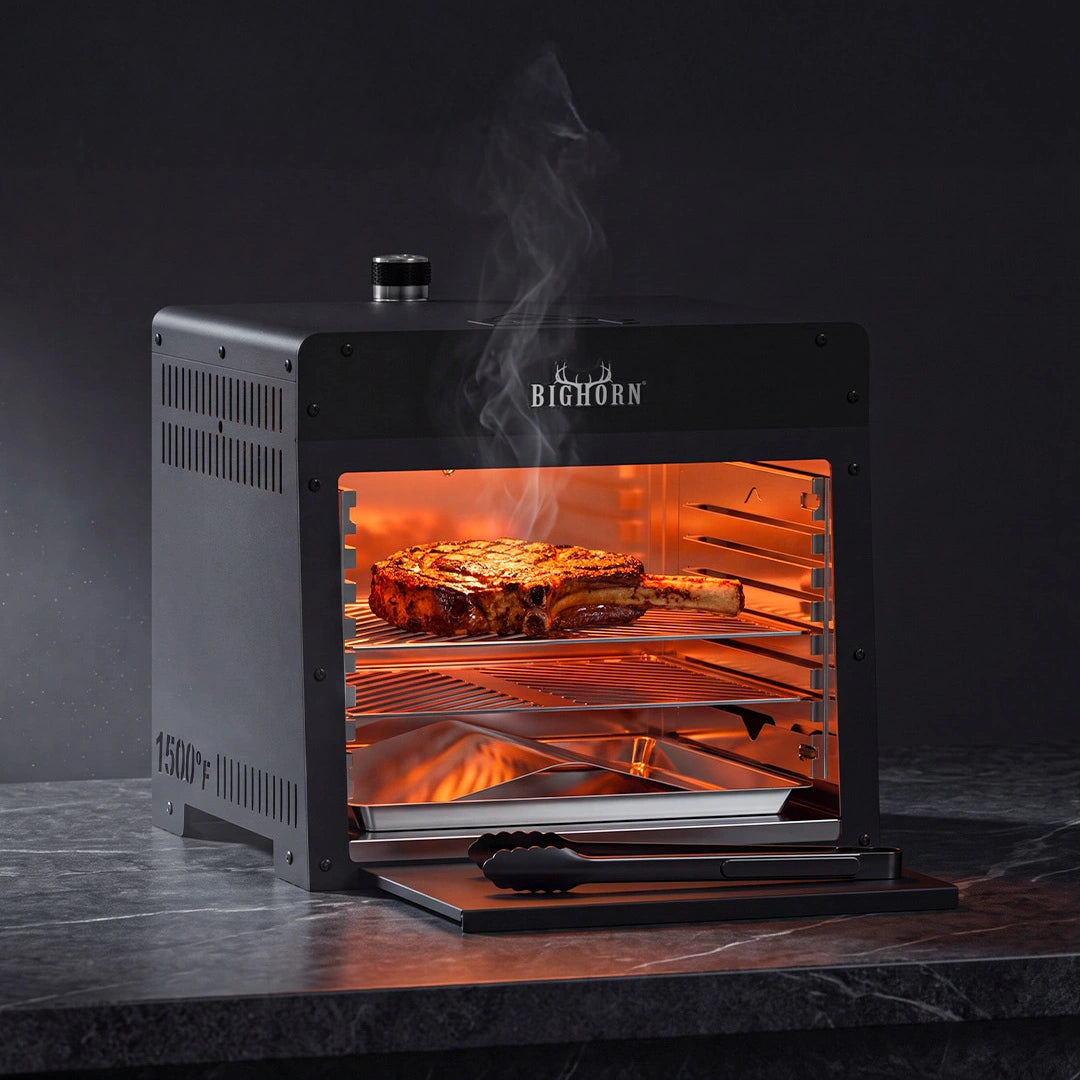
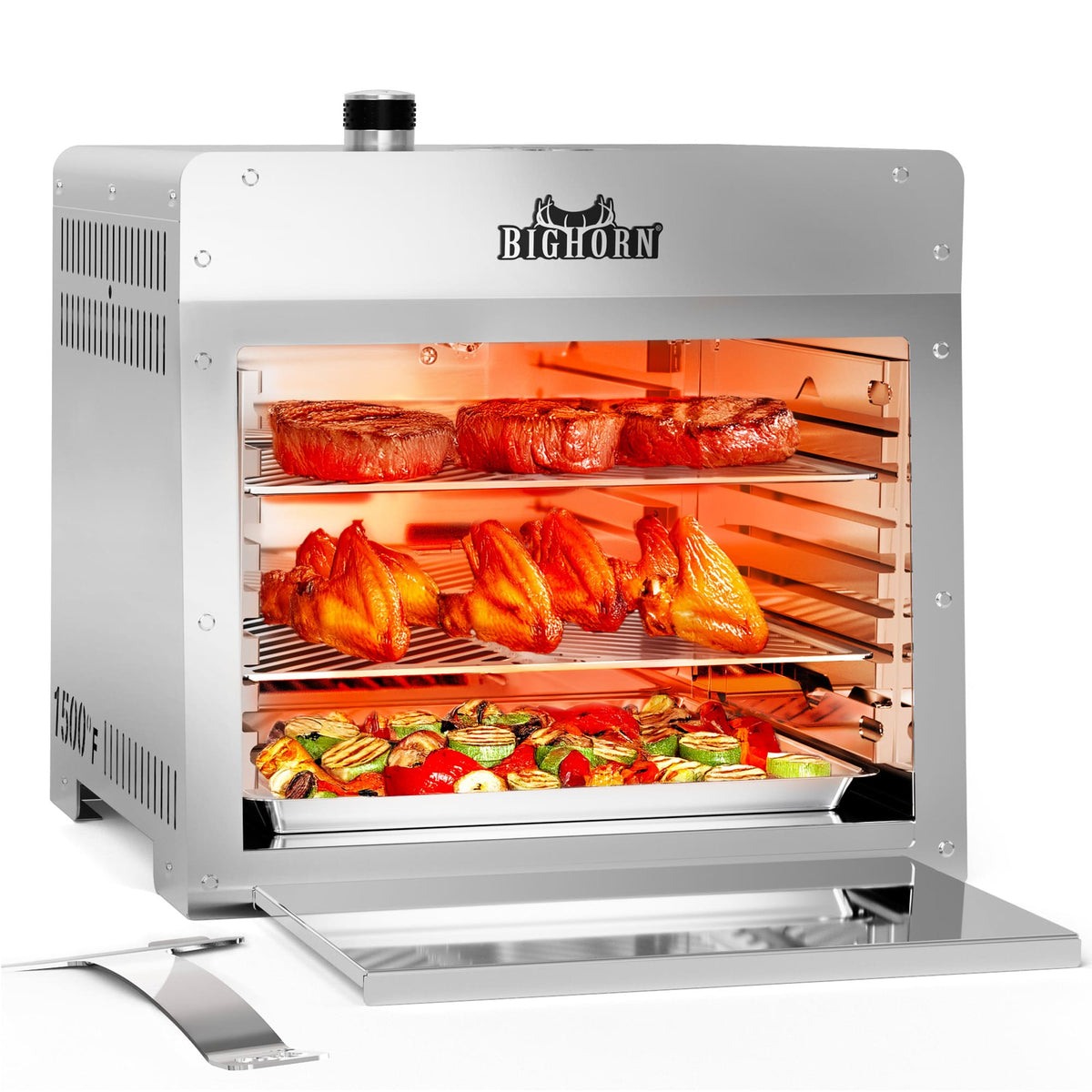
Use a moderate rack position rather than the closest sear setting — seafood browns fast without the brutal intensity that works for steak. On the Big Horn 16-inch infrared broiler, the ten rack positions let you dial this in: a middle position gives a crisp exterior without scorching. Watch the surface, not the clock; pull the moment it releases from the grate.

Timing by seafood
Salmon filets with skin sear skin-side down first, release when done, and finish quickly; shrimp cook in a minute or two per side and are done when they turn opaque; scallops brown on each side and pull at a barely-tender center. Because every seafood behaves differently, cook in one layer and pull each piece as it finishes rather than trying to time the whole batch together.
What oil should you use for seafood?
Use an oil with a higher smoke point, like canola or vegetable, so it helps browning without burning. A light coat on the fish, not a heavy one, is enough — excess oil causes flare-ups and a greasy surface.
How do you keep delicate seafood from falling apart?
Let it sear until it releases from the grate before turning, and use a wide spatula or fish turner. Trying to flip too early tears the flesh. Cook in one layer and turn each piece once, and it will hold together.
How long does seafood take on infrared?
Most seafood cooks in 2–5 minutes depending on thickness: shrimp in a minute or two per side, scallops quickly, and thicker salmon a little longer. Watch the surface and pull each piece the moment it finishes rather than timing the whole batch together.
What sides cook well alongside seafood on infrared?
Vegetables with structure — asparagus, zucchini, peppers, and mushrooms — cook quickly on a moderate rack position and pair naturally with fish. A little oil and salt, then a pull as they char, keeps them bright. Cook the vegetables as a first round, then the seafood so everything lands together.
How do you avoid overcooking the center of thick fish?
For thicker filets, sear the surface in the hot zone, then move the fish to a lower rack position or off the direct heat to finish gently. Use a thermometer and pull around 125–130 °F for salmon, allowing carryover. The crust forms fast; the center needs a gentler finish.
Can you use a marinade on seafood before searing?
Bright, short marinades with citrus or soy work, but they add surface moisture and sugar that can burn at infrared heat. Pat the fish dry after marinating and before searing, and keep the marinade light. For crisp skin, dry-rub and season after the sear is the more reliable path.
How do you season seafood for infrared without burning it?
Season simply before the sear — salt, pepper, and a light oil — then add herbs, lemon, or a glaze after cooking so nothing blackens. Sugary marinades burn at infrared temperatures, so keep them off the surface that will hit the heat. Finishing fresh is both better tasting and easier to manage than trying to season through the flame.
What is the difference between searing skin-on and skinless fish?
Skin-on fish sears skin-side down first, where the fat crisps the skin and protects the flesh; skinless filets are more delicate and need a gentler rack position and careful flipping. Both want a dry surface and a single confident turn. Match the technique to the side that will face the heat first.
How do you scale seafood cooking for a group?
Cook in small batches so the heat stays high, and hold finished pieces on a warm plate while the next round sears. Different seafood finishes at different speeds, so group by cook time and pull each as it sets. A landing board and a warm spot next to the grill keep the flow smooth without overcrowding the heat.
What should you avoid when searing seafood on infrared?
Avoid three errors: searing wet or freshly marinated fish (it steams instead of browning), using the closest rack position for delicate filets, and flipping before the sear releases. Each turns a quick, crisp result into a stuck, torn, or overcooked one. Dry the surface, moderate the heat, and be patient with the turn.
How do you pair the sear with a sauce or finish?
Finish with a simple compound butter, a squeeze of lemon, or a light herb oil after the sear, so nothing burns on the surface. Serve the fish the moment it is done — seafood waits poorly. A clean finish keeps the char crisp and the flavor bright, which is what the technique is built to deliver.
With dry surfaces, a moderated rack position, and fast timing, seafood becomes one of the easiest protein groups on an infrared grill — and one of the most impressive results at a cookout.
Start with shrimp or scallops if you are new to infrared seafood — their short cook times teach the heat quickly, and salmon builds on that once the pattern feels natural.
Seafood searing FAQs
Does seafood stick to the infrared grate?
Less if the fish is dry, oiled, and the grate is clean and preheated. If it sticks, wait — it releases when the sear has formed, so forcing it tears the flesh.
Should I cook seafood with the same heat as steak?
No — use a lower rack position. Steak can take full infrared intensity; seafood needs a slightly gentler setting to brown without drying.
Can I cook a mix of seafood at once?
Yes, in batches by cook time. Shrimp and scallops finish fast; thicker salmon takes longer. Keep them separated so you can pull each at its own moment.
To confirm the rack positions and included accessories, review the 16-inch Big Horn infrared broiler product page.